

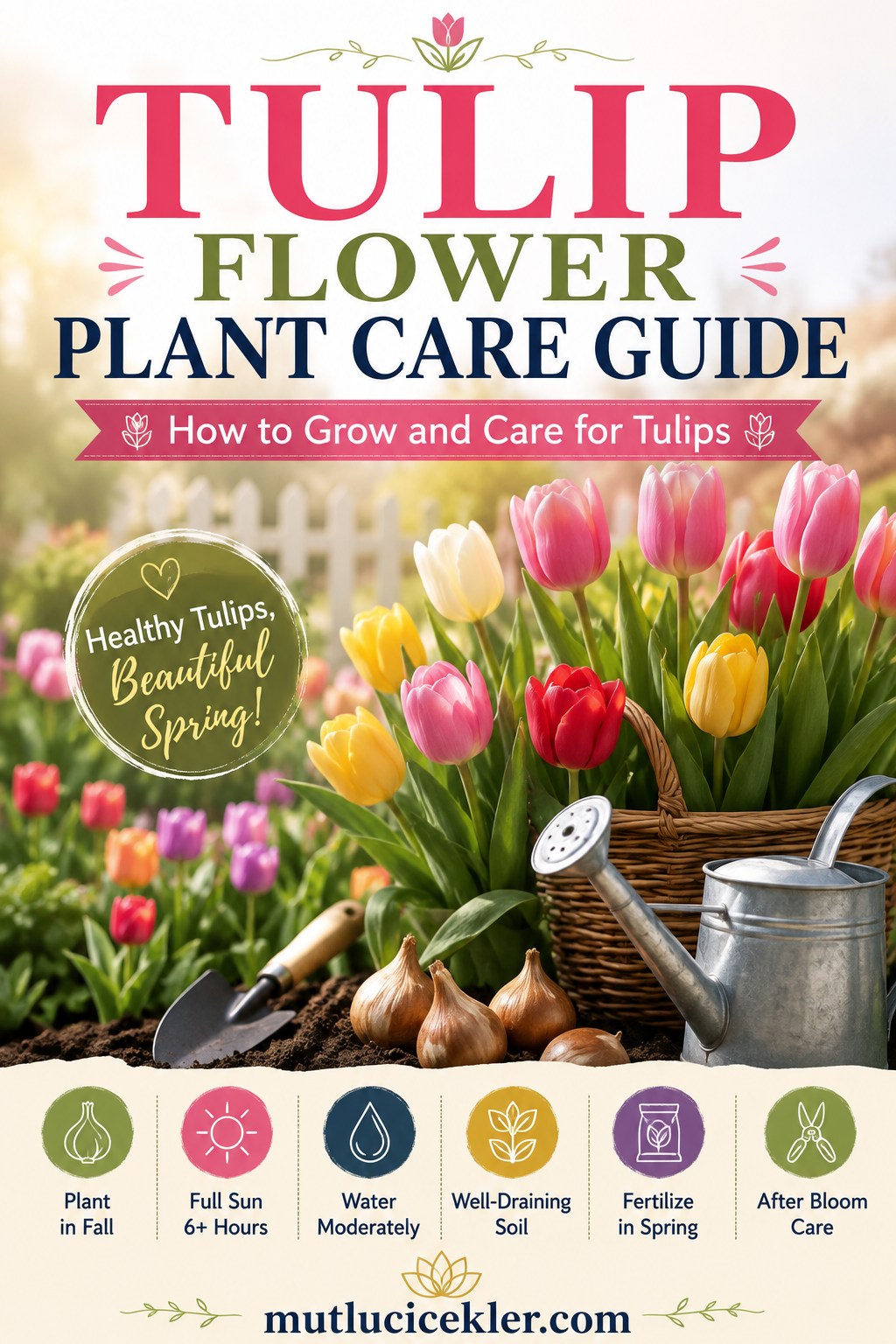
Tulips (Tulipa spp.) are among the most recognizable and beautiful spring flowers. Famous for their elegant cup-shaped blooms and impressive range of colors, tulips can transform gardens, balconies, patios, and containers into colorful spring displays.
Although tulips are relatively easy to grow, successful flowering depends on several important factors, including planting time, soil drainage, sunlight, watering, and proper care after blooming.
In this Tulip Flower Plant Care Guide, you will learn how to plant tulip bulbs, care for tulips in pots and gardens, encourage healthy flowering, and protect the bulbs for future seasons.
🌷 Tulip Care at a Glance
- Botanical name: Tulipa spp.
- Plant type: Bulbous perennial
- Blooming season: Spring
- Light: Full sun to partial shade
- Soil: Fertile and well-draining
- Watering: Moderate
- Planting season: Autumn
- Planting depth: About 15–20 cm (6–8 inches)
- Hardiness: Depends on the tulip variety
- Best location: Gardens, flower beds, borders and containers
1. When and How to Plant Tulip Bulbs
Planting tulip bulbs correctly is one of the most important steps for producing healthy spring flowers.
When Should Tulip Bulbs Be Planted?
Tulip bulbs are generally planted in autumn, several weeks before the ground freezes.
The cool winter period is important because tulip bulbs need exposure to low temperatures before they can produce strong spring growth.
In warmer climates where winters are mild, some gardeners pre-chill tulip bulbs before planting.
How Deep Should Tulip Bulbs Be Planted?
Plant the bulbs approximately 15–20 cm (6–8 inches) deep, with the pointed end facing upward.
Leave roughly 10–15 cm (4–6 inches) between bulbs.
Planting bulbs deeply can provide additional protection against sudden temperature changes and may also help keep them stable in the soil.
2. Best Soil for Tulips
Tulips dislike sitting in constantly wet soil. Good drainage is therefore one of the most important requirements for healthy bulbs.
Choose loose, fertile soil that allows excess water to drain easily.
Heavy clay soil can be improved with organic matter such as compost. However, avoid creating conditions where water collects around the bulbs.
A slightly acidic to neutral soil generally works well for tulips.
3. Light and Temperature Requirements
☀️ How Much Sun Do Tulips Need?
Tulips generally perform best with approximately 6 hours of direct sunlight per day.
Full sun encourages strong stems and healthy flowers. In warmer regions, some afternoon shade may help protect blooms from excessive heat.
🌡️ Temperature
Tulips are naturally adapted to cool conditions.
Their bulbs require a period of cold temperatures to support proper flowering. This is one reason tulips perform especially well in regions with cool winters and mild springs.
Once flowers appear, cooler spring temperatures can also help the blooms last longer.
4. How to Water Tulips
Tulips need moisture, but overwatering is one of the easiest ways to damage the bulbs.
After planting the bulbs in autumn, water the soil thoroughly. Natural rainfall may then provide much of the moisture they need during winter.
When growth begins in spring, water when the soil becomes noticeably dry.
Avoid Overwatering
Constantly wet soil can encourage bulb rot and fungal diseases.
Tulips planted in containers require slightly more attention because potting soil can dry out faster than garden soil. Always make sure containers have drainage holes.
5. Fertilizing Tulips
Tulips can benefit from nutrients when they are planted and again when new growth begins.
A balanced bulb fertilizer or slow-release fertilizer can be applied according to the product instructions.
Compost can also help improve soil quality.
Avoid excessive fertilization, particularly fertilizers containing very high amounts of nitrogen. Too much nitrogen may encourage leaf growth rather than strong flowering.
6. Growing Tulips in Pots
Tulips are excellent container plants and are a good option for balconies, terraces, patios, and small gardens.
Choose a container with sufficient drainage holes.
Plant the bulbs close together without allowing them to touch each other. The container should also be deep enough to provide adequate soil beneath and above the bulbs.
Place the pot in a sunny location once growth begins.
Important Container Care Tips
- Use well-draining potting soil.
- Never allow the container to remain filled with standing water.
- Check soil moisture regularly.
- Protect containers from extreme temperature fluctuations.
- Make sure bulbs receive the cold period required for flowering.
7. Tulip Care After Flowering
Proper care does not end when tulip flowers fade.
Remove the spent flower heads after blooming. This prevents the plant from spending unnecessary energy producing seeds.
However, do not immediately cut the green leaves.
The foliage continues photosynthesis and sends energy back into the bulb. This stored energy can help support future growth.
Wait until the leaves naturally turn yellow and begin to die back before removing them.
8. Will Tulips Bloom Again Next Year?
Tulips are technically perennial bulbs, but their ability to return and flower strongly every year varies significantly by variety and growing conditions.
Some tulips may return for several years, while others gradually produce smaller or fewer flowers.
Species tulips and certain varieties are generally more reliable for naturalizing and returning year after year.
For better results:
- Choose a sunny planting location.
- Provide excellent drainage.
- Allow foliage to die naturally.
- Avoid excessive summer watering.
- Select varieties known for perennial performance.
Some gardeners treat modern hybrid tulips as annuals and plant fresh bulbs every autumn for the most reliable spring display.
9. Should Tulip Bulbs Be Dug Up?
Tulip bulbs do not always need to be removed from the ground.
If the soil remains relatively dry and well-drained during summer, bulbs can often remain where they are.
However, bulbs may be lifted if the area experiences very wet summers or if you want to reorganize the flower bed.
After the foliage has completely died back, carefully dig up the bulbs and allow them to dry.
Store them in a cool, dry, dark and well-ventilated location until the next planting season.
10. Common Tulip Problems
Tulips are generally easy to maintain, but several problems can affect their growth.
Tulips Produce Leaves but No Flowers
Possible causes include:
- Insufficient winter chilling
- Old or weakened bulbs
- Poor soil conditions
- Too much shade
- Removing foliage too early the previous year
Yellow Leaves
Yellow foliage after flowering is usually part of the tulip’s natural life cycle.
However, yellow leaves appearing unusually early may indicate excessive watering, poor drainage, or bulb problems.
Bulb Rot
Bulb rot is commonly associated with excessively wet soil.
Good drainage and careful watering are the best preventive measures.
Pests
Depending on the region, tulip bulbs and shoots may attract rodents, squirrels, slugs, snails, or other garden pests.
Protecting newly planted bulbs and keeping the garden area clean can reduce some of these problems.
11. Indoor Tulip Care
Tulips can also be grown indoors, especially when bulbs have been properly chilled beforehand.
Once shoots appear, place the container in a bright location.
Keep indoor tulips away from heaters and extremely warm rooms because high temperatures can shorten the flowering period.
Water when the upper layer of soil begins to dry, but never allow the bulbs to sit in water.
After flowering, indoor tulips can sometimes be planted outdoors, although reblooming is not always guaranteed.
12. How to Make Tulip Flowers Last Longer
A few simple practices can help extend the flowering period.
- Keep tulips away from excessive heat.
- Maintain moderate soil moisture.
- Protect flowers from strong winds.
- Avoid unnecessary watering over the flowers.
- Remove faded blooms.
- Provide some afternoon protection in unusually warm spring weather.
Cool spring conditions generally help tulip flowers remain attractive for longer.
🌷 Final Tips for Healthy Tulips
Successful tulip care begins with healthy bulbs and the right planting location.
Choose firm bulbs, plant them during autumn, provide good drainage and give the plants plenty of sunlight. Avoid excessive watering and allow the foliage to die naturally after flowering.
With these simple practices, tulips can provide one of the most spectacular displays of the spring gardening season.
Frequently Asked Questions About Tulip Care
How often should tulips be watered?
Tulips should be watered when the soil begins to dry. They generally do not require constant watering, especially when rainfall is sufficient. Avoid keeping the soil permanently wet.
Do tulips need full sun?
Tulips usually perform best in full sun and should ideally receive around six hours of direct sunlight per day.
Can tulips grow in pots?
Yes. Tulips grow very well in containers as long as the pot is deep enough and has adequate drainage holes.
What should I do with tulips after they bloom?
Remove faded flowers but leave the green foliage in place until it naturally turns yellow and dies back.
Why are my tulips not flowering?
Insufficient cold exposure, poor sunlight, weak bulbs, excessive moisture, or removing leaves too early can all contribute to poor flowering.
Can tulip bulbs stay in the ground all year?
In suitable climates and well-drained soil, many tulip bulbs can remain in the ground. However, their ability to flower reliably in following years depends on the variety and growing conditions.
Follow Mutlu Çiçekler 🌿
For more plant care guides, gardening tips, flower-growing advice and practical information, keep following mutlucicekler.com.


Bir yanıt yazın