

In Turkic mythology, Umay Ana (or simply Umay) is a revered deity associated with fertility, motherhood, and protection. She is often regarded as the “Mother Goddess,” embodying the nurturing and protective qualities attributed to motherhood. Her significance spans across centuries, deeply rooted in the spiritual traditions and cultural practices of Turkic peoples.
Origins and Symbolism
The name “Umay” is believed to be derived from the ancient Turkic word for “placenta” or “afterbirth,” symbolizing the source of life and fertility. This etymology aligns with Umay Ana’s role as the protector of mothers and children, highlighting her connection to birth and creation.
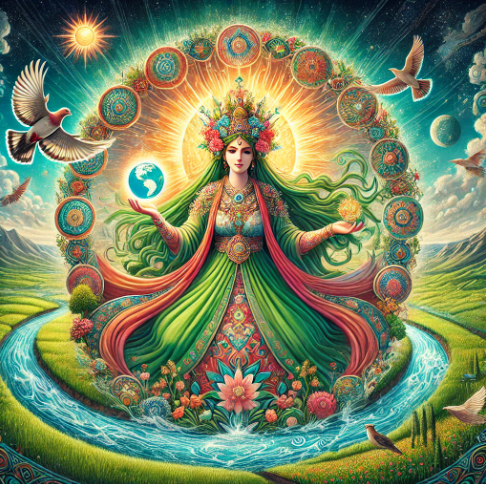
Umay Ana is often depicted as a benevolent maternal figure. Her image varies across regions and interpretations, but she is commonly described as a radiant woman with a powerful aura, symbolizing life and vitality. In some depictions, she is shown with three horns, representing her role as a trinity of life, protection, and renewal.
Role in Turkic Mythology
Umay Ana holds a prominent place in the pantheon of Turkic deities. Her primary role is as a guardian of families, especially women and children. She is believed to:
- Protect Pregnant Women and Infants: Umay Ana is invoked during childbirth to ensure the safety of both the mother and the baby. She is thought to ward off evil spirits and negative energies.
- Foster Fertility: As a goddess of fertility, she is associated with agricultural abundance and the prosperity of families.
- Guide Souls: In some traditions, Umay Ana also plays a role in guiding the souls of the deceased, further emphasizing her maternal and protective qualities.
Worship and Practices
Although the formal worship of Umay Ana has largely faded with the adoption of Islam and other religions among Turkic peoples, remnants of her veneration remain in cultural traditions and folklore. For instance:
- Rituals for Protection: Mothers and grandmothers would often pray to Umay Ana for the well-being of their children. Special charms and symbols representing her were used as talismans.
- Folk Beliefs: In some rural areas, women would leave offerings such as milk or bread to honor Umay Ana and seek her blessings.
- Shamanistic Practices: Shamans, or “kam,” in Turkic cultures invoked Umay Ana during ceremonies related to childbirth, healing, and fertility.
Umay Ana in Modern Culture
Today, Umay Ana remains an enduring symbol of motherhood and protection in Turkic culture. She is often referenced in literature, art, and folklore, serving as a reminder of the ancient spiritual beliefs of the Turkic peoples. Her legacy continues to inspire contemporary interpretations of maternal care and the interconnectedness of life.
In modern Turkic societies, Umay Ana’s image is celebrated as a cultural icon, reflecting the deep respect for motherhood and the nurturing forces of nature. Festivals, artistic representations, and academic studies have contributed to the preservation and revitalization of her story, ensuring that her spirit remains alive in the collective memory.
Conclusion
Umay Ana, the Mother Goddess of Turkic mythology, is a timeless representation of fertility, protection, and maternal love. Her story bridges the ancient and the modern, connecting the spiritual heritage of Turkic peoples with contemporary expressions of reverence for motherhood. As a symbol of life and care, Umay Ana continues to hold a special place in the hearts of those who cherish the rich tapestry of Turkic traditions.













Bir Cevap Yazın