

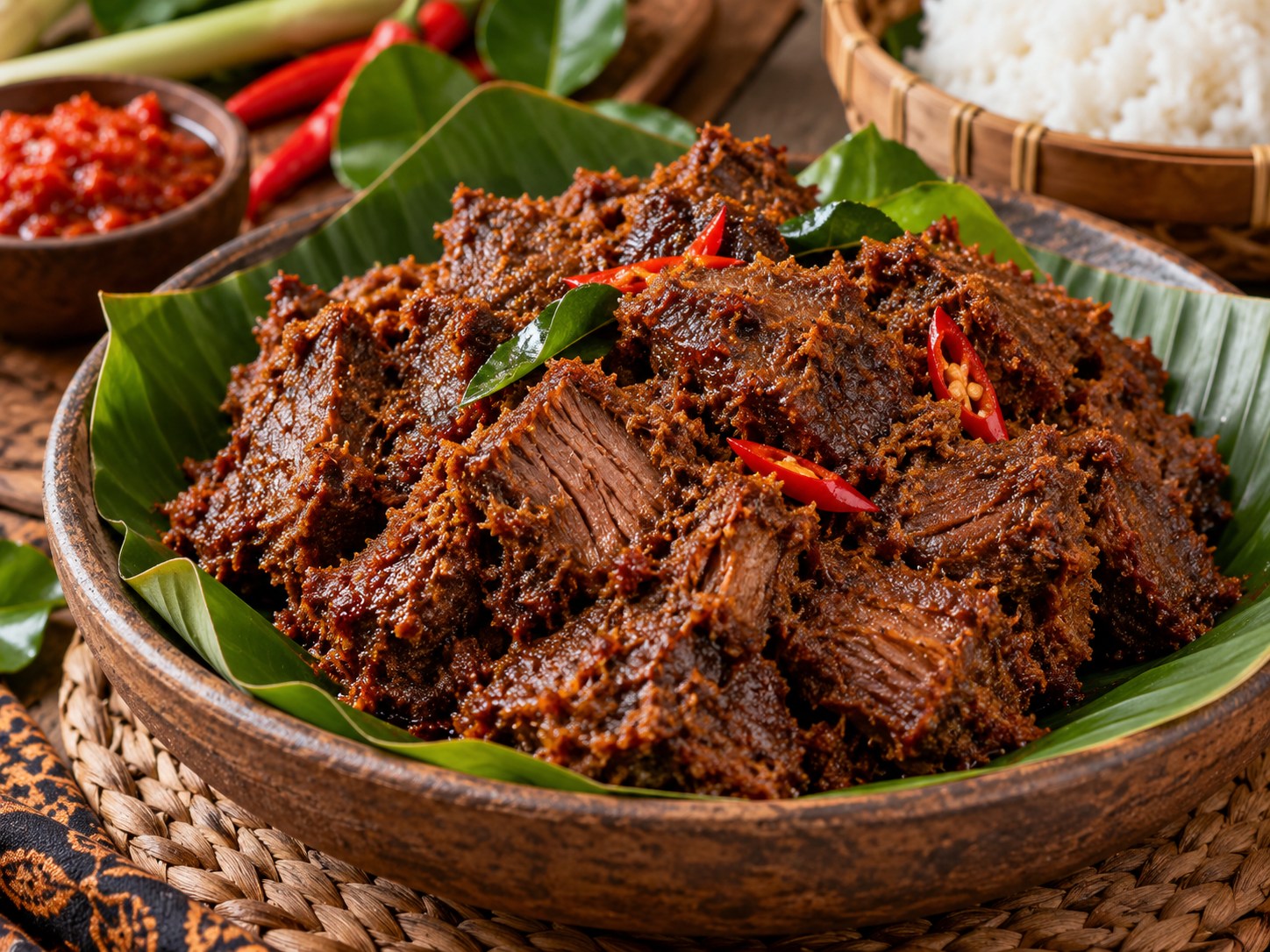
Beef rendang, or rendang daging, is one of Indonesia’s best-known slow-cooked dishes. It comes from the Minangkabau culinary tradition of West Sumatra, where meat is cooked patiently with coconut milk, chilies and aromatic spices until the liquid reduces, the coconut oil separates and the beef becomes deeply seasoned and dark brown.
This version is designed for a home kitchen while staying close to the character of traditional rendang: rich rather than soupy, aromatic rather than simply hot, and cooked long enough for the sauce to cling to the beef instead of remaining like a curry.
What Is Beef Rendang?
Rendang is closely associated with the Minangkabau people of West Sumatra. Its defining feature is not one single spice blend but the cooking method. Coconut milk and a ground spice paste slowly reduce around the meat. During cooking, the dish passes from a loose, curry-like stage to a thicker stage often called kalio, and finally to the darker, drier finish associated with rendang.
That reduction is what creates rendang’s concentrated flavor. The beef absorbs the spices while the coconut milk gradually releases its fat and the mixture caramelizes. Rushing this step usually leaves the dish pale, watery or one-dimensional.
Ingredients for Indonesian Beef Rendang
For the Beef
- 1 kg beef chuck or brisket, cut into large 4–5 cm pieces
- 800 ml full-fat coconut milk
- 2 stalks lemongrass, bruised and tied in knots if possible
- 4 makrut lime leaves, torn slightly
- 1 turmeric leaf, tied in a knot, if available
- 1 tablespoon tamarind paste
- 1–1½ teaspoons salt, or to taste
- 1 teaspoon palm sugar or brown sugar, optional
For the Spice Paste
- 8–10 shallots, roughly chopped
- 5 cloves garlic
- 5–8 red chilies, adjusted to taste
- 4 cm fresh ginger, peeled
- 5 cm fresh galangal, peeled and sliced
- 4 candlenuts, if available
- 1 teaspoon ground coriander
- ½ teaspoon ground turmeric if you do not have fresh turmeric leaf
- 2–3 tablespoons neutral oil, only as needed for blending or frying
Ingredient note: Makrut lime leaves are still sometimes sold under the older name “kaffir lime leaves.” Indonesian bay leaf (daun salam) is also different from the common European bay leaf, so ordinary bay leaves should not be treated as an exact substitute.
Choosing the Right Beef
Use a cut with enough connective tissue to stay juicy during long cooking. Chuck and brisket are both excellent choices. Very lean cuts can become dry before the coconut mixture has reduced properly. Keep the pieces fairly large because they shrink as the rendang cooks.
How to Make Authentic Beef Rendang
1. Make the Spice Paste
Add the shallots, garlic, chilies, ginger, galangal, candlenuts, coriander and turmeric to a blender or food processor. Blend until you have a thick, fairly smooth paste. Add only a small amount of oil or water if your blender needs help moving the mixture.
2. Cook the Aromatics
Place a wide, heavy pot over medium heat. Add the spice paste and cook for 5–8 minutes, stirring frequently, until the raw aroma softens and the paste becomes fragrant. Add the lemongrass, makrut lime leaves and turmeric leaf.
3. Add Coconut Milk
Pour in the coconut milk and stir well so the spice paste is evenly distributed. Add the tamarind. Bring the mixture to a gentle simmer rather than a hard boil.
4. Add the Beef
Add the beef and stir so every piece is coated. Keep the heat at low to medium-low and cook uncovered. Stir every 15–20 minutes at first, scraping the bottom of the pot so the coconut milk does not catch.
5. Reduce Slowly
Continue cooking for about 2½–4 hours, depending on the beef, the width of your pot and the heat level. The mixture will first look like a curry, then become thicker and more oily. As it reduces, stir more frequently.
Do not stop when the beef is merely tender. Rendang develops its characteristic flavor during the final reduction. The coconut oil should begin to separate and the spice mixture should cling tightly to the meat.
6. Finish Until Dark and Rich
When very little liquid remains, lower the heat and stir carefully and frequently. Season with salt and, if desired, a small amount of palm sugar. Continue cooking until the beef is dark brown, tender and coated with a concentrated, slightly dry spice mixture.
How Do You Know When Rendang Is Ready?
- The beef should be fork-tender but still hold its shape.
- There should be almost no loose coconut gravy left in the pot.
- The spice coating should be dark brown and cling to the meat.
- A little coconut oil may be visible around the edges.
- The aroma should be toasted and deeply spiced rather than raw or milky.
Tips for Better Rendang
- Use a wide pot: A larger surface area helps the coconut milk reduce evenly.
- Keep the heat controlled: High heat can burn the coconut solids before the beef becomes tender.
- Stir more often near the end: The risk of sticking increases as the liquid disappears.
- Do not drown it in water: Full-fat coconut milk supplies the liquid and richness. Add only a splash of water if absolutely necessary.
- Give it time: Rendang is a reduction dish. The transformation from pale coconut sauce to a dark coating is part of the recipe.
What to Serve with Beef Rendang
Serve rendang with hot steamed rice. Cucumber, sambal, blanched vegetables or a simple fresh salad make good accompaniments because they balance the richness of the beef and coconut.
How to Store and Reheat Rendang
Cool the rendang promptly and store it in an airtight container in the refrigerator for up to 3–4 days. Reheat gently in a covered pan over low heat, adding a spoonful of water only if needed to prevent sticking. For longer storage, freeze in meal-sized portions and thaw in the refrigerator before reheating.
Final Note
A good beef rendang should not look like a bowl of coconut curry. Its strength comes from patient reduction: tender beef, a dark aromatic coating and layers of chili, lemongrass, galangal, ginger and coconut. Give the pot time, especially during the final stage, and the result will be far richer than a quick stew.

Bir yanıt yazın