
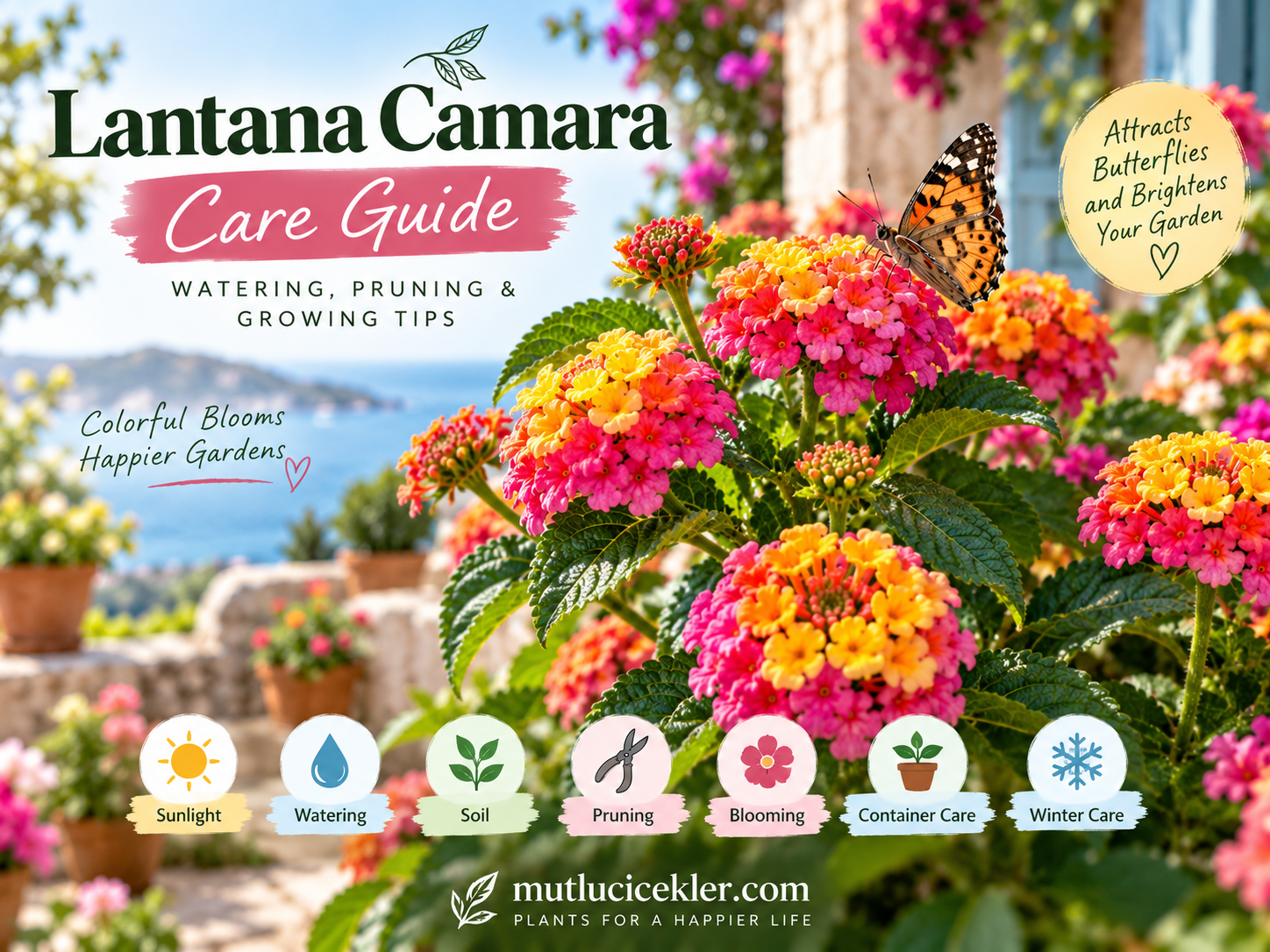
With its colorful flower clusters, long blooming season, and ability to attract butterflies and other pollinators, Lantana camara is a popular ornamental plant in warm and sunny gardens around the world.
Also known as common lantana or sometimes shrub verbena, this fast-growing plant is valued for its heat and drought tolerance. However, successful care depends on plenty of sunlight, well-draining soil, proper watering, and occasional pruning.
There are also two important things gardeners should know: Lantana camara can be toxic if eaten and is considered invasive in some parts of the world.
Here is everything you need to know before growing it.
🌿 What Is Lantana Camara?
Lantana camara belongs to the Verbenaceae family and is native to tropical regions of the Americas.
Today, it is grown as an ornamental plant in many warm, subtropical, and tropical regions.
Depending on the cultivar, its flowers may appear in combinations of:
- Yellow
- Orange
- Red
- Pink
- Purple
- White
One of the plant’s most interesting characteristics is that the flowers of some varieties change color as they mature, creating multicolored flower clusters.
In warm climates, lantana can grow as a perennial shrub. In colder regions, it is often grown as an annual or kept in containers and protected during winter.
☀️ How Much Sun Does Lantana Need?
Lantana performs best in full sun.
For strong growth and abundant flowering, aim for at least 6 hours of direct sunlight per day.
Plants growing in too much shade may become:
- Leggy
- Less compact
- More foliage-heavy
- Less productive in terms of flowers
If your lantana is healthy but produces very few flowers, insufficient sunlight should be one of the first things you check.
💧 How Often Should You Water Lantana?
Established lantana plants are relatively drought tolerant, but this does not mean they should never be watered.
Instead of following a fixed watering schedule, check the soil first.
Allow the upper layer of soil to dry somewhat between waterings, then water thoroughly.
Container-grown lantana
Plants grown in containers usually dry out faster than plants growing directly in the ground.
During hot summer weather, check container soil regularly.
Make sure the pot has drainage holes and never allow the roots to remain permanently waterlogged.
Signs of overwatering may include:
- Persistently wet soil
- Yellowing leaves
- Weak growth
- Root problems
Good drainage is particularly important for preventing these issues.
🪴 Best Soil for Lantana Camara
Lantana is adaptable to different soil conditions, but good drainage is essential.
It generally performs well in soil that:
- Drains easily
- Does not remain waterlogged
- Allows sufficient air around the roots
For container growing, use a good-quality, well-draining potting mix.
Avoid heavy soils that stay saturated for long periods.
🌸 How to Get More Flowers on Lantana
Lantana is naturally a prolific bloomer when growing conditions are suitable.
For better flowering:
- Provide plenty of direct sunlight.
- Avoid keeping the soil constantly wet.
- Make sure drainage is good.
- Avoid excessive nitrogen fertilizer.
- Prune overly long or untidy growth when necessary.
- Keep container plants from becoming chronically waterlogged.
Too much nitrogen can encourage lush foliage at the expense of flowers.
If your lantana produces lots of leaves but very few blooms, review both its sun exposure and fertilization.
🌱 Does Lantana Need Fertilizer?
Lantana generally does not require heavy feeding.
Plants growing in poor soil or containers may benefit from moderate feeding during active growth, but excessive fertilizer is unnecessary.
In particular, too much nitrogen may promote foliage growth rather than flowering.
Always follow the instructions for the fertilizer you use rather than applying more in an attempt to increase blooming.
✂️ How to Prune Lantana
Lantana responds well to pruning and can grow rapidly in warm conditions.
Pruning can help:
- Control its size
- Maintain a compact shape
- Remove damaged growth
- Encourage branching
- Improve the overall appearance of the plant
A more substantial shaping prune can usually be performed before vigorous new growth begins.
Light trimming may also be used during the growing season when necessary.
Use clean, sharp pruning tools.
Tip: Wearing gloves is a good precaution because contact with lantana foliage or sap may irritate sensitive skin.
🪴 Can Lantana Grow in Pots?
Yes. Lantana is well suited to container gardening.
Container growing is particularly useful for gardeners living in colder climates because plants can be moved to a protected location before freezing temperatures arrive.
Choose a container that:
- Has drainage holes
- Provides adequate root space
- Allows excess water to escape easily
Container-grown lantana may require more frequent watering than plants grown in garden soil.
❄️ Is Lantana a Perennial or Annual?
It depends largely on climate.
In tropical and warm subtropical climates, lantana can grow as a perennial shrub.
In colder climates where freezing temperatures occur, it may be grown as:
- An annual
- A container plant
- A plant that is overwintered in a protected location
Cold tolerance also varies among species and cultivars, so local growing conditions should always be considered.
🏠 How to Overwinter Lantana
Gardeners in colder climates can grow lantana in containers and move it to a frost-protected location before severe cold arrives.
During winter:
- Reduce watering as growth slows.
- Avoid keeping the soil constantly wet.
- Protect the plant from freezing temperatures.
- Provide suitable light depending on how the plant is being overwintered.
When temperatures rise again, gradually acclimate the plant to stronger outdoor sunlight.
🌱 How to Propagate Lantana
Lantana can be propagated from cuttings or seeds.
For home gardeners, stem cuttings are often the more practical method.
Propagating from cuttings
- Select a healthy shoot.
- Cut it using clean pruning shears.
- Remove some of the lower leaves.
- Insert the cutting into a moist, well-draining growing medium.
- Keep it in a warm location with bright light.
- Prevent the growing medium from completely drying out while roots develop.
Once a healthy root system develops, gradually transition the young plant to normal growing conditions.
🦋 Does Lantana Attract Butterflies?
Yes.
Lantana flowers provide nectar and are frequently visited by butterflies, bees, and other pollinating insects.
Its long flowering period is one reason lantana is commonly included in butterfly and pollinator gardens.
Growing a variety of flowering plants alongside lantana can help provide additional food sources throughout the growing season.
🐛 Common Lantana Pests
Although lantana is generally resilient, it can occasionally experience pest problems.
Possible pests include:
- Whiteflies
- Spider mites
- Aphids
- Other sap-feeding insects
Regularly inspect the undersides of leaves, especially on container plants and plants being overwintered indoors.
Early detection makes pest problems easier to manage.
⚠️ Is Lantana Camara Toxic?
Lantana camara should not be considered an edible plant.
Its leaves, fruits, and other plant material can cause poisoning when consumed, and the plant can also pose a risk to certain animals.
Extra caution is recommended around:
- Young children
- Dogs
- Cats
- Livestock
- Pets that chew plants
Keep the plant out of reach when possible and discourage animals from eating any part of it.
Contact with the plant may also cause skin irritation in sensitive individuals, so gloves are recommended when pruning or handling large amounts of foliage.
🌍 Is Lantana Camara Invasive?
This is an important consideration that is sometimes missing from basic lantana care guides.
Lantana camara is considered invasive in a number of tropical and subtropical regions around the world.
In suitable climates, it can spread beyond gardens and compete with native vegetation.
Its invasive status varies significantly by country and region.
Before planting lantana outdoors, especially in warm climates, check recommendations or restrictions from your local environmental, agricultural, or invasive-species authority.
If lantana is considered invasive where you live, choose a suitable non-invasive alternative recommended for your region.
🌎 Growing Lantana in Different Climates
Tropical climates
Lantana can grow vigorously throughout much of the year. Regular pruning and spread control may be necessary.
Mediterranean climates
Sunny, warm conditions can suit lantana very well. Established plants generally cope well with summer heat, although container plants require closer monitoring for water.
Temperate climates
Lantana is commonly grown as a summer ornamental. Protect it from frost or grow it as an annual.
Hot and dry climates
Its heat and drought tolerance can make lantana useful in sunny gardens, but newly planted specimens still require appropriate watering while establishing.
Humid climates
Good airflow and drainage become especially important. Also check whether lantana is classified as invasive in your area.
📋 Lantana Camara Care at a Glance
| Care Requirement | Recommendation |
|---|---|
| ☀️ Light | Full sun |
| 💧 Water | Allow soil to partially dry between waterings |
| 🪴 Soil | Well-draining |
| 🌡️ Climate | Prefers warm conditions |
| ✂️ Pruning | Prune to control shape and growth |
| 🌸 Flowering | Long flowering season in suitable climates |
| 🌱 Propagation | Cuttings or seeds |
| 🦋 Pollinators | Attracts butterflies and other pollinators |
| 🪴 Containers | Suitable |
| ⚠️ Toxicity | Do not ingest |
| 🌍 Invasive potential | Check local regulations and guidance |
Frequently Asked Questions About Lantana
Why is my lantana not flowering?
Insufficient sunlight is one of the most common reasons. Excessive nitrogen fertilizer and unsuitable watering conditions can also contribute to poor flowering.
Does lantana like full sun?
Yes. Lantana generally performs and flowers best in full sun.
Is lantana drought tolerant?
Established plants have good drought tolerance, but newly planted and container-grown lantanas still require appropriate watering.
Can lantana survive winter?
In warm climates, yes. In colder climates, frost can damage or kill the plant. Container plants may be moved to a protected location for winter.
Can you grow lantana indoors?
Lantana is primarily an outdoor, sun-loving plant. It may be temporarily overwintered in protected conditions, but ordinary indoor environments often provide less sunlight than it prefers.
Is lantana safe for dogs and cats?
Lantana should be kept away from pets that may chew or eat plants because ingestion can be harmful.
Does lantana attract bees and butterflies?
Yes. Its nectar-rich flowers are visited by butterflies, bees, and other pollinating insects.
Does lantana spread quickly?
It can. In warm climates, Lantana camara may spread aggressively and is classified as invasive in some regions. Always check local guidance before planting it outdoors.
🌺 Final Thoughts
Lantana camara combines colorful flowers, heat tolerance, a long blooming season, and strong appeal to pollinators.
Give it plenty of sunlight, well-draining soil, sensible watering, and occasional pruning, and it can provide months of color in suitable climates.
However, responsible gardening is important.
Lantana should not be eaten, should be kept away from children and animals likely to consume plants, and its invasive status should always be checked before planting it outdoors.
With the right location and responsible management, lantana can be a spectacular addition to a sunny garden or container display.
Bir Cevap Yazın