
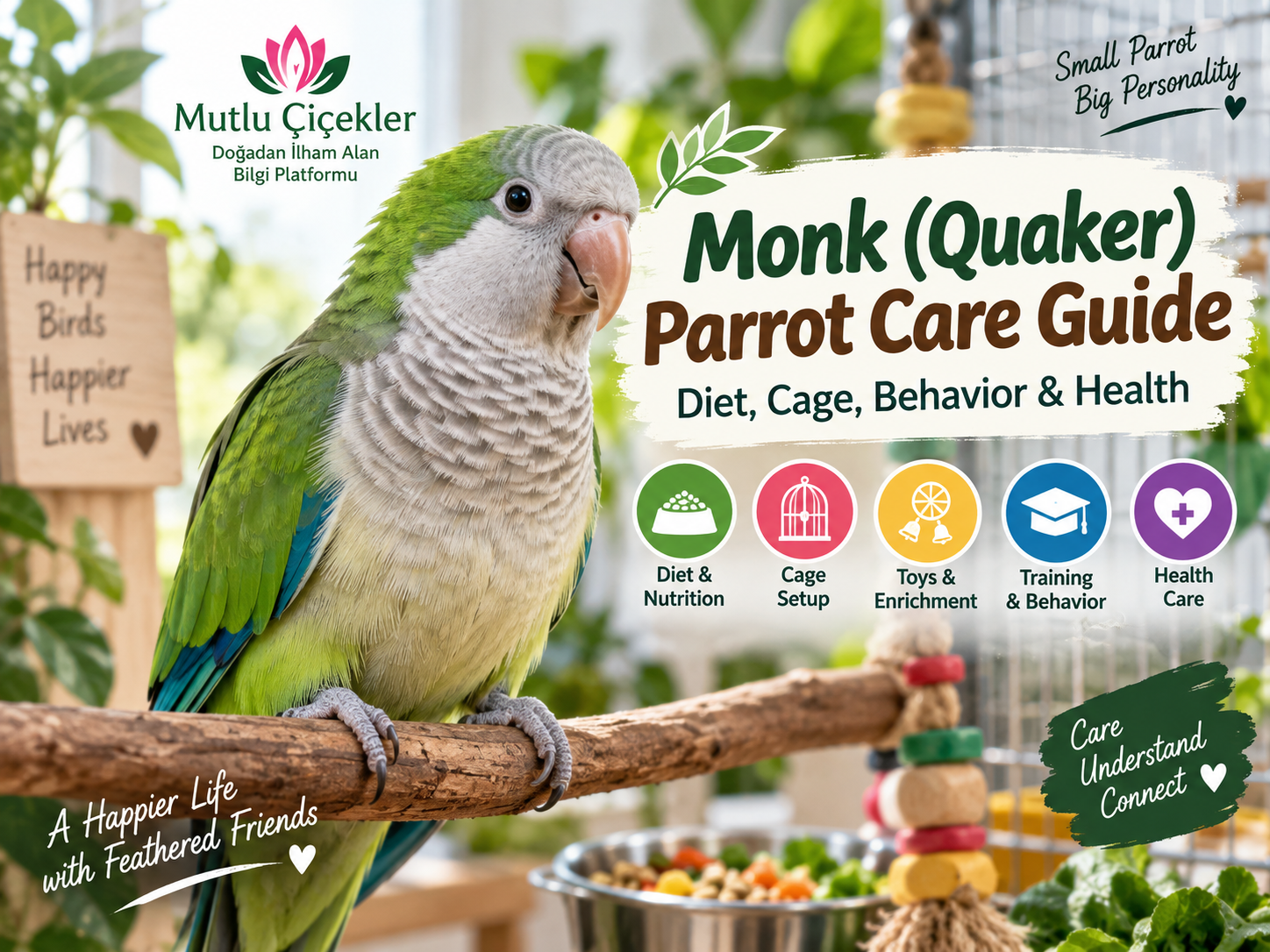
The Monk Parakeet, commonly known as the Quaker Parrot, is an intelligent, energetic, social bird known for its remarkable personality and ability to learn sounds and words. With proper care, enrichment, nutrition, and veterinary attention, a Quaker Parrot can become a fascinating long-term companion.
However, Quakers are not simply small parrots that can be kept entertained with food and a few toys. They need daily interaction, opportunities to exercise, mental stimulation, adequate sleep, a balanced diet, and an appropriately designed living environment.
If you are considering adopting one—or already share your home with a Quaker—this guide covers the essentials of Quaker Parrot care, including diet, cage setup, behavior, training, enrichment, hygiene, and health.
Quaker Parrot Quick Facts
Common names: Quaker Parrot, Monk Parakeet
Scientific name: Myiopsitta monachus
Origin: South America
Size: Small-to-medium parrot
Personality: Intelligent, social, active, curious
Talking ability: Often good, although individual ability varies
Social needs: High
Activity level: High
Care level: Moderate; requires consistent daily attention
Quaker Parrots are particularly interesting because wild birds construct large communal stick nests rather than relying exclusively on tree cavities like many other parrots.
This natural nesting behavior can influence how captive Quakers interact with their cage and surroundings.
Quaker Parrot Personality and Behavior
Quakers are famous for having big personalities in relatively small bodies.
Many are curious, playful, confident, and highly interactive with their caregivers. They can learn household routines quickly and may become excited when they recognize activities associated with feeding, playtime, or a favorite person.
Their intelligence also means they can become bored when their environment lacks stimulation.
A bored or stressed parrot may develop undesirable behaviors such as excessive screaming, destructive chewing, or repetitive behaviors.
Daily interaction and enrichment should therefore be considered essential parts of Quaker care rather than occasional entertainment.
Are Quaker Parrots Affectionate?
Many Quakers form strong relationships with their caregivers and enjoy social interaction.
However, every bird has an individual personality. Some enjoy physical contact while others prefer interacting through talking, training, playing, or simply remaining near their caregiver.
Never force a parrot to accept touching.
Learning the bird’s body language and allowing it to choose whether to interact can help build trust.
Do Quaker Parrots Talk?
Quaker Parrots are often considered capable vocal learners.
Some individuals learn numerous words, phrases, household sounds, whistles, and routines. Others may talk much less.
Talking ability should never be guaranteed when adopting a parrot.
If you want to encourage speech:
- Speak clearly and consistently.
- Repeat short words in relevant situations.
- Reward attention and attempts to communicate.
- Keep training sessions short and positive.
- Never punish a bird for not talking.
Social interaction is more important than simply playing recordings repeatedly.
Choosing a Cage for a Quaker Parrot
A Quaker needs enough room to move, climb, stretch its wings, play, and access different perches and enrichment items without being overcrowded.
In general, larger is better, provided the bar spacing and cage design are safe for the bird.
When selecting a cage, consider:
- Appropriate bar spacing for a Quaker-sized parrot
- Enough horizontal room for movement
- Secure doors and locks
- Multiple safe perches
- Space for toys without restricting movement
- Easily cleaned food and water areas
- Safe, bird-appropriate construction materials
Avoid choosing a cage solely because it is advertised for a particular species. Cage dimensions, construction, bar spacing, and the needs of the individual bird should all be considered.
Where Should You Put a Quaker Parrot’s Cage?
The cage should be placed in an area where the bird can participate in household life without being exposed to constant disturbance.
Avoid locations with:
- Direct drafts
- Excessive temperature changes
- Constant intense sunlight without shade
- Cooking fumes
- Cigarette or vape smoke
- Aerosol sprays and strong fragrances
The kitchen is generally a poor location because birds have sensitive respiratory systems and can be exposed to cooking fumes and heated cookware.
Overheated non-stick cookware and certain other heated coatings can release fumes that are extremely dangerous to birds.
Perches and Foot Health
A cage should contain perches of different safe diameters and textures.
Natural branches from bird-safe, pesticide-free tree species can provide variation for the feet.
Avoid filling the entire cage with identical smooth dowel perches.
Perches should also be positioned so droppings do not routinely contaminate food or water containers.
If you are unsure whether a particular wood or material is safe, check with an avian veterinarian before placing it in the cage.
What Should a Quaker Parrot Eat?
A healthy diet is one of the most important aspects of Quaker Parrot care.
For many companion parrots, a nutritionally complete formulated pellet can form the foundation of the diet, supplemented with appropriate vegetables and other bird-safe fresh foods.
Depending on veterinary guidance and the individual bird, the diet may include:
- Quality formulated pellets
- Leafy greens
- Suitable vegetables
- Limited amounts of appropriate fruit
- Small amounts of seeds or nuts when appropriate
- Fresh, clean water
Seeds should not automatically make up the entire diet.
Seed-heavy diets can be nutritionally unbalanced and may contain excessive fat depending on the mixture.
If your Quaker currently eats only seeds, avoid abruptly replacing its entire diet. Dietary conversion should be gradual, and an avian veterinarian can help monitor the bird’s health and weight during the transition.
Vegetables for Quaker Parrots
A variety of bird-safe vegetables can add diversity to the diet.
Depending on the individual bird, appropriate options may include foods such as:
- Carrot
- Bell pepper
- Broccoli
- Leafy greens
- Squash
- Sweet potato prepared appropriately
- Peas
Wash fresh produce thoroughly and remove uneaten fresh foods before they spoil.
Dietary variety should be introduced gradually, particularly if the bird is unfamiliar with fresh foods.
Can Quaker Parrots Eat Fruit?
Bird-safe fruits can be offered as part of a varied diet, but fruit does not need to dominate the menu.
Depending on veterinary recommendations and the bird’s overall diet, suitable options may include small portions of apple without seeds, berries, melon, mango, or other safe fruits.
Because fruit contains natural sugars, portions should be appropriate.
Foods Quaker Parrots Should Not Eat
Some human foods can be dangerous to parrots.
Avoid giving your Quaker:
- Avocado
- Chocolate
- Alcohol
- Caffeinated beverages
- Very salty foods
- Highly processed foods
- Foods containing ingredients known to be toxic to birds
Fruit pits and seeds from certain fruits can also present hazards.
When you are uncertain about a particular food, do not assume that it is safe simply because humans can eat it. Ask an avian veterinarian or consult a reliable avian veterinary resource first.
Fresh Water and Food Hygiene
Fresh drinking water should be available every day.
Water containers can quickly become contaminated by food, feathers, or droppings, so they should be checked regularly and cleaned appropriately.
Fresh foods should not remain in the cage long enough to spoil.
Food and water dishes should also be washed routinely.
Good hygiene helps reduce unnecessary exposure to bacteria, mold, and other contaminants.
Toys and Mental Enrichment
Quakers are intelligent parrots that benefit from opportunities to explore and solve problems.
Useful enrichment can include:
- Foraging toys
- Shreddable materials
- Safe chewing toys
- Climbing opportunities
- Puzzle-style toys
- Supervised training
- Rotating toys
You do not need to fill every part of the cage with toys.
Too many objects can restrict movement. Instead, provide a manageable selection and rotate appropriate toys periodically to maintain interest.
Always inspect toys for damaged parts, loose threads, unsafe gaps, or pieces that could become entanglement hazards.
Why Do Quaker Parrots Build Things?
One of the most fascinating characteristics of Quaker Parrots is their natural construction behavior.
Wild Monk Parakeets build elaborate communal nests using sticks.
Some companion Quakers retain strong instincts to carry, arrange, weave, or manipulate objects.
Providing safe opportunities for appropriate manipulation and foraging can help satisfy their active minds.
However, all materials offered to a bird should be checked for potential ingestion, entanglement, or injury risks.
Quaker Parrot Territorial Behavior
Some Quakers can become protective of their cage, favorite toys, food bowls, or particular spaces.
A bird that is friendly away from its cage may behave differently when someone reaches inside its territory.
Instead of punishing the bird, use positive reinforcement and learn to recognize its warning signals.
Training the bird to step onto a perch or hand voluntarily can make routine cage management easier.
Why Does My Quaker Parrot Bite?
Biting can occur for many reasons, including:
- Fear
- Territorial behavior
- Overstimulation
- Frustration
- Lack of trust
- Unwanted handling
- Learned behavior
- Physical discomfort
Pay attention to what happens immediately before the bite.
Understanding the trigger is usually more useful than reacting after the bird has bitten.
Avoid hitting, yelling at, or frightening a parrot as punishment. These reactions can damage trust and may make behavioral problems worse.
Sudden or unexplained behavioral changes can sometimes be associated with illness or discomfort and warrant veterinary attention.
Training a Quaker Parrot
Positive reinforcement is generally the best foundation for parrot training.
Useful behaviors to teach include:
- Step up
- Step down
- Target training
- Entering the cage voluntarily
- Moving onto a perch
- Remaining calm during routine handling
Keep training sessions short and end while the bird is still engaged.
A small appropriate reward, praise, or access to something the bird enjoys can reinforce desired behavior.
Training is not only about tricks. It can make everyday care safer and less stressful for both the bird and caregiver.
Exercise and Time Outside the Cage
Quakers need regular opportunities for movement and exercise.
Supervised time outside the cage in a bird-safe environment can provide climbing, flying where appropriate and safe, social interaction, and mental stimulation.
Rather than relying on one universal number of hours for every bird, focus on providing substantial daily opportunities for safe activity and interaction appropriate to the individual bird and household.
Before releasing a bird from its cage:
- Close exterior doors and windows.
- Turn off ceiling fans.
- Keep other pets safely separated.
- Remove toxic plants.
- Cover or secure dangerous water sources.
- Prevent access to hot surfaces.
- Remove potentially toxic or chewable hazards.
Never leave a parrot loose in an unsafe room without supervision.
Bathing a Quaker Parrot
Many Quakers enjoy bathing.
Depending on the bird’s preference, bathing opportunities can include a shallow dish or a gentle mist.
Never force a frightened bird to bathe.
Clean water should be used, and soaps, shampoos, perfumes, or other human cosmetic products should not be applied unless specifically directed by an avian veterinarian.
How Much Sleep Does a Quaker Parrot Need?
Parrots benefit from a consistent, quiet sleep routine.
Many companion parrots do well with roughly 10–12 hours of uninterrupted darkness and rest, although individual needs and veterinary recommendations can vary.
A bird that is regularly disturbed late at night and awakened early may not receive adequate rest.
A predictable day-night schedule can support healthy behavior and overall well-being.
Quaker Parrot Molting
Like other parrots, Quakers periodically replace old feathers with new ones.
During a molt you may notice increased feather shedding and new pin feathers.
A normal molt should not create large bald areas.
Extensive feather loss, damaged feathers, skin irritation, persistent plucking, or other unusual changes should be discussed with an avian veterinarian.
Signs a Quaker Parrot May Be Sick
Birds can sometimes hide signs of illness until a problem becomes significant.
Warning signs can include:
- Unusual lethargy
- Sitting fluffed up for prolonged periods
- Changes in appetite
- Noticeable changes in drinking
- Changes in droppings
- Difficulty breathing
- Tail bobbing associated with breathing
- Weakness
- Spending unusual amounts of time on the cage floor
- Sudden weight change
- Vomiting or abnormal regurgitation
- Significant behavioral changes
These signs should not be diagnosed solely through internet searches.
Because birds can deteriorate quickly, concerning symptoms should be evaluated promptly by a veterinarian experienced with avian patients.
Difficulty breathing, collapse, severe weakness, significant bleeding, seizures, or suspected poisoning should be treated as urgent veterinary situations.
Regular Avian Veterinary Care
Do not wait until your Quaker is visibly ill before finding an avian veterinarian.
Establishing veterinary care while the bird is healthy provides a baseline and gives you somewhere to turn quickly if a problem develops.
Your veterinarian can advise you about:
- Nutrition
- Weight monitoring
- Preventive examinations
- Feather and skin health
- Beak and nail care
- Behavior
- Appropriate testing
- Species-specific health concerns
Never give a bird human medication unless specifically instructed by a veterinarian.
A Simple Quaker Parrot Care Routine
Every Day
- Replace drinking water.
- Check food and remove spoiled fresh foods.
- Observe appetite, droppings, activity, and behavior.
- Provide social interaction.
- Offer opportunities for exercise and enrichment.
- Spot-clean obvious cage messes.
Regularly
- Wash food and water containers thoroughly.
- Clean cage surfaces and perches as appropriate.
- Inspect toys for damage.
- Rotate safe enrichment items.
- Monitor body condition and weight when recommended by your veterinarian.
Periodically
- Deep-clean the cage and accessories using bird-safe methods.
- Review the bird’s diet.
- Replace worn perches and unsafe toys.
- Attend veterinary examinations as recommended.
Common Quaker Parrot Care Mistakes
Some common mistakes can have a major effect on a Quaker’s quality of life.
Feeding Mostly Seeds
Seeds alone generally do not provide balanced nutrition for a companion parrot.
Using a Cage That Is Too Small
A cage should allow comfortable movement and should not become overcrowded with accessories.
Providing Too Little Enrichment
An intelligent parrot without enough stimulation can become frustrated and develop behavioral problems.
Punishing Biting or Screaming
Punishment can increase fear and damage the relationship between bird and caregiver.
Ignoring Sleep
A consistent period of quiet darkness is an important part of daily care.
Waiting Too Long When the Bird Appears Sick
Birds may hide illness. Significant behavioral or physical changes should be taken seriously.
Is a Quaker Parrot Right for You?
A Quaker can be an excellent companion for someone prepared for an intelligent, vocal, active bird that needs substantial daily involvement.
Before adopting one, consider whether you can provide:
- Daily interaction
- Mental stimulation
- Appropriate nutrition
- Safe housing
- Regular cleaning
- Veterinary care
- Long-term commitment
- Tolerance for noise and mess
You should also check local laws before acquiring a Quaker Parrot. Because feral Monk Parakeet populations have become established in some areas, ownership or breeding may be restricted in certain jurisdictions.
Frequently Asked Questions
Are Quaker Parrots good for beginners?
They can be suitable for committed first-time parrot caregivers who research their needs carefully, but their intelligence, noise, territorial tendencies, and social requirements should not be underestimated.
Can Quaker Parrots learn to talk?
Yes, many Quakers become capable vocal mimics. However, speech ability varies between individual birds and should never be guaranteed.
Can a Quaker Parrot live alone?
A single Quaker can live successfully in a home when provided with adequate daily interaction, enrichment, exercise, and appropriate care. A bird should not be expected to spend most of its life isolated in a cage.
Why is my Quaker protective of its cage?
Territorial behavior can occur in Quakers and may be related to their natural behavior. Positive reinforcement training and respecting the bird’s body language can help with management.
Should a Quaker Parrot eat seeds every day?
Seeds may be included in appropriate amounts depending on the bird’s overall diet, but an all-seed or seed-dominated diet is generally not considered an ideal balanced diet for a companion parrot.
How often should a Quaker Parrot bathe?
There is no universal schedule. Offer regular opportunities to bathe and allow the bird to participate according to its preference.
How long do Quaker Parrots live?
Quaker Parrots can be long-lived companion birds, but lifespan varies substantially with genetics, nutrition, environment, preventive healthcare, and other factors. Anyone considering adoption should be prepared for a long-term commitment.
Final Thoughts
Caring for a Quaker Parrot means much more than providing a cage, food, and water.
These intelligent birds need balanced nutrition, daily enrichment, social interaction, exercise, adequate sleep, a safe environment, and appropriate veterinary care throughout their lives.
Learning your Quaker’s individual body language and preferences is just as important as following general care guidelines. With consistent care and positive interaction, you can provide an environment that supports both physical health and psychological well-being.
If you are ever unsure about your bird’s diet, health, or sudden behavioral changes, consult a veterinarian experienced in avian medicine rather than relying solely on general online advice.
🦜 Follow MutluCicekler.com!
Love parrots, pets, gardening, travel, recipes, and practical lifestyle tips? Follow mutlucicekler.com for expert guides, fresh ideas, and helpful articles updated every week. Discover new content and make every day a little brighter with MutluCicekler.com! 🌿✨


Bir Cevap Yazın