

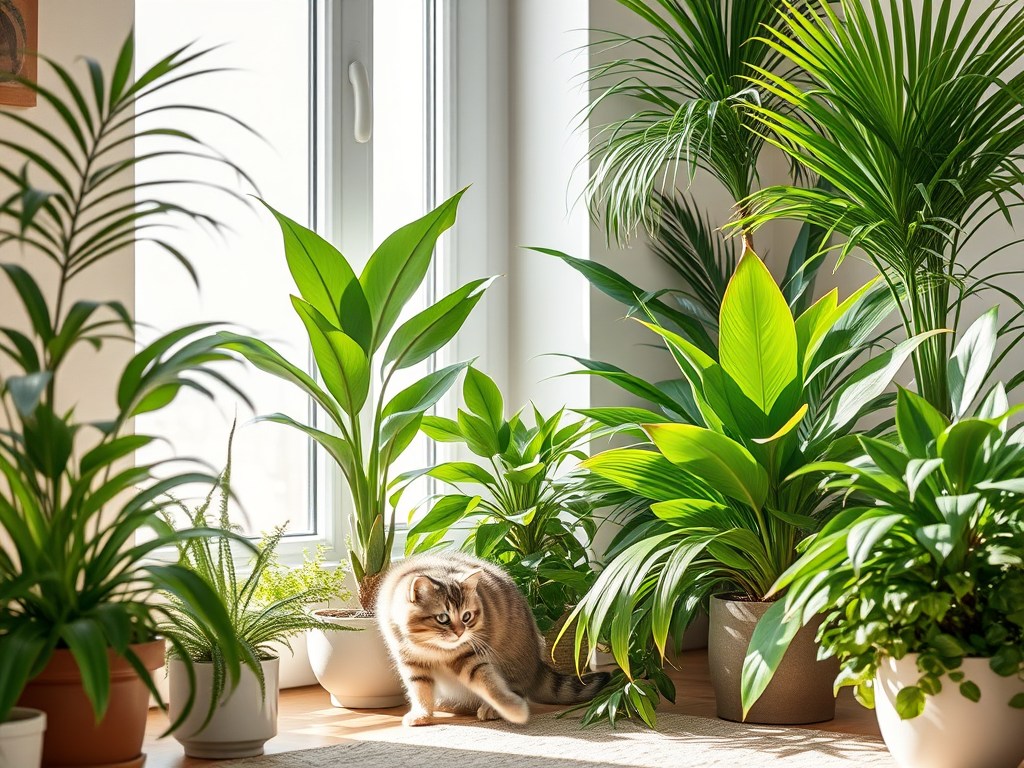
Cats may nibble leaves, play with hanging stems or knock over pots. Choosing suitable houseplants is therefore a matter of correct botanical identification and practical household safety, not merely buying something labelled “pet-friendly.” ASPCA records provide useful guidance on many common plants, but the term non-toxic does not mean a plant is intended as food. Eating a large amount of any plant material can cause stomach upset.
Eight houseplants generally considered non-toxic to cats
1. Areca palm (Dypsis lutescens)
The areca palm is listed by ASPCA as non-toxic to cats. It prefers bright indirect light, moderate soil moisture and good drainage. Ensure the planter is stable, as tall fronds may attract playful cats.
2. Spider plant (Chlorophytum comosum)
This popular hanging plant produces arching leaves and young plantlets. ASPCA lists it as non-toxic; however, persistent chewing should be discouraged. Bright filtered light and careful watering suit most indoor settings.
3. Calathea species
Calatheas are known for patterned leaves. Many are listed as non-toxic to cats. They generally prefer bright indirect light and suitable humidity. Always check the exact botanical name, because a similar trade name may refer to a different genus.
4. Prayer plant (Maranta leuconeura)
The prayer plant is a decorative non-toxic choice with patterned foliage. It appreciates warm conditions, filtered light and consistent but not waterlogged potting mix. Avoid placing it where the pot can fall.
5. Nerve plant (Fittonia albivenis)
Fittonia has small leaves with contrasting veins. It prefers reasonably high humidity and gentle light. The growing mix should not be allowed to remain permanently waterlogged.
6. Chinese money plant (Pilea peperomioides)
This rounded-leaf Pilea is a distinct plant from several other species sold under “money plant” names. Use the scientific name when checking safety. It grows well in bright indirect light and a draining pot.
7. Baby rubber plant (Peperomia obtusifolia)
Despite the common name, Peperomia obtusifolia is not the same as a Ficus rubber tree. ASPCA lists the Peperomia as non-toxic. Thick leaves make it relatively easy to overwater; allow appropriate drying between waterings.
8. Moth orchid (Phalaenopsis species)
Phalaenopsis orchids offer flowers without the toxicity risk associated with true lilies. Use suitable airy orchid substrate, filtered light and careful watering. A cat can still damage a flower spike or topple a pot.

Is catnip safe to leave out all day?
Catnip (Nepeta cataria) may cause excitement or relaxation in some cats. ASPCA notes that ingestion can trigger vomiting and diarrhea, so it should not be presented as an entirely risk-free edible houseplant. Monitor your cat and speak with a veterinarian about concerning symptoms. Also avoid confusing catnip with other aromatic herbs and essential oils.
Common toxic plants to avoid
- True lilies (Lilium and Hemerocallis): Extremely dangerous to cats; even pollen or vase water exposure can be an emergency.
- Sago palm (Cycas revoluta): Highly toxic and potentially life-threatening.
- Pothos (Epipremnum aureum): Can cause painful oral irritation.
- Monstera deliciosa: Contains irritating calcium oxalate crystals.
- Peace lily (Spathiphyllum): Causes irritation and is not the same toxin risk as true lilies.
- Begonia: May cause gastrointestinal and oral problems if chewed.
- Aloe and many Dracaena plants: Not appropriate for curious cats.
Safe placement and plant care
Place plants in stable, well-draining pots and keep fertilizer or pesticide containers out of reach. Avoid products that leave unsafe residues on leaves. A secure, high shelf can help, but a determined cat may jump. Offer normal play, scratching and resting opportunities so plants are less attractive as toys. Check hanging hooks and heavy plant stands regularly.
What if a cat chews a plant?
If a dangerous plant may have been eaten, contact a veterinarian immediately and keep its label or a clear photo for identification. Suspected true lily exposure is urgent even if the cat looks normal. Do not induce vomiting or give home remedies without veterinary instructions. If you are unsure of the species, get professional identification rather than guessing.
Frequently asked questions
Does non-toxic mean edible? No. Non-toxic is a safety classification, not a recommendation to feed the plant.
Are all palms cat-safe? No. The name “palm” includes unrelated plants; for example, the sago palm is extremely toxic.
Is a peace lily the same as a true lily? No. It is a different plant but still causes irritation.
Conclusion
A cat-safe home can include attractive greenery, but the safest approach combines accurately labelled plants, ASPCA safety checks and secure placement. Never rely on generic trade names alone.


Bir yanıt yazın