

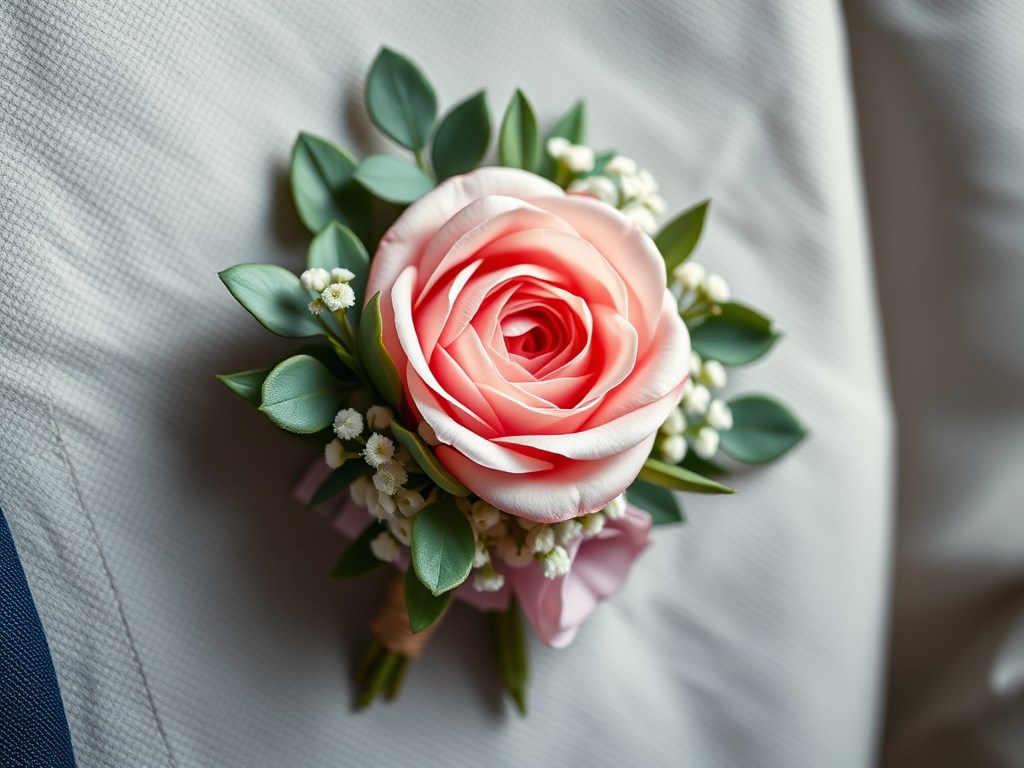
A groom’s boutonniere is a small floral accessory usually worn on the left lapel of a suit jacket. Making one at home is possible with a fresh flower, a little greenery and a few basic florist supplies. The aim is a light, compact arrangement that stays secure without damaging delicate fabric or exposing anyone to sharp pins. Prepare a practice piece before the wedding so you know how the materials behave.
What is a boutonniere?
A boutonniere is a small floral arrangement attached to a lapel or fitted into a purpose-made buttonhole. Wedding boutonnieres may match the bridal bouquet, the color scheme or the season. They can be classic, rustic, minimal or more colorful. There is no requirement to use an elaborate arrangement; a single well-chosen flower can look balanced.
Materials you will need
- One small, fresh flower such as a spray rose, carnation or suitable seasonal bloom.
- A small sprig of greenery or filler flowers, if desired.
- Clean, sharp floral snips or scissors.
- Green floral tape and optional thin floral wire.
- Ribbon or twine for the visible stem wrap.
- One or two suitable boutonniere pins or a purpose-made magnetic attachment.
- A clean damp towel, cool storage container and a workspace with good light.
Step 1: Choose suitable flowers
Small roses, carnations, ranunculus and other compact, sturdy blooms can work. Avoid oversized, heavy or fragile flowers likely to droop. If possible, choose freshly conditioned flowers from a florist. Check for allergies and fragrances that might bother the wearer. Very fragile or poisonous material is inappropriate around children or pets.
Step 2: Clean and trim the stems
Remove foliage below the planned binding point and any damaged outer petals. Cut stems with clean snips, leaving enough length for handling before the final trim. If using a delicate flower, ask a florist whether wiring is needed for structural support. Avoid unnecessary wire in a simple arrangement.
Step 3: Arrange the focal flower and greenery
Hold the main flower facing slightly outward, with optional greenery positioned behind rather than over the petals. The silhouette should be compact and suit the lapel width. Check how it looks from the front and side; bulky arrangements can twist or drag on the fabric.
Step 4: Bind with floral tape
Starting just below the bloom, stretch and wrap floral tape snugly down the gathered stems. Keep the tape even and avoid wrapping flower petals. If necessary, trim excess stems to a neat length. Floral tape helps secure the arrangement, but may become sticky on delicate garments, so finish with ribbon.
Step 5: Add ribbon and finish
Wrap a short length of ribbon or twine over the taped stem. Secure the end with a small knot or appropriate florist adhesive away from the clothing. Do not leave exposed wire ends. A good finished piece is comfortable to wear and does not protrude excessively.
Step 6: Test the fit on the jacket
Hold the boutonniere at the upper part of the left lapel, close to a designed buttonhole if present. Use a suitable pin to pass from the reverse of the lapel through the secured stems and back into the reverse fabric, following safe florist practice. The sharp tip must not remain exposed against the wearer. Delicate or borrowed jackets may benefit from a magnetic attachment, but magnets require their own safety precautions around small children and certain medical devices.
How to keep the boutonniere fresh
Make the arrangement as close to the event as practical. Keep cut flowers cool and protected from direct sun and hot vehicles. Certain flowers benefit from cold storage, but not every tropical flower tolerates refrigeration. Avoid soaking a fully taped boutonniere or placing it near freezing temperatures. A florist can advise on species-specific storage.
Common mistakes to avoid
- Choosing flowers too large for the lapel.
- Allowing stems or wiring to poke through the ribbon.
- Wrapping the tape loosely so the flower rotates.
- Using too much filler greenery so the main bloom disappears.
- Attaching the arrangement with a sharp tip exposed.
- Preparing fragile flowers too far in advance without appropriate storage.
Three simple styling ideas
Minimal classic
Use one small ivory or white rose with one modest green leaf. Keep the stem wrap clean and short.
Rustic garden
Combine a compact seasonal bloom with a little textured foliage and a neutral twine wrap. Check that dry materials do not crumble.
Color-coordinated
Choose a flower tone that complements rather than exactly duplicates the tie, pocket square or wedding palette. Keep visual weight proportional to the suit.
Frequently asked questions
Which side does the groom wear a boutonniere? Traditionally the left lapel, though individual style and cultural practice can differ.
Can I make it the night before? Some sturdy flowers may hold well under suitable conditions; delicate flowers are better prepared near the event.
Do I need floral wire? Not always. A sturdy small flower can often be supported with tape alone.
Can the boutonniere damage the suit? Pins, tape or adhesive can damage delicate fabric. Test carefully or ask a florist for an alternative attachment.
Final thoughts
A handmade boutonniere adds a personal floral detail to a wedding outfit. A simple, secure and fresh arrangement is more useful than an oversized design.


Bir yanıt yazın