

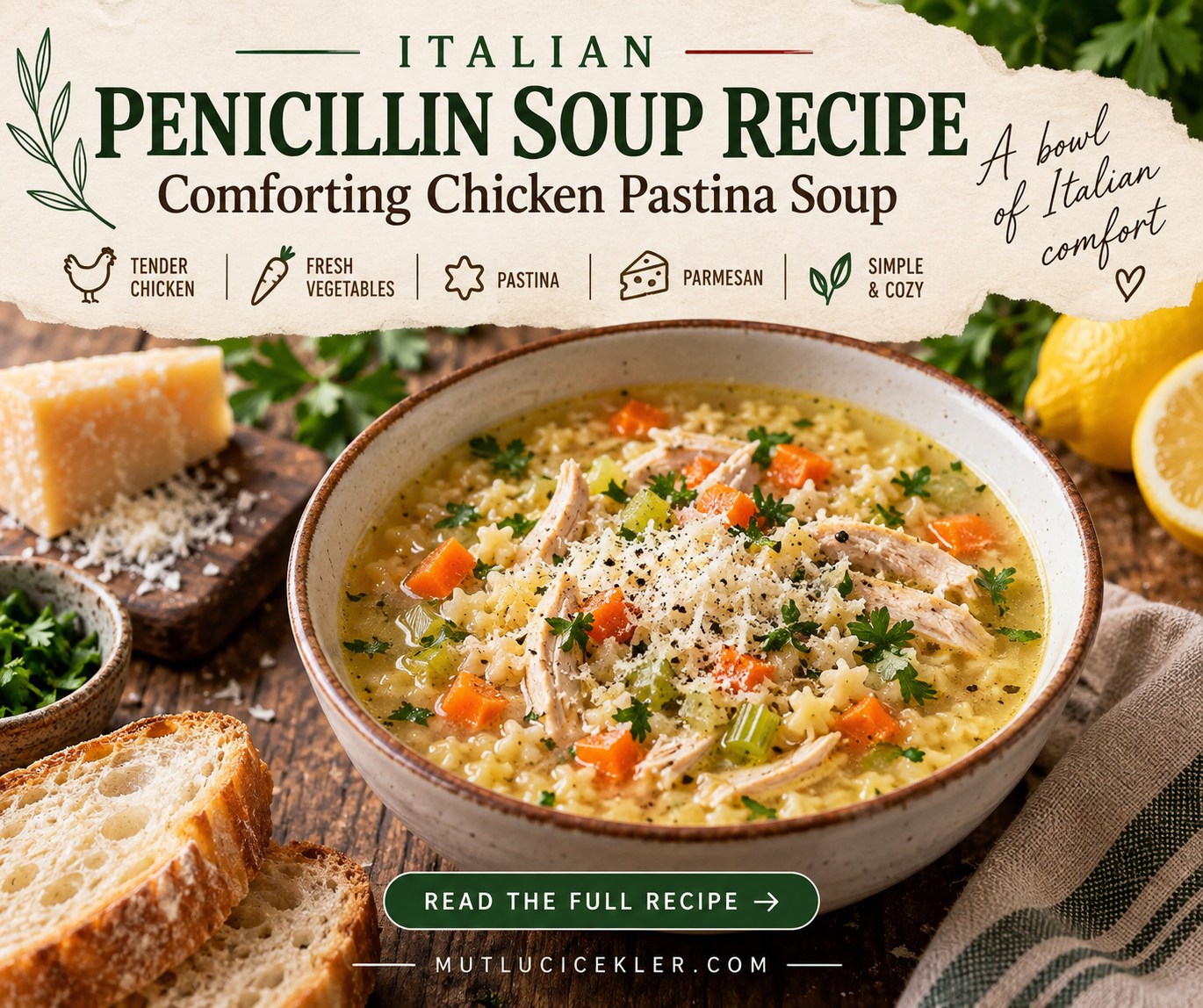
Warm chicken broth, tender vegetables, tiny pasta, shredded chicken and Parmesan come together in a comforting bowl of Italian Penicillin Soup.
Despite its popular nickname, this soup does not contain penicillin and is not a medicine. The name is an affectionate way of describing the kind of warm, nourishing chicken-and-pastina soup many people turn to when they want something simple and comforting.
Inspired by Italian pastina in brodo and chicken soup traditions, this recipe combines familiar ingredients with a smooth vegetable-enriched broth and plenty of savory flavor.
What Is Italian Penicillin Soup?
“Italian Penicillin” is a modern nickname commonly used for comforting Italian-style chicken soup made with broth, vegetables and very small pasta known as pastina.
There is not one single official recipe under this name.
Different versions may contain:
- Chicken
- Chicken broth
- Onion
- Carrot
- Celery
- Garlic
- Pastina
- Parmigiano-Reggiano
- Herbs
- Lemon
Some recipes leave the vegetables whole, while others blend them into the broth for a smoother and richer texture.
Small pasta shapes such as stelline, acini di pepe and ditalini can all work well.
Italian Penicillin Soup at a Glance
Prep Time: 15 minutes
Cook Time: 35–40 minutes
Total Time: About 50–55 minutes
Servings: 6
Difficulty: Easy
Cuisine: Italian-inspired
Course: Soup / Main Course
Ingredients
- 500 g boneless, skinless chicken thighs or chicken breast
- 1.8 liters low-sodium chicken broth
- 1 medium onion, roughly chopped
- 3 carrots, peeled and chopped
- 3 celery stalks, chopped
- 3 garlic cloves
- 1 tablespoon extra-virgin olive oil
- 1 Parmesan rind, optional
- 1 bay leaf
- 1 small sprig fresh thyme, optional
- 180–200 g pastina or another very small pasta
- 50 g freshly grated Parmigiano-Reggiano, plus more for serving
- Salt, as needed
- Freshly ground black pepper
- Fresh parsley for serving
- Lemon wedges for serving
Best Pasta Choices
For the closest pastina-style result, try:
- Stelline
- Acini di pepe
- Ditalini
- Orzo
- Other tiny soup pasta
Tip: Pasta expands considerably while cooking, so avoid adding too much.
How to Make Italian Penicillin Soup
1. Cook the Chicken
Place the chicken in a large pot.
Add the chicken broth, bay leaf, thyme and Parmesan rind if using.
Bring the broth to a gentle simmer.
Cook until the chicken is fully cooked.
For food safety, poultry should reach an internal temperature of 74°C / 165°F at its thickest point.
Remove the cooked chicken and set it aside to cool slightly.
2. Cook the Vegetables
Add the onion, carrots, celery and garlic to the broth.
Simmer for approximately 15–20 minutes, or until the vegetables are completely tender.
Soft vegetables are especially important if you plan to blend them.
3. Blend the Vegetables
Remove the bay leaf, thyme and Parmesan rind.
Transfer the cooked vegetables to a blender with approximately 1–2 cups of broth.
Blend until smooth.
Return the vegetable mixture to the pot.
This step produces the creamy-looking, velvety broth found in many modern Italian Penicillin soup recipes—without adding cream. Food Network’s version similarly cooks the aromatics until soft and blends them back into the broth.
Safety tip: Take extra care when blending hot liquids. Work in batches if necessary and do not overfill the blender.
4. Shred the Chicken
While the vegetables are cooking, shred the chicken into bite-sized pieces using two forks.
Set aside.
5. Cook the Pastina
Bring the broth back to a gentle simmer.
Add the pastina.
Cook according to the pasta package instructions until al dente.
Small pasta cooks quickly, so check it frequently.
6. Return the Chicken
Add the shredded chicken back to the soup.
Stir gently and cook for another 2–3 minutes, just until everything is heated through.
7. Add Parmesan
Lower the heat.
Stir in freshly grated Parmigiano-Reggiano.
Taste before adding additional salt because both chicken broth and Parmesan can already contain significant amounts of sodium.
Finish with freshly ground black pepper.
8. Serve
Ladle the soup into bowls.
Top with:
- Fresh parsley
- Extra Parmigiano-Reggiano
- Black pepper
- A small drizzle of extra-virgin olive oil
Serve lemon wedges on the side so everyone can add as much acidity as they like.
Chef’s Tips
Use a Good Chicken Broth
Broth is the foundation of this soup, so its flavor matters.
Choose homemade broth or a good-quality lower-sodium chicken broth whenever possible.
Add a Parmesan Rind
A Parmesan rind gently simmered in the broth can add extra savory depth.
Remove it before blending or serving.
Do Not Overcook the Pastina
Tiny pasta can go from al dente to very soft quickly.
Check it according to the package timing.
Cook Pasta Separately for Leftovers
If you know you will have leftovers, consider cooking the pastina separately.
Add a portion to each bowl before serving.
This prevents the pasta from continuing to absorb broth while refrigerated.
Add Lemon at the Table
A squeeze of lemon can brighten the rich chicken-and-Parmesan flavors.
It is a flavor addition—not a medical treatment.
What Is Pastina?
Pastina literally refers to very small pasta.
Rather than describing one single shape, the term can include several tiny pasta varieties traditionally suited to broths and simple soups.
Popular examples include:
Stelline: tiny stars
Acini di pepe: very small round pasta
Ditalini: small tube-shaped pasta
Simple pastina soups commonly combine tiny pasta with broth and Parmesan; recipes vary widely between households and regions.
Can I Make It Without Blending the Vegetables?
Absolutely.
Blending is a popular modern technique that gives the soup a thicker, velvety consistency, but it is not required.
For a more rustic soup:
- Chop the vegetables into small pieces.
- Cook until tender.
- Leave them directly in the broth.
- Add the pastina and chicken.
Both versions work well.
Chicken Breast or Chicken Thighs?
Both can be used.
Chicken Breast
- Leaner
- Mild flavor
- Easy to shred
- Can become dry if overcooked
Chicken Thighs
- More forgiving
- Richer flavor
- Usually remain tender and juicy
Choose whichever you prefer.
Can I Use Store-Bought Chicken Broth?
Yes.
A good-quality store-bought broth makes this recipe much quicker.
A lower-sodium broth is especially useful because Parmesan adds saltiness later.
You can always add more salt at the end.
How to Make the Soup More Brothy
Pastina absorbs liquid as it sits.
If the soup becomes thicker than you prefer, simply add:
- Additional chicken broth
- Or a small amount of hot water
Warm gently and adjust the seasoning before serving.
Is Italian Penicillin Soup Really Medicinal?
No.
The phrase “Italian Penicillin” is a nickname, not a medical description.
Chicken soup does not cure the common cold, flu or bacterial infections, and it should not be considered a replacement for appropriate medical care.
However, warm fluids such as broth or chicken soup can feel soothing when someone has a cold, can contribute to fluid intake, and may temporarily help with congestion. Mayo Clinic specifically lists warm liquids including chicken soup among measures that may provide symptom comfort, while also noting that there is no cure for the common cold.
That distinction is important:
Comfort food? Yes.
Actual penicillin? No.
Approximate Nutrition
Nutrition depends heavily on the type of chicken, broth, pasta, Parmesan and serving size used.
A bowl of chicken pastina soup generally provides:
- Protein from chicken
- Carbohydrates from pasta
- Fat and protein from Parmesan
- Vegetables such as carrot, celery and onion
Using lower-sodium broth can help you control the total amount of sodium.
For exact nutritional values, the quantities and brands used in your own kitchen would need to be calculated individually.
How to Store Italian Penicillin Soup
Allow the soup to cool before transferring it to an airtight container.
Store in the refrigerator for up to 3–4 days, provided it has been handled and chilled properly.
Because pastina continues absorbing liquid, refrigerated soup will usually become thicker.
Simply add a splash of chicken broth when reheating.
How to Reheat It
Reheat the soup gently on the stove over medium-low heat.
Add a little broth if necessary.
Stir occasionally until completely hot.
Avoid repeatedly reheating the entire pot if you only need one serving.
Can Italian Penicillin Soup Be Frozen?
Yes, although there is one important consideration.
Pastina becomes softer after freezing and thawing.
For the best texture, freeze the chicken-and-vegetable broth without the pasta, then cook fresh pastina when you are ready to serve it.
If the soup has already been mixed with pasta, it can still be frozen, but expect a softer texture after reheating.
Variations You Can Try
The basic soup is easy to customize.
Add Spinach
Stir a handful of baby spinach into the soup near the end of cooking.
Add Peas
Frozen peas work well with pastina and add a touch of sweetness.
Add More Vegetables
Try:
- Fennel
- Zucchini
- Leek
Make It Extra Lemony
Serve with additional lemon wedges rather than cooking large amounts of lemon juice into the broth.
Make It Without Chicken
For a simpler pastina soup, omit the chicken and use vegetable broth.
It will no longer be chicken pastina soup, but it can still make a comforting meal.
What to Serve With Italian Penicillin Soup
This soup can easily be served as a complete light meal.
Good accompaniments include:
- Rustic Italian bread
- Garlic bread
- Green salad
- Roasted vegetables
- Focaccia
A simple piece of crusty bread is especially useful for soaking up the broth.
Frequently Asked Questions
Why is it called Italian Penicillin?
It is a playful nickname for comforting Italian-style chicken and pastina soup.
The soup does not contain pharmaceutical penicillin.
Is Italian Penicillin the same as pastina soup?
They overlap, but the terms are not always interchangeable.
Pastina soup is a broad category of soups made with very small pasta.
Recipes called Italian Penicillin typically also feature chicken broth, vegetables and often chicken.
What pasta is best?
Stelline, acini di pepe and ditalini are excellent choices.
Any very small soup pasta can work.
Can I use orzo?
Yes.
Orzo is larger than many traditional pastina shapes but works well in chicken soup.
Do I have to blend the vegetables?
No.
Blending produces a smooth broth, but leaving the vegetables whole creates a more rustic texture.
Can children eat Italian Penicillin Soup?
The basic soup can be family-friendly, but ingredients, salt levels, pasta size, allergies and individual dietary needs should always be appropriate for the child’s age.
Does this soup cure a cold?
No.
Chicken soup does not cure viral infections.
Warm broth may be soothing and can help with hydration, but it should not be described as a cure or antibiotic.
Can I prepare it ahead of time?
Yes.
For the best texture, prepare the broth and chicken in advance and cook the pastina shortly before serving.
Final Thoughts
Italian Penicillin Soup may have a playful modern name, but the appeal behind it is very simple: warm chicken broth, vegetables, tiny pasta and Parmesan make an exceptionally comforting meal.
The key is not adding dozens of ingredients.
A flavorful broth, properly cooked vegetables, tender chicken and good Parmigiano-Reggiano are enough.
Whether you call it Italian Penicillin, chicken pastina soup or simply a comforting bowl of pastina, it is an easy recipe worth keeping for cool evenings and days when you want something warm and satisfying.


Bir yanıt yazın