


What is K-pop? K-pop (Korean popular music) is not one musical sound. It is a diverse pop-music industry and cultural movement associated with South Korea, encompassing dance, hip-hop, R&B, ballads, experimental sounds, carefully planned performances and active fan communities. If you have ever wondered what a trainee does, why albums contain photocards, or what a “comeback” means, these 15 surprising K-pop facts explain the music and the culture behind it.
The history stretches beyond viral songs: the current idol-industry model took shape over decades. This guide combines well-established history, industry terminology and examples without treating every group or artist as the same.
K-pop at a glance
- Origin: South Korea; the influential modern pop transformation accelerated in the early 1990s.
- Typical elements: Music releases, choreography, music videos, promotional performances and direct fan engagement.
- Common terms: Idol, trainee, debut, comeback, bias, photocard and lightstick.
- Global milestones: PSY’s 2012 viral breakthrough and BTS’s Billboard Hot 100 No. 1 with “Dynamite” in 2020 are important examples—not the whole story.
1. Modern K-pop has a landmark moment in 1992
Korean popular music existed long before the 1990s, so it would be misleading to say K-pop was invented in a single year. However, Seo Taiji and Boys debuted in 1992 and helped transform the mainstream sound by bringing rap, rock and dance influences into youth-oriented Korean pop. The Library of Congress K-pop timeline identifies their emergence as an important turning point. Later acts such as H.O.T. and S.E.S. helped establish the idol-group era.
2. The trainee system is structured—but there is no universal training period
Aspiring idols may train in singing, dancing, language skills, performance, camera work and teamwork before debut. Some prepare for years, others for much less time, and many trainees never debut at all. “Seven to ten years” is not a standard requirement; the length and conditions differ widely by agency and individual. Training can open doors, but the pressure and uncertainty are important parts of the story, too.
3. A “comeback” usually means a new release, not a return from retirement
In K-pop, fans often call a fresh single, EP or album release a comeback—even when the artist has been active all along. The release may involve teaser images, a concept film, music video, showcase, performances and fan activities. Some comebacks carry a coherent visual storyline, while others focus mainly on the music. The important distinction is that comeback is an industry-and-fandom term for a new promotional era, not necessarily a reunion.
4. The music blends more genres than the name suggests
K-pop is often presented as a single genre, but its tracks can draw from R&B, hip-hop, house, disco, rock, ballads and electronic music. A song may switch tempo, mood or arrangement midway through. That variety helps explain why two Korean groups can sound completely different. It is also why the Library of Congress introductory guide describes K-pop as a broad artistic and cultural ecosystem rather than one fixed musical style.
5. Choreography can become part of a song’s identity
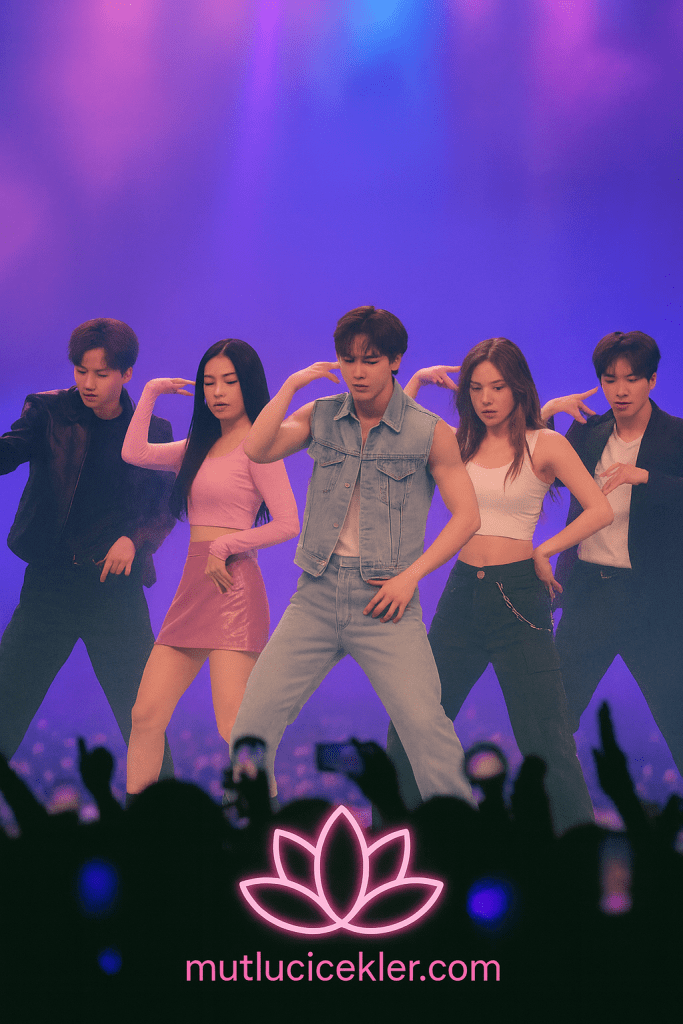
From intricate formations to deceptively simple point dances, movement is a major form of storytelling in many idol performances. Groups may rehearse extensively to synchronize timing and spacing, while dance-practice videos offer fans a closer view of the routine. Not every K-pop artist emphasizes difficult choreography: soloists, bands and vocal-focused performers may work differently. Short signature moves can also make a track recognizable even to people who have not heard its full chorus.
6. Songwriting and production can be international collaborations
A K-pop recording may involve Korean lyricists, overseas composers, producers, arrangers and choreographers. Some songs are adapted from international songwriting sessions, while others begin with Korean artists or agencies. That does not mean most songs have a particular foreign origin, or that local creativity plays a lesser role. What makes the industry interesting is the range of collaboration models used to create music for different artists and audiences.
7. Fashion, hair and makeup help create a visual concept
Stage styling often changes from one promotional era to another, combining clothing, hair color, makeup and art direction. Male and female performers alike may use makeup as part of professional stage presentation. Fans frequently discuss specific looks as vividly as they discuss the music. But styling conventions vary among performers, and the history of men’s makeup did not begin with K-pop. Its distinctive contribution lies in making highly coordinated visual concepts a recognizable part of many idol releases.
8. A “killing part” is a standout moment—not a rule for every song
Fans use killing part to describe an especially memorable vocal line, expression, gesture or dance moment. Sometimes the artist or creative team builds one into a performance; sometimes the audience decides which moment deserves the label. A related term, point choreography, means a recognizable signature move. Not every song has an official killing part, and there is no fixed formula that guarantees a viral hit.
9. Physical albums are often designed as collectibles
Unlike a simple jewel-case CD, some K-pop albums arrive with photobooks, photocards, posters and different packaging versions. Fans may trade cards to collect their favorite members. The format remains commercially significant: IFPI’s 2025 global album-sales figures, published in February 2026, place Stray Kids’ KARMA at No. 2 and SEVENTEEN’s HAPPY BURSTDAY at No. 3. These are music-industry album-sales rankings; they do not establish a typical resale price for individual photocards.
10. A lightstick can connect an entire arena
Many major idol groups have an official lightstick, often using colors, logos or shapes associated with their identity. Some concerts coordinate compatible lightsticks to create synchronized light patterns across the venue. Not every artist or fandom has one, and unofficial versions also exist. For attendees, a lightstick is more than merchandise: it can be a visible sign of participation and community during the show.
11. Fandom names are part of K-pop’s shared vocabulary
BTS fans are widely known as ARMY; BLACKPINK fans as BLINK; Stray Kids fans as STAY; and SEVENTEEN fans as CARAT. Fan communities organize listening parties, translations, events, fundraising and creative projects. The Library of Congress guide to K-pop fandoms notes both their promotional activity and their charitable and cultural projects. Each fandom is diverse, so no one behavior speaks for every fan.
12. K-pop songs can move naturally between languages
Many releases combine Korean and English, while some artists issue Japanese, English or other-language versions for specific markets. A multilingual chorus can be memorable, but language choice differs from song to song. Korean-language releases have also reached large international audiences, showing that every hook does not need English lyrics to connect with listeners. The mix of languages is one tool among many, not a requirement for global success.
13. The internet helped turn regional popularity into global discovery
Online video, subtitles, fan translations, streaming platforms and short-form dance challenges made it easier to discover artists beyond South Korea. PSY’s “Gangnam Style” became a major international video phenomenon in 2012. Years later, global fandoms could follow releases simultaneously across time zones. It is still inaccurate to claim that most worldwide social-media trends originate in K-pop; the point is that K-pop communities became unusually effective at organizing cross-border attention.
14. Record-chart breakthroughs show the scale of the change
BTS made history when “Dynamite” debuted at No. 1 on the Billboard Hot 100 in 2020, becoming the first Korean act to top that chart. The milestone is documented by Korea.net. Earlier global breakthroughs and later achievements by other artists are part of a longer story; one record should never be treated as proof that a single group created the entire genre. K-pop’s international growth came through multiple generations of artists, companies and fans.
15. K-pop’s influence extends beyond the recording studio
A major release can influence fashion conversations, dance trends, merchandise, concerts and interest in Korean language and culture. Touring also creates spending opportunities for venues and local businesses, although the effect depends on the artist, city and event. The Korean Wave, often called Hallyu, includes television, film and other cultural exports as well as music. K-pop is a highly visible part of that larger phenomenon, not a synonym for everything South Korean.
A quick K-pop glossary for new fans
- Idol: A performer associated with the Korean idol music industry.
- Debut: The first official release or promotional introduction of an act.
- Comeback: A newly promoted release or era.
- Bias: A fan’s favorite member of a group.
- Photocard: A collectible artist photo card, often included in an album.
- Lightstick: A handheld concert light, sometimes officially branded.
- Maknae: The youngest member of a group.
Frequently asked questions
What does K-pop stand for?
K-pop is short for Korean popular music. In global use, the term often refers to South Korea’s idol-oriented popular music industry, but Korean pop music itself is broader.
When did K-pop start?
Korean popular music has a long history. The 1992 debut of Seo Taiji and Boys is a landmark of the modern era, while the idol system developed further during the late 1990s.
How long do K-pop trainees train?
There is no standard number of years. Training can last months or many years, and debut is never guaranteed.
What is a K-pop comeback?
A comeback is a new release or promotion cycle, often involving performances, teasers and a music video. It does not necessarily mean an artist has returned after a long absence.
Why do fans collect K-pop photocards?
Photocards are part of the appeal of physical albums. Fans enjoy collecting different members or versions, trading with one another, and keeping a tangible memento of a musical era.
Do all K-pop groups have official lightsticks?
No. Many prominent idol groups have them, but not all acts do, and fans can enjoy concerts without purchasing one.
The bigger picture
K-pop is fascinating because it brings together sound, performance, visual storytelling, commerce and participation. Its history is more nuanced than a single viral video, and its artists and fans are too varied for sweeping claims. Understanding those differences makes the 15 K-pop facts above more useful for curious newcomers and longtime listeners alike.
Want to keep exploring? Read our Turkish-language K-pop article or discover the country’s wider culture in our South Korea travel guide.
Editorial note (reviewed October 30, 2026): Individual experiences and industry practices vary by artist and agency. Historical and chart examples were checked against institutional and industry records.
Bir yanıt yazın