


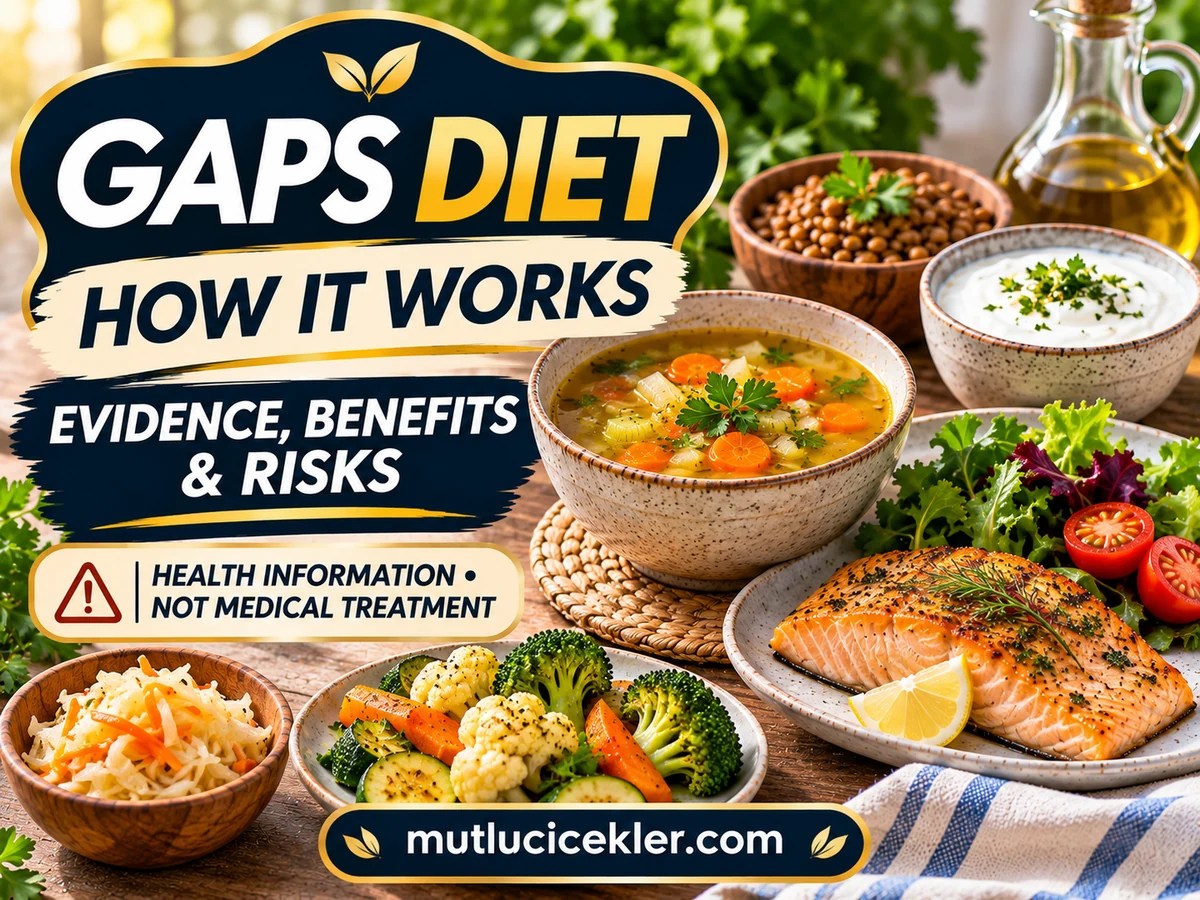
What is the GAPS diet, and does it actually work? The Gut and Psychology Syndrome (GAPS) diet is a restrictive eating protocol developed by Dr. Natasha Campbell-McBride. It removes many grains, starchy foods, and processed products while emphasizing certain soups, meats, vegetables, and fermented foods. Its promoters say the approach may influence gut health and conditions involving the brain or immune system. However, convincing clinical evidence that the GAPS protocol treats those conditions is lacking. Understanding the difference between the diet’s claims and the scientific evidence is essential before considering it.
At a glance: GAPS is not an established treatment for autism, ADHD, anxiety, depression, inflammatory bowel disease, or autoimmune disorders. The gut–brain axis is a legitimate research topic, but that does not validate any particular elimination diet. The diet can also be difficult to meet nutritional needs on, particularly during its introduction phase.
⚕️ IMPORTANT HEALTH INFORMATION
This article explains a restrictive dietary approach; it is not a diagnosis, medical treatment, or individualized meal plan. The GAPS diet has not been established as a treatment for autism, ADHD, depression, autoimmune disease, or digestive disorders. Before removing major food groups—especially for a child, during pregnancy, with chronic illness, or while taking medication—speak with a qualified healthcare professional and registered dietitian. Do not stop prescribed treatments.
What Is the GAPS Diet?
GAPS stands for Gut and Psychology Syndrome; the term Gut and Physiology Syndrome is also used by the program’s promoters. The protocol was developed by physician Natasha Campbell-McBride and is based on the hypothesis that changes in the digestive system and gut microbiota contribute to a broad range of physical, neurological, and psychological symptoms.
The program encourages eliminating multiple categories of food and moving through different phases. Its description of “healing” the intestinal lining is a claim made by the protocol, not a proven clinical outcome. To understand how its advocates describe the approach, see the GAPS Introduction Diet and Full GAPS Diet pages. These are primary descriptions of the program, not independent evidence that it works.
GAPS vs. the Gut–Brain Axis
The nervous system, immune system, digestive tract, and microorganisms living in the gut interact in complex ways. Researchers investigate these relationships in conditions such as irritable bowel syndrome (IBS) and disorders of gut–brain interaction. But discovering these connections is not the same as proving that one prescribed food list can correct them—or treat autism, depression, or ADHD. Scientific claims must be tested in appropriately designed human studies.
Is “Leaky Gut Syndrome” an Official Diagnosis?
Intestinal permeability is a real physiological characteristic that scientists can study. The popular label “leaky gut syndrome,” however, is not currently accepted as a distinct, formally validated medical diagnosis that explains a wide range of nonspecific symptoms. A 2024 review in Gastroenterology & Hepatology describes the limitations of commercial testing and of unproven treatments marketed under that label. Read the review: Leaky Gut Syndrome—Myths and Management.
How Does the GAPS Diet Work? The Three Phases Explained
The protocol is commonly described in three broad parts: a highly restrictive six-stage introduction, the Full GAPS diet, and gradual reintroduction of excluded foods. These phases describe the program’s own framework; they are not medically validated milestones that demonstrate the intestine has been repaired.
| Phase | What the protocol describes | Why caution matters |
|---|---|---|
| Introduction: six stages | Starts with a narrow range of soups, stocks and selected cooked foods; other foods are introduced over successive stages | Very limited variety may make adequate energy, fiber and nutrients hard to obtain |
| Full GAPS | A broader but still restrictive selection of meat, fish, eggs, vegetables, selected fruit, fats, nuts and fermented products | Many grains, legumes and starches remain restricted; long-term adequacy requires assessment |
| Reintroduction | Previously excluded foods are added back progressively | There is no validated “gut healed” test that dictates when to advance |
Phase 1: The Six-Stage Introduction Diet
According to the GAPS program, early stages emphasize stocks or broths, soups, and cooked vegetables, with additional foods introduced later. Some versions include fermented-food liquids and substantial restrictions on fiber-rich or carbohydrate-rich foods. The official material describes six stages, but there is no scientifically established number of days at which the gut becomes “healed.” Depending on how it is implemented, an introductory diet may not provide sufficient calories, fiber, or micronutrients.
Broth may be a useful ingredient in a meal, but there is no reliable human clinical evidence that it independently “seals” the gut lining, detoxifies the body, or cures the conditions commonly associated with GAPS.
Phase 2: The Full GAPS Diet
The Full GAPS plan is less restrictive than the introduction, but it continues to exclude or limit a number of foods that are nutrient-rich in ordinary dietary patterns. The original protocol permits selected vegetables, meat, fish, eggs, certain fermented dairy products, and small amounts of fruit or nuts. It restricts grains and many starches. Duration recommendations on GAPS websites should not be confused with a medically validated treatment course.
Phase 3: Food Reintroduction
The protocol describes adding back previously restricted foods over time. In evidence-based clinical nutrition, a supervised elimination-and-reintroduction process can sometimes help assess specific food-related symptoms, but the details depend on the diagnosis. Reintroduction should not be based on an assumed “healing” threshold or a commercial microbiome test. Documented food allergies, celiac disease, and certain gastrointestinal conditions require their own medical guidance.
GAPS Diet Food List: What Is Included and Restricted?
Searches for a “GAPS diet food list” often return confident lists of approved and forbidden foods. The table below is a description of commonly presented GAPS rules, not a recommendation to eliminate nutritious foods. Requirements change across phases, and different sources may describe them differently.
| Often emphasized by GAPS | Often restricted by GAPS |
|---|---|
| Soups, meat or fish stocks | Grains such as wheat, oats and rice |
| Fish, eggs and selected meats | Many legumes and starchy foods |
| Nonstarchy vegetables and selected fruit | Refined sugars and many processed foods |
| Certain yogurt, kefir and fermented foods | Some dairy products, depending on phase and tolerance |
| Nuts, seeds, and cooking fats | Other foods according to the current stage |
What About Fermented Foods and Probiotics?
Fermented foods can be part of a varied eating pattern, but they are not interchangeable with a tested medical treatment. The effects of probiotic supplements depend on the specific microorganisms, dose, person, and condition. Evidence for IBS is mixed, and safety concerns may be greater in people who are severely ill or have a weakened immune system. NIH/NCCIH reviews IBS and probiotic evidence; the NHS explains limitations of probiotic claims.
Food Safety: Avoid Raw Milk and Raw Eggs
Some promotional versions of restrictive diets include raw dairy or undercooked animal products. Do not assume these foods are safe because they are described as natural or traditional. Unpasteurized milk can contain harmful bacteria, while raw or undercooked eggs may present infection risks. Choose pasteurized dairy and properly cooked eggs, especially for children, pregnant people, older adults, and anyone with weakened immunity. CDC: Raw Milk and Food Safety.
Does the GAPS Diet Have Proven Benefits?
Anecdotes can describe what an individual experienced, but they cannot tell us whether GAPS caused a change, whether an existing treatment helped, or whether the same result would have occurred without the diet. Direct clinical evidence for the GAPS protocol is sparse, and it has not been established as an effective treatment for the broad range of disorders it is marketed for.
Claims About Autism and ADHD
A 2025 scoping review of nutritional interventions in autism identified only very limited GAPS-related research and concluded that stronger randomized studies are needed. Some studies combined diets with other supplements, making any isolated effect difficult to interpret. Meanwhile, the UK National Institute for Health and Care Excellence (NICE) advises against exclusion diets (such as gluten- or casein-free diets) for managing the core features of autism in children and young people. These guidelines do not deny that an autistic person can also have a separately diagnosed food allergy or gastrointestinal condition requiring treatment. Sources: 2025 scoping review; NICE CG170.
There is likewise no robust evidence establishing GAPS as a treatment for ADHD, depression, anxiety, or learning difficulties. Appropriate diagnosis, nutritional support, and evidence-based care should not be delayed while trying a restrictive diet.
Claims About IBS, Inflammatory Bowel Disease and Autoimmune Conditions
People with bloating, diarrhea, constipation, or other digestive symptoms deserve a diagnosis that distinguishes IBS from celiac disease, inflammatory bowel disease, food intolerance, infection, and other causes. GAPS has not been proven to treat Crohn’s disease, ulcerative colitis, or autoimmune disorders. Some targeted dietary changes can help specific conditions, but they are different from adopting the entire GAPS protocol. NIH/NIDDK explains evidence-based IBS treatment options.
Does GAPS Repair the Gut Lining or Strengthen Immunity?
The phrases “repair the gut” and “boost immunity” sound persuasive but can conceal very broad claims. The gut barrier and the immune system are complex; lab findings involving bacterial communities or intestinal permeability cannot establish that the GAPS protocol improves clinical outcomes. There is no validated clinical test showing that completing its phases has “repaired” the gut in a person with nonspecific symptoms.
Potential Risks and Drawbacks of the GAPS Diet
- Nutrient shortfalls: Restricting grains, legumes, dairy, or fruit can reduce fiber, calcium, some B vitamins, and overall energy intake unless the diet is carefully planned.
- Growth and feeding concerns: In children and teenagers, additional food restrictions can compound selective eating and make adequate growth and nutrition more difficult.
- Digestive discomfort: Low fiber intake may worsen constipation, while some fermented foods may increase bloating in sensitive people.
- Foodborne illness: Unpasteurized dairy or improperly handled foods can carry harmful microorganisms.
- Unwanted weight loss: Rapid or unintended weight loss may reflect inadequate intake rather than a desirable health improvement.
- Cost and social burden: Complex preparation, limited food choices, and the need to follow strict rules may strain time, finances, and everyday routines.
- Delayed medical care: Attributing persistent symptoms to “detox” or “gut imbalance” may postpone diagnosis or appropriate treatment.
Are Headache and Fatigue Really “Detox Symptoms”?
Headaches, fatigue, dizziness, nausea, and mood changes can occur for many reasons, including inadequate calorie intake, dehydration, medication effects, or an underlying illness. They are not proof that the body is detoxifying or that the diet is working. Stop and seek medical advice if symptoms are concerning, persistent, or severe; urgent care may be needed for fainting, confusion, or significant dehydration.
Who Should Be Especially Cautious?
Children and adolescents, pregnant or breastfeeding people, older adults at risk of undernutrition, people with eating disorders or a history of restrictive eating, and anyone with diabetes, kidney disease, gastrointestinal disease, or medically significant food allergies should not start broad food exclusions without appropriate clinical guidance.
Before Restricting Foods: A Practical Health Checklist
- Clarify the reason: Is there a diagnosed food allergy, celiac disease, IBS, or another condition—or only a general concern about “gut health”?
- Check for symptoms needing evaluation: Persistent diarrhea, blood in the stool, unexplained weight loss, severe abdominal pain, or symptoms that disrupt daily life warrant medical assessment.
- Discuss nutrition: A registered dietitian can assess whether enough energy, protein, fiber, calcium, iron, and other nutrients are being supplied.
- Review medications and supplements: Do not stop, reduce, or replace prescribed treatment because a diet website recommends it.
- Set meaningful outcomes: If a medically indicated dietary trial is planned, track symptoms and nutritional adequacy with a clinician rather than relying on “detox” interpretations.
- Make room for food variety: Exclusion should be no broader or longer than needed for an actual clinical reason.
Important: Celiac Testing Before a Gluten-Free Diet
If you may have celiac disease, do not remove gluten before diagnostic testing unless your clinician has directed you to. A gluten-free diet can make blood tests and intestinal biopsy results inaccurate. Both the US National Institute of Diabetes and Digestive and Kidney Diseases and UK guidance advise completing appropriate evaluation before starting a gluten-free diet. NIDDK: Diagnosis of Celiac Disease.
More Evidence-Based Ways to Support Digestive Health
There is no single diet that fixes every digestive symptom. If the goal is general well-being rather than treatment of a diagnosed disease, a varied and nutritionally adequate eating pattern is a sound starting point. The World Health Organization’s 2026 guidance emphasizes adequacy, balance, moderation, and diversity and encourages fiber-rich foods such as vegetables, fruit, whole grains, and pulses. WHO: Healthy Diet (26 January 2026).
For IBS: Individualized Dietary Support
For some people with IBS, adjustments to fiber or a temporary, dietitian-guided low-FODMAP approach may help symptoms. This involves structured restriction followed by reintroduction and personalization; it is not a permanent ban on all foods containing FODMAPs. Depending on symptoms, other treatment options and stress-management approaches may also be appropriate. NIDDK: Treatment for IBS.
An Illustrative Balanced Day, Without a Restrictive Protocol
Breakfast: Eggs or yogurt with fruit and a whole-grain option if tolerated. Lunch: Lentil soup or another protein source with vegetables. Dinner: Fish, tofu, or poultry with cooked vegetables and a whole grain or suitable starch. Optional snack: Fruit and nuts if needed. This is only an illustration of dietary variety—not a prescribed menu for IBS, food allergies, celiac disease, or another medical condition. Personal requirements differ.
Frequently Asked Questions About the GAPS Diet
Is the GAPS diet scientifically proven?
No. Although the gut–brain axis is an active area of research, the GAPS protocol itself lacks strong clinical evidence supporting its broad treatment claims. A 2025 review concluded that better-quality research is needed.
Does the GAPS diet treat autism?
There is no convincing evidence that it treats autism. NICE advises against exclusion diets to manage the core features of autism in children and young people. Individual dietary needs and separately diagnosed medical conditions should still be addressed with appropriate care.
How long does the GAPS diet last?
Its promoters describe different stages and sometimes lengthy periods of restriction, but there is no clinically proven duration that “heals the gut.” A fixed timeline should not be treated as an established medical recommendation.
Can the GAPS diet help with weight loss?
Restricting food choices can cause weight loss if it reduces overall energy intake. That does not prove GAPS has a unique fat-loss effect or that the weight change is safe. Unintended weight loss can signal undernutrition.
Can children follow the GAPS diet?
Broad elimination diets may compromise growth and dietary adequacy, especially in children with selective eating. Parents should seek pediatric and registered-dietitian input rather than using GAPS as a substitute for evidence-based assessment or treatment.
Are bone broth and fermented foods enough to heal the gut?
No. These foods may be included in some people’s meals, but they have not been shown to cure a wide range of illnesses or reliably repair the intestinal barrier. Food safety and overall nutritional adequacy still matter.
Is GAPS the same as keto or the Specific Carbohydrate Diet?
No. The diets may overlap in restricted foods, but their rules, stated purposes, and medical evidence differ. GAPS is built around its own digestive-system hypotheses; ketogenic diets aim to induce nutritional ketosis, while the Specific Carbohydrate Diet has been studied separately for some gastrointestinal conditions. One diet’s evidence cannot be automatically applied to another.
Should I buy probiotic supplements for GAPS?
Supplements are not universally necessary or safe. Probiotic effects are strain- and condition-specific, and some people with serious illness or weakened immunity may face additional risks. Ask a clinician before using them to treat symptoms.
Conclusion: Understand the Protocol, but Prioritize Evidence and Safety
The GAPS diet is a restrictive eating program based on a theory linking the gut with psychological and physical conditions. Its rules are widely shared online, but that visibility does not establish effectiveness or safety. For digestive or neurological concerns, a more dependable next step is an accurate diagnosis, adequate and varied nutrition, and evidence-based care. If a food restriction is medically indicated, it should be tailored to the person and monitored rather than copied from a generic program.
Health information: This guide is educational and does not replace medical evaluation, prescribed treatment, or individualized nutrition advice. Seek professional advice before major food restrictions. Persistent vomiting or diarrhea, blood in the stool, unexplained weight loss, or severe abdominal pain should be assessed by a healthcare professional.
Sources and Further Reading
- GAPS Diet — Introduction Diet and Full GAPS Diet. Primary descriptions of the program (not independent efficacy evidence).
- Ozler E, Sanlier N. Nutritional Approaches in Autism Spectrum Disorder: A Scoping Review. Current Nutrition Reports, 22 April 2025. Discusses the limited evidence for restrictive dietary interventions including GAPS.
- NICE Guideline CG170 — Autism spectrum disorder in under 19s: support and management. Recommends against exclusion diets for the core features of autism in children and young people.
- NIH/NICHD — Nutritional Therapy for Autism. Evidence limitations and nutritional considerations.
- Lacy BE, Wise JL, Cangemi DJ. Leaky Gut Syndrome: Myths and Management. Gastroenterology & Hepatology, 2024.
- NIH/NIDDK — Diagnosis of Celiac Disease. Why gluten should not be removed before diagnostic testing.
- NIH/NIDDK — Treatment for Irritable Bowel Syndrome. Evidence-based options for digestive symptoms.
- NIH/NCCIH — Irritable Bowel Syndrome: What You Need to Know. Probiotics and other complementary approaches.
- CDC — Raw Milk. Updated 31 January 2025; foodborne illness and pasteurization.
- World Health Organization — Healthy Diet. Updated 26 January 2026; adequacy, balance, moderation and diversity.
Language edition: See the Turkish GAPS diet guide.


Bir yanıt yazın