

Triton is the largest moon of Neptune and one of the most fascinating objects in the Solar System. It is famous for its retrograde orbit, nitrogen geysers, and the possibility of a subsurface ocean, making it a highly intriguing target in the search for extraterrestrial life.
But the big question remains: Could life exist on this frozen world?
In this article, we explore Triton’s structure, surface, temperature, atmosphere, and its potential to host life in detail.
🌍 What Is Triton?
Triton is the largest moon of Neptune and one of the most unique moons discovered.
- Discovered in: 1846
- Diameter: 2,710 km
- Orbit direction: Retrograde (opposite to Neptune’s rotation)
- Surface temperature: -235°C
- Atmosphere: Extremely thin, mostly nitrogen
Scientists believe Triton was once a dwarf planet that was later captured by Neptune’s gravity.
🧊 What Is Triton’s Surface Like?
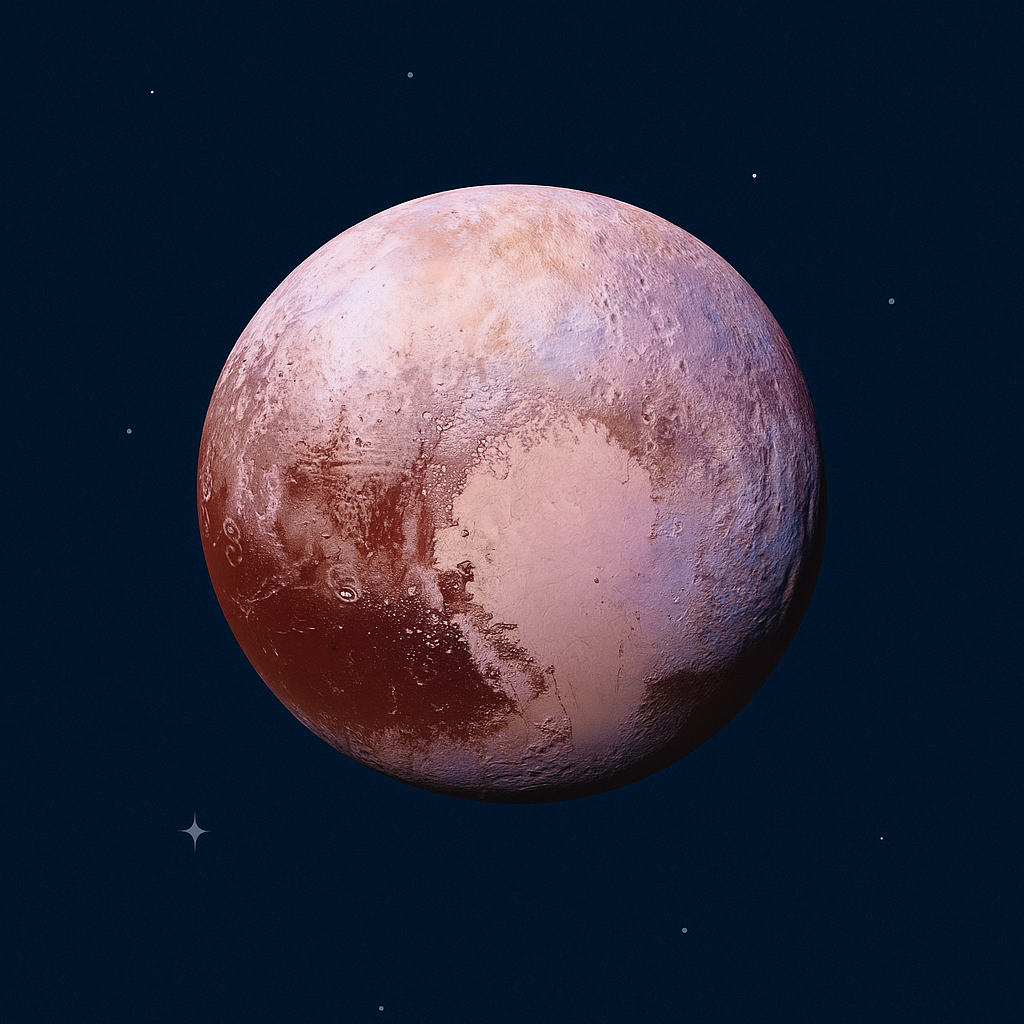
Triton’s surface looks like a frozen alien landscape:
- Covered with solid nitrogen, methane, and water ice
- Features cryovolcanoes (ice volcanoes)
- Has active nitrogen geysers
- Displays young geological formations and surface fractures
These features show that Triton is geologically active, even today.
🌫️ Does Triton Have an Atmosphere?
Yes, Triton has a very thin atmosphere:
- Mostly nitrogen
- Contains traces of methane and carbon monoxide
- Changes seasonally
- Easily affected by solar winds due to its weak structure
🌊 Could Triton Have a Subsurface Ocean?
Scientific models suggest that beneath Triton’s thick ice crust, there may be:
- A salty liquid ocean
- Heat generated by tidal forces
- Chemical reactions that could create a suitable environment for life
This possibility places Triton on the list of most promising moons for extraterrestrial life research.
🧬 Is There Life on Triton?
So far, there is no direct evidence of life on Triton. However, scientists seriously consider these key factors:
✅ Possible subsurface ocean
✅ Chemical energy sources
✅ Ongoing geological activity
✅ Presence of organic compounds in the atmosphere
All these features suggest that Triton could potentially support microbial life.
🛰️ Which Spacecraft Has Studied Triton?
So far, Triton has only been closely observed by Voyager 2 in 1989.
Voyager 2 discovered:
- Ice geysers
- Young surface features
- A thin atmosphere
- Interactions with Neptune’s magnetic field
Future missions dedicated to Triton are currently under discussion.
❄️ Why Is Triton So Cold?
Triton is incredibly cold because:
- It is located very far from the Sun
- It has a very weak atmosphere
- It cannot retain heat efficiently
As a result, Triton is known as one of the coldest moons in the Solar System.
📌 Interesting Facts About Triton
- The only large moon with a retrograde orbit
- The only known moon with active ice geysers
- One of the few moons with a seasonally changing atmosphere
- It may eventually spiral closer to Neptune and break apart in the distant future
✅ Conclusion: Triton Is One of the Most Promising Moons in the Search for Life
Despite its extreme cold, Triton remains one of the most exciting candidates in the search for extraterrestrial life due to its possible subsurface ocean, chemical activity, and geological dynamics. Future space missions may one day reveal whether life truly exists beneath its frozen surface—and help answer humanity’s greatest question:
“Are we alone in the universe?”
❓ Frequently Asked Questions (FAQ)
Is Triton a planet?
No, Triton is a moon of Neptune.
Is there water on Triton?
Yes, water exists as ice on the surface, and a liquid subsurface ocean is possible.
Could humans live on Triton?
No, due to extreme cold, weak atmosphere, and radiation, human life would not be possible.
📣 Follow Us
For more space, science, and cosmic discoveries, follow mutlucicekler.com and our social media channels! 🚀✨













Bir Cevap Yazın