

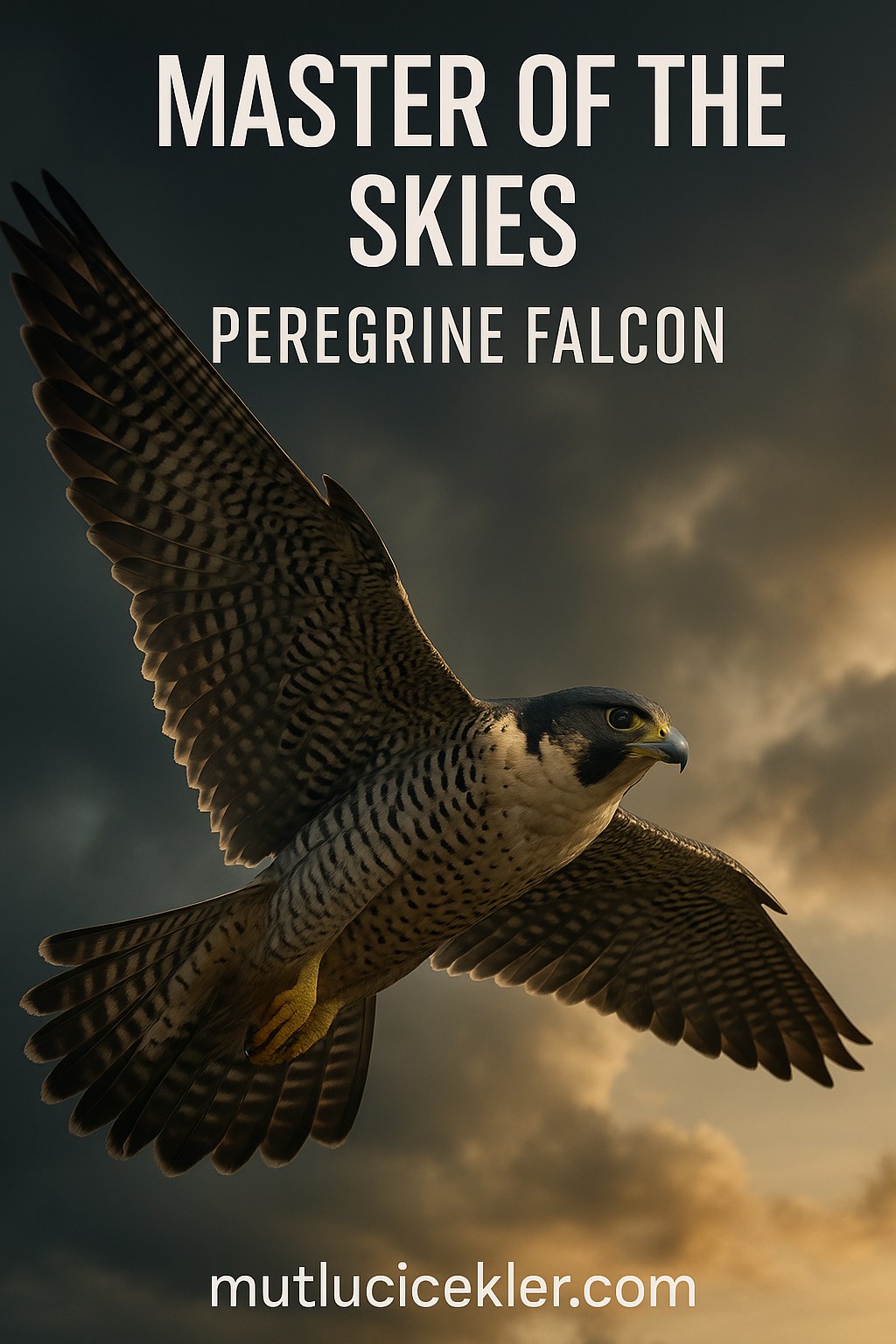
One of nature’s most powerful aerial hunters, the Peregrine Falcon (Falco peregrinus) is widely known as the fastest animal on Earth. With its extraordinary speed, razor-sharp vision, and flawless hunting technique, this magnificent bird continues to fascinate scientists and wildlife enthusiasts alike. In this article, you’ll discover everything about the peregrine falcon — from its habitat and diet to its breeding behavior and amazing abilities.
🦅 What Is a Peregrine Falcon?
The peregrine falcon is a diurnal bird of prey belonging to the Falconidae family. It holds the record as the fastest living creature in the world. During a hunting dive (stoop), it can reach speeds of 320–390 km/h (200–242 mph).
- Scientific name: Falco peregrinus
- Average lifespan: 15–20 years
- Wingspan: 74–120 cm
- Weight: 600–1500 grams

🌍 Where Do Peregrine Falcons Live?
Peregrine falcons are found on every continent except Antarctica, making them one of the most widely distributed birds on Earth. Their adaptability allows them to thrive in both wild and urban environments.
Common habitats include:
- Rocky cliffs and mountains
- Forest edges
- Coastal regions
- Open plains
- High-rise buildings and city towers
Today, many peregrines successfully nest on skyscrapers, bridges, and urban structures.
👀 Physical Characteristics
The peregrine falcon is built for speed and precision:
- Long, pointed wings
- Sharp, hooked beak
- Powerful talons
- Exceptional eyesight (up to 8 times sharper than humans)
- Dark “moustache” markings under the eyes
🍽️ What Do Peregrine Falcons Eat?
Peregrine falcons are specialized aerial hunters. They capture prey mid-air using speed and surprise.
Their diet mainly consists of:
- Pigeons
- Sparrows
- Small ducks
- Gulls
- Other small birds
They strike their prey at high speed and disable it in seconds.
🪺 Breeding and Chick Care
- Breeding occurs once a year
- The female lays 3–4 eggs
- Incubation lasts about 30 days
- Chicks fledge in 6–7 weeks
- Both parents actively care for the young
⚠️ Is the Peregrine Falcon Endangered?
In the past, peregrine falcon populations declined dramatically due to:
- Pesticides (especially DDT)
- Habitat destruction
- Illegal hunting
Thanks to successful conservation programs, their populations have recovered in many parts of the world.
🌟 Amazing Facts About Peregrine Falcons
- 🏆 They are the fastest animals on the planet
- 👁️ Their eyesight far surpasses human vision
- 🏙️ They can adapt to urban life
- 🦅 They symbolize power and freedom in many cultures
- 🏁 They can outpace Formula 1 cars during dives
🌿 Ecological Importance
Peregrine falcons help maintain ecological balance by controlling bird populations. By preying on weak or sick individuals, they contribute to natural selection and ecosystem health.
✅ Conclusion
The peregrine falcon is not only a symbol of speed but also a masterpiece of evolution. Its intelligence, agility, and adaptability make it one of the most impressive birds of prey on Earth. Protecting peregrine falcons means protecting the balance of nature itself.
❓ Frequently Asked Questions (FAQ)
Can a peregrine falcon be domesticated?
No. It is a wild bird and should live freely in nature.
Are peregrine falcons found in Turkey?
Yes. They can be observed across many regions of Turkey, especially in rocky and mountainous areas.
Do peregrine falcons attack humans?
They are not aggressive toward humans unless their nests are threatened.


Bir yanıt yazın