
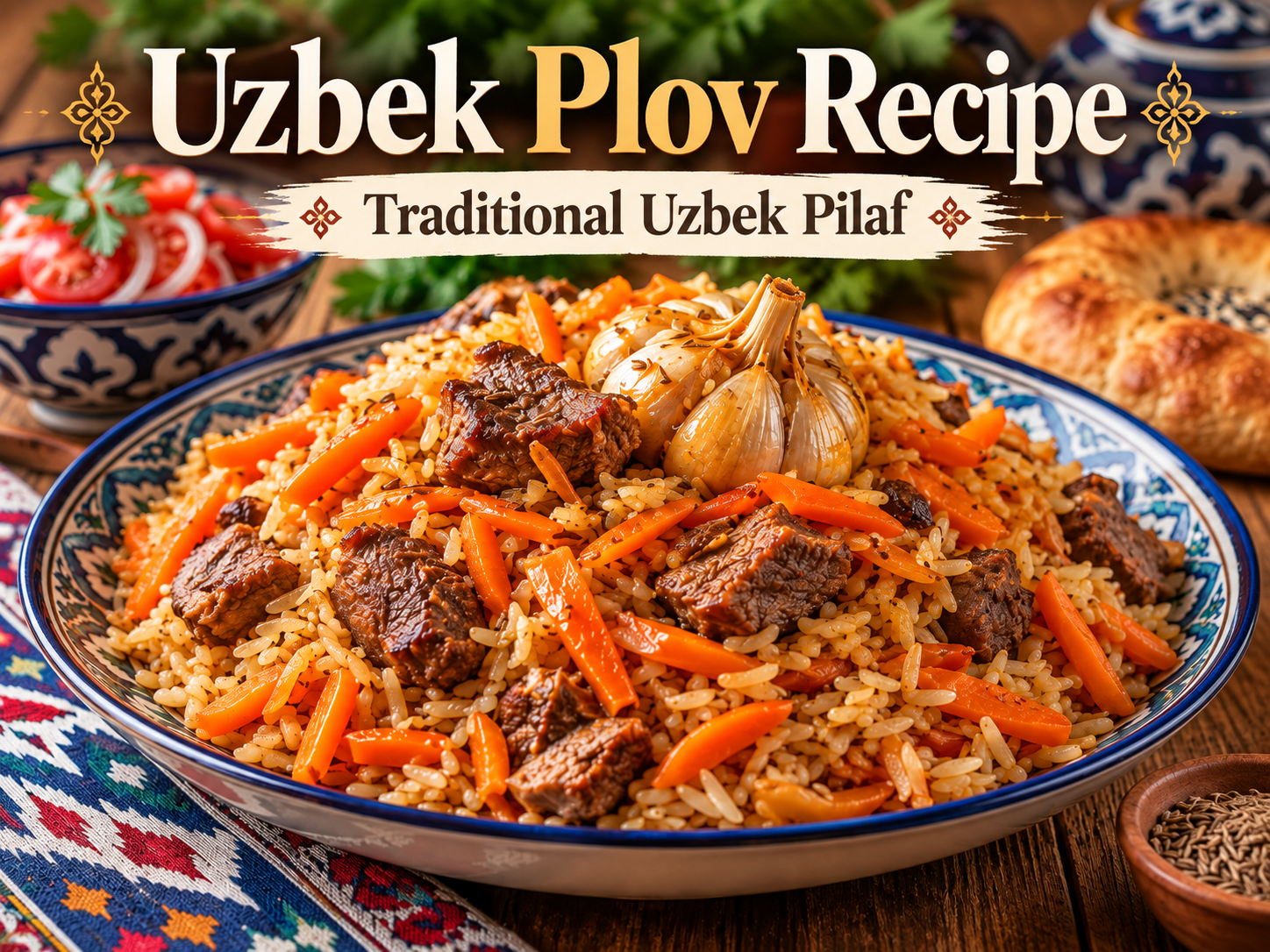
Uzbek plov, also known as palov, pilaf, or osh, is one of the best-known dishes of Uzbekistan and Central Asia. It combines rice, meat, carrots, onions, cumin, and garlic in a single pot, but the real character of the dish comes from the cooking technique rather than a long ingredient list.
The key is preparing a rich base called zirvak before adding the rice. The rice then cooks above this flavorful mixture, absorbing the broth and spices while remaining separate and fluffy.
Plov is more than an everyday rice dish in Uzbekistan. It has an important place at family gatherings, weddings, celebrations, and community events, and Uzbek palov culture and tradition was added to UNESCO’s Representative List of the Intangible Cultural Heritage of Humanity in 2016.
Uzbek Plov at a Glance
| Detail | Information |
|---|---|
| Preparation time | 25 minutes |
| Cooking time | 1 hour 20 minutes |
| Total time | About 1 hour 45 minutes |
| Servings | 6 |
| Difficulty | Medium |
| Main ingredients | Rice, lamb or beef, carrots, onions |
| Cooking method | One-pot |
| Approximate calories | 550–650 kcal per serving |
Calories are approximate and vary depending on the meat and amount of oil used.
What Is Uzbek Plov?
Uzbek plov is a traditional rice dish made by cooking meat, onions, and carrots together with spices before layering rice on top.
Unlike many pilaf recipes, the ingredients are not simply mixed together from the beginning.
The process usually follows three main stages:
- Browning the meat and onions.
- Cooking the carrot-and-meat base known as zirvak.
- Adding the rice and finishing it with controlled steaming.
This method gives plov its characteristic layered flavor and separate grains of rice.
Ingredients
For the Plov
- 2 cups Devzira rice, or good-quality long-grain rice
- 500 g lamb or beef, cut into medium chunks
- 400–500 g carrots
- 2 large onions
- 80–100 ml neutral cooking oil
- 1 whole head of garlic
- 1½ teaspoons cumin seeds or ground cumin
- ½ teaspoon ground coriander, optional
- 1 teaspoon black pepper
- Salt, to taste
- About 3–4 cups hot water, as needed
Optional additions
Depending on the regional style, you may also add:
- A small handful of chickpeas
- Barberries
- Raisins
- A small dried chili pepper
These are optional rather than essential.
Which Rice Is Best for Uzbek Plov?
The traditional rice most strongly associated with Uzbek plov is Devzira rice.
Devzira absorbs flavor well while maintaining a firm texture, which makes it especially suitable for plov.
If Devzira is unavailable, you can use:
- Basmati rice
- Another good-quality long-grain rice
The most important point is that the rice should not become sticky or mushy.
Should You Wash the Rice?
Yes.
Wash the rice several times until the water becomes nearly clear.
Then soak it in warm, lightly salted water for about 30 minutes.
Drain before adding it to the pot.
This helps the grains cook more evenly and remain separate.
How to Cut the Carrots
Carrots are one of the defining ingredients of Uzbek plov.
Do not grate them.
Instead, cut them into:
- Long thin batons
- Approximately matchstick-sized pieces
Grated carrots soften too quickly and can disappear into the zirvak.
Hand-cut carrot strips hold their structure and give the finished plov its traditional appearance.
How to Make Uzbek Plov
Step 1: Prepare the Ingredients
Rinse and soak the rice.
Cut the meat into medium-sized pieces.
Slice the onions.
Cut the carrots into long thin strips.
Remove loose outer layers from the garlic head but leave the head whole.
Step 2: Heat the Oil
Heat the oil in a heavy-bottomed pot, Dutch oven, or kazan over medium-high heat.
A traditional Uzbek plov is cooked in a kazan, a large round cooking pot, but a heavy Dutch oven works very well at home.
The oil should be hot before the meat is added.
Step 3: Brown the Meat
Add the meat in a single layer.
Brown it well on all sides.
Do not rush this stage.
The browned surface of the meat contributes significantly to the flavor of the zirvak.
Remove the meat briefly if needed while cooking the onions, or keep it in the pot if there is enough space.
Step 4: Cook the Onions
Add the sliced onions.
Cook until they become golden and begin to caramelize.
The onions should take on real color rather than simply becoming soft.
Step 5: Add the Carrots
Add the carrot strips.
Cook for about 5–8 minutes, stirring gently.
The carrots should soften slightly but still keep their shape.
Step 6: Make the Zirvak
Return all the meat to the pot if you removed any earlier.
Add:
- Cumin
- Black pepper
- Coriander, if using
- Salt
Pour in enough hot water to just cover the meat and vegetables.
Add the whole garlic head.
Bring the mixture to a gentle boil, then reduce the heat.
Simmer uncovered or partially covered for about 30–40 minutes.
This flavorful meat-and-vegetable broth is called zirvak.
Taste the liquid before adding the rice.
It should taste slightly saltier and more intensely seasoned than the finished dish because the rice will absorb much of that flavor.
Step 7: Add the Rice
Drain the soaked rice thoroughly.
Spread it evenly over the zirvak.
Do not stir the rice into the meat and carrots.
The rice should remain as a separate layer on top.
Carefully pour in additional hot water if necessary.
The liquid should come approximately 1 cm above the rice, though the exact amount depends on the rice variety and pot.
Step 8: Cook Until the Water Is Absorbed
Increase the heat to medium-high.
Cook uncovered until most of the water has been absorbed and the surface of the rice begins to appear dry.
This may take around 10–15 minutes.
Check several grains of rice.
They should be partly cooked but still slightly firm in the center.
Step 9: Steam the Plov
Once most of the liquid has disappeared, gently gather the rice toward the center of the pot to form a slight mound.
Make several holes through the rice with the handle of a wooden spoon. This allows steam to circulate.
Reduce the heat to very low.
Cover the pot tightly.
Steam for approximately 20–25 minutes.
Do not repeatedly open the lid.
Step 10: Rest and Serve
Turn off the heat and allow the plov to rest for about 10 minutes.
Remove the garlic.
Gently mix the rice with the meat, onions, and carrots from the bottom of the pot.
Avoid aggressive stirring, which can break the rice.
Transfer the plov to a large serving platter.
Place the meat and garlic prominently on top if you want a more traditional presentation.
Chef’s Tips for Better Uzbek Plov
Do Not Grate the Carrots
Hand-cut carrot strips maintain their texture and are much closer to the traditional preparation.
Brown the Meat Properly
Good browning adds depth to the zirvak.
Pale meat produces a much flatter flavor.
Do Not Stir the Rice Into the Zirvak
Once the rice is added, keep it layered above the meat and vegetables until the final mixing stage.
Adjust the Water Carefully
Different rice varieties absorb different amounts of water.
Add enough for the rice to cook but avoid flooding the pot.
Too much liquid is one of the main reasons plov becomes mushy.
Use Plenty of Cumin
Cumin is one of the defining aromas of Uzbek plov.
If possible, lightly crush whole cumin seeds between your fingers before adding them.
Let the Plov Rest
The final resting period allows moisture to redistribute and helps the rice finish cooking evenly.
What Is Zirvak?
Zirvak is the flavorful base prepared before the rice is added.
It generally contains:
- Meat
- Onion
- Carrots
- Oil
- Spices
- Water
The rice absorbs the flavor of the zirvak during cooking.
A well-prepared zirvak is one of the most important steps in making good plov.
Lamb or Beef: Which Is Better?
Both can be used.
Lamb
Lamb gives plov a richer, more traditional flavor and is widely associated with Central Asian preparations.
Beef
Beef produces a slightly milder dish and is often easier to find.
Choose a cut with some fat and connective tissue rather than extremely lean meat.
A little fat contributes to the richness of the finished dish.
Can You Make Uzbek Plov With Chicken?
Yes, but chicken produces a different style of pilaf.
If your goal is a more traditional Uzbek-style plov, lamb or beef is the better choice.
Chicken cooks much faster, so the zirvak cooking time must also be reduced.
What to Serve With Uzbek Plov
Plov is usually filling enough to be served as the main dish.
Simple fresh accompaniments work best.
Try serving it with:
- Tomato and onion salad
- Cucumber salad
- Fresh herbs
- Pickled vegetables
- Yogurt or ayran
- Flatbread
A classic tomato-and-onion salad provides freshness and acidity that balances the richness of the rice and meat.
Approximate Nutrition
The nutrition of Uzbek plov varies greatly depending on the amount of oil and fat in the meat.
A typical serving may contain approximately:
- Calories: 550–650 kcal
- Protein: 25–30 g
- Carbohydrates: 60–70 g
- Fat: 20–30 g
These figures are estimates rather than laboratory values.
Using leaner meat and slightly less oil will reduce the calorie content.
How to Store Uzbek Plov
Allow leftover plov to cool before transferring it to an airtight container.
Store it in the refrigerator and consume it within approximately 3 days.
Because cooked rice requires careful handling, refrigerate leftovers promptly rather than leaving them at room temperature for long periods.
How to Reheat Plov
Plov can be reheated:
- In a covered pan over low heat
- In the microwave
- In the oven in a covered dish
Add a small splash of water before reheating if the rice appears dry.
Heat thoroughly before serving.
Avoid repeatedly cooling and reheating the same portion.
Can Uzbek Plov Be Frozen?
Yes.
Divide the cooled plov into airtight freezer-safe portions.
Freeze and use within about 2–3 months for the best quality.
Thaw safely in the refrigerator and reheat thoroughly.
The texture of the rice may become slightly softer after freezing.
Why Uzbek Plov Is Culturally Important
Plov is deeply connected with social life in Uzbekistan.
It is prepared for:
- Weddings
- Family gatherings
- Religious and community occasions
- Celebrations
- Hospitality
- Large public meals
Recipes vary from one region and family to another.
Differences can include:
- The type of rice
- Choice of meat
- Amount of carrots
- Additional chickpeas or dried fruit
- Cooking fat
- Spice combinations
There is therefore no single version that represents every Uzbek household.
In 2016, Palov culture and tradition was inscribed on UNESCO’s Representative List of the Intangible Cultural Heritage of Humanity, reflecting the dish’s wider cultural role beyond the kitchen.
Frequently Asked Questions
What is the difference between plov and pilaf?
“Pilaf” is a broad term for rice dishes cooked in seasoned broth, while plov or palov refers to Central Asian versions, especially those associated with Uzbekistan.
What is the best rice for Uzbek plov?
Devzira is one of the best-known traditional choices. If unavailable, a firm long-grain rice such as basmati can be used.
Can I use basmati rice?
Yes. Basmati works well for a home version, although the flavor and texture differ slightly from Devzira.
Why is my plov mushy?
Common causes include:
- Too much water
- Overcooking the rice
- Stirring the rice too early
- Using a rice variety that becomes soft easily
Why should the carrots not be grated?
Grated carrots break down too quickly. Cutting them into long strips helps preserve their texture and gives plov its characteristic appearance.
What is zirvak?
Zirvak is the meat, onion, carrot, spice, and broth base cooked before the rice is added.
Can I make plov without a kazan?
Yes.
A heavy Dutch oven or thick-bottomed pot works very well for home cooking.
Can I make vegetarian Uzbek plov?
You can make a vegetable pilaf inspired by plov, but removing the meat changes the traditional character of the dish considerably.
Final Thoughts
Uzbek plov is built around a simple idea: rice cooked in the flavor of meat, vegetables, spices, and a carefully prepared zirvak.
The ingredient list is not complicated, but the order of cooking matters.
Brown the meat properly, cut the carrots into strips, season the zirvak generously, keep the rice layered above the meat during cooking, and finish the dish slowly with steam.
Once you understand those steps, Uzbek plov becomes a surprisingly approach
👉 Don’t forget to follow mutlucicekler.com 💕


Bir Cevap Yazın