

🌿 Introduction
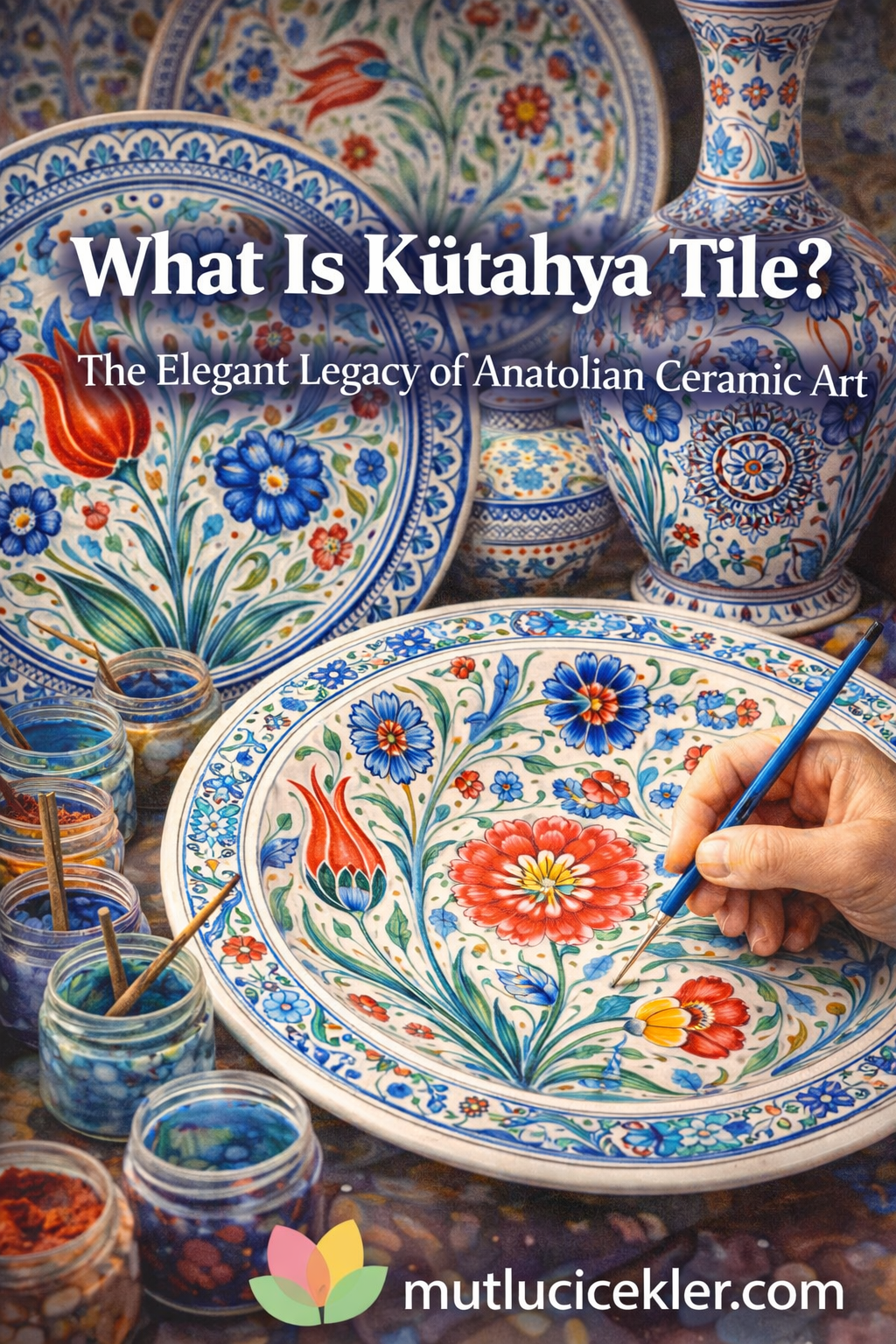
Kütahya tile is one of the most precious traditional handicrafts of Anatolia, admired for its vibrant colors, delicate motifs, and centuries-old craftsmanship. From the Ottoman era to the present day, this unique ceramic art has been used both in daily life and in architectural decoration, representing the artistic spirit of Turkish culture.
🏺 The History of Kütahya Tile
Tile-making in Kütahya dates back to the 14th century and flourished during the Germiyanid and Ottoman periods.
Together with İznik, Kütahya became one of the two main centers of Ottoman ceramic art. Especially after the 17th century, Kütahya rose to prominence and continued the tradition as İznik production declined.
🎨 Characteristics of Kütahya Tile
What makes Kütahya tiles distinctive:
- Rich color palette: Blue, turquoise, green, yellow, purple, and red
- White background: Highlights detailed patterns
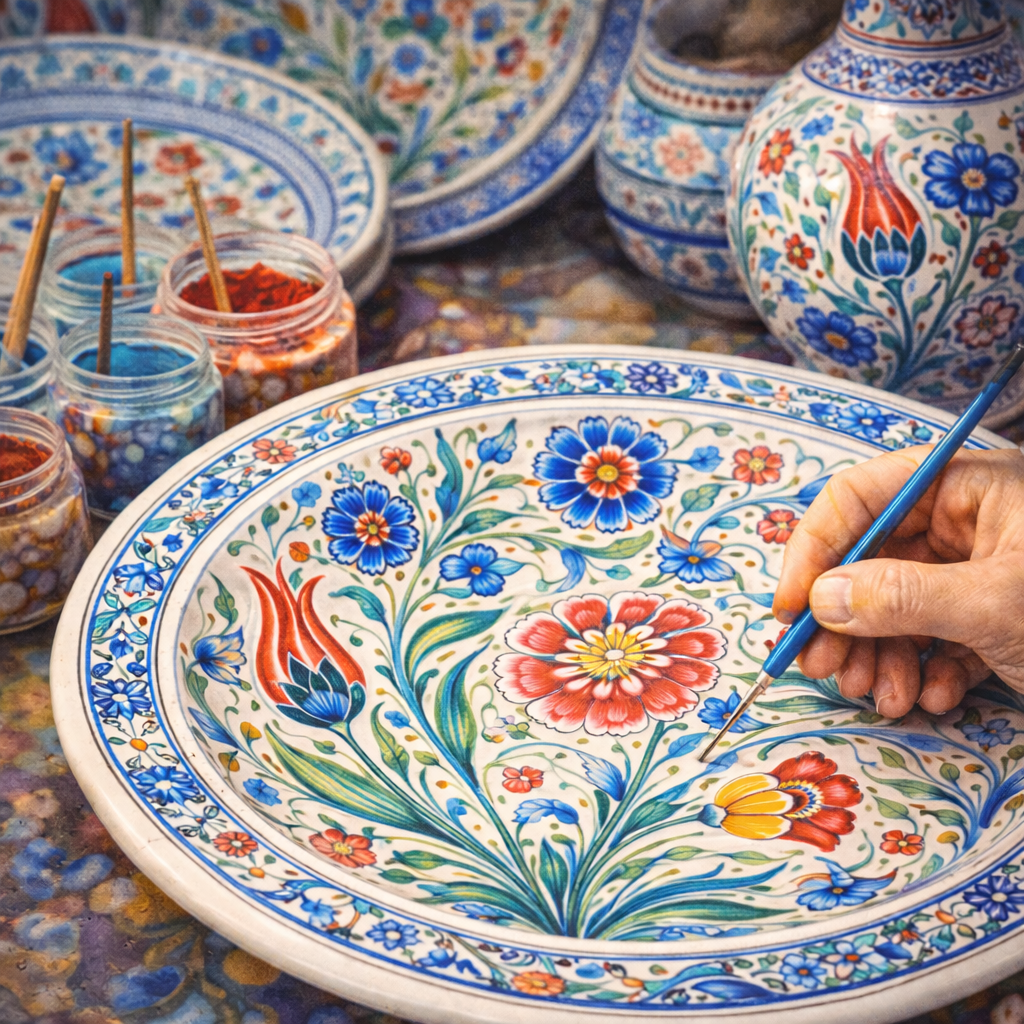
- Handcrafted production: Each piece is shaped and painted by hand
- Functional forms: Plates, bowls, vases, cups, and decorative panels
Compared to İznik tiles, Kütahya ceramics are known for their freer style and greater variety of colors.
🌺 Motifs and Patterns
Common motifs found in Kütahya tiles include:
- 🌷 Tulips
- 🌸 Carnations
- 🌹 Roses
- 🌼 Floral bouquets
- 🌿 Leaves and branches
- ⭐ Geometric patterns
- 🕌 Religious and figurative scenes
These designs are inspired by nature, Ottoman aesthetics, and Anatolian folk culture.
🖌️ How Are Kütahya Tiles Made?
The production process requires patience and mastery:
- Clay preparation: Special clay is kneaded
- Shaping: Formed by hand or molds
- First firing (biscuit): Hardening in the kiln
- Drawing motifs: Transferring patterns onto the surface
- Painting: Using natural oxide pigments
- Glazing: Coating with transparent glaze
- Final firing: Creating a shiny and durable finish
Each step is essential to achieve the final beauty.
🏛️ Use from the Ottoman Era to Today
Historically, Kütahya tiles were used in:
- Mosques and tombs,
- Palaces and mansions,
- Decorative architectural panels.
Today, they are widely used in:
- Home décor,
- Souvenirs and gifts,
- Decorative plates and wall panels.
🌍 Kütahya Tile in Modern Times
Today, Kütahya remains:
- The most important tile production center in Türkiye,
- Home to workshops, museums, and art courses,
- A place where traditional motifs meet modern designs.
This art continues to contribute to both local culture and economy.
🌟 Conclusion
Kütahya tile reflects the soul of Anatolian art with its colors and motifs full of meaning. Passed down through generations, this elegant craft still lives in the hands of skilled masters and continues to inspire future generations as a symbol of Turkish cultural heritage.
❓ FAQ – Frequently Asked Questions
What is the difference between Kütahya and İznik tiles?
İznik tiles are more classical and limited in color, while Kütahya tiles are more colorful and freer in style.
Are Kütahya tiles suitable for daily use?
Yes. Many items like plates and cups are made for everyday use.
Can tile workshops in Kütahya be visited?
Yes. Many workshops and museums are open to visitors.
Are Kütahya tiles handmade?
In traditional production, yes—each piece is handcrafted.
👉 For more cultural and artistic stories, don’t forget to follow mutlucicekler.com 🌸


Bir Cevap Yazın