
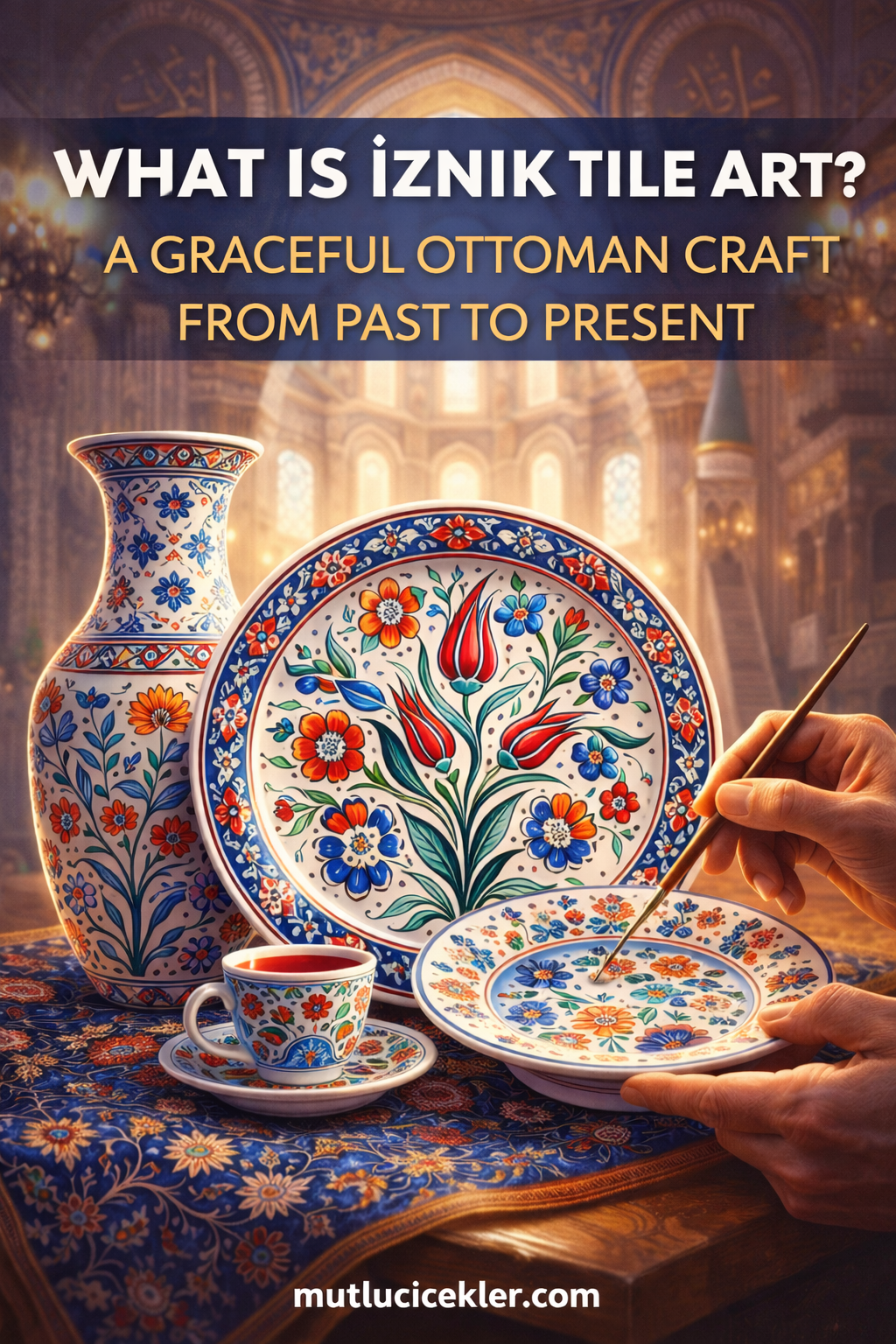
One of the most exquisite legacies of Turkish-Islamic art, Iznik tile art is a unique ceramic tradition that reached its peak during the Ottoman Empire. Famous for its vibrant colors, elegant floral motifs, and flawless glaze, Iznik tiles have adorned mosques, palaces, and architectural masterpieces for centuries.
In this article, we explore the history, characteristics, motifs, production process, and modern significance of Iznik ceramics.
📜 The History of Iznik Tiles
Iznik tile production began in the late 14th century, inspired by Seljuk traditions, and flourished during the 15th and 16th centuries, the golden age of the Ottoman Empire.
- 📍 The town of Iznik became the main center of ceramic production.
- 🕌 Masterpieces such as the Süleymaniye Mosque, Rüstem Pasha Mosque, and Topkapı Palace were decorated with Iznik tiles.
- 🌍 Today, original Iznik pieces are displayed in major museums around the world.
🎨 Key Features of Iznik Ceramics
What makes Iznik tiles truly special?
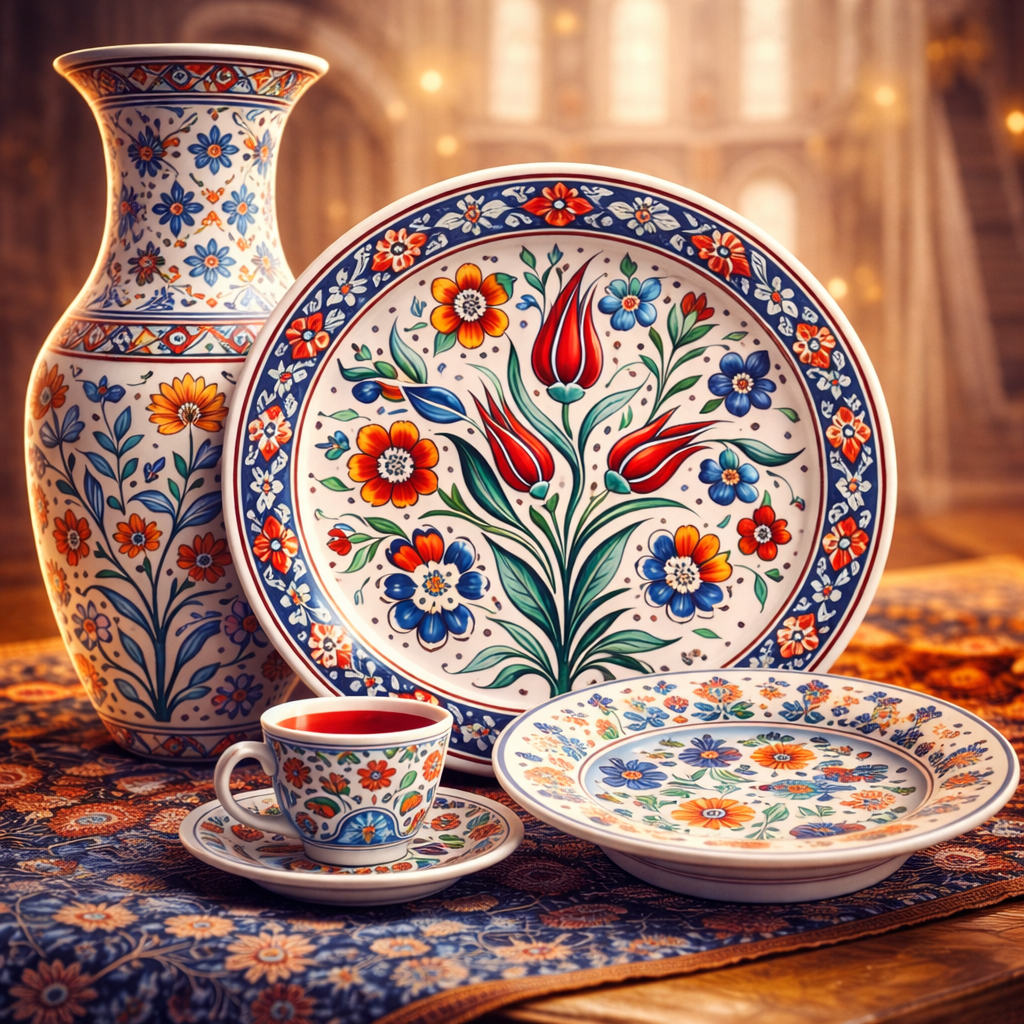
- 🤍 White quartz-based body
- 🔵 Cobalt blue, 🟢 green, 🔴 famous coral red, and ⚫ black outlines
- ✨ Bright, glass-like glaze
- 🖌️ Fine hand-painted craftsmanship
The legendary Iznik red became the signature color of this art form.
🌺 Motifs and Patterns
Common motifs in Iznik tiles include:
🌷 Tulip – elegance and Ottoman identity
🌸 Carnation – beauty and harmony
🌼 Hyacinth – vitality and spring
🌿 Rumi & Hatayi – traditional decorative patterns
🐉 Cloud & dragon motifs – Central Asian influence
⚓ Ships & waves – rare narrative designs
Designs are usually symmetrical and perfectly balanced.
🏺 How Are Iznik Tiles Made?
The traditional production of Iznik tiles is a meticulous process:
1️⃣ Preparing the clay (quartz, clay, glass powder)
2️⃣ Shaping and drying
3️⃣ First firing (biscuit)
4️⃣ Drawing the design
5️⃣ Hand-painting with natural pigments
6️⃣ Glazing
7️⃣ Final firing
🔥 After firing, the colors become vivid and the glaze turns glossy.
🕌 Where Were Iznik Tiles Used?
During the Ottoman era, Iznik tiles were used to decorate:
- Mosques 🕌
- Palaces 🏰
- Tombs
- Fountains
- Plates and bowls for daily use 🍽️
They were both functional and decorative works of art.
🌍 Iznik Tiles Today
Today, Iznik tile art is kept alive by skilled artisans through the master-apprentice tradition.
🎓 Workshops, museums, and courses in Iznik and across Turkey introduce this heritage to new generations.
📍 Iznik tile workshops attract both local and international visitors.
💡 Tips About Iznik Tiles
✨ Authentic Iznik tiles have vibrant colors and smooth glaze.
✨ Minor imperfections indicate true handcraft.
✨ Symmetry and fine detailing show quality.
✨ Ask for a certificate when purchasing handmade pieces.
❓ FAQ – Frequently Asked Questions
What is the difference between Iznik and Kütahya tiles?
Iznik tiles are known for finer body and brighter glaze, while Kütahya tiles have different colors and styles.
What is Iznik red?
A unique coral red developed in the Ottoman period, slightly raised and very vibrant.
Were Iznik tiles only decorative?
No. Plates, bowls, and daily-use ceramics were also produced.
Are authentic Iznik tiles still made today?
Yes, using traditional techniques by modern artisans.
🌸 Conclusion
Iznik tile art is more than decoration — it is a reflection of Ottoman elegance, patience, and mastery. This timeless craft continues to represent the artistic soul of Turkish culture and inspires the world with its beauty.
👉 For more culture and art stories, follow us – mutlucicekler.com 🌷













Bir Cevap Yazın