
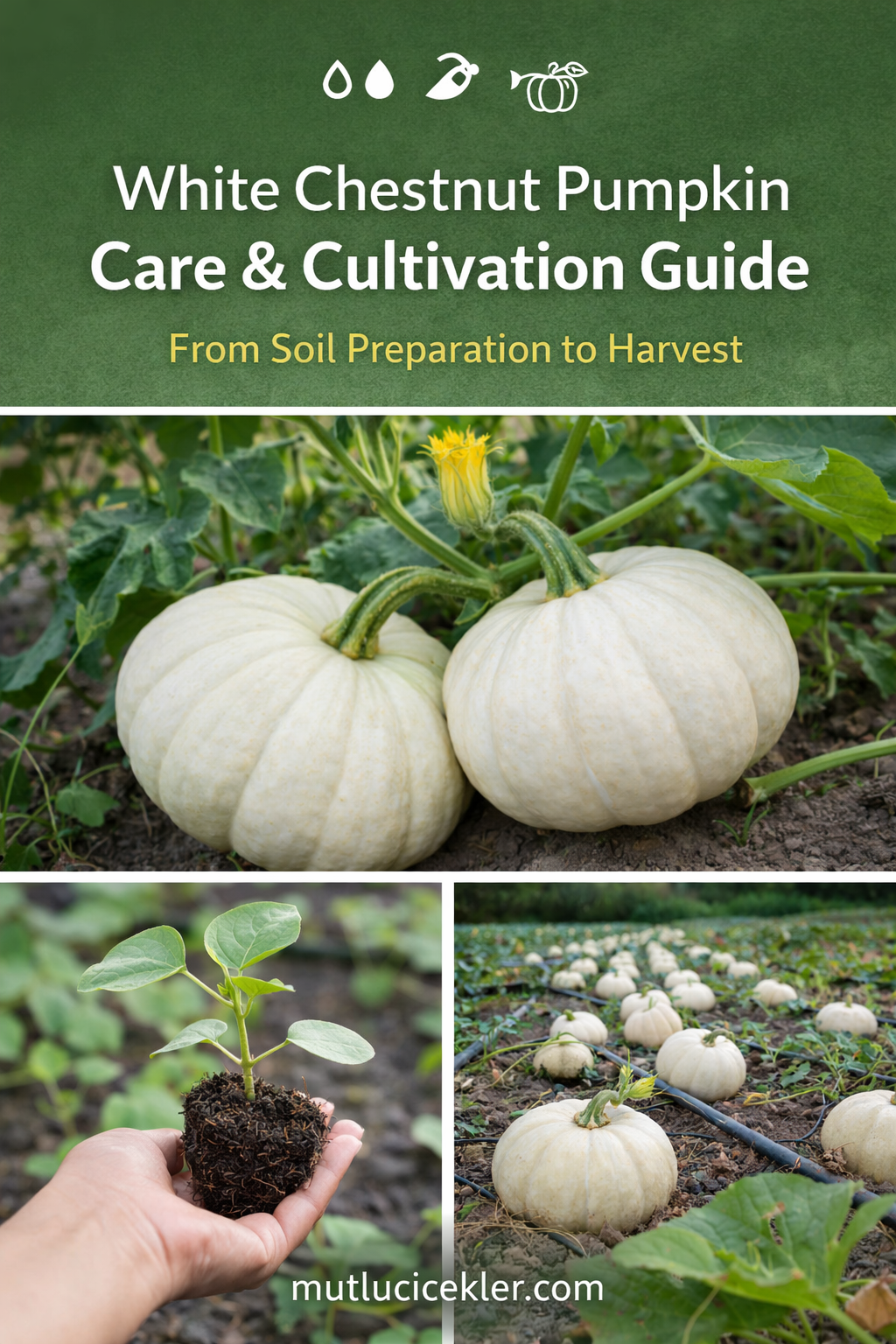
A Complete Agricultural Guide from Soil Preparation to Harvest
White chestnut pumpkin is a valuable agricultural crop appreciated for its firm texture, long shelf life, and versatile culinary use. Proper cultivation practices play a crucial role in achieving high yield and quality production. This guide provides a comprehensive overview of white chestnut pumpkin cultivation, from land preparation to harvesting and storage.
🌾 Introduction
White chestnut pumpkin is widely grown in open fields and agricultural lands. Thanks to its adaptability and strong market demand, it has become an important crop for sustainable vegetable production. Successful cultivation depends on climate suitability, soil quality, irrigation management, and correct farming techniques.
🌍 Climate and Soil Requirements
White chestnut pumpkin thrives in warm and temperate climates.
Ideal conditions include:
- Optimal temperature: 18–30°C
- Full sun exposure
- Well-drained, fertile soil
The most suitable soil type is loamy or sandy-loam soil with a pH between 6.0 and 7.5. Heavy clay soils should be avoided due to poor drainage.
🚜 Soil Preparation and Planting
Before planting:
- Deep plowing is recommended to loosen the soil
- Organic manure or compost should be incorporated
- Raised beds improve drainage and root development
Planting guidelines:
- Sowing time: After frost risk has passed
- Row spacing: 2–2.5 meters
- Plant spacing: 70–100 cm
- Use certified, disease-free seeds
Seeds can be sown directly into the soil or transplanted as seedlings.
💧 Irrigation Management
Regular and controlled irrigation is essential.
- Drip irrigation is strongly recommended
- Avoid excessive watering to prevent root rot
- Increase irrigation frequency during flowering and fruit development
Maintaining consistent soil moisture improves fruit size and quality.
🌿 Fertilization Practices
Balanced nutrition ensures healthy plant growth.
Fertilization stages:
- Pre-planting: Organic fertilizer or compost
- Vegetative stage: Nitrogen-based fertilizers
- Flowering & fruiting: Potassium-rich fertilizers
Soil analysis is highly recommended for accurate nutrient management.
🐞 Pest and Disease Control
Common threats include:
- Aphids
- Spider mites
- Powdery mildew
- Downy mildew
Preventive measures:
- Crop rotation
- Proper plant spacing for air circulation
- Integrated Pest Management (IPM)
Chemical treatments should be applied only when necessary and according to agricultural guidelines.
🍈 Harvesting Time and Techniques
White chestnut pumpkins are ready for harvest when:
- The rind becomes hard
- The fruit reaches full size
- The vine begins to dry
Harvest carefully using sharp tools, leaving a short stem to extend shelf life.
📦 Storage and Shelf Life
One of the advantages of white chestnut pumpkin is its excellent storage capacity.
- Store in a cool, dry, and well-ventilated area
- Avoid direct sunlight
- Proper storage can extend shelf life for several months
🌟 Conclusion
White chestnut pumpkin cultivation offers high economic potential when proper agricultural practices are followed. With correct soil preparation, irrigation, fertilization, and pest management, growers can achieve healthy plants and high-quality yields.
❓ Frequently Asked Questions (FAQ)
Is white chestnut pumpkin suitable for commercial farming?
Yes, it is highly suitable due to strong market demand and long storage life.
How long does it take to harvest?
Harvest usually occurs 90–120 days after planting.
Does it require frequent watering?
Moderate but regular irrigation is necessary, especially during flowering and fruit development.


Bir Cevap Yazın