

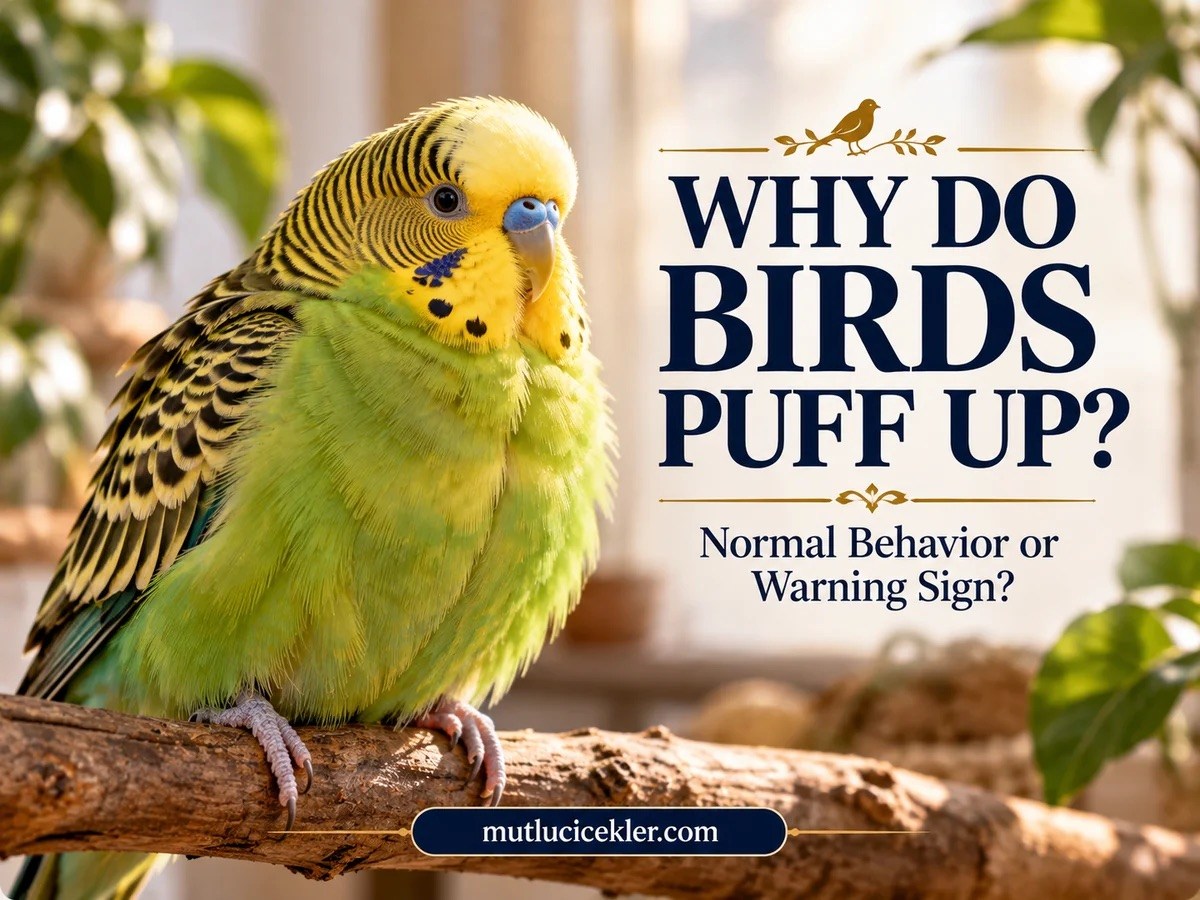
Birds puff up their feathers for several reasons: to conserve warmth, settle down for sleep, preen, or respond to their surroundings. Brief fluffing in an otherwise alert, active bird can be normal. But a budgie, cockatiel, or other pet bird that stays fluffed up while eating less, breathing differently, or becoming unusually quiet may be unwell and needs prompt veterinary advice.
The key is not the feather position alone. Watch how long it lasts, what your bird is doing, and whether its normal appetite, droppings, voice and activity have changed. This guide helps you distinguish everyday behavior from warning signs without trying to diagnose an illness at home.
Why do birds fluff up their feathers?
A bird can raise or relax its feathers by moving tiny muscles at their bases. Changing the spacing between feathers helps adjust insulation and is also part of ordinary grooming and body language. The same visible posture can therefore have more than one explanation.
- Keeping warm: Raised feathers can trap a layer of air close to the body.
- Resting: A bird may look rounder while dozing or settling down for the night.
- Grooming: Brief fluffing, shaking and preening help feathers return to position.
- Comfort or communication: A relaxed bird may fluff briefly, but posture alone cannot prove a particular emotion.
- Illness or discomfort: Persistent puffing combined with behavioral changes deserves veterinary attention.
Normal puffing: what does a comfortable bird look like?
A budgie that briefly fluffs up, stretches, shakes its feathers, and then resumes chirping, eating or exploring is behaving differently from a bird that remains rounded and withdrawn. During a normal rest period, a bird may tuck its head or stand on one foot; this is reassuring only when the rest of its behavior and health are normal.
After bathing, feathers may also be rearranged and fluffed while the bird dries. Keep the environment comfortable and free of drafts. Avoid assuming that every puffed-up bird is happy or that a sleepy posture is always harmless: context matters.
Puffing up when cold
Feather fluffing helps reduce heat loss. A bird may do it more in a cool room, near a draft, or during colder seasons. The RSPCA notes that changes in rest and feather posture can accompany winter conditions, but marked lethargy or excessive fluffing should not simply be dismissed as cold weather.
Check for drafts, sudden temperature swings and exposure to direct air-conditioning. Move the cage away from open windows and vents to a stable, comfortable environment. Do not place the bird directly against a heater, use an unregulated heat lamp, or overheat a closed cage. If the bird remains puffed and subdued, contact an avian veterinarian rather than relying on warmth alone.
When puffed feathers may mean illness
Birds can conceal weakness, so small changes may matter. Persistent fluffing is especially concerning when it occurs together with reduced appetite, unusual sleepiness, changes in droppings, loss of balance or difficulty perching. The Merck Veterinary Manual and the Association of Avian Veterinarians both identify changes in feather posture and behavior among reasons to seek veterinary assessment.
Warning signs that need urgent help
- Breathing with an open beak, obvious effort to breathe, or repeated tail movement with each breath.
- Sitting on the cage floor, falling, marked weakness, or inability to perch.
- Not eating or drinking normally, vomiting, or a pronounced change in droppings.
- Unusual inactivity, eyes closed for much of the day, or sudden loss of normal vocalization.
- Bleeding, seizures, collapse, or a rapid deterioration in condition.
Do not wait for several signs to appear. Breathing distress, collapse or severe weakness warrants immediate veterinary attention. A bird that remains fluffed and less active than usual should be assessed promptly, ideally the same day. Only a veterinarian can determine the underlying cause.
Stress, unfamiliar surroundings and feather posture
A new cage, loud sounds, nearby pets or sudden handling may change a bird’s posture. Some birds make themselves appear larger during an alert or defensive response. However, stress should never be used as a convenient explanation for prolonged puffing when appetite or activity has also changed.
Offer a predictable routine, places to perch comfortably, opportunities to retreat, and a quiet area. Observe without repeatedly chasing or handling the bird. If the change persists, seek professional advice.
What to do if your budgie stays puffed up
- Observe from a distance: Note when the posture started and whether the bird is alert, eating, drinking and perching normally.
- Check the environment: Remove drafts and sudden temperature changes; keep the bird somewhere calm.
- Record useful details: Note food intake, droppings, recent diet or cage changes and any unusual breathing; a short video may help the vet.
- Contact an avian veterinarian: Describe the signs and ask how urgently the bird needs examination.
- Avoid home treatments: Do not give human medicines, leftover antibiotics, essential oils or forced food or water without veterinary instructions.
If the bird appears very weak or has trouble breathing, minimize handling and follow the veterinary clinic’s instructions for safe transport. A warm, quiet setting may reduce stress while arranging care, but it is not a substitute for treatment.
How to tell normal resting from a warning sign
More reassuring: A short fluff-and-shake, followed by normal posture; the bird remains responsive, interested in food and active at its usual times. More concerning: The bird stays round and still for long periods, is unusually silent, closes its eyes frequently, refuses food, or breathes with effort. A single snapshot cannot reliably distinguish the two.
Frequently asked questions
Why does my budgie puff up and close its eyes?
It may be settling down for a normal nap. But if this happens unusually often, particularly during its usual active hours or together with reduced appetite, it can indicate illness. Contact an avian veterinarian.
Does puffing up always mean my bird is cold?
No. Feather fluffing also happens during rest, grooming and some social responses. Cold is only one possible explanation.
Why is my bird puffed up but still eating?
Eating is reassuring but does not rule out illness. Watch for a change from its usual behavior, droppings or breathing. Persistent abnormal posture merits veterinary advice even if the bird still takes some food.
Should I give my puffed-up bird medication?
Not without veterinary direction. Several conditions can produce similar signs, and the wrong medication or dose may be harmful.
Conclusion
A few seconds of fluffy feathers can be part of normal bird life. Persistent puffing, especially with tiredness, appetite changes or breathing difficulty, is different. Learn your bird’s everyday pattern, act quickly when that pattern changes, and ask an avian veterinarian rather than relying on online symptom lists for a diagnosis.
Sources and editorial note
- Merck Veterinary Manual — Illness in Pet Birds (reviewed April 2025).
- Association of Avian Veterinarians — Signs of Illness in Companion Birds.
- RSPCA — Caring for Pet Birds in Winter.
Editorial update — 30 October 2026: The original explanations of warmth, rest, comfort, stress and illness were retained and expanded with a practical decision guide, urgent warning signs and veterinary sources. This article is general educational information, not a diagnosis or treatment plan. The cover image is an AI-generated illustration of a budgie.
Bir yanıt yazın