

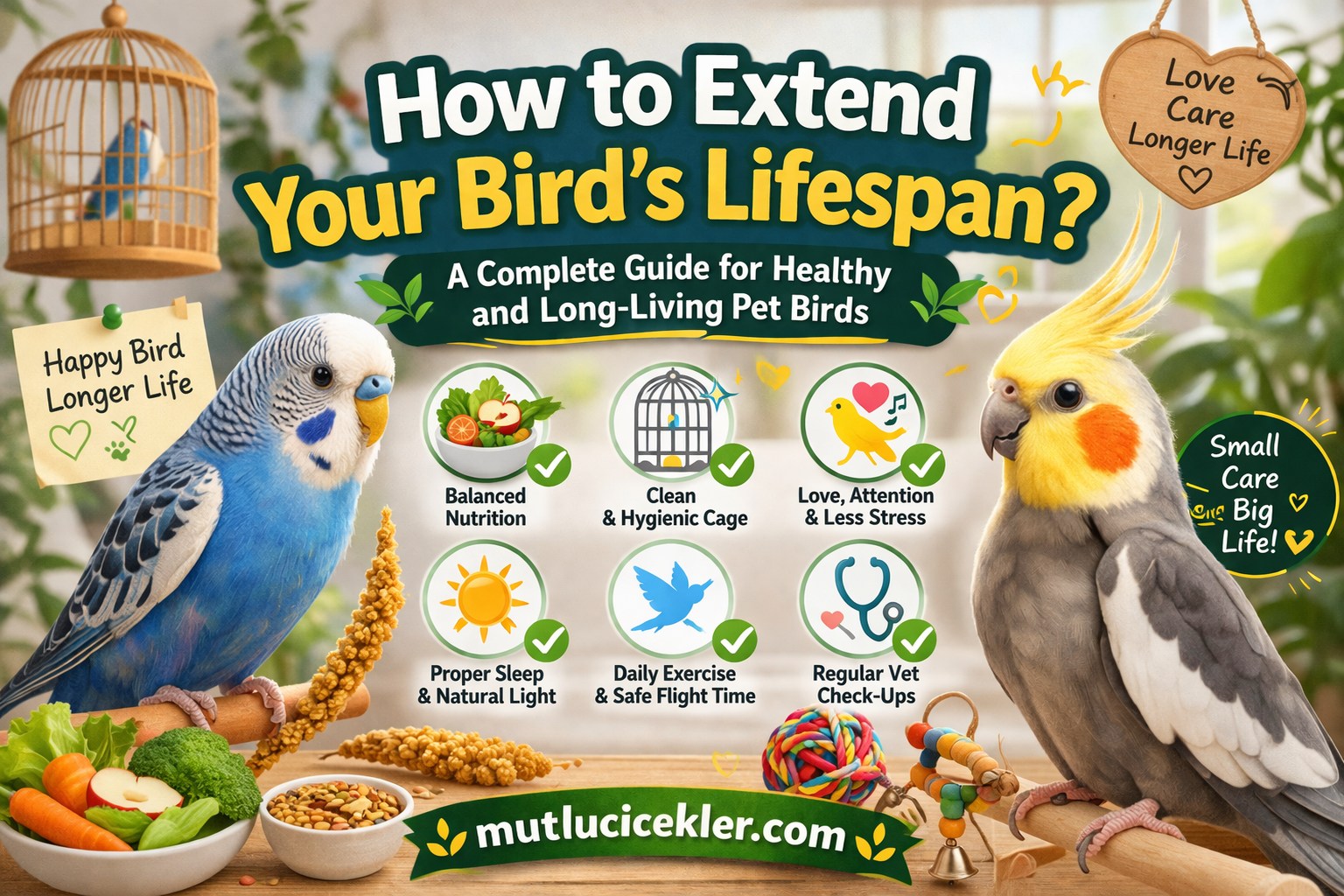
Can better care help a pet bird live longer? Good nutrition, safe housing, meaningful activity and preventive veterinary care can reduce avoidable health risks—but no routine can guarantee a particular lifespan. Budgies, cockatiels, finches and large parrots have very different needs, so the best care plan starts with your bird’s species, age and health.
This practical guide explains what to feed, how to make the home safer, which warning signs should never be ignored and what to do every day and week. It is intended for companion-bird owners and does not replace advice from an avian veterinarian.
How Long Do Pet Birds Typically Live?
Lifespan varies with species, genetics, medical history and care. The following figures are broad reference ranges rather than promises for individual birds.
| Pet bird | Approximate lifespan or potential | Important context |
|---|---|---|
| Budgerigar (budgie) | Often around 5–10 years | Some well-cared-for individuals live longer |
| Finch | Often around 5–10 years | Varies among finch species |
| Canary | Up to about 15 years | Individual lifespan varies |
| Cockatiel | Can live up to about 20 years | Health, husbandry and genetics matter |
| African grey parrot | Often around 30–50 years | A long-term commitment requiring specialised care |
These estimates are drawn from the Merck Veterinary Manual’s popular pet bird reference table. Treat any exact number on social media as a rough guide, not as a way to predict your own bird’s lifespan.
1. Build a Species-Appropriate Diet—Not a Seed-Only Menu
A diet based almost entirely on seeds can be high in fat and deficient in important nutrients. For many pet parrots, a nutritionally formulated, species-appropriate diet combined with suitable vegetables is a better foundation. However, there is no single pellet-to-seed percentage for every bird: smaller parrots, finches, canaries, lories and birds with medical conditions may require different feeding plans.
- Ask an avian veterinarian which commercial food is appropriate for your bird’s species, size and life stage. Do not assume a formula for a large parrot is ideal for a budgie.
- Where appropriate, offer washed, bird-safe vegetables such as leafy greens, broccoli, carrot and bell pepper. Fruit is generally a smaller portion because of its sugar content.
- Use millet, seeds or nuts as species-appropriate portions or training rewards rather than automatically making them the entire diet.
- Provide fresh drinking water every day and wash water containers daily; replace water sooner if it becomes soiled.
- Remove perishable food promptly. Spoiled produce or moldy seeds can cause illness.
How to change a seed-based diet safely
Never abruptly remove the only food a bird reliably eats. Introduce new foods gradually, observe actual intake and follow a veterinarian’s conversion plan. A bird can appear to investigate pellets without consuming enough calories. During a diet transition, monitor its weight and droppings; sudden weight loss or reduced droppings calls for immediate veterinary advice.
Foods and supplements that need caution
Keep avocado, chocolate, alcohol, caffeine, very salty foods, fruit pits and apple seeds away from pet birds. Do not provide human medication or vitamin and mineral supplements unless your avian veterinarian recommends them: excessive supplementation can be harmful, especially with complete formulated diets. Never self-treat a bird that has eaten a potentially toxic substance; contact an avian veterinarian promptly.
2. Choose a Spacious, Safe Cage and Healthy Perches
A cage is not just a place for food bowls. It is a living space where your bird must be able to spread its wings, climb, play and move naturally. Choose the largest practical bird-safe enclosure, with bar spacing appropriate to the species so the head cannot become trapped. A longer horizontal flight space is particularly useful for small birds that fly from perch to perch.
- Offer perches of different safe diameters and textures, including clean, pesticide-free natural branches suited to the species.
- Avoid relying on identical smooth dowels or abrasive sandpaper perch covers, which can contribute to foot problems.
- Position perches so droppings do not fall into food or water bowls; do not overcrowd the cage with toys.
- Inspect bars, clips, bells, ropes and toys for sharp edges, loose fibers, exposed metal and pieces that could be swallowed.
- Keep the enclosure away from kitchens, smoke, cooking fumes, drafts, prolonged direct heat and high-traffic hazards.
Always consider the bird’s individual mobility and temperament when choosing perches and cage placement. A bird with arthritis or disability may need a modified setup recommended by a veterinarian.
3. Clean Daily—Not Just Once or Twice a Week
The earlier version of this guide suggested cleaning the cage one or two times a week. That can be misleading if it means leaving droppings, dirty dishes or damp food in place. A better routine separates daily hygiene from a more thorough cleaning.
- Every day: replace the cage-floor paper, inspect droppings, clear uneaten fresh food and clean food and water bowls.
- Regularly: wash dirty perches, play stands and toys using bird-safe methods, then rinse and dry thoroughly.
- Weekly or as needed: deep-clean cage surfaces and accessories; increase frequency for larger or multi-bird enclosures.
- Keep birds away from cleaning chemicals and fumes. Never mix household cleaners, particularly bleach with ammonia or acids.
Cleanliness also makes health monitoring easier: changes in droppings or food intake are much harder to notice in a dirty enclosure.
4. Provide Exercise, Foraging and Social Enrichment
Birds are active, intelligent animals. Appropriate movement and mental stimulation support their welfare. The goal is not simply to add more toys; it is to make safe opportunities for natural behaviours such as flying, climbing, exploring, chewing and searching for food.
- Offer supervised out-of-cage activity in a bird-proofed room. Turn off ceiling fans, close windows and doors, cover large reflective surfaces when necessary and separate pets that could injure the bird.
- Rotate safe toys and foraging puzzles. Start with easy challenges and make sure the bird continues to access enough food.
- Use gentle, reward-based interaction and respect signs that your bird wants space.
- Match social arrangements to the species and individual bird. Some birds need compatible avian companionship; others require careful introductions or separate housing.
Never leave pet birds flying freely around hot stovetops, uncovered water, open doors or unprotected electrical cables.

5. Protect Sleep and Establish a Predictable Routine
Many commonly kept diurnal companion birds do best with roughly 10–12 hours of quiet, uninterrupted night-time rest, but exact needs differ by species, season and health. Consistent light and dark periods matter more than forcing every bird to follow an identical clock.
- Provide a quiet sleeping location away from bright television screens and late-night activity.
- Allow natural daytime light while protecting birds from overheating behind glass; do not place the cage in strong midday sun without shade.
- Avoid unnecessary nighttime disturbances and abrupt routine changes.
- Discuss species-specific lighting or UV requirements with an avian veterinarian instead of using an unverified lamp or supplement.
6. Make Household Air and Everyday Spaces Bird-Safe
This is one of the most overlooked parts of bird care. Birds have sensitive respiratory systems, and certain airborne substances or heated coatings can be dangerous or fatal.
- Cooking and non-stick surfaces: keep birds away from kitchens and overheated PTFE/non-stick cookware or appliances; use great care with self-cleaning ovens.
- Airborne products: avoid cigarette smoke, aerosol cleaners, perfumes, strong fragrances, insecticides, incense and scented candles around birds.
- Poisoning and injury: prevent contact with lead or zinc sources, unknown houseplants, medications, adhesives, electrical cords and hot liquids.
- Escape and collisions: secure windows and doors; supervise flying near mirrors, glass, fans and other pets.
If fumes are released and your bird shows distress, move it away from the exposure only if you can do so safely and contact an emergency avian veterinarian immediately. Do not wait for symptoms to resolve on their own.
7. Schedule Preventive Visits With an Avian Veterinarian
Birds often conceal illness until it is advanced. An initial examination after adoption and at least an annual wellness check with a veterinarian experienced in birds can uncover nutrition, weight, respiratory, feather or behavioral problems. Senior birds and birds with chronic illnesses may need more frequent appointments.
- Discuss baseline weight, body condition, diet, beak and nail health, droppings and enrichment.
- Ask which tests are appropriate for your bird rather than assuming every species needs the same screening package.
- Before introducing a new bird to existing birds, arrange a veterinary assessment and ask about safe separation or quarantine.
- Learn where the nearest avian emergency service is located before an emergency occurs.
Weigh your bird and learn its normal baseline
Because feathers conceal changes in body condition, a small gram scale can be helpful for routine monitoring if your bird tolerates it. Weigh consistently at a similar time and record trends; the right schedule depends on the species and your veterinarian’s advice. A sudden decline, persistent change or difficulty eating deserves a veterinary call.
8. Recognize Illness Early—Especially Respiratory Emergencies
A bird may still perch and appear fairly alert while becoming ill. Do not use bright eyes or smooth feathers alone as proof of good health. Changes from your bird’s usual behaviour are often more useful.
Warning signs that warrant prompt veterinary advice
- Reduced appetite, unusually small or altered droppings, vomiting, excessive sleeping or a major drop in activity.
- Fluffed feathers for prolonged periods, sitting unusually low, reluctance to perch, weakness or loss of balance.
- New discharge around the eyes or nostrils, sudden changes in voice, or noticeable weight loss.
- Difficulty breathing, wheezing, open-mouth breathing or pronounced tail bobbing with each breath.
Emergency: a bird that is unresponsive, bleeding actively, having trouble breathing or lying weakly on the cage floor needs immediate professional attention. Do not force-feed, give leftover antibiotics or attempt home remedies while waiting for a diagnosis.
9. Adjust Care as Your Bird Ages
Ageing birds can develop joint discomfort, visual changes, reduced mobility and other conditions. Support them with easier access to food and water, secure lower perches if needed, a stable environment and a veterinary review of diet and activity. A slower bird is not automatically “just old”—pain or illness should be ruled out.
Pet Bird Care Checklist: What to Do and When
| When | Care task |
|---|---|
| Every morning | Observe behaviour, breathing, appetite and droppings; replace water and offer species-appropriate food |
| Every day | Replace soiled cage paper, clean bowls, provide supervised activity and safe enrichment |
| Several times a week | Check toy wear, cage fittings and perches; adjust or rotate enrichment safely |
| Weekly or when needed | Thoroughly clean the enclosure and record weight if recommended for your bird |
| Every year (or more often if advised) | Arrange an avian-veterinary wellness examination |
Frequently Asked Questions
Can a seed-only diet shorten a bird’s life?
A poorly balanced seed-only diet can contribute to nutritional deficiencies and illness. However, diet composition differs by species. Ask an avian veterinarian how to move toward an appropriate balanced menu without risking food refusal.
Do pet birds really need 10–12 hours of sleep?
That is a commonly recommended nighttime-rest range for many diurnal companion birds, not a universal rule. Keep nights quiet and ask your veterinarian if your bird’s sleep pattern or behaviour changes.
Is it safe to let my budgie or cockatiel fly around the home?
Supervised exercise can be beneficial after the room has been made bird-safe. Secure doors and windows, switch off fans, cover hazards and remove other animals when necessary.
Does a healthy-looking bird still need a vet visit?
Yes. Birds can hide signs of illness. Preventive exams help establish a baseline and may detect problems before they become severe.
Final Thoughts: A Longer Life Starts With Safer Daily Habits
There is no proven trick that adds a fixed number of years to a pet bird’s life. The strongest foundation is consistent, species-appropriate nutrition; room to move; low-stress enrichment; clean air and housing; attentive monitoring; and reliable avian veterinary care. Small daily decisions can make a meaningful difference to welfare and prevent avoidable harm.
Veterinary note: This article offers general education only. Never delay professional care when a bird is ill, injured or potentially poisoned.
Veterinary and Public-Health References
- Merck Veterinary Manual — Popular Pet Birds (species and typical lifespans)
- Merck Veterinary Manual — Management of Pet Birds (diet, housing and clinical care)
- Merck Veterinary Manual — Providing a Home for a Bird
- Merck Veterinary Manual — Household Hazards for Pet Birds
- Merck Veterinary Manual — Illness in Pet Birds
- Merck Veterinary Manual — Importance of Veterinary Care in Pet Birds
- Association of Avian Veterinarians — Bird Owner Resource Series
- US Centers for Disease Control and Prevention — Birds: Healthy Pets, Healthy People
Bir yanıt yazın