

🥛 What Is Kurut?
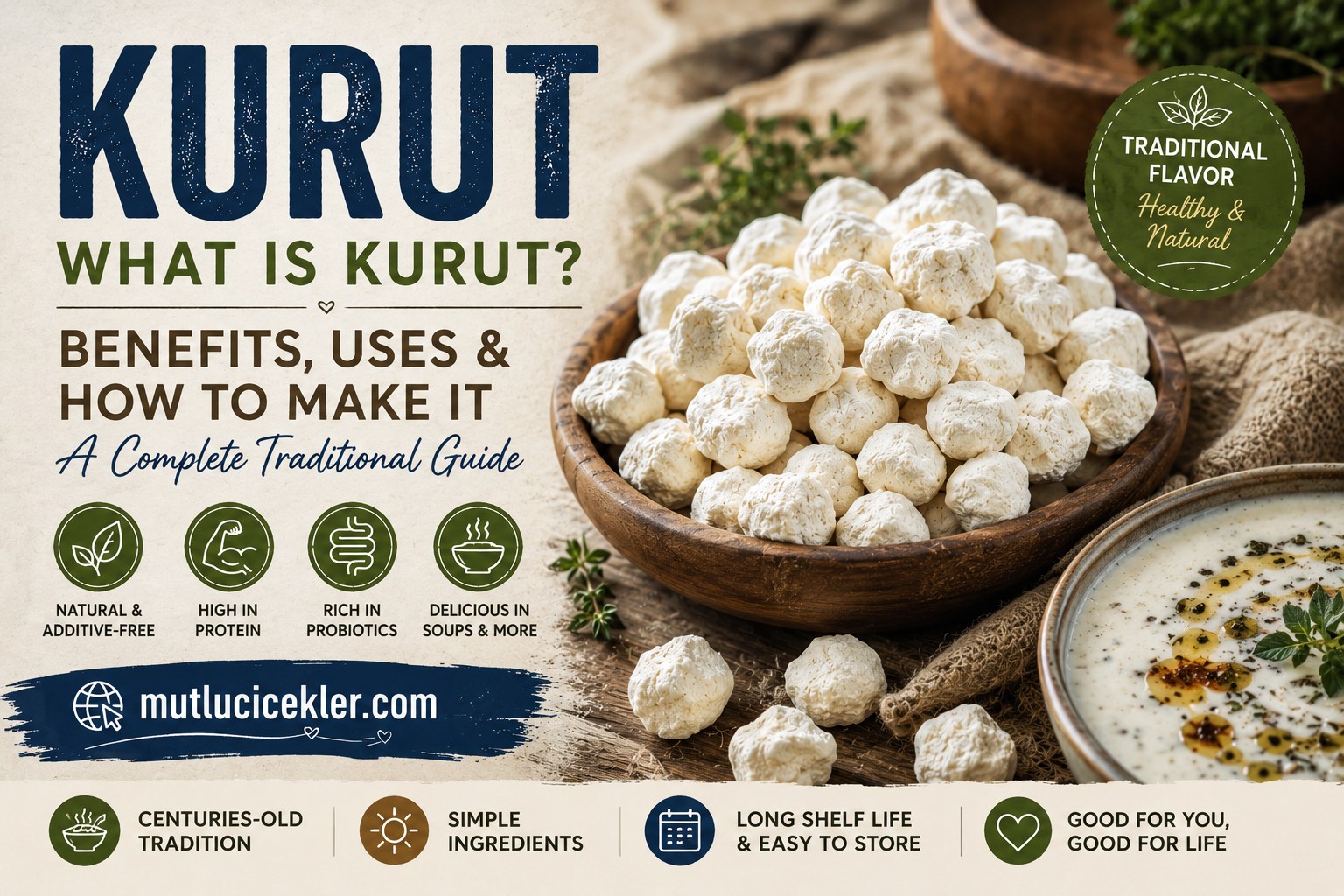
Kurut is a traditional dried dairy product made by straining yogurt or buttermilk, salting it, and drying it until it becomes firm and long-lasting. It has been consumed for centuries across Central Asia, Anatolia, the Caucasus, and parts of the Middle East.
Known for its rich flavor, high nutritional value, and long shelf life, kurut was historically an essential food for nomadic communities. Because it could be stored for months without refrigeration, it became one of the most practical and valuable traditional foods.
Kurut usually appears as small white or cream-colored balls with a slightly tangy and salty taste. Today, it is used in soups, sauces, traditional dishes, and even modern gourmet cuisine.
🌍 The History and Origin of Kurut
The origins of kurut date back thousands of years. It is believed to have first emerged among Turkic and Central Asian nomadic tribes who needed durable food sources during long journeys.
By drying fermented dairy products, they managed to:
- Preserve yogurt for long periods
- Reduce spoilage
- Increase portability
- Retain nutritional value
Today, kurut is still widely consumed in:
- Türkiye
- Kazakhstan
- Kyrgyzstan
- Uzbekistan
- Mongolia
- Azerbaijan
- Iran
- Afghanistan
Each region may have slightly different preparation methods and names, but the traditional essence remains the same.
🧀 Nutritional Value of Kurut
Kurut is highly nutritious and concentrated in essential nutrients.
It typically contains:
- Protein
- Calcium
- Potassium
- Phosphorus
- Vitamin B12
- Beneficial probiotics
Because the moisture is removed during drying, the nutrients become more concentrated compared to regular yogurt.
Average Nutritional Values Per 100g
| Nutrient | Amount |
|---|---|
| Calories | 320-380 kcal |
| Protein | 20-25 g |
| Fat | 15-20 g |
| Carbohydrates | 10-15 g |
| Calcium | High |
| Sodium | Moderate-High |
✅ Benefits of Kurut
🦴 1. Supports Bone Health
Kurut is rich in calcium, which helps strengthen bones and teeth.
💪 2. High in Protein
Its concentrated protein content makes it a satisfying and energizing food.
🦠 3. Supports Digestion
As a fermented dairy product, kurut may help support gut health and digestion.
⚡ 4. Provides Energy
Its dense nutritional structure makes it a great energy source.
🛡️ 5. Long Shelf Life
When stored properly, kurut can last for months without spoiling.
🌿 6. Natural and Traditional
Homemade kurut contains no artificial preservatives or additives.
🍽️ How Is Kurut Used?
Kurut is surprisingly versatile in traditional and modern cooking.
🍲 In Soups
One of the most popular uses is in traditional yogurt-based soups.
🥟 In Dough Dishes
Some regional dumplings and pastries use kurut for added flavor.
🥗 As a Sauce Base
It can be crushed and mixed with water to create savory sauces.
🥜 As a Snack
In many regions, kurut is eaten directly as a salty snack.
🍝 With Rice or Pasta
Its intense flavor can elevate simple dishes.
🏡 How to Make Kurut at Home
Making kurut at home takes patience but produces an authentic traditional flavor.
🥛 Ingredients
- 3 liters full-fat yogurt
- 1 tablespoon rock salt
- Cheesecloth or straining cloth
👩🍳 Step-by-Step Kurut Recipe
1. Strain the Yogurt
Place the yogurt into a cheesecloth and allow excess water to drain for several hours.
2. Add Salt
Mix the thickened yogurt with rock salt thoroughly.
3. Shape the Balls
Take small portions and roll them into bite-sized balls.
4. Dry the Kurut
Place the yogurt balls onto a clean cloth or tray.
Dry them:
- In a sunny and airy place
- For about 4–10 days
- Turning occasionally
- Away from humidity
5. Store Properly
Once completely dry and firm, place them in airtight glass jars.
☀️ Tips for Perfect Kurut
- Use natural homemade yogurt if possible
- Keep everything clean during preparation
- Avoid humid environments
- Do not skip the drying process
- Store only when fully hardened
🧊 How to Store Kurut
Proper storage helps preserve kurut for a very long time.
Storage Tips
✅ Store in glass jars
✅ Keep away from moisture
✅ Place in a cool environment
✅ Avoid direct sunlight
Under ideal conditions, kurut can last for several months.
🌿 Kurut in Modern Cuisine
As interest in fermented and traditional foods grows worldwide, kurut is becoming popular again in modern kitchens.
Today, chefs use kurut in:
- Gourmet soups
- Fermented food platters
- Healthy snacks
- Fusion cuisine
- Traditional-inspired recipes
Its bold flavor and nutritional benefits make it attractive for health-conscious food lovers.
🇹🇷 Kurut in Turkish Cuisine
In Türkiye, kurut is especially common in Eastern Anatolia and Central Anatolia.
It is traditionally consumed in cities such as:
- Van
- Erzurum
- Kars
- Ağrı
- Erzincan
- Sivas
Some regions also refer to similar products as:
- Keş
- Dried yogurt
- Winter yogurt
⚠️ Things to Consider Before Consuming Kurut
Although kurut is healthy, it should be consumed in moderation due to its salt content.
People with:
- High blood pressure
- Kidney conditions
- Salt sensitivity
should avoid excessive consumption.
📌 Conclusion
Kurut is more than just a traditional dairy product — it is a cultural heritage food passed down through generations. Its rich nutritional profile, long shelf life, and unique flavor make it one of the most fascinating fermented foods in traditional cuisine.
Whether used in soups, sauces, snacks, or modern recipes, kurut continues to connect ancient culinary traditions with today’s kitchens.
If you enjoy discovering authentic and natural foods, homemade kurut is definitely worth trying.
❓ Frequently Asked Questions (FAQ)
Is kurut the same as dried yogurt?
Yes, kurut is essentially a form of dried and salted yogurt, though preparation methods vary by region.
Can kurut be eaten directly?
Yes, many people eat it as a snack.
How long does kurut last?
When properly stored, it can last for months.
Does kurut need refrigeration?
Not always. If fully dried and stored correctly, refrigeration may not be necessary.
Is kurut healthy?
Yes, it is rich in protein, calcium, and probiotics, but should be consumed in moderation because of its salt content.
📌 Follow mutlucicekler.com for more traditional recipes, global food culture guides, and natural living content!
Bir yanıt yazın