
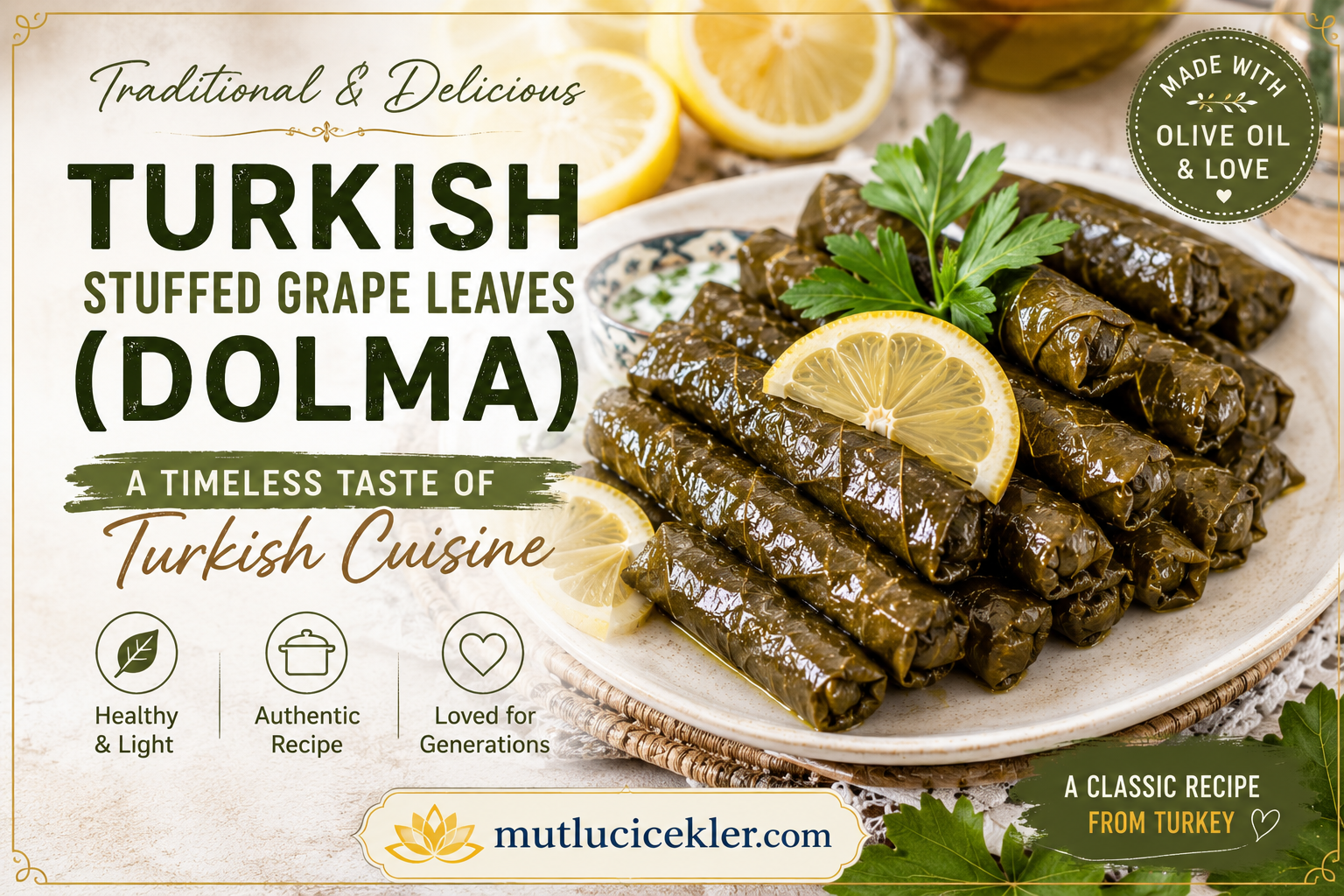
Stuffed grape leaves, known as Dolma or Yaprak Sarma, are one of the most iconic dishes of Turkish cuisine. Prepared with delicate vine leaves wrapped around a flavorful rice filling, this traditional dish has been enjoyed for centuries across Türkiye, Azerbaijan, and many parts of Central Asia influenced by Turkic culture.
The word “Dolma” comes from the Turkish verb “doldurmak”, meaning “to fill” or “to stuff.” This perfectly describes the cooking technique used in the dish — vegetables or leaves filled with aromatic ingredients. The term has deep roots in Turkish culinary history and spread throughout regions connected to the Ottoman Empire and Turkic communities.
Today, dolma remains a beloved symbol of Turkish hospitality, family gatherings, festive tables, and traditional home cooking.
🥬 Ingredients for Turkish Yaprak Sarma
For the Grape Leaves:
- 500 g preserved grape leaves
- Hot water for soaking
For the Filling:
- 2 cups rice
- 2 large onions
- 3 tablespoons olive oil
- 1 tablespoon tomato paste
- 1 teaspoon red pepper paste
- 1/2 tea glass pomegranate molasses
- 1/2 bunch fresh parsley
- 1 teaspoon dried mint
- 1 teaspoon black pepper
- 1 teaspoon red pepper flakes
- 1 teaspoon salt
- 1 teaspoon allspice
- Juice of half a lemon
- 1 cup hot water
For Cooking:
- Olive oil
- Lemon slices
- Hot water
👩🍳 How to Make Turkish Dolma
1. Prepare the Grape Leaves
If using preserved grape leaves, soak them in hot water for 10-15 minutes to remove excess salt. Rinse well and drain.
2. Make the Filling
Heat olive oil in a pan and sauté the finely chopped onions until soft.
Add tomato paste and pepper paste, then stir for another minute. Add washed rice and all spices. Pour in pomegranate molasses, lemon juice, and hot water.
Cook the mixture for about 5 minutes before adding chopped parsley.
3. Roll the Dolma
Place each grape leaf shiny side down. Add a small spoonful of filling near the stem area.
Fold in the sides and roll tightly into thin cylinders.
4. Arrange and Cook
Line the bottom of a pot with a few grape leaves. Arrange the dolmas tightly side by side.
Top with lemon slices and drizzle olive oil over them. Add enough hot water to slightly cover the dolmas.
Place a heatproof plate on top to keep them from opening during cooking. Simmer on low heat for about 40-45 minutes.
✨ Tips for Perfect Turkish Stuffed Grape Leaves
- Thin grape leaves create the best texture.
- Rolling tightly helps the dolmas keep their shape.
- Letting the dolma rest overnight enhances the flavor.
- Olive oil and lemon are essential for authentic Turkish taste.
- Tokat-style grape leaves are especially popular in Türkiye.
🌍 Dolma in Turkish and Central Asian Culture
Dolma is much more than a recipe — it is part of a shared culinary heritage across the Turkic world. Variations of dolma can be found in Türkiye, Azerbaijan, Turkmenistan, Uzbekistan, and other Central Asian regions.
In Turkish cuisine, dolma is traditionally served during:
- Family gatherings
- Religious holidays
- Wedding celebrations
- Tea time and special dinners
Although many neighboring cuisines have their own versions today, the origin and terminology of dolma are deeply connected to Turkish culinary traditions and Turkic history.
🍋 What to Serve with Yaprak Sarma
Turkish stuffed grape leaves pair beautifully with:
- Cacık (Turkish yogurt dip)
- Ayran
- Fresh lemon slices
- Shepherd’s salad
- Turkish tea
🔥 Calories in Turkish Dolma
One medium-sized olive oil stuffed grape leaf contains approximately:
- 35–45 calories
Calories may vary depending on ingredients and portion size.
👨🍳 Chef’s Recommendations
For the best Turkish stuffed grape leaves, small details can make a big difference in both texture and flavor:
- Choose tender grape leaves: Thin, young leaves are easier to roll and become more delicate after cooking.
- Do not overfill the leaves: Rice expands while cooking, so leave a little room inside each roll.
- Keep the rolls similar in size: This helps all the stuffed grape leaves cook evenly.
- Arrange them tightly in the pot: Keeping the rolls close together prevents them from opening during cooking.
- Cook slowly: Low heat allows the rice to soften gradually while helping the grape leaves remain intact.
- Let them rest before serving: Olive oil yaprak sarma develops a richer flavor as it cools. For an even deeper taste, refrigerate it for several hours or overnight.
- Finish with fresh lemon: A little freshly squeezed lemon juice before serving adds brightness and balances the richness of the olive oil.
Chef’s Tip: For an elegant Turkish-style presentation, arrange the stuffed grape leaves neatly on a serving plate and serve them with lemon wedges and a small bowl of thick yogurt on the side.
❓ Frequently Asked Questions
Is dolma served hot or cold?
Olive oil dolma is usually served cold or at room temperature.
Can stuffed grape leaves be frozen?
Yes. They can be frozen either cooked or uncooked.
Why is it called dolma?
The word comes from the Turkish verb “doldurmak,” meaning “to fill” or “stuff.”
🌱 Final Thoughts
Turkish Yaprak Sarma is one of the finest examples of traditional Turkish cuisine. With its delicate texture, aromatic filling, and rich cultural history, dolma continues to be a timeless favorite from Central Asia to Anatolia.
Whether served at festive gatherings or enjoyed as a comforting homemade meal, this classic Turkish dish brings generations together around the table.
Follow !
For more traditional Turkish recipes and global food culture guides, visit mutlucicekler.com.


Bir Cevap Yazın