

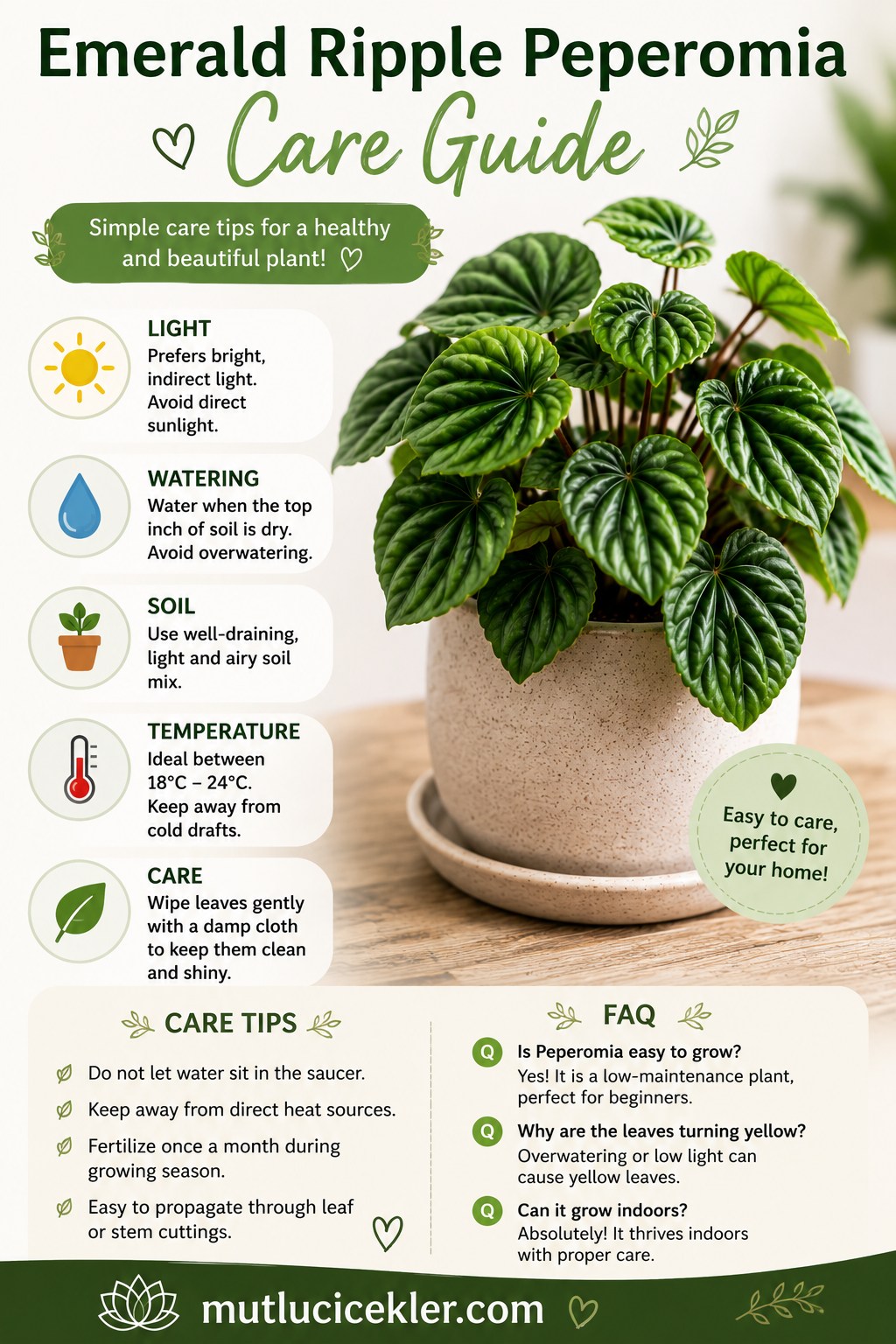
The Emerald Ripple Peperomia is one of the most popular indoor plants thanks to its compact shape, glossy textured leaves, and easy-care nature. With its elegant dark green foliage and decorative appearance, this tropical plant is perfect for homes, offices, and modern indoor spaces.
If you are looking for a low-maintenance houseplant that still looks stylish and vibrant, Peperomia is an excellent choice. In this complete Emerald Ripple Peperomia Care Guide, you will learn everything about watering, sunlight, soil, temperature, propagation, fertilizing, and expert care tips for keeping your plant healthy year-round.
What Is Emerald Ripple Peperomia?
Emerald Ripple Peperomia (Peperomia caperata) is a compact tropical houseplant native to South America, especially Brazil. It belongs to the Piperaceae family and is loved for its rippled heart-shaped leaves and attractive texture.
This plant is widely used in:
- Modern home decoration
- Office desks
- Small apartments
- Indoor plant collections
Because of its manageable size and minimal care requirements, it is ideal for beginners.
Emerald Ripple Peperomia Features
🌿 Deep green textured leaves
🌿 Compact growth habit
🌿 Easy-care indoor plant
🌿 Suitable for small spaces
🌿 Airy and decorative appearance
🌿 Slow to moderate growth rate
Best Light for Peperomia
Peperomia plants prefer bright indirect light.
☀️ Ideal lighting conditions:
- Bright rooms with filtered sunlight
- East or north-facing windows
- Medium light conditions also work well
Avoid:
- Harsh direct sunlight
- Intense afternoon sun
Too much sunlight can scorch the leaves and fade their rich green color.
How Often Should You Water Peperomia?
One of the most common mistakes with Peperomia is overwatering.
💧 Watering tips:
- Allow the top layer of soil to dry before watering
- Water thoroughly but avoid soggy soil
- Reduce watering during winter
Peperomia stores moisture in its leaves, so it tolerates slight dryness better than excessive moisture.
Signs of Overwatering
⚠️ Yellow leaves
⚠️ Mushy stems
⚠️ Root rot
⚠️ Drooping foliage
Best Soil for Emerald Ripple Peperomia
Peperomia needs light, airy, and well-draining soil.
🌱 Recommended soil mix:
- Peat moss or coco peat
- Perlite
- Orchid bark or coarse sand
Heavy compact soil can trap water and damage the roots.
Ideal Temperature and Humidity
Emerald Ripple Peperomia enjoys warm indoor temperatures.
🌡️ Best temperature range:
- 18°C to 24°C (65°F to 75°F)
Avoid:
- Cold drafts
- Sudden temperature changes
- Frost exposure
Humidity Needs
Peperomia prefers moderate humidity levels but adapts well to average indoor humidity.
Fertilizing Peperomia
Feed the plant lightly during the growing season.
🌿 Fertilizer recommendations:
- Use balanced liquid fertilizer
- Feed once a month in spring and summer
- Avoid overfertilizing
Too much fertilizer can cause weak growth and salt buildup in the soil.
How to Propagate Emerald Ripple Peperomia
Peperomia is very easy to propagate.
Leaf Cutting Method
- Cut a healthy leaf with a short stem
- Place it in moist soil or water
- Keep in bright indirect light
- Maintain slight humidity
Roots and small baby plants usually appear within a few weeks.
Common Peperomia Problems
Yellow Leaves
Usually caused by:
- Overwatering
- Poor drainage
- Lack of light
Curling Leaves
Possible reasons:
- Dry air
- Underwatering
- Temperature stress
Soft Stems
Often related to:
- Excess moisture
- Root rot
How to Keep Peperomia Healthy
✨ Avoid overwatering
✨ Use pots with drainage holes
✨ Keep away from direct sunlight
✨ Wipe leaves occasionally to remove dust
✨ Repot only when rootbound
✨ Maintain stable indoor temperatures
Does Peperomia Flower?
Yes, Peperomia can produce small spike-like flowers.
🌸 Flowering characteristics:
- Thin upright flower spikes
- Usually green or cream-colored
- More decorative foliage than flowers
Most people grow Peperomia mainly for its attractive leaves.
Is Peperomia Safe for Pets?
Good news for pet owners!
🐾 Emerald Ripple Peperomia is considered non-toxic to cats and dogs, making it a safer choice for homes with pets.
However, it is still best to prevent pets from chewing houseplants excessively.
Can Peperomia Grow Indoors?
Absolutely! Peperomia is one of the best indoor plants for beginners.
🏡 Indoor benefits:
- Compact size
- Low maintenance
- Stylish appearance
- Adapts well to indoor environments
- Great for shelves and desks
Its elegant texture works beautifully in minimalist and modern interiors.
Benefits of Emerald Ripple Peperomia
🌿 Decorative tropical appearance
🌿 Easy to care for
🌿 Perfect for beginners
🌿 Pet-friendly houseplant
🌿 Suitable for small apartments
🌿 Helps create a relaxing indoor atmosphere
Expert Peperomia Care Tips
🌱 Water only when soil partially dries
🌱 Use airy well-draining soil
🌱 Keep in bright indirect light
🌱 Protect from cold temperatures
🌱 Avoid excessive fertilizer
🌱 Clean leaves regularly for healthy shine
Conclusion
Emerald Ripple Peperomia is a stylish, beginner-friendly indoor plant that combines beauty with simplicity. Its textured leaves, compact size, and easy-care requirements make it one of the best houseplants for modern homes and offices.
With proper lighting, careful watering, and well-draining soil, your Peperomia can stay healthy and attractive for many years.
Frequently Asked Questions
Does Peperomia need direct sunlight?
No. Peperomia prefers bright indirect light and should be protected from harsh direct sun.
How often should I water Peperomia?
Water when the top layer of soil becomes dry.
Why are my Peperomia leaves turning yellow?
Overwatering is the most common cause.
Is Emerald Ripple Peperomia easy to grow?
Yes. It is considered one of the easiest indoor plants for beginners.
Can Peperomia survive indoors?
Yes, it thrives indoors with proper care.
🌱 For more plant care guides, indoor gardening tips, and home decoration inspiration, visit mutlucicekler.com
Bir yanıt yazın