


African violets are among the most beloved indoor flowering plants thanks to their soft velvet leaves and vibrant blooms. With proper care, these charming plants can flower almost all year round, making them a favorite choice for homes, offices, and cozy indoor spaces.
In this complete guide, you will learn everything about African violet care, watering techniques, light requirements, propagation methods, color varieties, and expert tips for encouraging healthy blooms.
What Is an African Violet?
The African violet (Saintpaulia) is a compact flowering houseplant native to East Africa. Despite its small size, it produces eye-catching flowers in a variety of stunning colors.
Its soft fuzzy leaves and elegant flowers make it one of the most popular decorative indoor plants around the world.
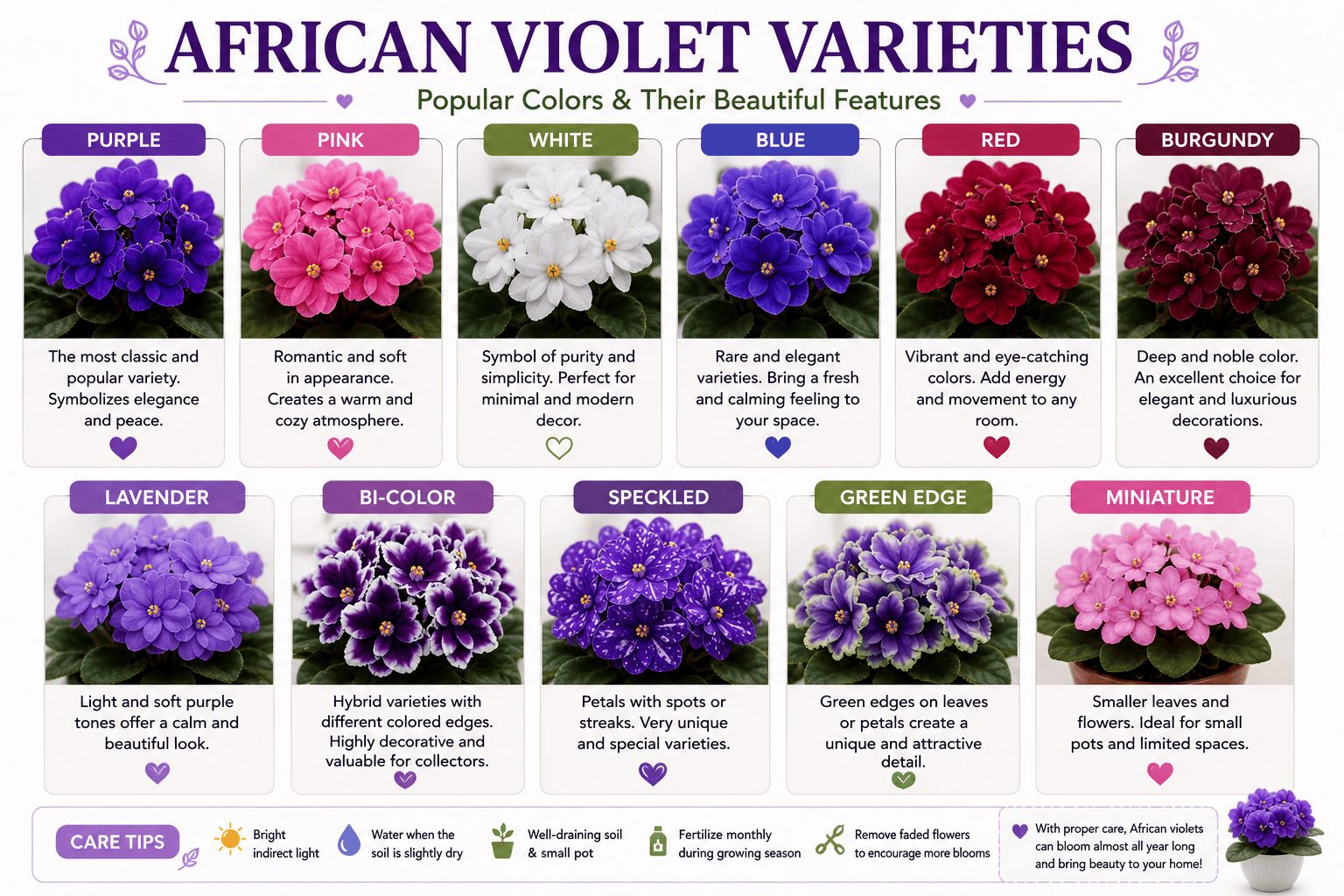
African Violet Colors and Their Beauty
African violets are available in many beautiful shades and hybrid patterns.
💜 Purple African Violet
The most classic and popular variety. Purple blooms symbolize elegance and peace.
💗 Pink African Violet
A soft and romantic color that creates a warm atmosphere indoors.
🤍 White African Violet
Represents simplicity and purity. Perfect for minimalist interiors.
💙 Blue African Violet
A rarer variety that brings a calm and refreshing appearance.
❤️ Red and Burgundy African Violet
These vibrant tones add energy and richness to home decor.
🌸 Bi-Color African Violets
Hybrid varieties with multicolored petals are highly decorative and popular among collectors.
How to Care for African Violets
☀ Light Requirements
African violets thrive in bright indirect light.
Best placement:
- Near east-facing windows
- Behind sheer curtains
- In bright indoor spaces without harsh direct sunlight
Too much direct sun may cause yellow or burnt leaves.
💧 Watering Tips
Proper watering is one of the most important parts of African violet care.
Watering Guidelines:
- Water when the top layer of soil feels slightly dry.
- Avoid overwatering.
- Do not splash water directly on the leaves.
- Use room-temperature water whenever possible.
Best Watering Method:
Bottom watering is highly recommended. Place the pot in a shallow tray of water for a few minutes so the soil absorbs moisture naturally.
🌡 Temperature and Humidity
African violets prefer warm and stable indoor temperatures.
Ideal temperature:
- Between 18°C and 24°C (65°F–75°F)
Keep the plant away from cold drafts, heaters, and air conditioners.
Moderate humidity helps improve flowering.
Best Soil for African Violets
African violets need light, airy, and well-draining soil.
An ideal soil mix includes:
- Peat moss
- Perlite
- Vermiculite
Heavy garden soil should be avoided.
Choosing the Right Pot
Small pots are better for African violets than oversized containers.
Why smaller pots work best:
- Encourage healthy root growth
- Promote more flowering
- Prevent excess moisture retention
Always choose pots with drainage holes.
How to Make African Violets Bloom More
If your plant is not flowering enough, these tips may help:
🌸 Flowering Secrets
- Provide consistent bright indirect light
- Avoid overwatering
- Remove faded flowers regularly
- Feed with a balanced liquid fertilizer once a month
- Keep the plant slightly root-bound
Healthy African violets can bloom throughout the year.
Why Are African Violet Leaves Turning Yellow?
Yellow leaves may occur due to:
- Excess sunlight
- Overwatering
- Cold temperatures
- Root rot
- Incorrect fertilizer use
Adjusting the environment usually helps the plant recover.
How to Propagate African Violets
African violets are easy to propagate from leaf cuttings.
🌱 Leaf Propagation Steps
- Cut a healthy leaf with a short stem.
- Plant it in moist soil.
- Keep it in a warm bright place.
- Maintain light moisture.
- New baby plants should appear within a few weeks.
Fertilizing African Violets
Use fertilizers designed for flowering houseplants.
Important tips:
- Do not over-fertilize
- Feed once a month during active growth
- Reduce fertilizer during winter
Common African Violet Care Mistakes
❌ Overwatering
❌ Leaving water on leaves
❌ Using oversized pots
❌ Exposing the plant to direct sunlight
❌ Keeping the plant in cold areas
Avoiding these mistakes helps keep the plant healthy and blooming.
Benefits of African Violets
African violets are not only decorative but also uplifting indoor plants.
🌿 Benefits
- Brighten indoor spaces
- Add natural beauty to home decor
- Compact and easy to grow
- Can bloom for long periods
- Suitable for desks, shelves, and windowsills
Final Thoughts
African violets are beautiful and rewarding houseplants that can bloom nearly year-round with proper care. By providing the right light, balanced watering, warm temperatures, and suitable soil, you can enjoy vibrant flowers and healthy foliage for many years.
Whether you prefer purple, pink, white, or bi-color varieties, African violets bring elegance and color into any indoor space.
Frequently Asked Questions
How often should I water an African violet?
Usually once a week, depending on soil dryness and indoor conditions.
Do African violets need direct sunlight?
No. They prefer bright indirect light.
Why is my African violet not flowering?
Insufficient light, overwatering, or large pots can reduce blooming.
Can African violets grow from leaves?
Yes. They are commonly propagated through leaf cuttings.
What temperature is best for African violets?
They grow best in warm indoor temperatures between 18°C–24°C (65°F–75°F).
Follow !
🌿 For more plant care guides, indoor gardening tips, and flower inspiration, visit mutlucicekler.com
Bir Cevap Yazın