


Who Was Osman Hamdi Bey?
Osman Hamdi Bey (1842–1910) was one of the most influential figures in Ottoman and Turkish cultural history. He was not only a celebrated painter but also an archaeologist, museum director, educator, and statesman. His groundbreaking work laid the foundations of modern archaeology and museology in Türkiye while introducing Ottoman culture to the international art world.
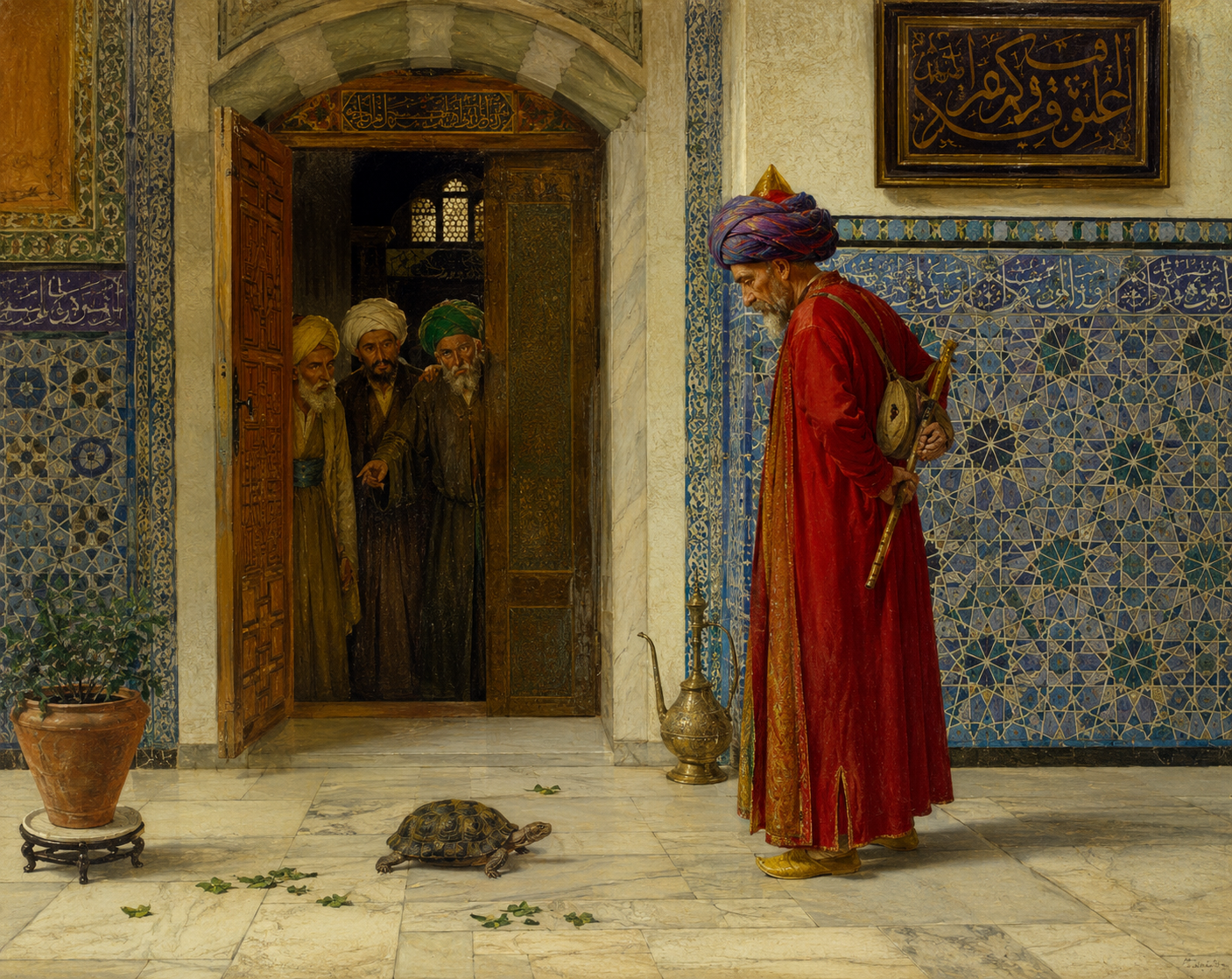
Today, he is best known for his iconic painting The Tortoise Trainer (Kaplumbağa Terbiyecisi), a masterpiece regarded as one of the most valuable works in Turkish art history.
📌 Early Life
- Born: December 30, 1842 – Istanbul, Ottoman Empire
- Died: February 24, 1910 – Istanbul
- Profession: Painter, Archaeologist, Museum Director, Educator
Osman Hamdi Bey was born into a distinguished Ottoman family. His father, İbrahim Edhem Pasha, served as Grand Vizier of the Ottoman Empire.
Initially sent to Paris to study law, Osman Hamdi Bey soon discovered his passion for painting. He remained in France for nearly nine years, studying under prominent Orientalist painters while gaining a deep understanding of European academic art.
His years in Paris profoundly influenced his artistic vision, allowing him to blend Western painting techniques with Ottoman themes and architecture.
🎨 Artistic Style
Osman Hamdi Bey developed a unique artistic identity that combined realism with Orientalist aesthetics.
His paintings are known for:
- Rich architectural details
- Ottoman interiors and historical settings
- Traditional clothing and cultural authenticity
- Symbolic storytelling
- Exceptional use of light and perspective
Unlike many Western Orientalist painters, Osman Hamdi Bey portrayed Ottoman society from an insider’s perspective, offering a more authentic representation of daily life.
🖼️ Famous Paintings by Osman Hamdi Bey
1. The Tortoise Trainer (1906)
The Tortoise Trainer is undoubtedly Osman Hamdi Bey’s most famous painting.
The artwork is widely interpreted as a metaphor for:
- Patience
- Social reform
- Education
- Slow cultural transformation
Its symbolism continues to inspire art historians worldwide.
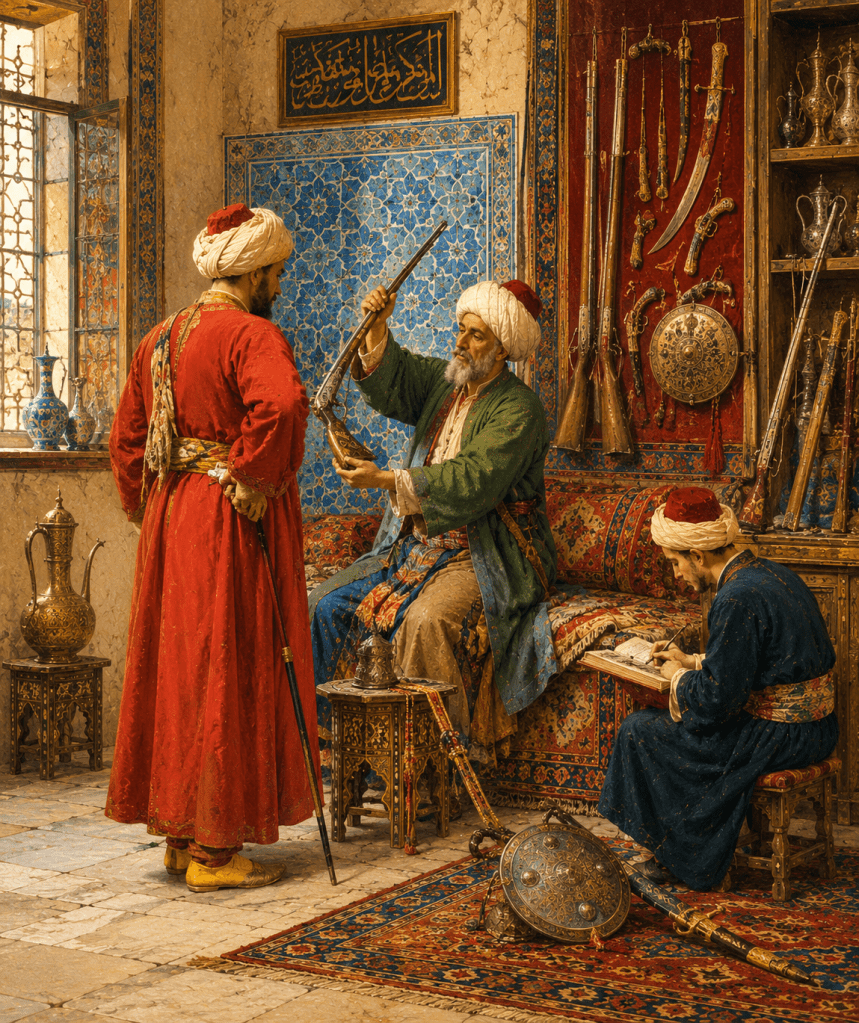
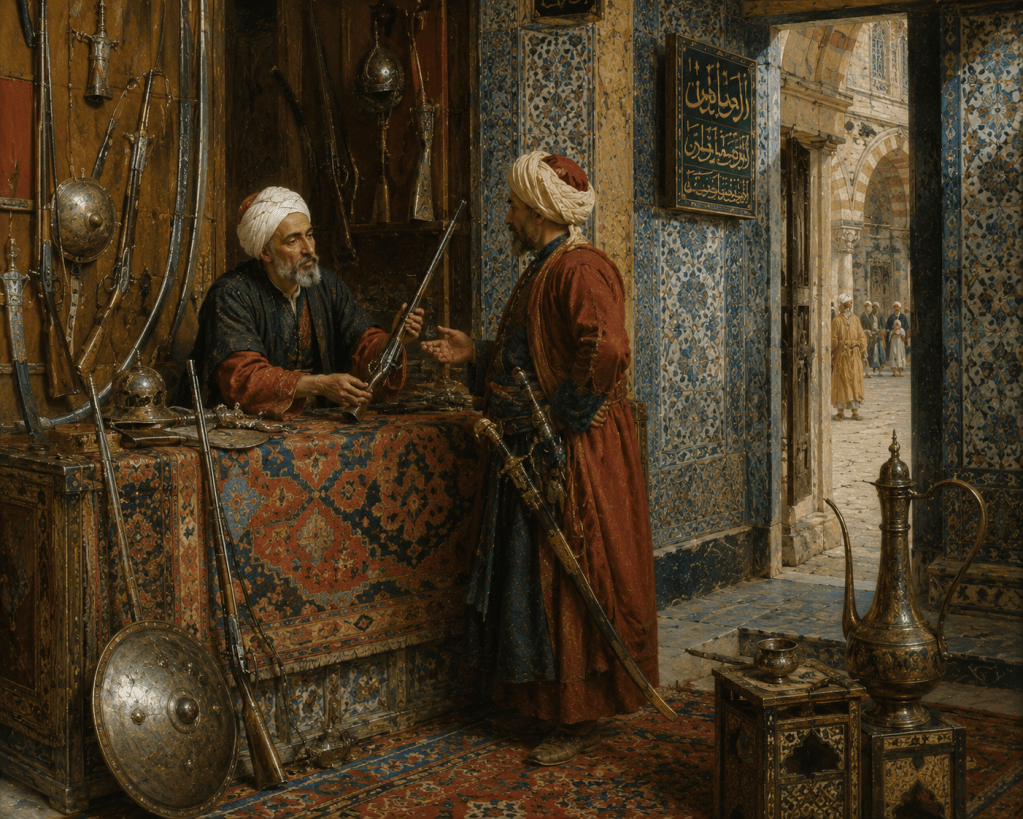
2. The Arms Dealer
A detailed depiction of Ottoman interiors and traditional craftsmanship, showcasing Osman Hamdi Bey’s extraordinary attention to detail.
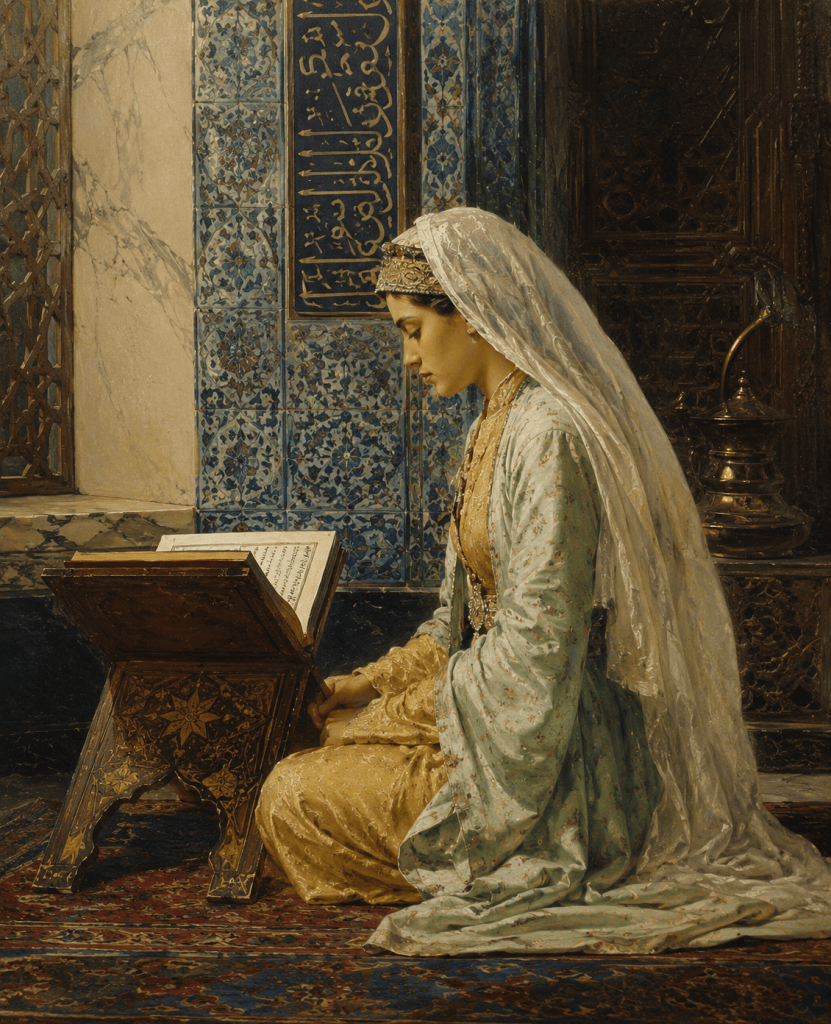
3. Girl Reciting the Quran
This painting portrays a young woman reading the Quran in a peaceful atmosphere, reflecting spirituality, education, and elegance.
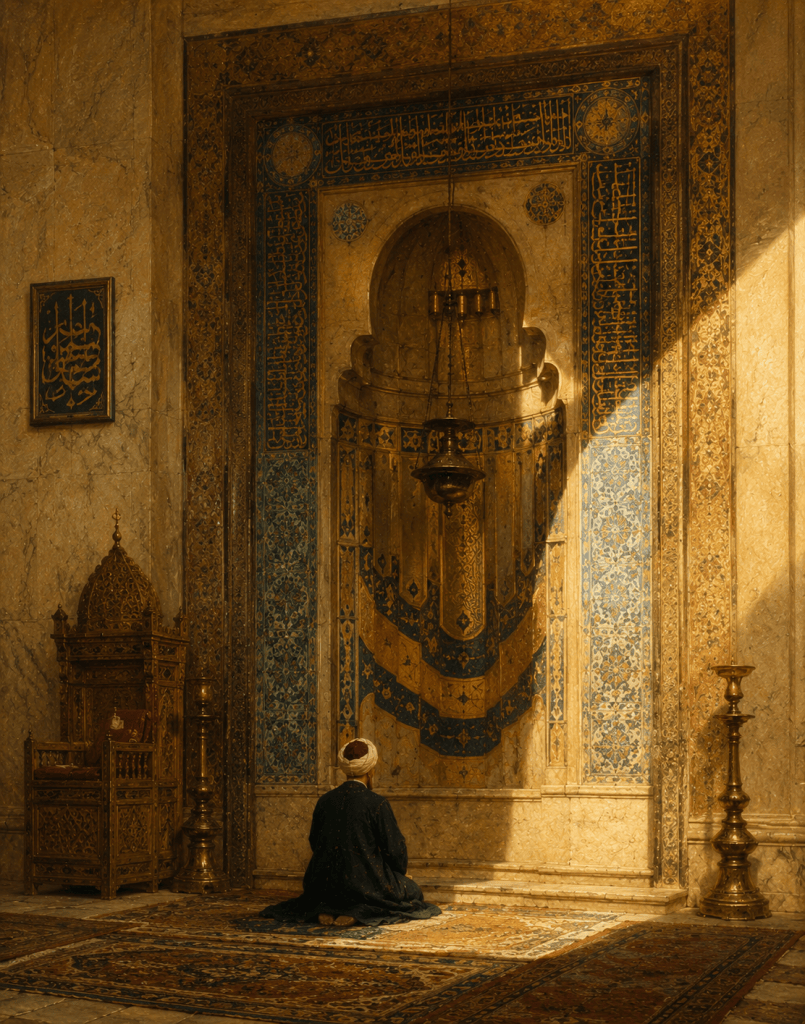
4. The Mihrab
An impressive work highlighting Islamic architecture and decorative arts.
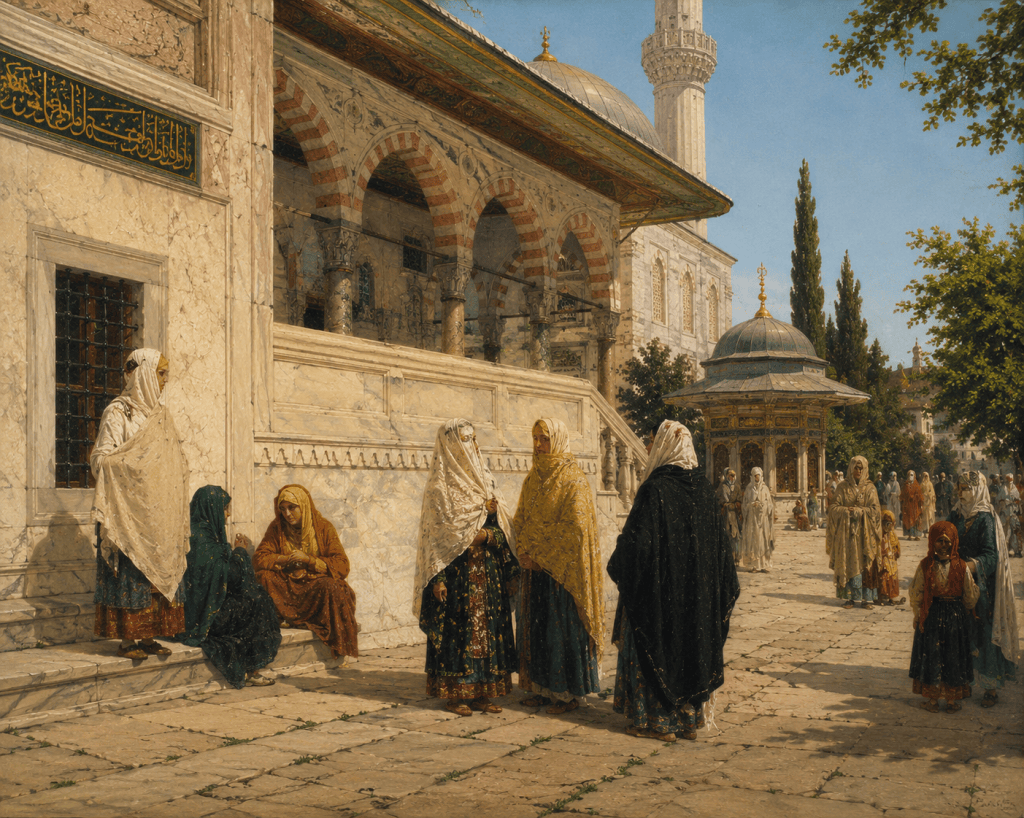
5. Women in Front of the Mosque
A remarkable depiction of Ottoman social life and architecture.
🏺 Pioneer of Turkish Archaeology
Beyond painting, Osman Hamdi Bey played a pioneering role in archaeology.
He directed several important excavations throughout the Ottoman Empire, helping preserve invaluable historical artifacts for future generations.
His major archaeological projects included:
- Sidon Royal Necropolis (present-day Lebanon)
- Lagina Ancient City
- Research around Mount Nemrut
His scientific approach transformed archaeological practices in the Ottoman Empire.
⚱️ Discovery of the Alexander Sarcophagus
One of Osman Hamdi Bey’s greatest achievements was the discovery of the Alexander Sarcophagus in 1887 during excavations at Sidon.
Although the sarcophagus is not believed to have belonged to Alexander the Great himself, it is considered one of the world’s finest examples of Hellenistic sculpture.
Today, it is one of the most treasured exhibits at the Istanbul Archaeology Museums.
🏛️ Founder of Modern Museology in Türkiye
Osman Hamdi Bey served as the director of the Imperial Museum (today’s Istanbul Archaeology Museums).
During his tenure, he:
- Expanded museum collections.
- Improved exhibition standards.
- Promoted scientific cataloging.
- Protected archaeological heritage.
- Raised international recognition of Ottoman museums.
His efforts established the foundations of modern museum management in Türkiye.
📜 Antiquities Law of 1884
Osman Hamdi Bey was instrumental in drafting the Antiquities Regulation of 1884 (Asar-ı Atika Regulation).
This landmark legislation:
- Restricted the export of historical artifacts.
- Protected archaeological discoveries.
- Regulated excavations.
- Strengthened state ownership of cultural heritage.
Many historians consider it one of the earliest modern cultural heritage protection laws in the region.
🎓 Founder of the Academy of Fine Arts
In 1882, Osman Hamdi Bey founded the School of Fine Arts (Sanayi-i Nefise Mektebi), the first institution of higher education dedicated to art in the Ottoman Empire.
Today, the institution is known as Mimar Sinan Fine Arts University, one of Türkiye’s most prestigious art universities.
🌍 Contributions to Art and Culture
Osman Hamdi Bey made lasting contributions by:
- Establishing modern Turkish painting traditions.
- Introducing scientific archaeology.
- Creating professional museum standards.
- Protecting historical artifacts.
- Founding formal art education in the Ottoman Empire.
- Promoting Ottoman culture internationally.
His influence continues to shape Turkish cultural institutions today.
📚 Why Is Osman Hamdi Bey Important?
Few historical figures successfully combined art, archaeology, education, and cultural preservation as effectively as Osman Hamdi Bey.
His paintings remain internationally admired, while his work in archaeology and museology continues to influence cultural heritage preservation across Türkiye and beyond.
He is widely regarded as one of the founding figures of modern Turkish cultural identity.
📌 Interesting Facts About Osman Hamdi Bey
- 🎨 Produced around 200 paintings.
- 🏛️ Considered one of Türkiye’s first professional archaeologists.
- 🖼️ Created The Tortoise Trainer, Turkey’s most famous painting.
- ⚱️ Led the discovery of the Alexander Sarcophagus.
- 🎓 Founded the Ottoman Empire’s first academy of fine arts.
- 🌍 His works are displayed in prestigious museums and private collections.
❓ Frequently Asked Questions
Who was Osman Hamdi Bey?
Osman Hamdi Bey was an Ottoman painter, archaeologist, museum director, educator, and one of the founders of modern Turkish art and archaeology.
What is Osman Hamdi Bey famous for?
He is best known for his masterpiece The Tortoise Trainer and for establishing modern archaeology and museology in Türkiye.
What is The Tortoise Trainer about?
The painting is generally interpreted as a symbolic representation of patience, reform, education, and the slow pace of social change.
What museum did Osman Hamdi Bey establish?
He transformed the Imperial Museum into today’s Istanbul Archaeology Museums, one of the world’s leading archaeological museums.
What school did Osman Hamdi Bey found?
He founded the School of Fine Arts (Sanayi-i Nefise Mektebi), now known as Mimar Sinan Fine Arts University.
Conclusion
Osman Hamdi Bey was far more than a gifted painter. His vision transformed archaeology, museum management, and art education in the Ottoman Empire. Through masterpieces like The Tortoise Trainer and his tireless efforts to preserve cultural heritage, he left an enduring legacy that continues to inspire artists, historians, and archaeologists around the world.
🌿 Follow MutluCicekler.com
Explore more inspiring articles about world history, famous artists, travel, culture, archaeology, science, and lifestyle at MutluCicekler.com.
Bir yanıt yazın