

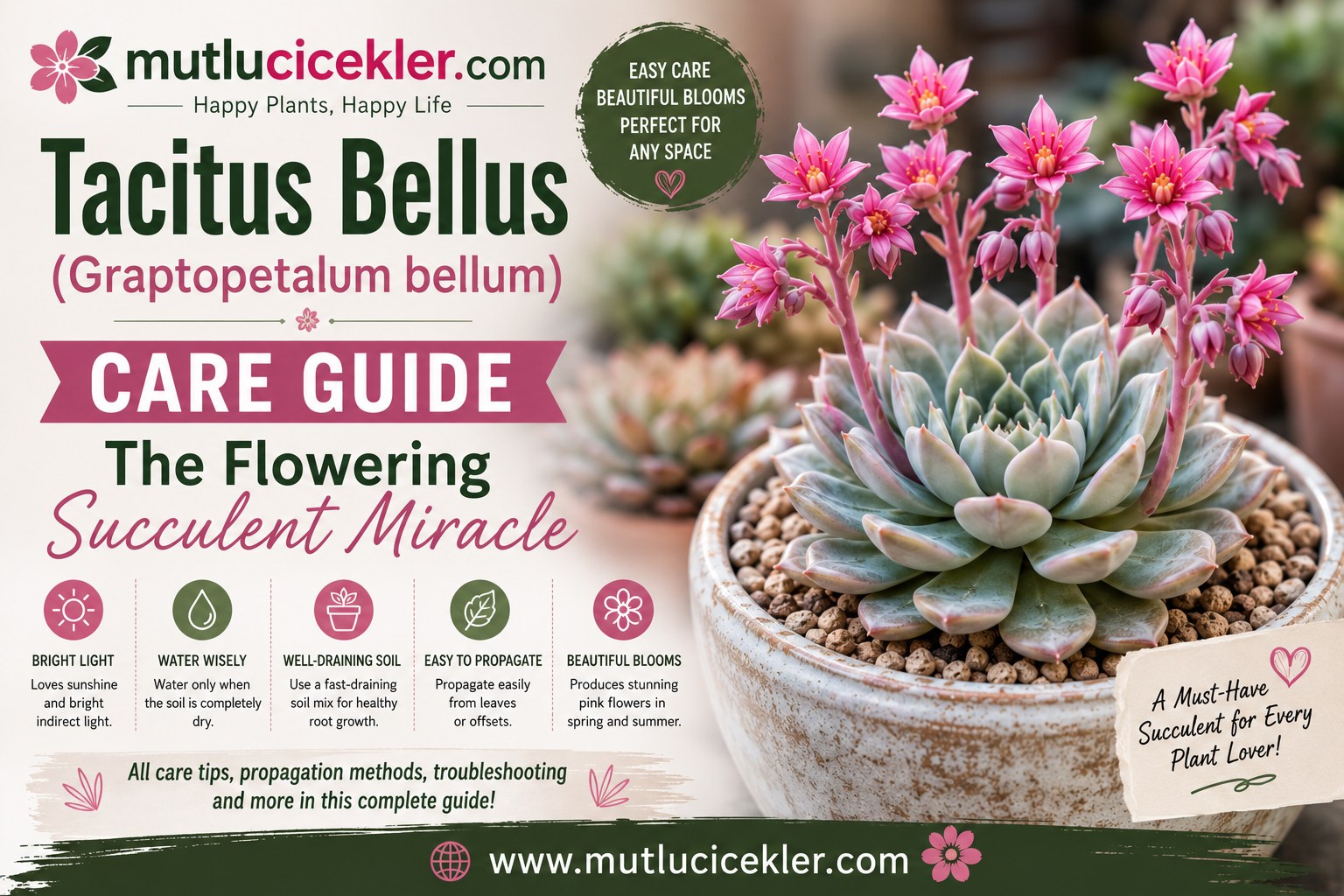
Tacitus Bellus (Graptopetalum bellum) Care Guide
Tacitus Bellus, now scientifically known as Graptopetalum bellum, is one of the most beautiful flowering succulents in the Crassulaceae family. Native to the rocky landscapes of Mexico, this compact succulent is admired for its elegant blue-green rosettes and spectacular star-shaped pink flowers that bloom from late spring into summer.
Unlike many succulents grown mainly for their foliage, Tacitus Bellus offers the perfect combination of attractive leaves and vibrant blossoms. Its compact size makes it an excellent choice for windowsills, balconies, succulent arrangements, rock gardens, and indoor plant collections.
Whether you’re a beginner or an experienced succulent enthusiast, this complete guide will help you grow a healthy, thriving Tacitus Bellus for years to come.
Plant Profile
| Feature | Details |
|---|---|
| Scientific Name | Graptopetalum bellum |
| Former Botanical Name | Tacitus bellus |
| Family | Crassulaceae |
| Origin | Mexico |
| Plant Type | Succulent |
| Growth Habit | Compact Rosette |
| Mature Size | 3–5 in (8–12 cm) |
| Flower Color | Bright Pink |
| Bloom Season | Late Spring to Early Summer |
| Growth Rate | Slow |
🌞 Light Requirements
Tacitus Bellus loves bright light.
For the healthiest growth, provide:
- 4–6 hours of bright indirect sunlight daily
- Gentle morning sun
- Bright afternoon light indoors
- Plenty of natural daylight
In extremely hot climates, protect the plant from harsh midday summer sun, which may scorch its leaves.
Best Locations
- South-facing window
- East-facing window
- Bright west-facing window
- Covered balcony
- Greenhouse
- Sunroom
Signs of Insufficient Light
- Stretching (etiolation)
- Loose rosette shape
- Pale leaves
- Reduced flowering
- Weak growth
💧 Watering Guide
Like most succulents, Tacitus Bellus prefers a soak-and-dry watering method.
Always allow the soil to dry completely before watering again.
Recommended Watering Schedule
Spring
- Every 10–14 days
Summer
- Every 7–10 days
Autumn
- Every 2–3 weeks
Winter
- Every 3–4 weeks
The schedule may vary depending on humidity, temperature, pot size, and growing conditions.
Avoid frequent watering, as soggy soil is the leading cause of root rot.
🌱 Best Soil Mix
Excellent drainage is essential.
A recommended soil mix includes:
- 40% cactus potting mix
- 30% pumice
- 20% perlite
- 10% coarse sand
Commercial cactus and succulent mixes also work well if drainage is sufficient.
Never use heavy garden soil that retains water.
🪴 Choosing the Right Pot
Use containers with drainage holes.
Good options include:
- Terracotta pots
- Ceramic pots
- Plastic pots with drainage
Terracotta is especially beneficial because it allows excess moisture to evaporate more quickly.
Choose a pot only slightly larger than the root system.
🌸 How to Encourage Blooming
The brilliant pink flowers are the highlight of Tacitus Bellus.
To encourage flowering:
- Provide plenty of sunlight.
- Allow a cool winter rest period.
- Avoid excessive nitrogen fertilizer.
- Water correctly.
- Keep the roots healthy.
- Maintain consistent growing conditions.
Healthy plants usually bloom in late spring or early summer with multiple flower stalks rising above the rosette.
🌿 Fertilizing
Feed during the active growing season.
Use:
- Balanced cactus fertilizer
- Succulent fertilizer
Apply once every 4–6 weeks during spring and summer.
Do not fertilize during autumn and winter dormancy.
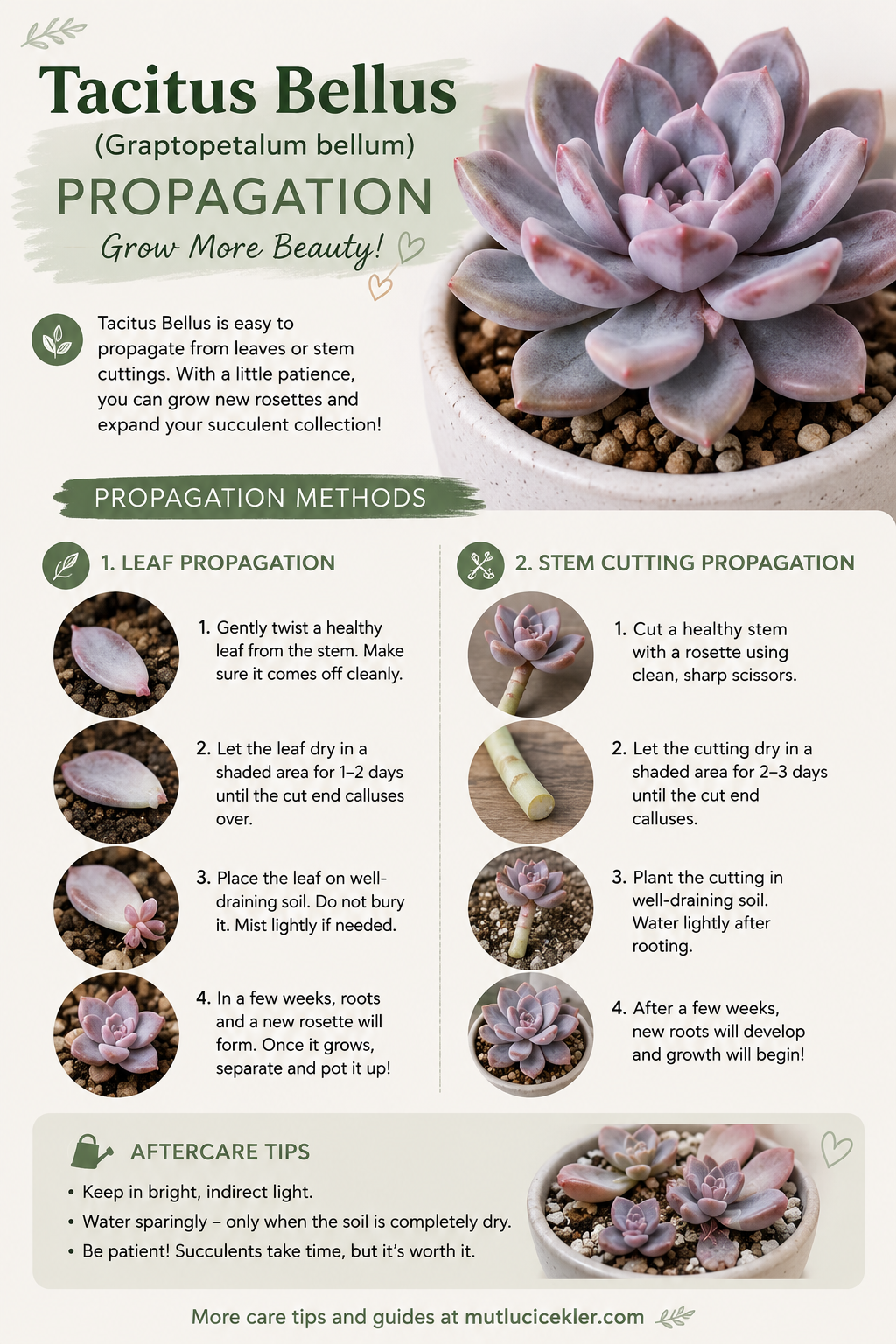
🌱 Propagation Methods
Tacitus Bellus is easy to propagate.
Leaf Propagation
- Remove a healthy leaf carefully.
- Let it dry for 2–3 days.
- Place it on dry succulent soil.
- Mist lightly after roots begin forming.
- New plants usually develop within several weeks.
Offsets
Mature plants often produce offsets around the base.
Simply separate the offsets with clean tools and plant them individually.
Seeds
Growing from seed is possible but requires patience, as germination and growth are slow.
🌡️ Temperature Requirements
Ideal temperatures range from:
60–82°F (15–28°C)
Tacitus Bellus can tolerate brief exposure to cooler temperatures but should be protected from frost.
Avoid prolonged temperatures below 40°F (5°C).
💨 Humidity
Low humidity is ideal.
High humidity combined with poor airflow may increase the risk of fungal diseases and root problems.
Avoid misting the leaves.
✂️ Pruning
Minimal pruning is required.
Simply remove:
- Dead leaves
- Spent flower stalks
- Damaged foliage
This improves airflow and keeps the plant attractive.
🦠 Common Problems
Root Rot
Usually caused by overwatering and poorly draining soil.
Mealybugs
These pests appear as white cotton-like clusters between leaves.
Treat with neem oil or insecticidal soap.
Sunburn
Sudden exposure to intense sunlight can cause brown or white leaf spots.
Gradually acclimate the plant to stronger light.
Soft Leaves
Often indicate excessive watering.
Reduce watering immediately and inspect the roots.
Seasonal Care Calendar
| Season | Care Tasks |
| Spring | Resume watering, fertilize, propagate |
| Summer | Provide bright light, water carefully |
| Autumn | Reduce watering gradually |
| Winter | Keep mostly dry and protect from frost |
Benefits of Growing Tacitus Bellus
- Stunning pink flowers
- Compact growth habit
- Excellent indoor succulent
- Beginner-friendly
- Drought tolerant
- Low maintenance
- Great for containers
- Attractive all year
- Easy to propagate
- Perfect for succulent collections
Expert Growing Tips
For the healthiest plant:
- Give at least 4–6 hours of bright light daily.
- Allow the soil to dry completely between waterings.
- Use fast-draining succulent soil.
- Never let the pot sit in standing water.
- Reduce watering during winter dormancy.
- Fertilize lightly during active growth.
- Rotate the pot occasionally for even growth.
- Ensure good air circulation.
- Protect from frost and freezing temperatures.
Conclusion
Tacitus Bellus (Graptopetalum bellum) is one of the most rewarding flowering succulents for both beginners and experienced plant collectors. Its compact rosette, striking pink flowers, and low-maintenance nature make it a standout addition to any indoor or outdoor succulent collection. With proper sunlight, well-draining soil, and careful watering, this beautiful Mexican succulent will reward you with healthy growth and spectacular blooms year after year.
Frequently Asked Questions
Is Tacitus Bellus easy to grow?
Yes. It is considered one of the easier flowering succulents to care for and is suitable for beginners.
How often should I water Tacitus Bellus?
Only when the soil has dried out completely. Watering frequency depends on climate, season, and growing conditions.
Why isn’t my Tacitus Bellus flowering?
Insufficient sunlight, lack of winter dormancy, or excessive nitrogen fertilizer are the most common reasons.
Can it grow indoors?
Absolutely. It grows very well near bright windows with several hours of indirect or gentle direct sunlight.
Is Tacitus Bellus drought tolerant?
Yes. Like most succulents, it stores water in its leaves and tolerates short periods of drought.
Is Tacitus Bellus toxic to pets?
Graptopetalum species are generally considered to have low toxicity. However, it is still best to keep plants out of reach of curious cats and dogs to prevent chewing or digestive upset.
🌿 Follow MutluCicekler.com
Discover more expert plant care guides, succulent growing tips, gardening inspiration, and indoor plant advice at MutluCicekler.com. New articles are published regularly to help plant lovers grow healthier, happier plants.


Bir yanıt yazın