


Mother of Thousands Plant Care Guide
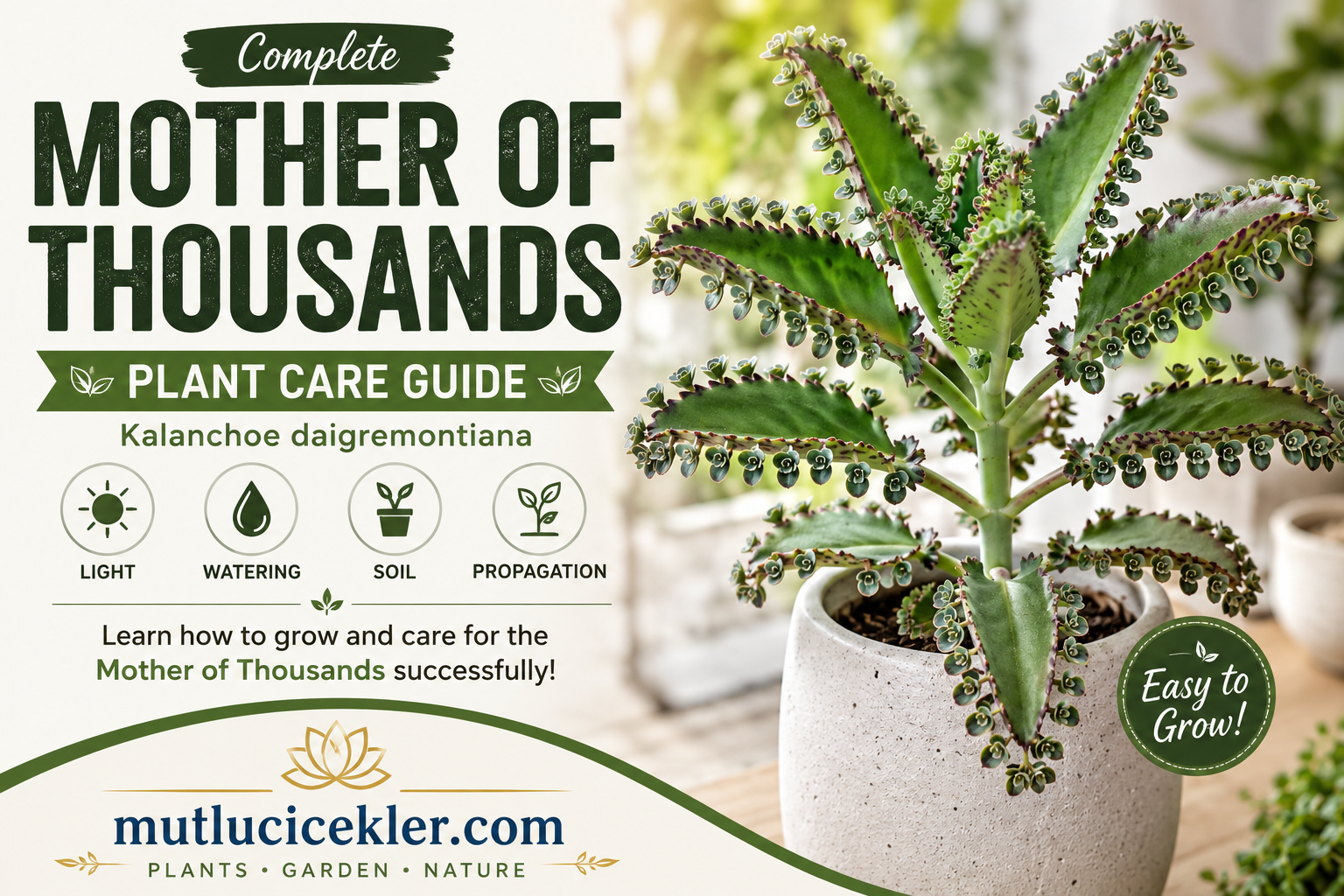
The Mother of Thousands plant, scientifically known as Kalanchoe daigremontiana, is a distinctive succulent famous for producing rows of tiny plantlets along the edges of its leaves. In Türkiye, this unusual plant is commonly called Aşkın Gözyaşları, but its best-known international name is Mother of Thousands.
It is also occasionally called the Mexican Hat Plant, Alligator Plant or Devil’s Backbone. The accepted botanical name is Kalanchoe daigremontiana, while Bryophyllum daigremontianum is an older botanical synonym.
Its sculptural foliage, easy propagation and drought tolerance make it an interesting houseplant. However, it spreads extremely easily and must be kept away from pets and small children because all parts of the plant can be toxic if eaten.
Mother of Thousands Plant Profile
🌿 Common name: Mother of Thousands
🔬 Scientific name: Kalanchoe daigremontiana
🌱 Plant family: Crassulaceae
🌍 Native region: Madagascar
☀️ Light: Bright light or gentle direct sun
💧 Watering: Low to moderate
🌡️ Preferred temperature: 18–27°C / 65–80°F
📏 Mature height: Approximately 50–100 cm / 20–40 in
🌸 Flowers: Hanging, tubular pinkish or grey-pink flowers
🐾 Pet safety: Toxic if ingested
🌱 Propagation: Naturally produced plantlets
The plant is an upright succulent with triangular or lance-shaped grey-green leaves. Mature leaves often develop brown or purple markings and carry miniature plants along their toothed edges.
What Is the Mother of Thousands Plant?
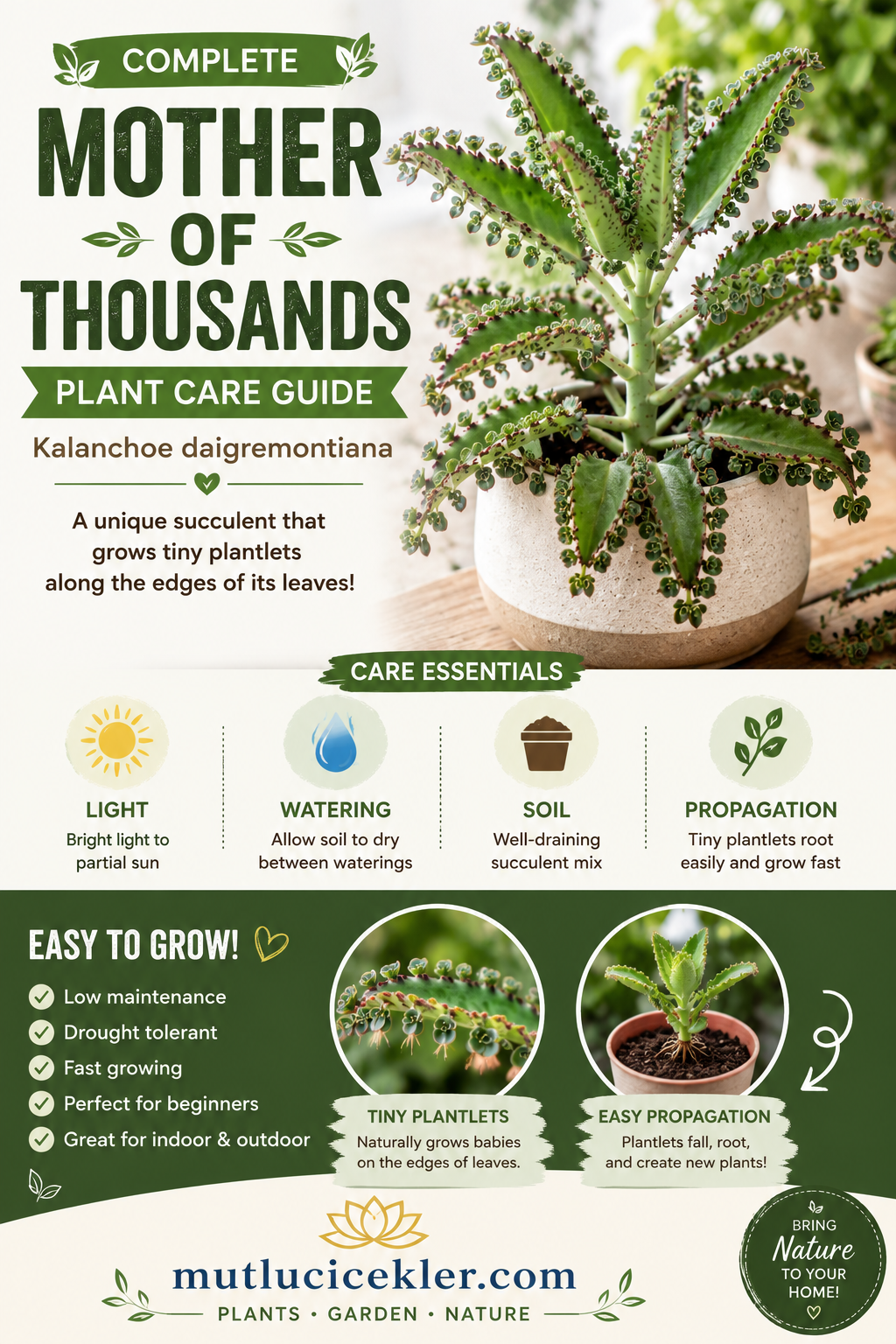
Mother of Thousands is a perennial succulent best known for its extraordinary method of reproduction. Instead of relying only on seeds, it develops numerous miniature plantlets directly along the edges of its leaves.
These tiny plantlets eventually grow small roots, fall from the parent plant and establish themselves in nearby soil. This ability explains the name “Mother of Thousands.”
The plantlets may also fall into neighbouring pots, cracks or garden beds. For this reason, the plant should ideally be grown in a container where its spread can be controlled.
Mother of Thousands vs Mother of Millions
Mother of Thousands and Mother of Millions are often confused, but they are not exactly the same plant.
Mother of Thousands — Kalanchoe daigremontiana
- Has broad, triangular leaves
- Produces plantlets along most of the leaf margins
- Usually develops an upright, sculptural form
Mother of Millions — usually Kalanchoe delagoensis
- Has narrower, tubular leaves
- Produces plantlets mainly near the leaf tips
- Often looks more slender and upright
There is also a naturally occurring hybrid called Kalanchoe × houghtonii, created from K. daigremontiana and K. delagoensis. This hybrid can resemble both parent species, which is one reason online photographs and commercial listings are sometimes incorrectly labelled.
Light Requirements
Mother of Thousands grows best in a bright location.
The ideal position provides:
- Bright indirect light
- Several hours of gentle morning sunlight
- Filtered sun near an east- or south-facing window
- Protection from extremely intense afternoon heat
Adequate light helps the plant remain compact and supports strong leaf development.
When the plant receives too little light, it may become tall, pale and stretched. Its stem may weaken as it grows toward the nearest light source.
Although it enjoys bright conditions, prolonged exposure to extremely strong afternoon sun may cause leaf scorch, especially when the plant has not been gradually acclimatised.
Indoor Placement Tip
Place the pot close to a bright window and rotate it every one or two weeks. Rotation encourages balanced growth and prevents the plant from leaning strongly in one direction.
How Often Should You Water Mother of Thousands?
Mother of Thousands stores moisture in its thick leaves and does not need frequent watering.
The safest method is to check the soil before watering.
Spring and Summer
Water when the upper half of the potting mix feels dry. Depending on temperature, light and pot size, this may be approximately every 10–14 days.
Autumn and Winter
Water less frequently because growth usually slows. In cooler conditions, the plant may only need water every three or four weeks.
These timings are guidelines rather than strict rules. Always examine the soil before watering.
Correct Watering Method
- Water the soil thoroughly.
- Continue until excess water flows from the drainage holes.
- Empty the saucer or decorative outer pot.
- Allow the soil to dry considerably before watering again.
Do not give small amounts of water every day. Constant moisture can damage the roots and lead to rot.
Overwatering is one of the most common problems affecting this plant.
Best Soil for Mother of Thousands
The plant requires loose, fast-draining soil that does not remain wet for long periods.
A suitable mixture can contain:
- Two parts cactus or succulent potting mix
- One part perlite or pumice
- A small amount of coarse horticultural sand
Ordinary garden soil is usually too dense for indoor containers and may retain excessive moisture.
The pot must have at least one drainage hole. Terracotta pots are especially useful because their porous surface allows moisture to evaporate more quickly.
Temperature and Humidity
Mother of Thousands prefers warm household conditions.
The best temperature range is approximately:
- 18–27°C / 65–80°F during active growth
- Above 10°C / 50°F during winter
Protect the plant from:
- Frost
- Cold window glass
- Freezing outdoor temperatures
- Sudden cold draughts
- Direct airflow from heaters or air conditioners
Average household humidity is usually sufficient. High humidity is not necessary and can become problematic when combined with poor ventilation and wet soil.
Fertilising Mother of Thousands
This succulent is not a heavy feeder.
Apply a balanced liquid houseplant or succulent fertiliser diluted to half strength approximately once every four to six weeks during spring and summer.
Avoid fertilising:
- Immediately after repotting
- When the soil is completely dry
- During cold winter dormancy
- When the plant is suffering from root rot or another serious problem
Too much fertiliser may produce weak growth or cause mineral accumulation in the soil.
Repotting
Mother of Thousands does not need frequent repotting.
Repot approximately every two or three years or when:
- Roots emerge from the drainage holes
- The plant becomes top-heavy
- The soil drains slowly
- The pot is filled with fallen plantlets
- Growth has noticeably slowed
Choose a new pot only slightly larger than the existing one. An oversized container holds more wet soil and increases the risk of overwatering.
Repotting Steps
- Allow the soil to dry slightly.
- Remove the plant carefully from its pot.
- Inspect the roots and remove damaged sections.
- Add fresh succulent soil to the new container.
- Replant at the same depth.
- Wait several days before watering if roots were disturbed.
Wear gloves while handling the plant, particularly if you have sensitive skin. Contact with Kalanchoe plants may cause skin irritation in some people.
How to Propagate Mother of Thousands
Propagation is one of the easiest parts of caring for this plant because it naturally produces miniature plants.
Propagation from Plantlets
- Wait until the plantlets have developed tiny roots.
- Gently remove several mature plantlets from the leaf edges.
- Place them on top of slightly moist succulent soil.
- Press them gently against the surface without burying them deeply.
- Keep the pot in bright indirect light.
- Water lightly until the roots become established.
Plantlets that fall naturally into the pot may begin rooting without assistance.
Propagation from Stem Cuttings
A healthy stem can also be propagated.
- Cut a firm stem using clean scissors.
- Remove the lowest leaves.
- Allow the cut end to dry and form a callus for one or two days.
- Insert it into dry, well-draining succulent soil.
- Wait several days before watering lightly.
Pruning and Controlling Growth
Mother of Thousands can become tall and untidy over time. Pruning helps maintain a stronger shape.
Remove:
- Dry lower leaves
- Weak or stretched stems
- Damaged growth
- Unwanted flower stalks
- Excess plantlets
Use clean, disinfected pruning tools.
It is also important to collect fallen plantlets regularly. They can root quickly in nearby containers and outdoor soil.
Do not discard unwanted plantlets directly into a garden or compost pile where they may continue growing. Seal them in a bag or allow them to dry completely before disposal, particularly in warm climates where the species may spread easily.
Does Mother of Thousands Flower?
Mature plants may produce tall flower stalks carrying clusters of hanging, tubular flowers. The blooms are often pink, coral, reddish or grey-pink.
Flowering is more common when the plant receives:
- Plenty of bright light
- Warm growing conditions
- Seasonal changes in day length
- Sufficient maturity
Indoor plants may not flower every year. The unusual foliage and rows of plantlets remain the plant’s main ornamental feature.
Common Mother of Thousands Problems
Yellow or Soft Leaves
The most likely cause is overwatering.
Check whether:
- The soil remains wet for several days
- The container lacks drainage
- Water is trapped inside a decorative pot
- The plant is being watered too frequently
Allow the soil to dry and remove any rotten roots.
Brown, Crispy Leaf Edges
Possible causes include:
- Severe dehydration
- Excessively intense sunlight
- Heat stress
- Natural ageing of older leaves
Check the soil and move the plant away from harsh afternoon sun if necessary.
Tall and Leggy Growth
Long gaps between leaves usually indicate insufficient light.
Move the plant gradually to a brighter location. Do not suddenly transfer a shade-grown plant into intense sunlight, as this may burn the leaves.
Leaves Dropping
Occasional loss of older leaves is natural. Excessive leaf drop may result from:
- Root rot
- Cold temperatures
- Sudden environmental changes
- Severe underwatering
- Poor light
Mushy Stem Base
A soft, darkened stem base usually indicates rot.
Remove the plant from its pot and inspect the roots. Cut away healthy upper sections for propagation if the lower stem cannot be saved.
Common Pests
Mother of Thousands may occasionally be affected by:
- Mealybugs
- Aphids
- Spider mites
- Scale insects
NC State Extension also lists powdery mildew and rust among the possible plant problems.
Inspect the undersides of leaves, stem joints and clusters of plantlets.
Small infestations can often be managed by:
- Isolating the plant
- Removing pests with a cotton swab
- Washing affected areas carefully
- Applying insecticidal soap according to label directions
Repeat treatment when necessary and keep the plant away from unaffected houseplants until the infestation is controlled.
Is Mother of Thousands Toxic?
Yes. Mother of Thousands should be considered toxic to people, cats, dogs and other animals if ingested. Kalanchoe species contain compounds that may cause digestive and potentially more serious symptoms.
Keep the plant away from:
- Cats
- Dogs
- Birds
- Small children
- Grazing animals
Because the tiny plantlets fall easily, placing the main pot out of reach may not be enough. Check the floor and nearby containers regularly.
Contact a doctor, veterinarian or poison-control service immediately if any part of the plant is swallowed.
Seasonal Care Guide
Spring
- Increase watering gradually
- Resume light fertilising
- Repot if necessary
- Remove excessive plantlets
Summer
- Provide bright light
- Protect from severe afternoon heat
- Check the soil more frequently
- Watch for pests
Autumn
- Reduce fertilising
- Water less frequently
- Move outdoor plants indoors before cold weather
Winter
- Keep the plant warm
- Allow the soil to dry thoroughly
- Stop fertilising
- Protect it from cold windows and draughts
Essential Care Tips
✔ Grow it in a pot with drainage holes.
✔ Use cactus or succulent soil.
✔ Let the soil dry between waterings.
✔ Provide bright light without sudden exposure to scorching sun.
✔ Remove fallen plantlets before they spread.
✔ Keep the plant away from children and animals.
✔ Avoid planting it freely outdoors in warm regions.
Conclusion
The Mother of Thousands plant, or Kalanchoe daigremontiana, is a fascinating succulent recognised by the miniature plantlets growing along its leaf margins. Its unusual appearance, drought tolerance and effortless propagation make it an attractive choice for succulent collectors.
For healthy growth, provide bright light, well-draining soil and careful watering. The plant should also be grown responsibly because it can spread rapidly and is toxic when ingested.
With proper care and regular control of its plantlets, Mother of Thousands can become one of the most distinctive plants in an indoor succulent collection.
Frequently Asked Questions
What is the English name of Aşkın Gözyaşları?
The most widely used English name is Mother of Thousands. Its scientific name is Kalanchoe daigremontiana. It is also called Mexican Hat Plant and Alligator Plant.
How often should Mother of Thousands be watered?
Water after a large portion of the soil has dried. This may be every 10–14 days in warm weather and less frequently in winter.
Why does it grow babies on its leaves?
The tiny growths are plantlets. They are a natural reproductive feature and can form roots before falling from the parent plant.
Can Mother of Thousands grow indoors?
Yes. It grows well indoors near a bright window when planted in fast-draining soil.
Does Mother of Thousands need direct sunlight?
Gentle morning sun is beneficial. Strong afternoon sun may scorch plants that have not been acclimatised.
Is Mother of Thousands safe for cats and dogs?
No. The plant is toxic if ingested and should be kept away from pets.
Why is my Mother of Thousands growing tall and thin?
Tall, weak growth usually indicates insufficient light. Move it gradually to a brighter location.
Can I plant Mother of Thousands outdoors?
It can grow outdoors in frost-free conditions, but its plantlets spread easily. Container cultivation is safer and easier to control.
Follow MutluCicekler.com
Discover more practical succulent guides, houseplant advice and gardening inspiration at mutlucicekler.com. Follow us for simple growing tips that help your indoor and outdoor plants thrive.
Bir yanıt yazın