
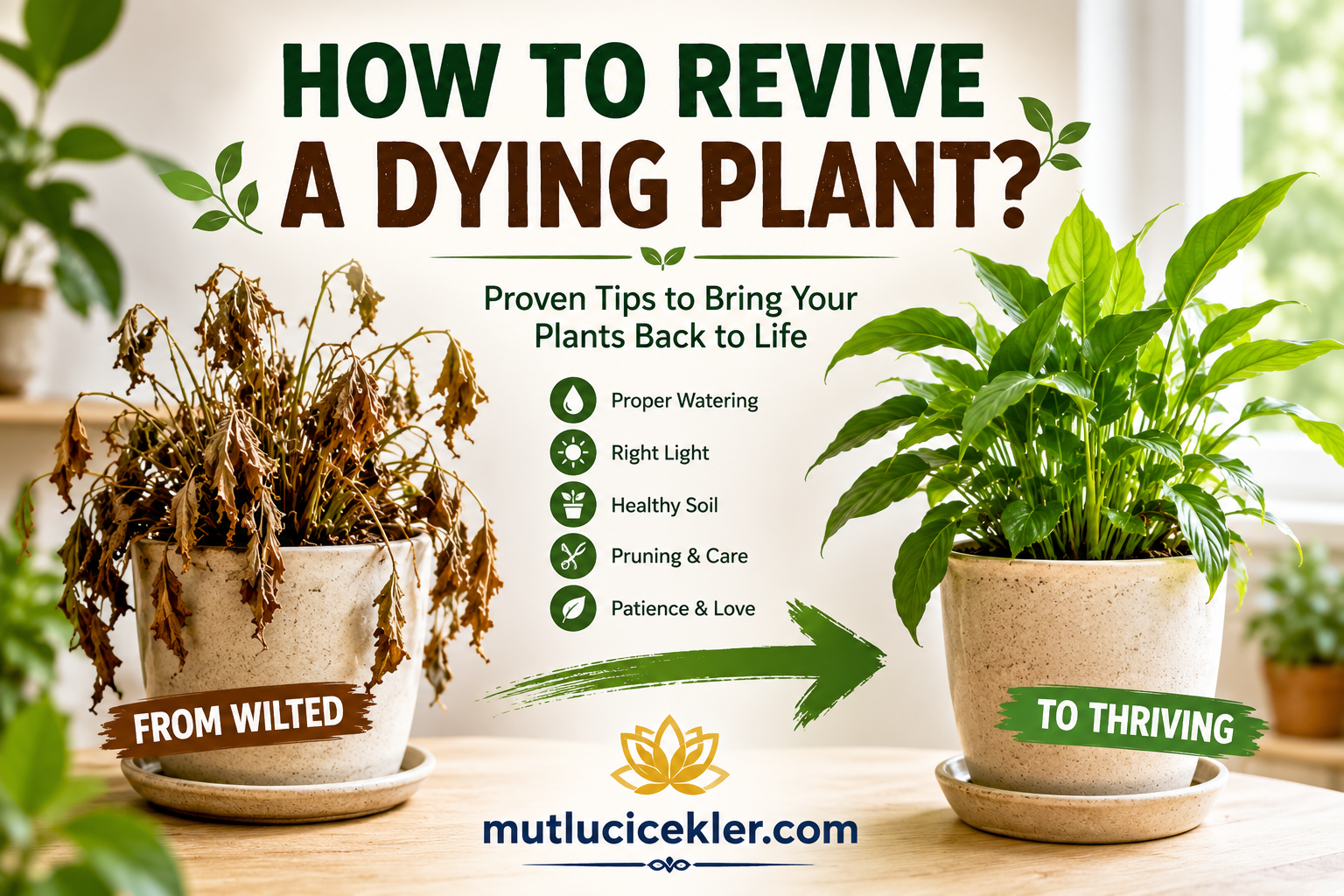
A dying plant doesn’t always mean it’s beyond saving. In many cases, houseplants begin to wilt because of improper watering, poor lighting, nutrient deficiencies, root problems, or environmental stress. With the right care and a little patience, many plants can recover and grow healthy again.
In this comprehensive guide, you’ll learn how to revive a dying plant, identify the causes of plant decline, and discover practical methods to restore your indoor plants to their best condition.
Why Do Plants Die or Wilt?
Before trying to save your plant, it’s important to understand what caused the problem.
Common reasons include:
- Overwatering
- Underwatering
- Too much or too little sunlight
- Poor drainage
- Low humidity
- Root rot
- Nutrient deficiency
- Pests and diseases
- Temperature stress
- Small or root-bound pots
Finding the cause is the first step toward successful recovery.
How to Revive a Dying Plant
1. Check the Soil Moisture
Always inspect the soil before watering.
- Dry soil indicates your plant needs water.
- Soggy soil may point to overwatering.
- Constantly wet soil can lead to root rot.
Insert your finger about 2 inches (5 cm) into the soil to check its moisture level.
2. Remove Dead Leaves and Stems
Dead foliage drains energy from the plant.
Use clean, sterilized pruning scissors to remove:
- Brown leaves
- Dead flowers
- Dry stems
- Damaged branches
Pruning encourages healthier new growth.
3. Move the Plant to a Better Location
Light is essential for healthy plant growth.
Most indoor plants prefer:
- Bright, indirect sunlight
- Good air circulation
- Stable temperatures
- Protection from harsh afternoon sun
Always research your plant’s specific light requirements.
4. Inspect the Roots
If your plant still struggles after proper watering, examine the roots.
Healthy roots should be:
- White or light tan
- Firm
- Odor-free
Dark, mushy roots often indicate root rot and should be trimmed away before repotting.
5. Repot if Necessary
Plants can become root-bound over time.
Signs you need a larger pot include:
- Roots growing through drainage holes
- Water draining too quickly
- Stunted growth
- Soil drying out very fast
Choose a pot that is only slightly larger than the current one.
6. Replace Old Potting Soil
Old soil loses nutrients and becomes compacted.
Fresh potting mix provides:
- Better drainage
- Improved aeration
- More nutrients
- Healthier root development
7. Feed Your Plant Carefully
Once the plant begins recovering, use a balanced liquid fertilizer according to the manufacturer’s instructions.
Key nutrients include:
- Nitrogen (N)
- Phosphorus (P)
- Potassium (K)
Avoid fertilizing severely stressed plants immediately after repotting.
8. Increase Humidity
Many tropical houseplants thrive in humid environments.
You can increase humidity by:
- Misting leaves lightly
- Using a humidifier
- Placing plants together
- Setting the pot on a pebble tray with water
9. Check for Pests
Inspect leaves, stems, and soil regularly.
Common indoor plant pests include:
- Spider mites
- Aphids
- Mealybugs
- Scale insects
- Fungus gnats
Early treatment prevents serious damage.
Can a Dead Plant Be Saved?
If the roots and stems are still alive, recovery is often possible.
However, if:
- The entire stem is brittle
- Roots are completely rotten
- No green tissue remains
the plant may not survive.
How to Save an Overwatered Plant
If you’ve watered too much:
- Stop watering immediately.
- Remove the plant from the pot.
- Trim rotten roots.
- Replace the wet soil with fresh potting mix.
- Repot in a container with drainage holes.
How to Save an Underwatered Plant
For severely dry plants:
- Place the pot in a bowl of room-temperature water for 20–30 minutes.
- Allow the soil to absorb moisture.
- Let excess water drain completely.
- Resume a regular watering schedule.
Natural Ways to Help Plants Recover
Some natural ingredients can support plant health when used occasionally.
Banana Peel Water
Rich in potassium and helpful for flowering plants.
Crushed Eggshells
Provide calcium for certain plants.
Rice Water
Unsalted rice water contains trace minerals that may benefit the soil.
Use natural fertilizers in moderation and avoid overfeeding.
Plant Care Tips to Prevent Future Problems
- Water only when needed.
- Use pots with drainage holes.
- Provide appropriate sunlight.
- Clean leaves regularly.
- Repot every 1–3 years.
- Fertilize during the growing season.
- Protect plants from sudden temperature changes.
- Monitor for pests frequently.
Common Mistakes That Damage Houseplants
- Watering every day
- Using pots without drainage
- Leaving plants in direct afternoon sun
- Over-fertilizing
- Ignoring pest infestations
- Allowing water to collect in saucers
- Never replacing old potting soil
Conclusion
Reviving a dying plant requires patience, observation, and proper care. By identifying the underlying problem and making simple adjustments to watering, lighting, humidity, and soil quality, you can often restore your favorite houseplants to full health.
Healthy plants reward consistent care with lush foliage, beautiful blooms, and cleaner indoor air.
Frequently Asked Questions (FAQ)
Can a dying plant recover?
Yes. If the roots and stems are still alive, many plants can recover with proper care.
How long does it take for a plant to recover?
Recovery may take anywhere from a few weeks to several months depending on the species and the severity of the damage.
Should I cut off dead leaves?
Yes. Removing dead foliage helps the plant focus its energy on producing healthy new growth.
Is fertilizer helpful for dying plants?
Yes, but only after the plant begins recovering. Avoid over-fertilizing stressed plants.
Can overwatering kill a plant?
Yes. Overwatering is one of the most common causes of root rot and plant death.
Is sugar water good for plants?
No. Sugar water is generally not recommended because it can encourage mold and harmful microorganisms in the soil.
Follow MutluCicekler.com
Looking for more expert gardening advice, plant care guides, and home gardening tips? Visit mutlucicekler.com for practical, beginner-friendly resources to help your plants thrive.


Bir Cevap Yazın