
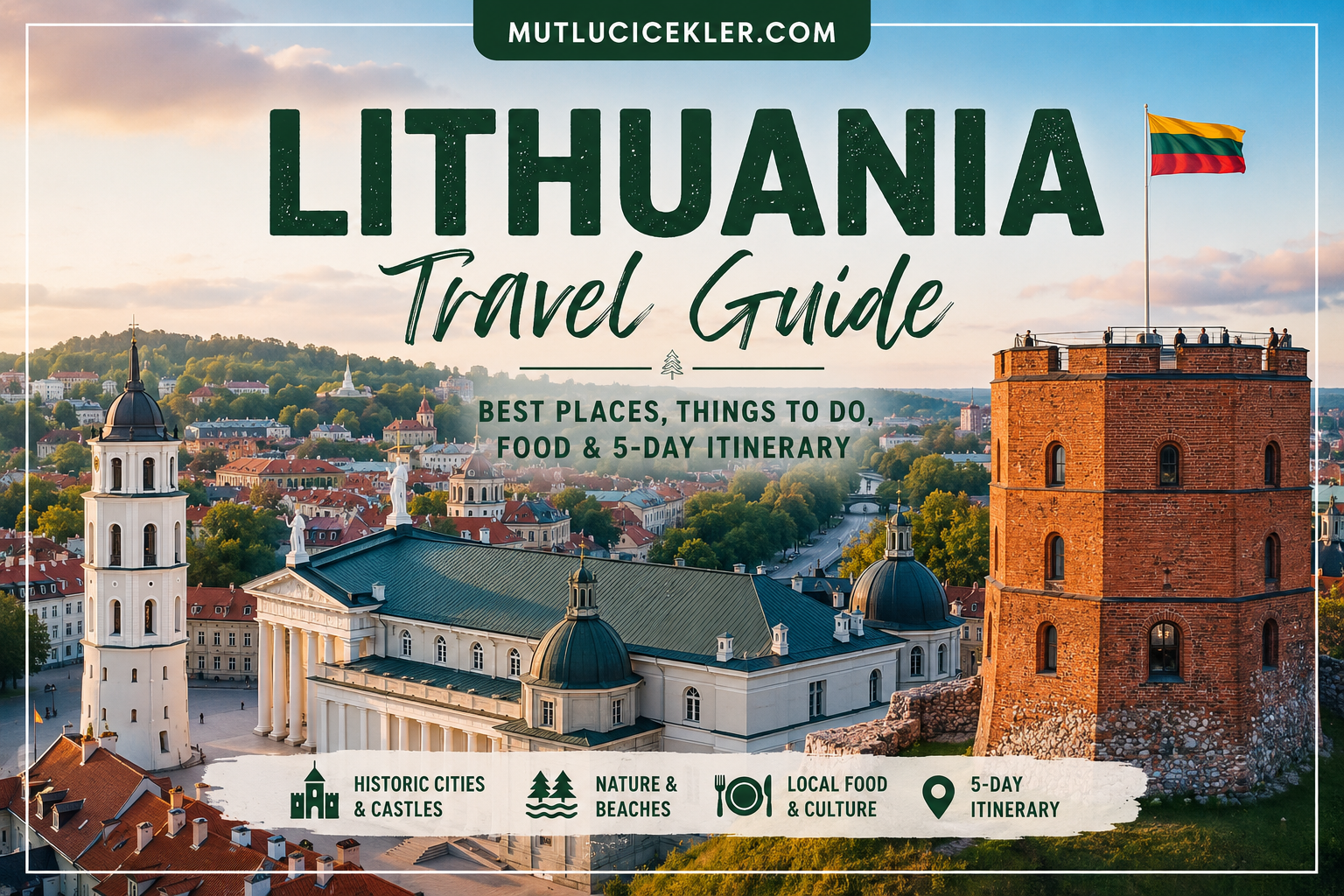
Lithuania is one of the Baltic region’s most rewarding destinations, combining medieval old towns, peaceful lakes, impressive castles, Baltic Sea landscapes, and a distinctive food culture. Although it is sometimes overlooked in favor of better-known European destinations, Lithuania offers an excellent balance of history, nature, culture, and affordability.
From wandering through the atmospheric streets of Vilnius Old Town to visiting the island castle of Trakai and exploring the remarkable sand dunes of the Curonian Spit, a trip to Lithuania can be surprisingly diverse.
This Lithuania travel guide covers the best places to visit, things to do, traditional Lithuanian food, the best time to visit, transportation tips, and a suggested 5-day Lithuania itinerary.
🇱🇹 Lithuania at a Glance
📍 Capital: Vilnius
🗣️ Official Language: Lithuanian
💶 Currency: Euro (€)
🌍 Region: Baltic / Northern Europe
🏛️ Known For: Medieval architecture, castles, forests, lakes, Baltic beaches and traditional cuisine
🚆 Getting Around: Trains, buses and rental cars
☀️ Best Time to Visit: May to September
⏳ Recommended Trip Length: 5–7 days
Lithuania is one of the three Baltic states, together with Latvia and Estonia. Its relatively compact size makes it particularly convenient for travelers who want to experience several different destinations during a short European trip.
Best Places to Visit in Lithuania
1. Vilnius – Lithuania’s Historic Capital
Vilnius is the natural starting point for almost every Lithuania itinerary. The capital combines centuries of history with cafés, creative neighborhoods, green spaces, churches, museums, and a lively contemporary atmosphere.
Its historic center is famous for its narrow streets and impressive mixture of Gothic, Renaissance, Baroque, and classical architecture.
Best Things to Do in Vilnius
- Explore Vilnius Old Town
- Visit Vilnius Cathedral
- Walk up to Gediminas’ Tower
- See the beautiful St. Anne’s Church
- Walk through the Gate of Dawn
- Explore the artistic Užupis district
- Enjoy panoramic views over the city
Don’t Miss: Užupis
One of Vilnius’ most unusual neighborhoods is Užupis, a creative district known for galleries, street art, cafés, and its playful self-declared “Republic of Užupis.”
It is an excellent area to explore on foot after visiting the historic center.
Recommended stay: 2 days

2. Trakai – The Famous Island Castle
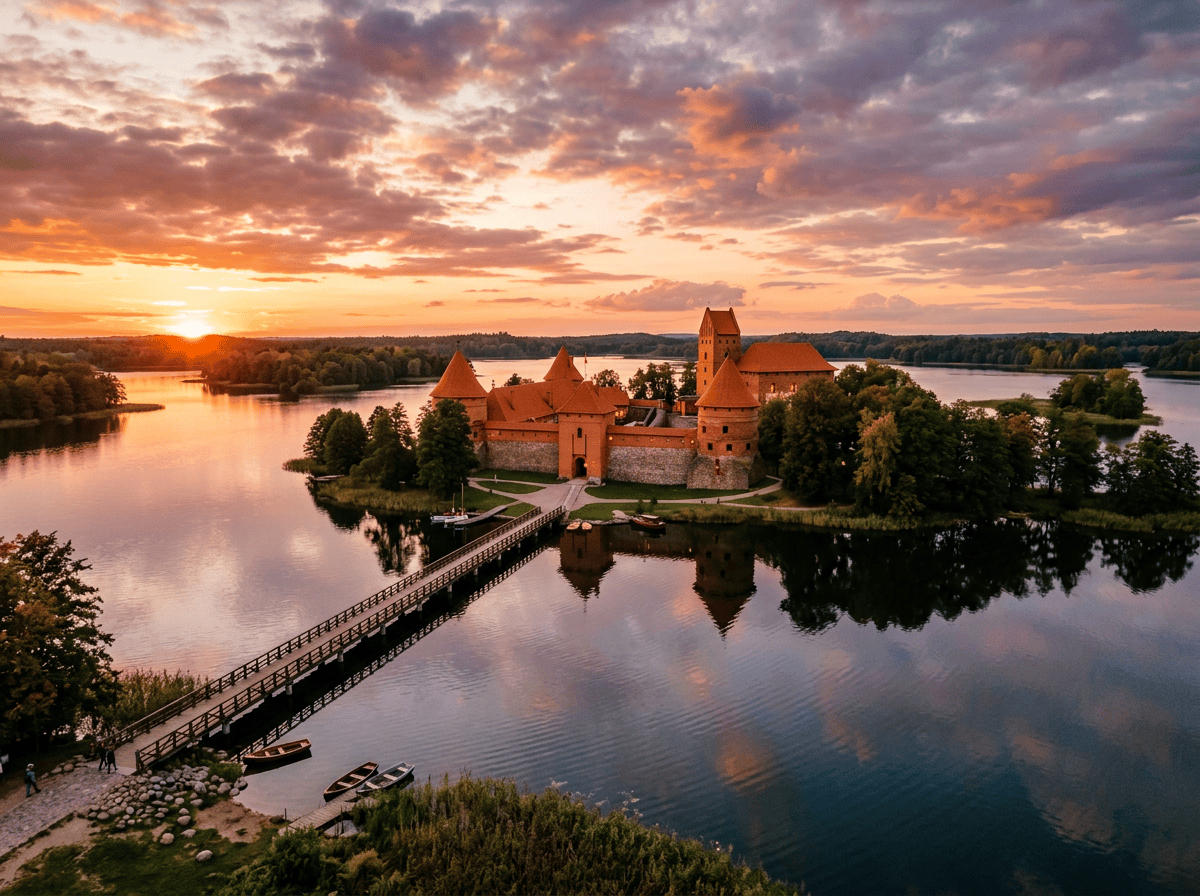
Located approximately 30 kilometers from Vilnius, Trakai is one of the easiest and most rewarding day trips from the Lithuanian capital.
Its most famous landmark is Trakai Island Castle, dramatically positioned on an island in Lake Galvė.
The reconstructed red-brick castle surrounded by water creates one of the most recognizable views in Lithuania.
Things to Do in Trakai
- Visit Trakai Island Castle
- Walk along the lakeside
- Take a boat trip on Lake Galvė
- Explore the historic town
- Learn about Lithuania’s Karaim community
- Try traditional kibinai
Trakai is particularly beautiful during late spring and summer when the surrounding landscape is green and lake activities are available.
Recommended stay: Half day or full day
3. Kaunas – Culture, History & Modern Lithuania
Kaunas, Lithuania’s second-largest city, provides a different atmosphere from Vilnius.
The city combines medieval heritage, interwar architecture, museums, street art, and a youthful cultural scene.
Begin around Kaunas Old Town before walking along Laisvės Alėja, one of the city’s main pedestrian avenues.
Best Things to See in Kaunas
- Kaunas Castle
- Town Hall Square
- Laisvės Alėja
- Cathedral Basilica of St. Peter and St. Paul
- Pažaislis Monastery
- Local museums and galleries
Architecture enthusiasts should pay particular attention to Kaunas’ modernist buildings, which form an important part of the city’s identity.
Recommended stay: 1 day

4. Curonian Spit – Lithuania’s Spectacular Coastal Landscape
For nature lovers, the Curonian Spit is one of the highlights of Lithuania.
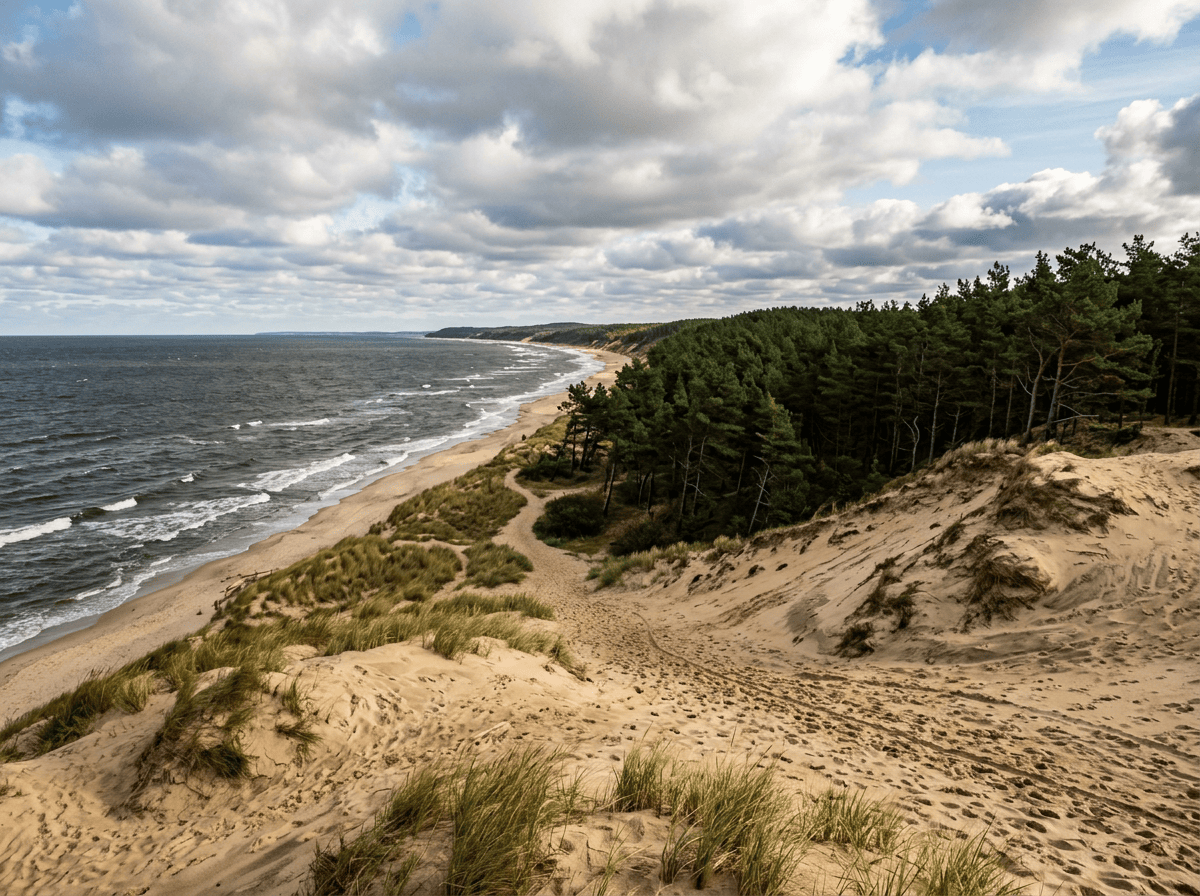
This long, narrow peninsula between the Curonian Lagoon and the Baltic Sea is known for enormous sand dunes, pine forests, beaches, fishing villages, and peaceful cycling routes.
Part of the Curonian Spit is protected as a UNESCO World Heritage Site.
What to Do on the Curonian Spit
- Explore the sand dunes
- Visit Nida
- Walk through pine forests
- Relax on Baltic Sea beaches
- Cycle between coastal villages
- Watch the sunset over the dunes
- Discover traditional fishermen’s architecture
Nida
Nida is one of Lithuania’s most beautiful coastal settlements and an excellent base for exploring the surrounding landscape.
The combination of colorful wooden houses, lagoon views, forests, and nearby dunes gives the town a completely different atmosphere from Lithuania’s major cities.
Recommended stay: 1–2 days
5. Klaipėda – Lithuania’s Baltic Port City
Klaipėda is Lithuania’s major port and the main gateway to the Curonian Spit.
Its architecture reflects a mixture of Lithuanian and German influences, giving the historic center a distinctive character.
Things to Do in Klaipėda
- Explore Klaipėda Old Town
- Walk around Theatre Square
- See the famous Ännchen of Tharau statue
- Explore the harbor area
- Discover the city’s sculptures
- Take the ferry toward the Curonian Spit
Klaipėda can easily be combined with a trip to Nida and the Curonian Spit.
Recommended stay: Half day to 1 day

🍽️ What to Eat in Lithuania
Lithuanian cuisine is hearty, comforting, and strongly influenced by the country’s agricultural traditions. Potatoes, rye bread, dairy products, mushrooms, meat, beetroot, and seasonal ingredients appear frequently.
Here are some traditional Lithuanian foods worth trying.
🥔 Cepelinai
Perhaps the best-known Lithuanian dish, cepelinai are large potato dumplings traditionally filled with minced meat or other fillings.
They are commonly served with sour cream and bacon sauce.
🥟 Kibinai
Kibinai are savory pastries traditionally associated with Lithuania’s Karaim community, particularly in Trakai.
They can contain meat, vegetables, cheese, or other fillings and make an excellent snack during a day trip.
🥣 Šaltibarščiai
One of Lithuania’s most colorful dishes, šaltibarščiai is a bright pink cold beet soup typically made with kefir.
It is especially popular during warmer months and is often served with boiled potatoes.
🥞 Bulviniai Blynai
These Lithuanian potato pancakes are crispy on the outside and soft inside.
They are often served with sour cream.
🍞 Lithuanian Rye Bread
Dark rye bread has an important place in Lithuanian food culture and is frequently served alongside soups, meat dishes, and cheeses.
🍰 Šakotis
Šakotis is a distinctive traditional cake with a branched or spiked appearance. It is commonly associated with celebrations and special occasions.

🗓️ Suggested 5-Day Lithuania Itinerary
A five-day trip provides enough time to experience Lithuania’s historic cities, famous castle, and Baltic coast without making the journey unnecessarily rushed.
Day 1 – Discover Vilnius Old Town
Start your Lithuania adventure in Vilnius.
Spend your first day exploring the historic center.
Suggested route:
Vilnius Cathedral → Cathedral Square → Gediminas’ Tower → St. Anne’s Church → Užupis → Old Town → Gate of Dawn
Spend the evening exploring local restaurants and cafés around the Old Town.
Overnight: Vilnius
Day 2 – Trakai Day Trip
Dedicate your second day to one of Lithuania’s most famous landmarks.
Travel from Vilnius to Trakai in the morning.
Visit Trakai Island Castle, walk around Lake Galvė, and stop at a local restaurant or bakery to try kibinai.
Return to Vilnius during the late afternoon.
Use the evening to explore any Vilnius attractions you missed on Day 1.
Overnight: Vilnius
Day 3 – Vilnius to Kaunas
Travel to Kaunas and spend the day discovering Lithuania’s second-largest city.
Start around Kaunas Castle and Old Town before continuing toward Town Hall Square.
Later, walk along Laisvės Alėja and explore the city’s cafés, museums, and modernist architecture.
Overnight: Kaunas
Day 4 – Kaunas to Klaipėda
Continue west toward Lithuania’s Baltic coast.
After arriving in Klaipėda, explore the compact Old Town, Theatre Square, and harbor area.
If time allows, take a relaxed waterfront walk before preparing for the next day’s excursion.
Overnight: Klaipėda
Day 5 – Curonian Spit & Nida
Finish your Lithuania itinerary with one of the country’s most spectacular natural destinations.
Cross from Klaipėda toward the Curonian Spit and continue to Nida.
Spend the day exploring:
- Nida village
- Sand dunes
- Baltic beaches
- Pine forests
- Lagoon viewpoints
Allow plenty of time simply to enjoy the landscape. The Curonian Spit is not a destination that needs to be rushed.
Return toward Klaipėda or stay overnight around Nida depending on your onward travel plans.
🌤️ Best Time to Visit Lithuania
Lithuania can be visited throughout the year, but the experience changes significantly with the seasons.
May–June
One of the best periods for sightseeing. Days become longer, landscapes are green, and temperatures are generally comfortable.
July–August
The warmest and busiest period, particularly along the Baltic coast.
This is an excellent time for beaches, cycling, outdoor dining, and exploring the Curonian Spit.
September
A particularly attractive month for travelers who prefer fewer crowds. Early autumn can provide pleasant temperatures and beautiful scenery.
October–April
Temperatures become considerably colder and daylight hours are shorter.
Winter can nevertheless be atmospheric, especially in Vilnius around the Christmas season.
Best overall period: May to September
🚆 Getting Around Lithuania
Traveling around Lithuania is relatively straightforward.
Train
Trains are useful for connections between several major cities, including Vilnius and Kaunas.
Bus
Lithuania has an extensive intercity bus network, making buses useful for destinations not directly connected by train.
Car
Renting a car provides greater flexibility, particularly when exploring rural areas or combining multiple natural attractions.
Getting Around Cities
Vilnius, Kaunas, and Klaipėda have walkable central districts. Public transportation can be useful for attractions located farther from the historic centers.
💰 Is Lithuania Expensive?
Lithuania can offer good value compared with many popular destinations in Western and Northern Europe.
Accommodation prices vary considerably depending on season and location. Vilnius and coastal destinations generally become more expensive during peak travel periods.
Budget-conscious travelers can reduce costs by using public transportation, booking accommodation early, eating at local restaurants, and traveling outside July and August.
✈️ Lithuania Travel Tips
- Carry a bank card, as electronic payments are widely used.
- Pack a light waterproof jacket even during warmer months.
- Reserve popular coastal accommodation early during summer.
- Wear comfortable shoes for Vilnius and Kaunas Old Towns.
- Allow extra time for the Curonian Spit rather than treating it as a quick photo stop.
- Try traditional food outside the most tourist-oriented areas when possible.
- Check transportation schedules before traveling between smaller destinations.
🌿 Why Visit Lithuania?
Lithuania is ideal for travelers looking for a European destination combining history, culture, food, and nature without the intensity of Europe’s busiest tourism centers.
In only a few days, you can walk through the Baroque streets of Vilnius, visit an island castle in Trakai, discover Kaunas’ architecture, explore Klaipėda, and stand among the huge dunes of the Curonian Spit.
That variety makes Lithuania particularly suitable for both first-time Baltic travelers and longer Northern European itineraries.
❓ Frequently Asked Questions About Lithuania
How many days do you need in Lithuania?
Around 5 days is enough for a first trip covering Vilnius, Trakai, Kaunas, Klaipėda, and the Curonian Spit. Travelers interested in slower travel or nature may prefer 7–10 days.
Is Lithuania worth visiting?
Yes. Lithuania offers historic cities, castles, Baltic beaches, forests, distinctive cuisine, and impressive natural landscapes within a relatively compact country.
What is Lithuania famous for?
Lithuania is known for Vilnius Old Town, Trakai Island Castle, the Curonian Spit, Baltic landscapes, basketball culture, traditional food, and its historical heritage.
What is the best city to visit in Lithuania?
Vilnius is generally the best starting point for first-time visitors because it has Lithuania’s largest concentration of historic landmarks and provides easy access to Trakai.
Is Lithuania easy to travel around?
Yes. Major destinations are connected by buses, trains, and roads, while the centers of Lithuania’s main tourist cities are generally easy to explore on foot.
What food should I try in Lithuania?
Try cepelinai, kibinai, šaltibarščiai, potato pancakes, Lithuanian rye bread, and šakotis.
Final Thoughts
Lithuania may be compact, but it offers an impressive variety of experiences.
Start among the historic streets and churches of Vilnius, discover the fairy-tale setting of Trakai Island Castle, experience the culture and architecture of Kaunas, continue toward the Baltic atmosphere of Klaipėda, and finish among the forests and towering dunes of the Curonian Spit.
Whether you’re planning a Baltic road trip, a European city break, or a nature-focused escape, Lithuania deserves a place on your travel list.
🌿 Follow mutlucicekler.com for more travel guides, destination inspiration, local food recommendations, and practical travel itineraries from around the world.
Bir Cevap Yazın