

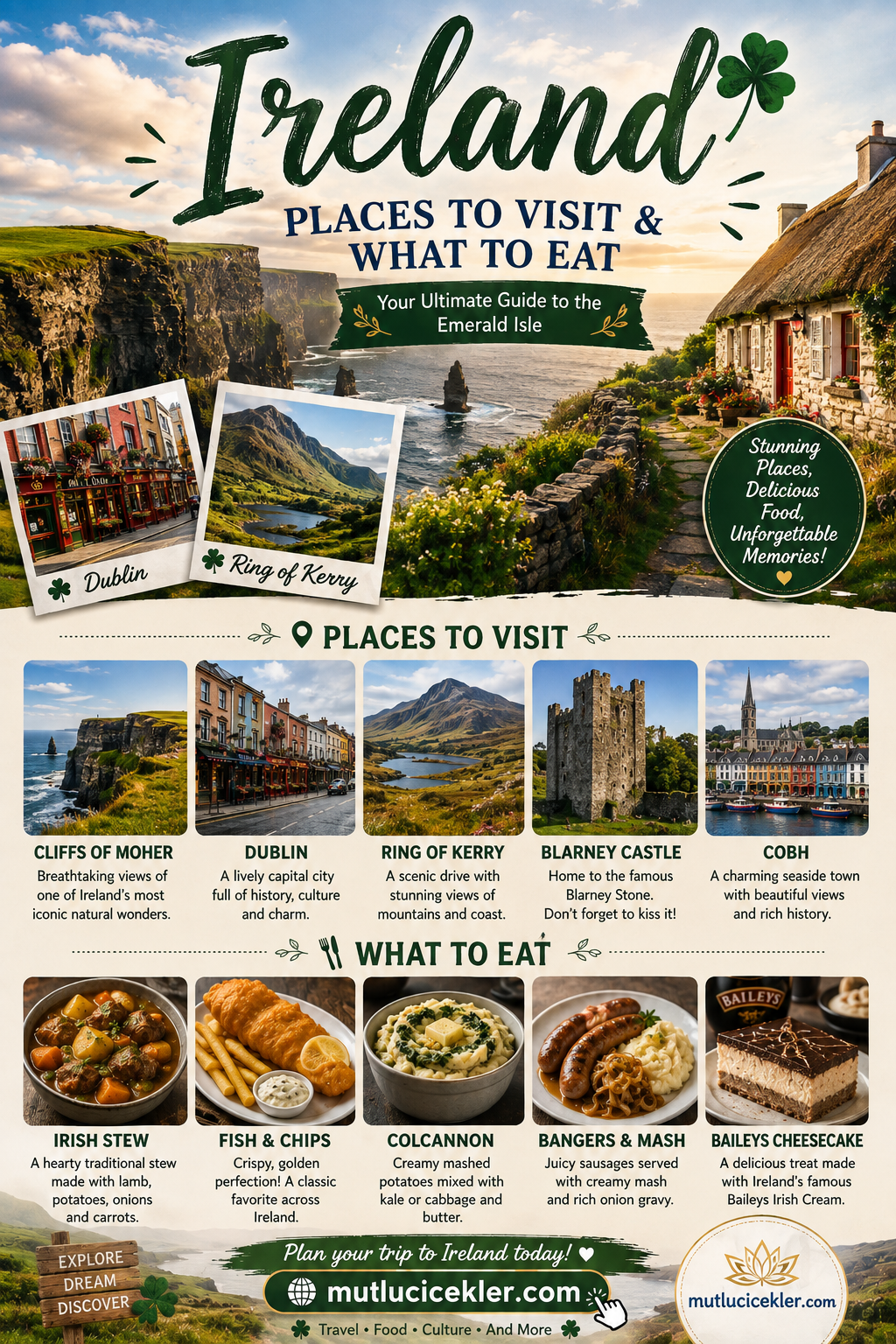
Ireland is a destination where dramatic Atlantic cliffs, emerald-green landscapes, medieval castles, colorful villages, lively pubs, and centuries of history come together. Known as the Emerald Isle, the country offers an unforgettable combination of natural beauty and cultural experiences.
For first-time visitors, Ireland is surprisingly easy to explore. You can begin among the historic streets of Dublin, cross the country to the colorful city of Galway, admire the spectacular Cliffs of Moher, experience the landscapes of the Ring of Kerry, and finish your journey among the historic treasures of Kilkenny.
This Ireland travel guide covers the best places to visit in Ireland, traditional Irish food, a detailed 7-day itinerary, the best time to visit, transportation tips, and practical information to help you plan your first trip.
🇮🇪 Ireland at a Glance
- Capital: Dublin
- Official Languages: Irish and English
- Currency: Euro (€)
- Driving: Left-hand side
- Time Zone: GMT / Irish Standard Time in summer
- International Calling Code: +353
- Best for: Road trips, history, castles, coastal scenery, traditional music and nature
- Recommended Trip Length: 7–10 days
- Main International Gateway: Dublin Airport
💡 Travel Tip: Ireland and Northern Ireland are not the same country. The Republic of Ireland uses the euro, while Northern Ireland is part of the United Kingdom and uses pound sterling.
Best Places to Visit in Ireland
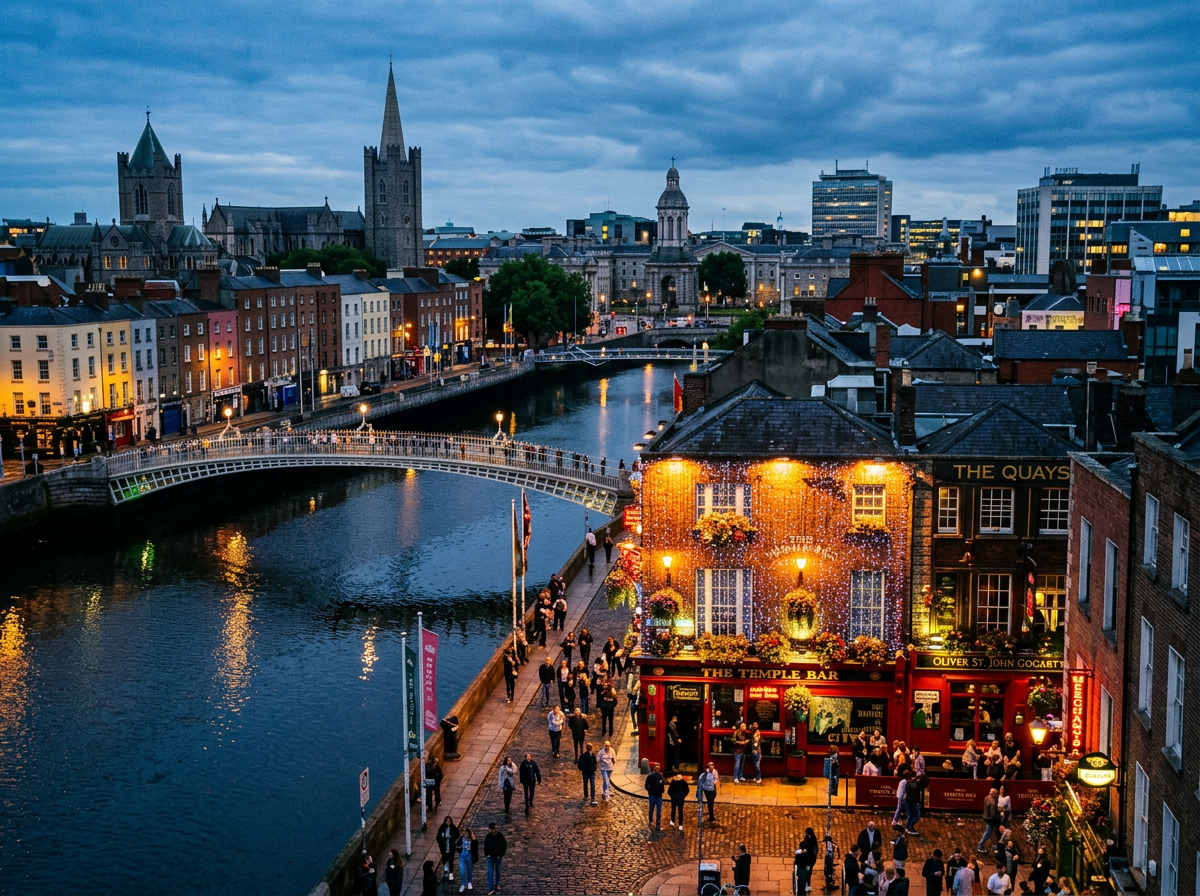
1. Dublin – History, Culture and Irish Pub Life
Dublin is the natural starting point for most first-time visitors. Ireland’s capital combines historic architecture and literary heritage with modern restaurants, shopping streets, museums and legendary pub culture.
One of the best ways to experience Dublin is simply to walk through its central neighborhoods. Georgian streets, historic university buildings and traditional pubs appear around almost every corner.
Top Things to Do in Dublin
- Walk through the historic grounds of Trinity College
- See Dublin Castle
- Explore the Temple Bar district
- Visit St Patrick’s Cathedral
- Walk through St Stephen’s Green
- Discover Ireland’s famous literary heritage
- Enjoy traditional Irish music in a local pub
The city center is compact enough to explore much of it on foot, making Dublin particularly convenient for first-time travelers.
Recommended stay: 2 days
2. Galway – Ireland’s Colorful Atlantic City
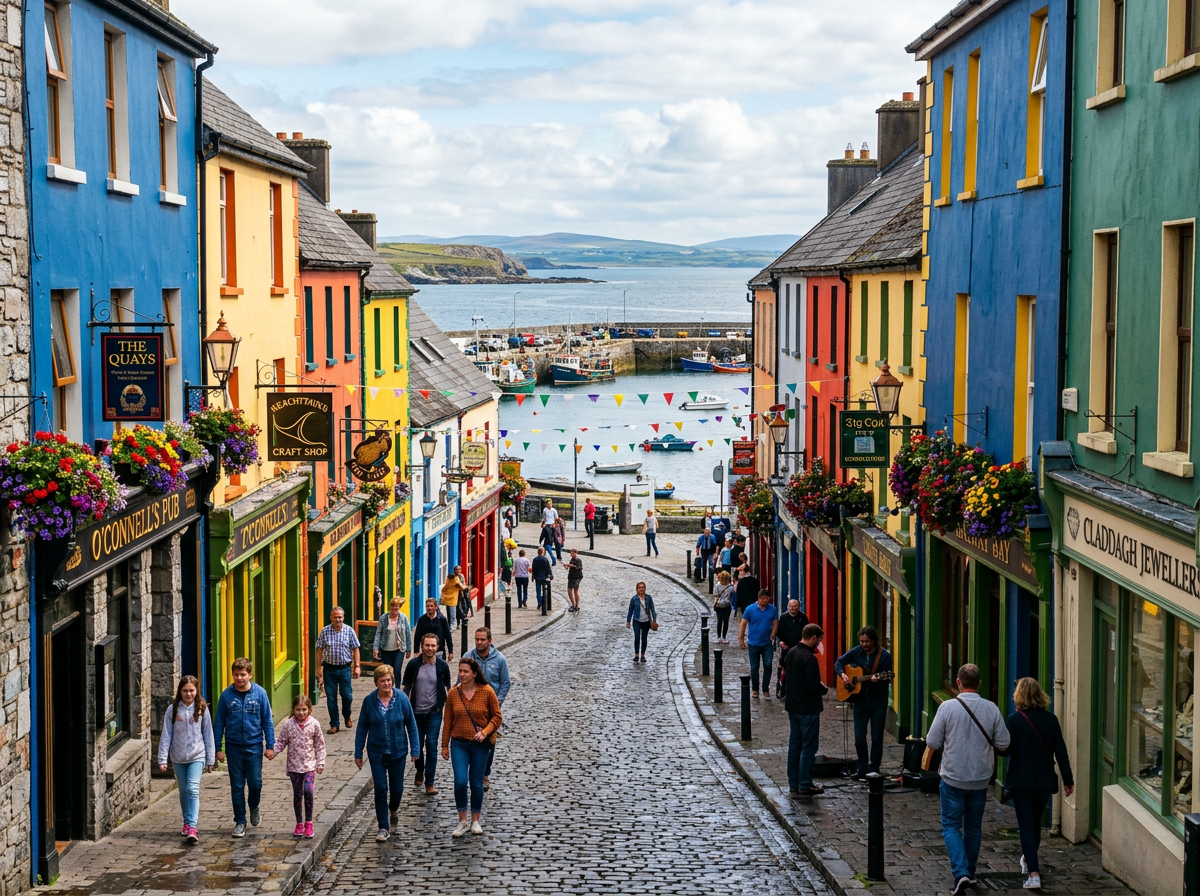
Located on Ireland’s west coast, Galway offers a completely different atmosphere from Dublin. The city is known for colorful streets, live music, seafood restaurants and its strong connection to traditional Irish culture.
The Latin Quarter is the heart of Galway and one of the best places to experience its lively atmosphere. Street musicians frequently perform around the pedestrianized streets, while traditional pubs provide live music in the evenings.
Top Things to Do in Galway
- Explore the Latin Quarter
- Walk along Quay Street
- Visit the Spanish Arch
- Walk along the River Corrib
- Explore Galway’s traditional pubs
- Try fresh Atlantic seafood
- Enjoy the promenade at Salthill
Galway is also an excellent base for exploring Ireland’s spectacular western coastline.
Recommended stay: 1–2 days
3. Cliffs of Moher – Ireland’s Iconic Coastal Landscape
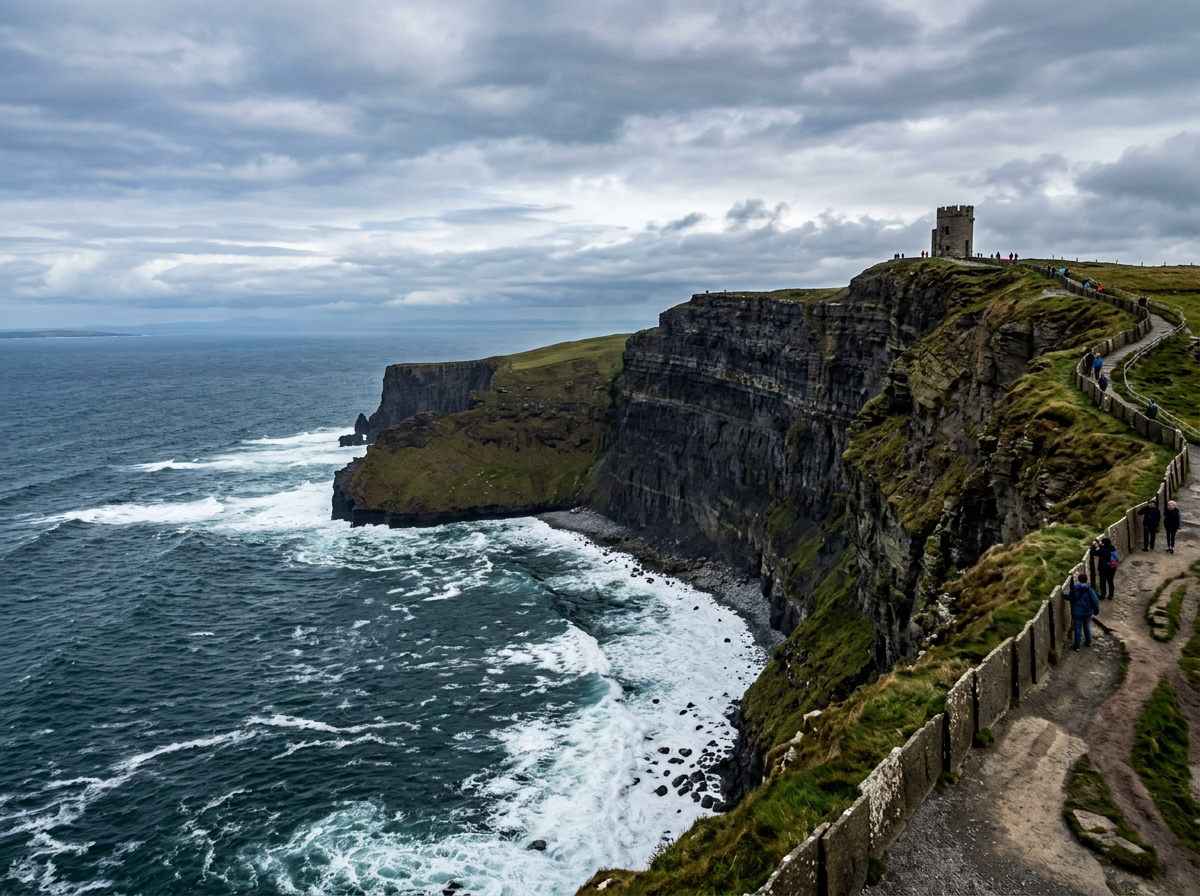
The Cliffs of Moher are among Ireland’s most famous natural attractions and one of the highlights of any first trip to the country.
Rising dramatically above the Atlantic Ocean on the coast of County Clare, the cliffs stretch for several kilometers and provide extraordinary views across the ocean.
Walking along the designated cliff paths allows visitors to appreciate the enormous scale of the landscape.
What to Do at the Cliffs of Moher
- Walk along the official cliff paths
- Visit the main viewing platforms
- See O’Brien’s Tower
- Explore the visitor center
- Photograph the Atlantic coastline
- Combine your visit with the Burren region
🌊 Travel Tip: Weather conditions can change quickly on Ireland’s Atlantic coast. Bring a waterproof jacket even if the morning begins with sunshine.
Recommended visit: Half day
4. Ring of Kerry – Ireland’s Legendary Scenic Drive
For travelers dreaming of Ireland’s famous green landscapes, the Ring of Kerry is one of the country’s essential experiences.
This scenic route around the Iveragh Peninsula passes mountains, lakes, beaches, traditional villages and dramatic sections of the Atlantic coastline.
Killarney makes an excellent base for exploring the region.
Highlights Around the Ring of Kerry
- Killarney National Park
- Ladies View
- Moll’s Gap
- Kenmare
- Cahersiveen
- Waterville
- Atlantic coastal viewpoints
Allow plenty of time for stops because some of the most memorable moments come from unexpected viewpoints and small villages along the route.
🚗 Travel Tip: Roads can be narrow in rural Ireland. Drive carefully and allow more travel time than navigation apps may initially suggest.
Recommended stay: 2 days

5. Kilkenny – Medieval Ireland
Kilkenny is one of Ireland’s most attractive historic cities and a great destination for travelers interested in medieval architecture.
Its compact center contains narrow streets, historic buildings, traditional pubs and one of Ireland’s most recognizable castles.
Top Things to Do in Kilkenny
- Visit Kilkenny Castle
- Walk the Medieval Mile
- See St Canice’s Cathedral
- Explore historic lanes
- Visit traditional pubs and cafés
- Discover local craft shops
Kilkenny can be visited as a day trip, but staying overnight allows you to experience the quieter atmosphere after many daytime visitors leave.
Recommended stay: 1 day

What to Eat in Ireland
Irish cuisine is traditionally based on simple, filling ingredients such as potatoes, meat, seafood, bread and dairy products. Modern Irish restaurants increasingly combine these traditions with contemporary cooking.
Irish Stew
One of Ireland’s classic comfort foods, Irish stew traditionally contains lamb or mutton with potatoes, onions and other vegetables.
Boxty
Boxty is a traditional Irish potato pancake associated particularly with the northern and northwestern parts of Ireland.
Seafood Chowder
Ireland’s long Atlantic coastline makes seafood an important part of local cuisine. Creamy seafood chowder commonly includes a mixture of fresh fish and shellfish.
Soda Bread
Irish soda bread is made using baking soda rather than yeast. It is often served with butter alongside soups, stews or breakfast.
Full Irish Breakfast
A traditional Irish breakfast may include eggs, sausages, bacon, black pudding, white pudding, tomatoes, mushrooms and toast.
Fish and Chips
A simple but popular choice, especially in coastal towns where fresh fish is widely available.
🍽️ Food Tip: Galway and Ireland’s western coast are particularly good places to try locally sourced seafood.

Suggested 7-Day Ireland Itinerary
A seven-day trip allows first-time visitors to combine Ireland’s cultural highlights with its famous western landscapes without trying to cover too much of the country.
Day 1 – Arrive in Dublin
Begin your Ireland adventure in Dublin.
After checking into your accommodation, spend the afternoon exploring the central city.
Visit:
- Trinity College area
- Grafton Street
- St Stephen’s Green
- Temple Bar
In the evening, find a traditional pub offering live Irish music.
Overnight: Dublin
Day 2 – Discover Dublin
Dedicate your second day to Dublin’s historic attractions.
Start with Dublin Castle before exploring the area around St Patrick’s Cathedral. Continue through the Georgian parts of the city and visit one or two museums depending on your interests.
Finish the afternoon with a walk along the River Liffey.
Overnight: Dublin
Day 3 – Dublin to Galway
Travel west from Dublin to Galway.
The journey gives you your first glimpse of Ireland’s countryside before arriving on the Atlantic coast.
Spend the afternoon exploring:
- Eyre Square
- Latin Quarter
- Quay Street
- Spanish Arch
- River Corrib
End your evening with traditional Irish music in one of Galway’s pubs.
Overnight: Galway
Day 4 – Cliffs of Moher & The Burren
Leave Galway for one of Ireland’s most spectacular coastal journeys.
Travel through the unusual limestone landscapes of The Burren before reaching the Cliffs of Moher.
Spend time walking along the designated paths and enjoying the Atlantic views.
Continue south toward County Kerry after your visit.
Overnight: Killarney
Day 5 – Ring of Kerry
Dedicate the entire day to the Ring of Kerry.
Start from Killarney and explore the Iveragh Peninsula, stopping at villages and viewpoints along the route.
Possible stops include:
- Killarney National Park
- Ladies View
- Kenmare
- Waterville
- Cahersiveen
- Scenic Atlantic viewpoints
Avoid rushing. The landscapes are the main attraction, so leave enough time for spontaneous stops.
Overnight: Killarney
Day 6 – Killarney to Kilkenny
Spend the morning enjoying Killarney before traveling east toward Kilkenny.
Once in Kilkenny, explore the historic center and Medieval Mile.
Visit Kilkenny Castle and walk through the city’s atmospheric old streets.
Enjoy dinner at a traditional Irish pub or local restaurant.
Overnight: Kilkenny
Day 7 – Kilkenny to Dublin
Enjoy a relaxed breakfast and a final walk around Kilkenny before returning to Dublin.
Depending on your flight schedule, spend your remaining time shopping, visiting a museum or enjoying one final Irish meal.
End of the 7-day Ireland itinerary.
Best Time to Visit Ireland
Ireland can be visited throughout the year, but each season offers a different experience.
🌸 Spring – March to May
Spring brings longer days, greener landscapes and generally fewer visitors than the peak summer period.
Best for: Road trips, sightseeing and photography.
☀️ Summer – June to August
Summer offers the longest daylight hours and generally the mildest conditions.
It is also the busiest period, especially around Dublin, Galway, Killarney and the Cliffs of Moher.
Best for: First-time visitors and long road trips.
🍂 Autumn – September to November
September can be an excellent month to explore Ireland as summer crowds begin to decrease.
Autumn landscapes also create beautiful scenery throughout rural areas.
Best for: Couples, photographers and travelers seeking fewer crowds.
❄️ Winter – December to February
Winter brings shorter days and colder, wetter conditions, but cities can be atmospheric and accommodation may be cheaper outside holiday periods.
Best for: City breaks and travelers prioritizing culture over outdoor sightseeing.
⭐ Overall recommendation: May, June and September offer an excellent balance of daylight, manageable visitor numbers and road-trip conditions.
Getting Around Ireland
🚗 Rental Car
For a trip combining cities with rural landscapes, renting a car provides the greatest flexibility.
A car is particularly useful for:
- Ring of Kerry
- Rural County Kerry
- The Burren
- Smaller coastal villages
- Scenic viewpoints
Remember that traffic drives on the left-hand side.
🚆 Train
Ireland’s rail network connects several major cities and is particularly convenient between destinations such as Dublin and Galway.
However, trains do not reach every rural attraction.
🚌 Bus
Intercity buses provide another useful option between major towns and cities.
Tour companies also operate day trips from Dublin and Galway to popular attractions such as the Cliffs of Moher.
Practical Ireland Travel Tips
🌦️ Prepare for Changing Weather
Irish weather can change surprisingly quickly. A sunny morning can become rainy and windy within hours.
Pack:
- Waterproof jacket
- Comfortable walking shoes
- Light layers
- Small umbrella
- Weather-resistant backpack
💳 Cards and Cash
Cards and contactless payments are widely accepted, particularly in cities and tourist destinations. Keeping a small amount of cash can still be useful in rural areas.
🚘 Driving in Ireland
Remember to drive on the left. Rural roads can be narrow, winding and bordered by stone walls or hedges.
Allow additional time when traveling through countryside regions.
🏨 Book Early in Peak Season
Accommodation in Dublin, Galway and Killarney can become expensive during summer.
Booking early is particularly important for July and August trips.
🎻 Experience Traditional Music
Traditional Irish music sessions are one of the country’s most memorable cultural experiences.
Galway is particularly famous for its live music scene, but traditional sessions can be found throughout Ireland.
Frequently Asked Questions About Ireland
How many days do you need in Ireland?
Seven days is a good amount of time for a first trip. It allows you to experience Dublin, Galway, the Cliffs of Moher, County Kerry and another historic destination without creating an excessively rushed itinerary.
Is Ireland good for first-time international travelers?
Yes. English is widely spoken, tourism infrastructure is well developed, and major destinations are relatively easy to navigate.
Do you need a car in Ireland?
Not necessarily if you are only visiting major cities. However, renting a car provides significantly more flexibility when exploring rural landscapes and scenic routes.
What is Ireland most famous for?
Ireland is famous for its green landscapes, dramatic Atlantic coastline, castles, traditional music, literary heritage, historic pubs and welcoming towns and villages.
Is Dublin worth visiting?
Yes. Dublin offers some of Ireland’s most important cultural attractions, museums, historic architecture and nightlife. Two days is usually enough for a first visit.
What should I pack for Ireland?
Bring layers, comfortable shoes and waterproof clothing regardless of season. Weather conditions can change rapidly, particularly along the Atlantic coast.
What is the best month to visit Ireland?
May, June and September are excellent choices for many travelers because they offer a good combination of daylight, sightseeing conditions and generally more manageable crowds than the busiest summer weeks.
Final Thoughts
Ireland is one of those destinations where the journey between attractions can be just as memorable as the attractions themselves. Ancient castles appear beside quiet roads, green hills descend toward the Atlantic, traditional music fills small pubs, and historic cities reveal centuries of Irish culture.
For first-time visitors, a route combining Dublin, Galway, the Cliffs of Moher, the Ring of Kerry and Kilkenny provides an excellent introduction to the country.
Seven days will only reveal part of what Ireland has to offer, but it is enough to understand why the Emerald Isle continues to capture the imagination of travelers from around the world.
Follow mutlucicekler.com for more travel guides, destination inspiration, practical travel tips and unforgettable routes from around the world.


Bir yanıt yazın