
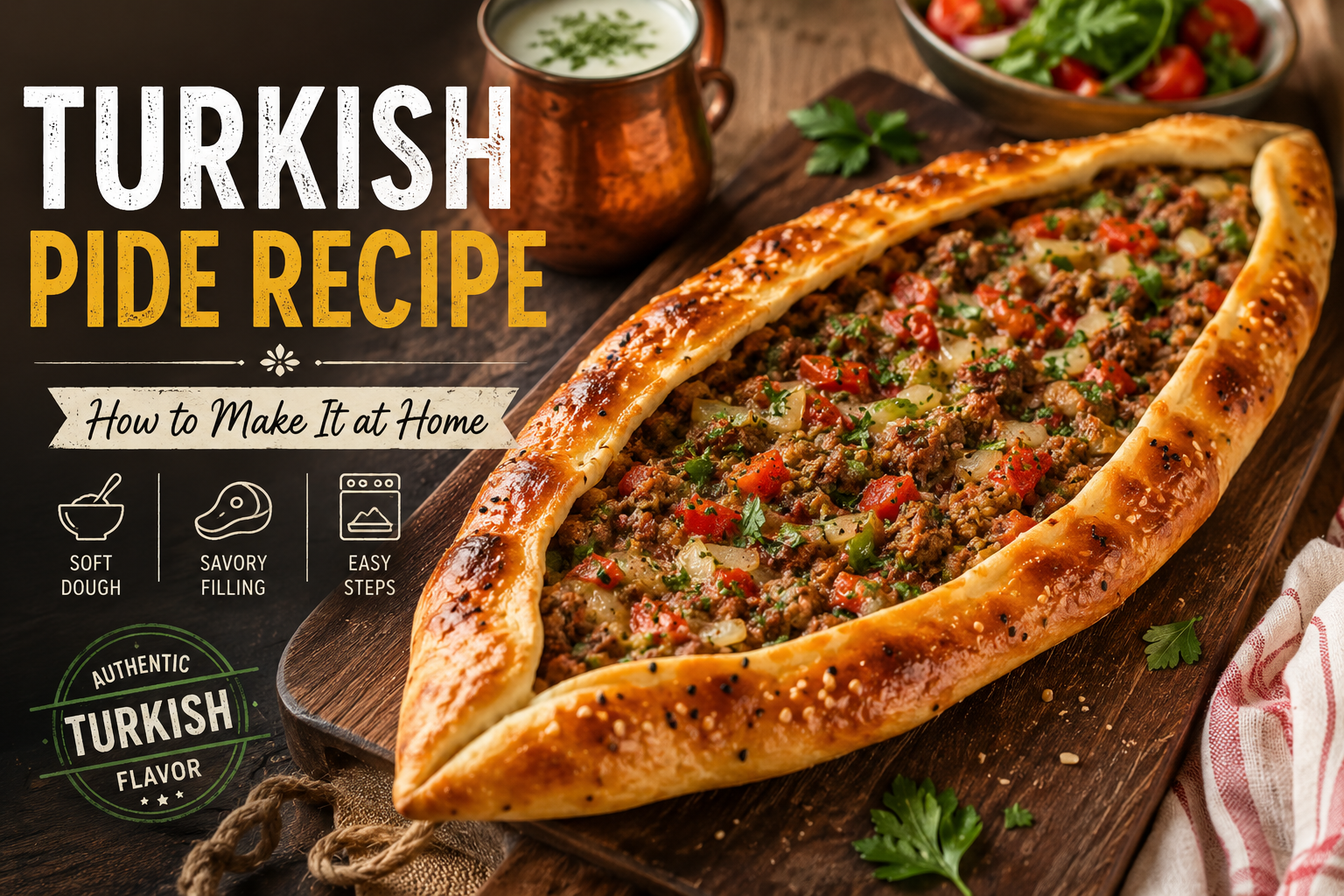
If you love Turkish cuisine, Turkish pide is one of those dishes you should try making at least once at home. With its soft, slightly chewy dough, crispy golden edges, and flavorful toppings, pide is a comforting classic found in bakeries and restaurants throughout Türkiye.
Often described as Turkish flatbread or sometimes compared to pizza, pide has its own distinctive character. The dough is shaped into a long oval or boat, filled with ingredients such as seasoned minced meat, cheese, vegetables, or sucuk, and baked at high heat until beautifully golden.
The good news is that you don’t need a traditional stone oven to enjoy it. This homemade Turkish pide recipe is designed for a regular home oven and uses simple ingredients.
What Is Turkish Pide?
Pide is a traditional Turkish baked flatbread that can be prepared with many different toppings. Depending on the region and recipe, it may be topped with minced meat, cheese, Turkish sausage, vegetables, eggs, or combinations of these ingredients.
One of its most recognizable features is its shape. The dough is rolled into an elongated oval, the filling is placed in the center, and the edges are folded inward to create the characteristic boat-shaped pide.
Pide is commonly served freshly baked and sliced into smaller pieces for sharing.
Although it is sometimes called “Turkish pizza,” pide has a different dough, shape, preparation method, and culinary tradition.
Turkish Pide at a Glance
Cuisine: Turkish
Course: Main dish
Preparation time: About 25 minutes
Dough rising time: 60–90 minutes
Cooking time: 12–18 minutes per batch
Total time: About 2 hours
Servings: 4 large pides
Difficulty: Medium
Ingredients for Homemade Turkish Pide
For the Pide Dough
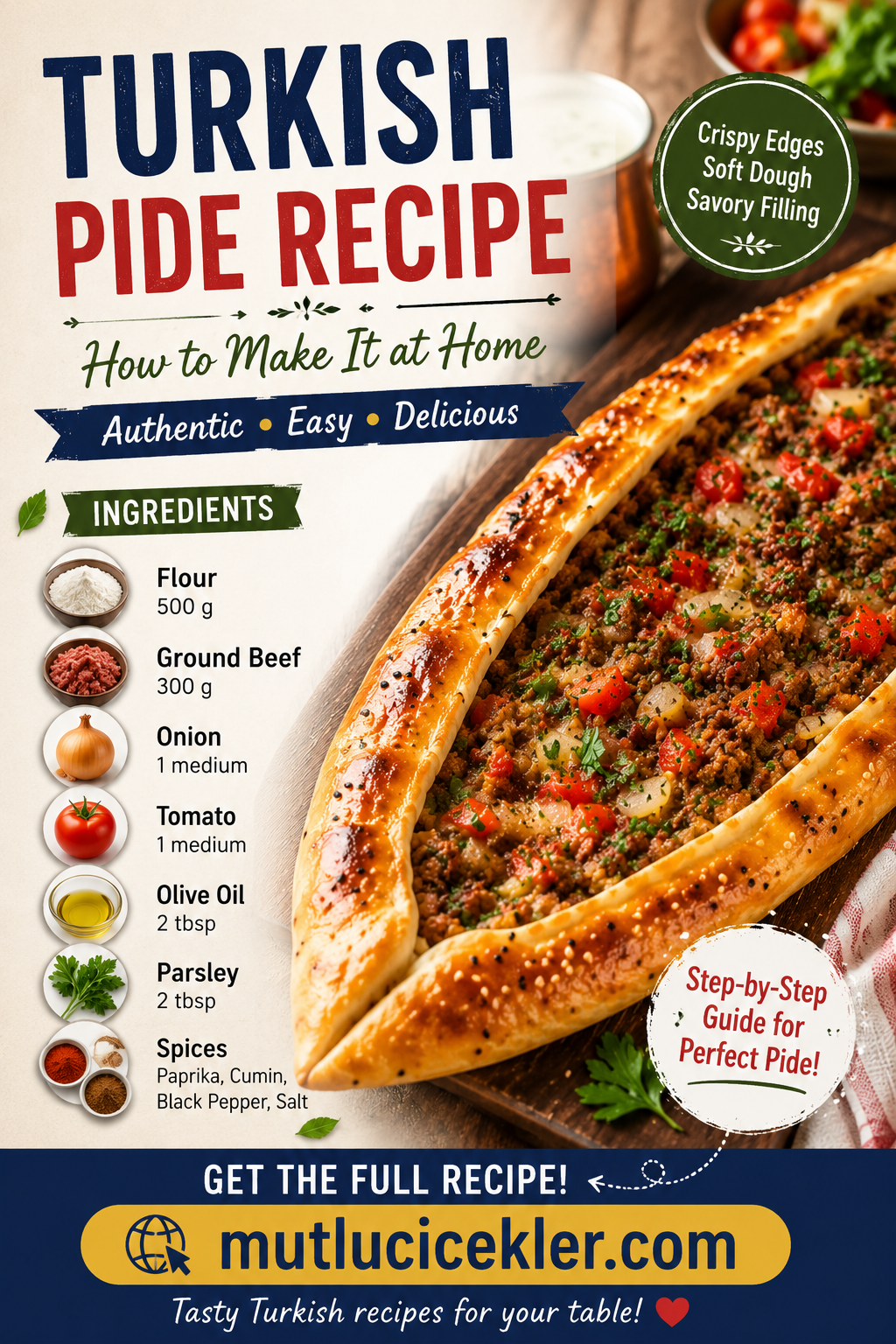
- 500 g (about 4 cups) all-purpose flour
- 7 g (2¼ teaspoons) instant dry yeast
- 1 teaspoon granulated sugar
- 1½ teaspoons salt
- 300 ml (about 1¼ cups) lukewarm water
- 2 tablespoons olive oil
For the Minced Meat Filling
- 300 g ground beef or lamb
- 1 medium onion, finely chopped
- 1 medium tomato, finely diced
- 1 small green pepper, finely chopped
- 1 small red pepper, finely chopped
- 1 tablespoon tomato paste
- 1 tablespoon olive oil
- ½ teaspoon paprika
- ½ teaspoon ground cumin
- ¼ teaspoon black pepper
- Salt to taste
- 2 tablespoons finely chopped fresh parsley
For the Edges
- 1 egg yolk
- 1 tablespoon milk or yogurt
- 1 teaspoon sesame seeds or nigella seeds, optional
- A little melted butter for brushing after baking
How to Make Turkish Pide at Home
1. Prepare the Dough
Add the lukewarm water, sugar, yeast, and olive oil to a large mixing bowl.
Stir briefly and then gradually add the flour.
Add the salt and begin mixing until a rough dough forms.
Transfer the dough to a lightly floured surface and knead for approximately 8–10 minutes, until it becomes smooth and elastic.
If the dough feels extremely sticky, add a small amount of flour. Avoid adding too much because a slightly soft dough helps create a tender pide.
2. Let the Dough Rise
Place the dough in a lightly oiled bowl and cover it with a clean kitchen towel or reusable cover.
Leave it in a warm place for approximately 60–90 minutes, or until it has roughly doubled in size.
The exact rising time will depend on the temperature of your kitchen.
3. Prepare the Pide Filling
While the dough is rising, prepare the filling.
Combine the ground meat, finely chopped onion, tomato, peppers, tomato paste, olive oil, paprika, cumin, black pepper, salt, and parsley in a bowl.
Mix until all the ingredients are evenly distributed.
The vegetables should be chopped quite finely. Large pieces can release too much moisture or make the filling difficult to spread evenly over the thin dough.
Important Tip
Unlike some meat dishes, the filling does not need to be cooked beforehand. When spread in a thin layer, the meat cooks together with the pide in the hot oven.
4. Preheat the Oven
Preheat your oven to 240°C / 465°F, or as hot as your oven comfortably allows.
Place a baking tray inside while the oven heats if you want a slightly crispier bottom.
A pizza stone or baking steel can also be used if you have one.
High heat is important because traditional pide is normally cooked quickly in very hot ovens.
5. Shape the Pide
Once the dough has risen, gently press out the excess air.
Divide it into 4 equal portions.
Shape each portion into a ball and allow them to rest for approximately 10 minutes. This makes the dough easier to roll without springing back.
Roll one piece into a long oval approximately 30–35 cm (12–14 inches) long.
The center should be relatively thin, while the outer edges can remain slightly thicker.
6. Add the Filling
Spread approximately one-quarter of the minced meat mixture over the center of the dough.
Leave a border of about 2 cm (¾ inch) around the edges.
Avoid piling the filling too thickly. A relatively thin layer helps the meat and vegetables cook quickly and evenly.
7. Create the Traditional Boat Shape
Fold the long edges of the dough slightly over the filling.
Pinch and twist both ends together to create pointed tips.
You should now have the classic Turkish pide boat shape.
Repeat with the remaining dough and filling.
8. Brush the Edges
Mix the egg yolk with the milk or yogurt.
Brush this mixture over the exposed edges of each pide.
If desired, sprinkle sesame seeds or nigella seeds over the crust.
This step helps create a glossy, golden-brown finish.
9. Bake the Turkish Pide
Carefully transfer the pide onto a parchment-lined hot baking tray.
Bake at 240°C / 465°F for approximately 12–18 minutes, depending on your oven and the thickness of the dough.
The pide is ready when:
- The edges are puffed and golden brown.
- The bottom is lightly crisp.
- The meat is completely cooked.
- The vegetables are tender.
For food safety, ground meat should be thoroughly cooked; if checking with a food thermometer, follow the safe minimum internal temperature guidance applicable to the meat you’re using.
10. Brush with Butter and Serve
As soon as the pide comes out of the oven, lightly brush the crust with melted butter.
This is optional, but it gives the edges extra flavor and helps keep them tender.
Allow the pide to rest for a couple of minutes before slicing it diagonally into pieces.
Serve while hot.
Popular Turkish Pide Variations
One of the best things about pide is how easily the toppings can be changed.
Kıymalı Pide – Minced Meat Pide
This is one of the most popular versions and the variation used in this recipe.
A mixture of minced meat, onion, tomato, peppers, herbs, and spices is spread thinly over the dough before baking.
Kaşarlı Pide – Cheese Pide
For a simpler vegetarian version, fill the pide with grated kaşar cheese.
If Turkish kaşar isn’t available, a mild melting cheese can be used as an alternative, although the flavor will be different.
Sucuklu Pide – Turkish Sausage Pide
Top the dough with slices of sucuk, a strongly seasoned Turkish sausage, and grated cheese.
The sucuk releases flavorful oils as it cooks, making this variation particularly rich.
Kuşbaşılı Pide – Diced Meat Pide
Small pieces of beef or lamb can be combined with tomatoes and peppers to make another traditional style.
The meat pieces need to be small enough to cook thoroughly during the relatively short baking time.
Yumurtalı Pide – Pide with Egg
An egg can be cracked into the center of the pide toward the end of baking.
Return it to the oven until the egg white has set and the yolk reaches your preferred consistency.
Vegetable Pide
Try a meat-free filling made with ingredients such as:
- Mushrooms
- Spinach
- Peppers
- Tomatoes
- Onions
- Cheese
Be careful with high-moisture vegetables. Cooking them briefly beforehand can prevent the pide from becoming soggy.
How to Make the Best Pide Dough
The dough is one of the most important parts of homemade pide.
For the best texture, keep these points in mind:
Use lukewarm water: Water that is too hot can damage the yeast, while very cold water can slow fermentation.
Don’t add excessive flour: The dough should be soft and slightly tacky rather than dry and stiff.
Give the dough enough time to rise: Proper fermentation improves both texture and flavor.
Rest the divided dough: A short rest before rolling makes shaping much easier.
Bake at high heat: A very hot oven helps create the contrast between a crisp exterior and a soft interior.
Why Is My Pide Dough Tough?
A tough pide crust is usually caused by one of several problems.
You may have added too much flour, kneaded additional flour into the dough during shaping, or baked the pide for too long.
Measure your ingredients carefully and aim for a soft dough.
Brushing the freshly baked edges with a small amount of butter can also help soften the crust.
How to Prevent Soggy Pide
Pide fillings often contain tomatoes, peppers, and onions, all of which release water during cooking.
To reduce excess moisture:
- Finely chop the vegetables.
- Remove particularly watery tomato seeds if necessary.
- Don’t overload the dough with filling.
- Use a fully preheated oven.
- Bake the pide on a hot tray, baking steel, or pizza stone when possible.
The filling should be flavorful and juicy without leaving the bottom of the bread wet.
What to Serve with Turkish Pide
Pide can easily be served as a complete meal, but simple side dishes work particularly well.
Try serving it with:
- Shepherd’s salad (Çoban salatası)
- Tomato and cucumber salad
- Ayran
- Pickled vegetables
- Roasted peppers
- Fresh parsley
- Lemon wedges
- Yogurt-based dips
A squeeze of fresh lemon can be especially delicious with minced meat pide.
Pide vs. Lahmacun: What’s the Difference?
Pide and lahmacun are both popular Turkish dishes made from dough and savory toppings, but they are not the same.
Pide usually has a thicker, softer dough and is shaped into an elongated boat with folded edges.
Lahmacun is much thinner, round, and typically topped with a very thin layer of seasoned minced meat and vegetables.
Lahmacun is often rolled or folded with parsley, onion, and lemon, while pide is generally sliced into pieces before serving.
Pide vs. Pizza
Pide is sometimes informally described as Turkish pizza, especially outside Türkiye, but the two dishes have distinct culinary traditions.
Pizza is generally round and often uses tomato sauce and cheese as foundational toppings.
Turkish pide is typically elongated and boat-shaped. Depending on the variety, it may contain minced meat, diced meat, cheese, sucuk, vegetables, or egg without using pizza-style tomato sauce.
Both are delicious baked dough dishes, but authentic pide deserves to be appreciated on its own terms.
Can You Make Turkish Pide Without Meat?
Absolutely.
For an easy vegetarian pide, use cheese and vegetables instead of meat.
Spinach and cheese is an excellent combination. Mushrooms, peppers, onions, and tomatoes can also be used.
For vegetables that contain a lot of water, sautéing them briefly before adding them to the dough can improve the final texture.
Can You Prepare Pide Dough in Advance?
Yes.
After kneading, place the dough in a covered container and refrigerate it overnight.
Slow fermentation can actually improve the flavor.
When you’re ready to make the pide, remove the dough from the refrigerator and allow it to come closer to room temperature before dividing and shaping it.
How to Store Leftover Turkish Pide
Allow leftover pide to cool completely before storing it.
Place it in an airtight container and refrigerate for up to 2–3 days.
Because this version contains cooked meat, refrigerate leftovers promptly rather than leaving them at room temperature for extended periods.
How to Reheat Pide
For the best texture, reheat pide in the oven rather than the microwave.
Heat the oven to approximately 180°C / 350°F and warm the pide for about 5–10 minutes, or until heated through.
An air fryer can also work well for smaller portions.
Microwaving is faster, but it tends to make the crust softer.
Can You Freeze Turkish Pide?
Yes.
Let the baked pide cool completely and cut it into portions.
Wrap the pieces well and place them in a freezer-safe container or bag.
For the best quality, use frozen pide within approximately 1–2 months.
Reheat directly from frozen in a preheated oven until thoroughly hot.
Approximate Nutrition Information
The nutritional values will vary depending on the type of meat, amount of oil, cheese, toppings, and portion size.
For one-quarter of a large minced meat pide, an approximate serving may contain:
Calories: 350–450 kcal
Protein: 15–22 g
Carbohydrates: 40–50 g
Fat: 12–20 g
These figures are estimates rather than laboratory-tested nutritional values.
Frequently Asked Questions About Turkish Pide
What is Turkish pide made of?
Turkish pide is made with a yeast-based dough and a variety of savory toppings. Popular fillings include minced meat, cheese, diced meat, sucuk, vegetables, and eggs.
What flour is best for pide?
Regular all-purpose flour works very well for homemade Turkish pide. Bread flour can also be used if you prefer a slightly chewier texture.
Can I make pide in a regular home oven?
Yes. A regular oven can produce excellent homemade pide. Preheat it thoroughly and use a high temperature for the best results.
Why is pide shaped like a boat?
Folding the edges creates the characteristic appearance of many pide varieties and also helps contain the filling while it bakes.
Is Turkish pide spicy?
Not necessarily. Traditional pide can be mild or moderately seasoned. You can add chili flakes or hot peppers if you prefer a spicier version.
Can I use chicken instead of beef?
You can create a chicken pide variation, but make sure the chicken is cut appropriately and cooked completely. Precooking the chicken can make food safety and timing easier in a home oven.
Is pide the same as Turkish bread?
Not exactly. The word “pide” can refer to different Turkish breads depending on context, but the boat-shaped topped pide described in this recipe is a specific style commonly served as a meal.
Final Thoughts
Making Turkish pide at home may look complicated at first, but the process becomes surprisingly simple once you learn how to shape the dough.
A soft homemade dough, flavorful filling, very hot oven, and those characteristic folded edges are the keys to creating a delicious pide.
Start with classic minced meat pide, then experiment with cheese, sucuk, vegetables, or egg to discover your favorite version.
Fresh from the oven, sliced into pieces and served with salad and ayran, homemade pide is a wonderful way to bring one of Türkiye’s most beloved flavors to your own kitchen.


Bir Cevap Yazın