

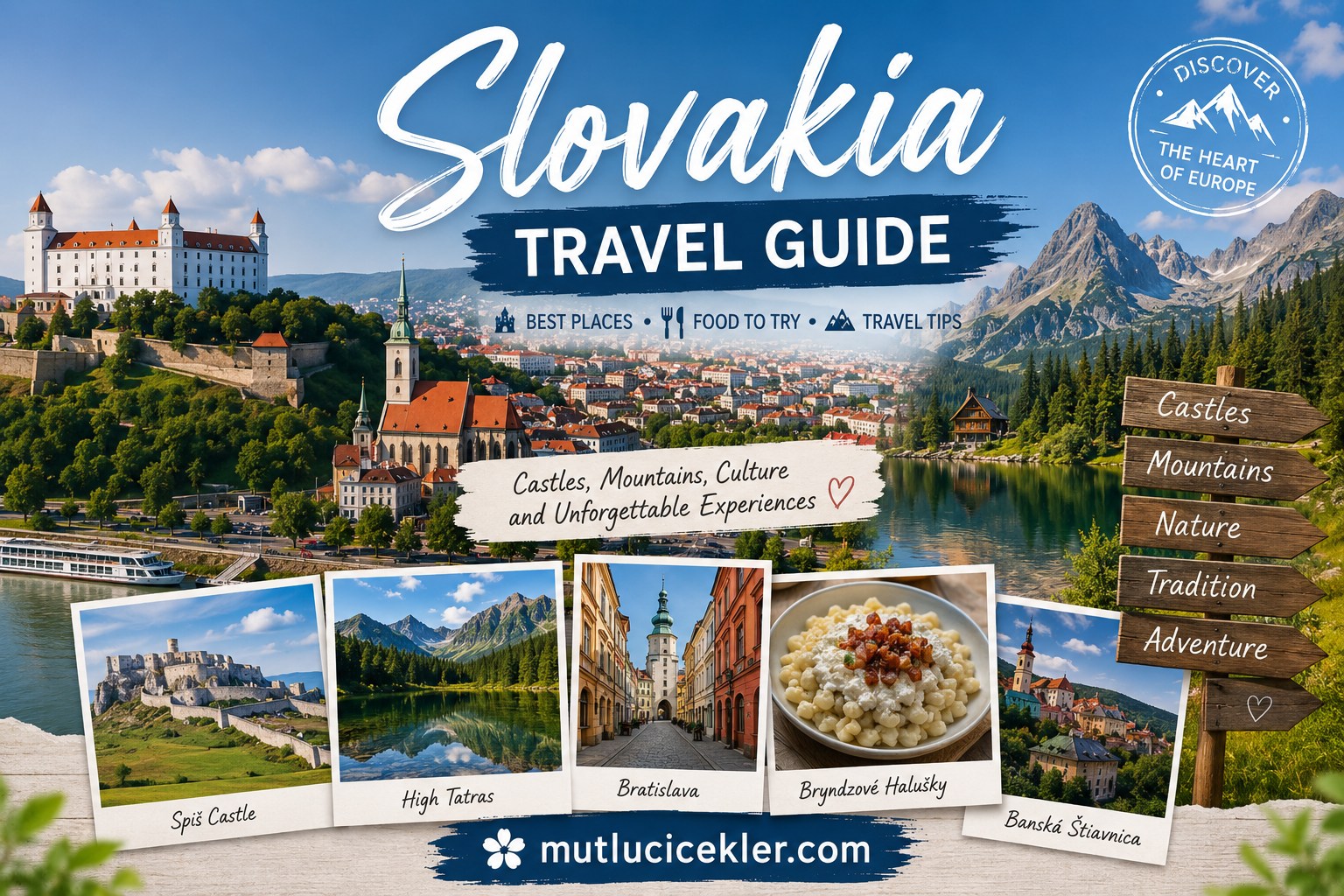
Slovakia is one of Central Europe’s most underrated travel destinations, offering an impressive combination of medieval towns, dramatic mountains, historic castles, traditional villages, thermal spas, and hearty local cuisine. Although it is often overshadowed by neighboring countries such as Austria, Hungary, Poland, and the Czech Republic, Slovakia has everything needed for a memorable European getaway.
From the charming streets of Bratislava to the spectacular peaks of the High Tatras, travelers can experience remarkably different landscapes within a relatively small country. Slovakia is also home to hundreds of castles and castle ruins, fascinating caves, UNESCO-listed heritage sites, and beautiful hiking trails.
Whether you are planning a cultural city break, a road trip through Central Europe, or an outdoor adventure, this Slovakia travel guide covers the best places to visit, traditional Slovak foods to try, a suggested 5-day itinerary, transportation tips, and useful information for first-time visitors.
🇸🇰 Slovakia Quick Facts
Capital: Bratislava
Official Language: Slovak
Currency: Euro (€)
Region: Central Europe
Best Time to Visit: May–September for sightseeing and hiking; December–March for winter activities
Famous For: Castles, mountains, historic towns, caves, thermal springs, and traditional cuisine
Ideal Trip Length: 5–7 days
Slovakia shares borders with Austria, Czechia, Poland, Ukraine, and Hungary, making it an excellent destination to combine with a longer Central European journey.
Best Places to Visit in Slovakia
1. Bratislava
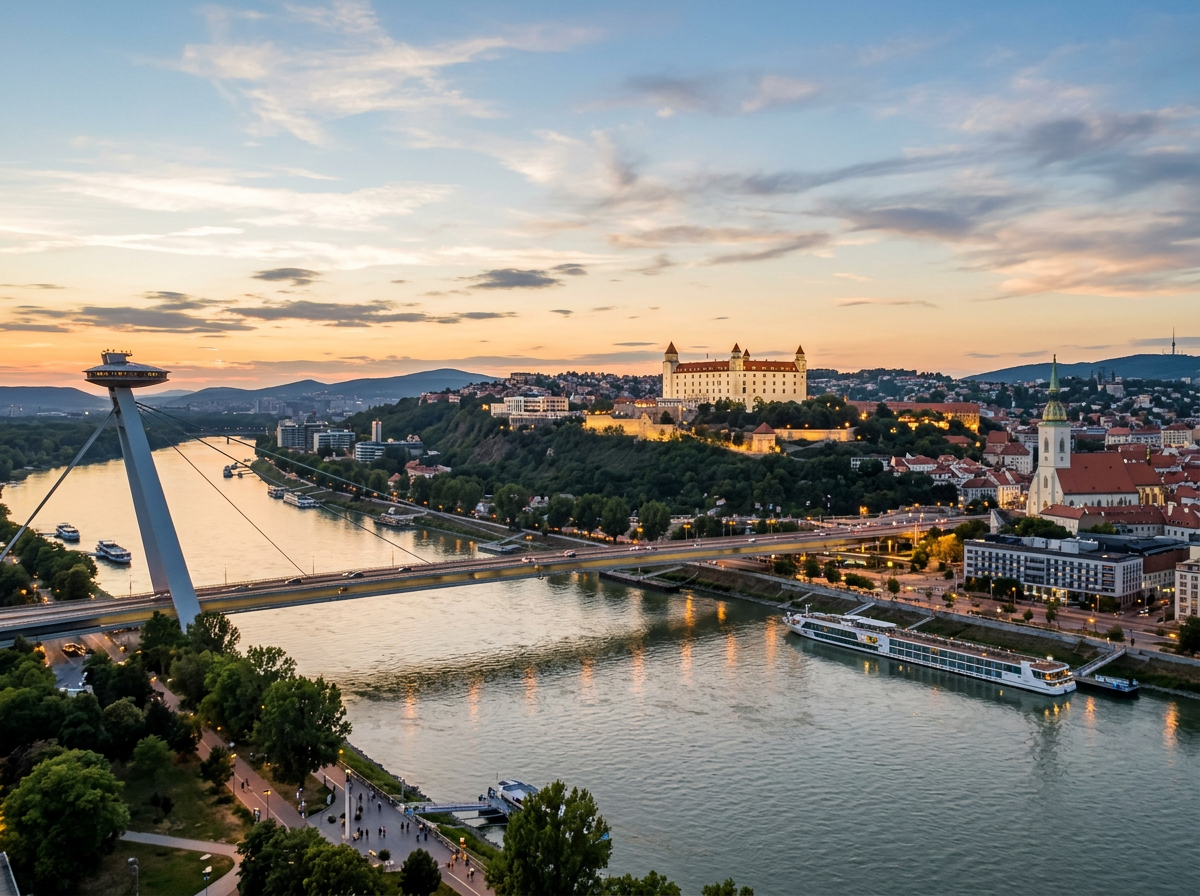
Located along the Danube River near the borders of Austria and Hungary, Bratislava is Slovakia’s capital and the natural starting point for many visitors.
Unlike some larger European capitals, Bratislava has a compact historic center that can easily be explored on foot. Colorful buildings, cobbled streets, small squares, cafés, churches, and historic landmarks create a relaxed atmosphere.
One of the city’s most recognizable attractions is Bratislava Castle, which stands on a hill overlooking the Danube. Its elevated position offers impressive views over the city and surrounding region.
Other highlights include:
- Bratislava Old Town
- Michael’s Gate
- St. Martin’s Cathedral
- Main Square
- Blue Church
- Slovak National Theatre
- Danube riverfront
Bratislava is particularly convenient for travelers visiting nearby European capitals. Vienna is only around 60 kilometers away, making the two cities easy to combine in one trip.
Recommended stay: 1–2 days
2. High Tatras
For nature lovers, the High Tatras are one of the absolute highlights of Slovakia.
Part of the Carpathian mountain range, the Tatras feature dramatic peaks, alpine lakes, forests, waterfalls, hiking trails, and mountain villages. The region is popular throughout the year.
During the warmer months, visitors come for hiking and outdoor adventures. In winter, the mountains become an important destination for skiing and other snow activities.
Popular bases include:
- Štrbské Pleso
- Tatranská Lomnica
- Starý Smokovec
One of the most photographed locations is Štrbské Pleso, a picturesque mountain lake surrounded by forest and peaks.
Travelers who enjoy hiking should allow at least one full day here, although spending two or three days provides a much more relaxed experience.
Best for: Hiking, photography, mountain scenery, skiing and nature

3. Spiš Castle
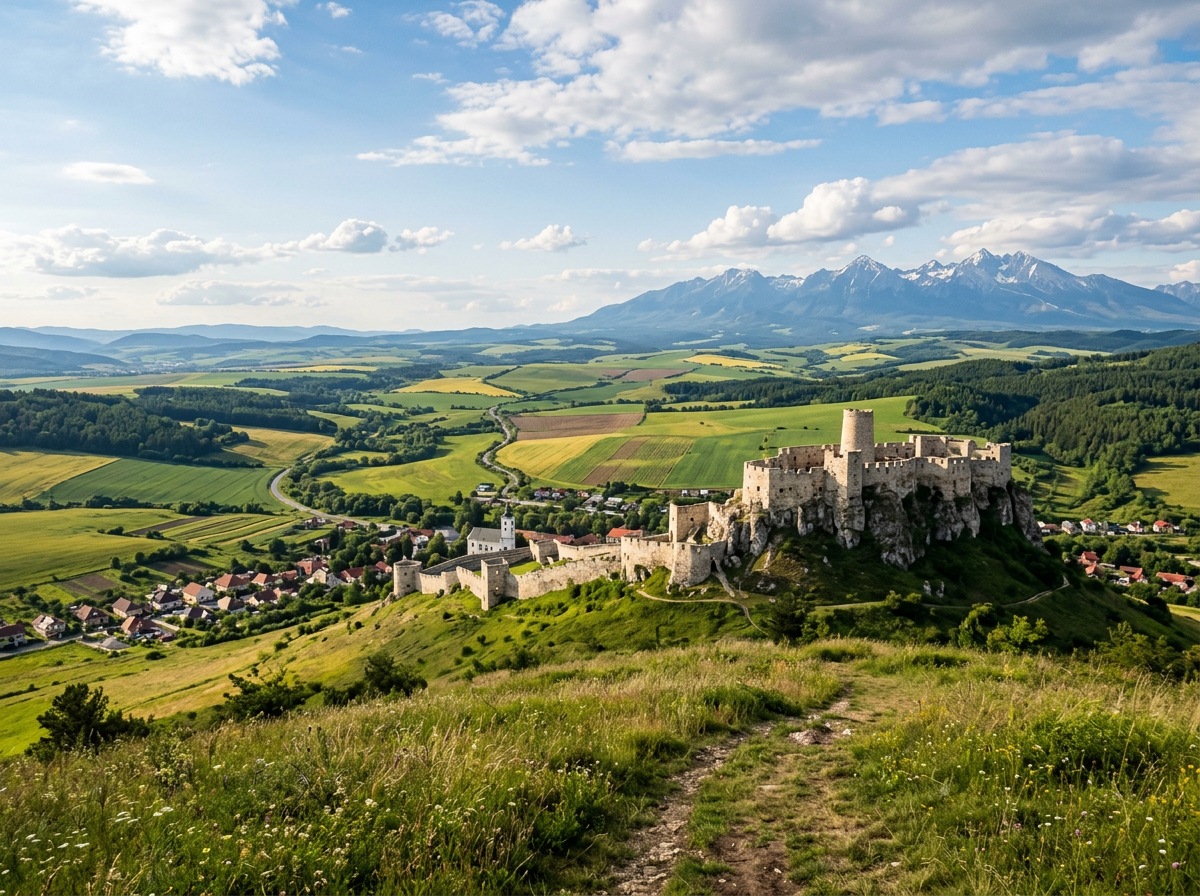
Slovakia is famous for its castles, and Spiš Castle is among the most impressive.
Standing dramatically above the surrounding countryside, the extensive castle ruins provide a fascinating glimpse into Slovakia’s medieval history.
The complex developed over several centuries and once served as an important political, military, and administrative center.
Today, visitors can explore sections of the ruins while enjoying panoramic views across the Spiš region.
Spiš Castle forms part of a UNESCO World Heritage Site together with surrounding cultural monuments.
Its combination of history, architecture, and landscape makes it one of the most memorable stops on a Slovakia road trip.
Best for: History, medieval architecture and panoramic views
4. Banská Štiavnica
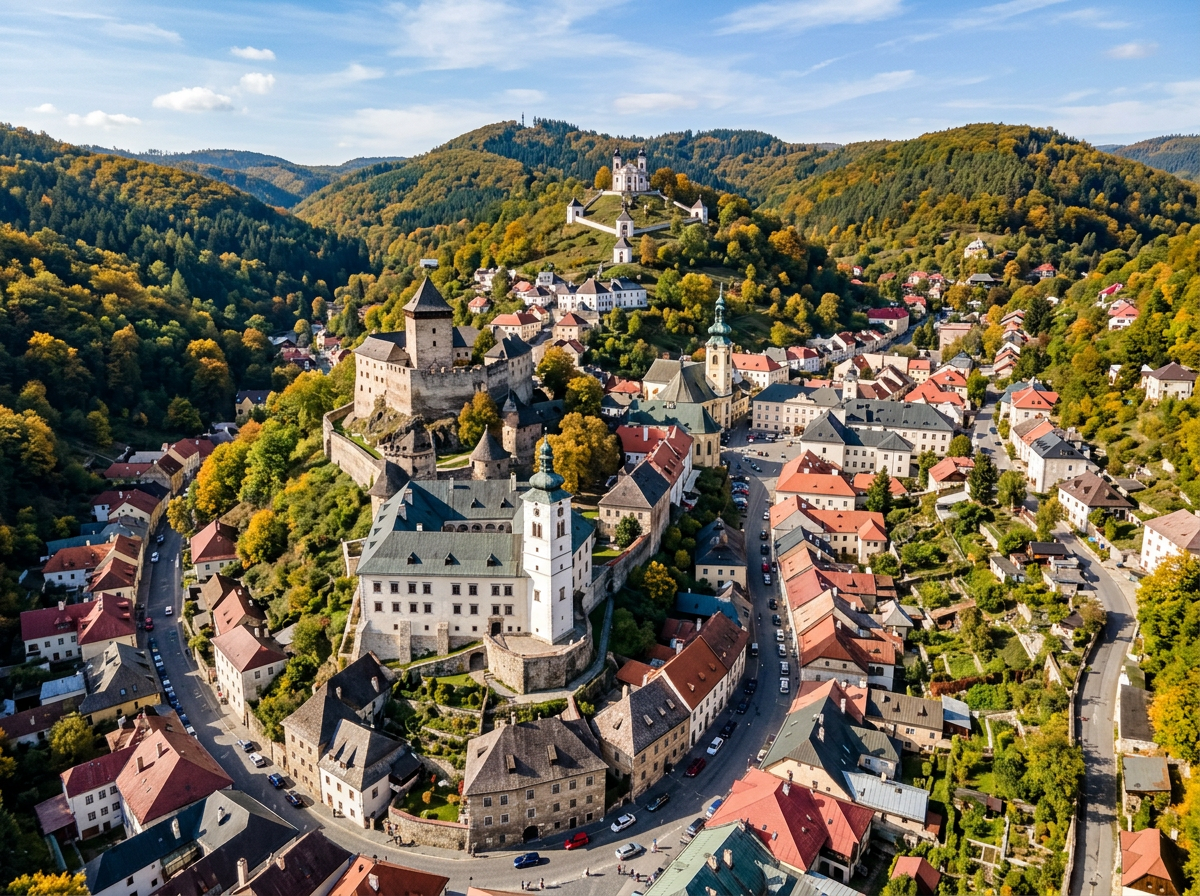
Nestled among hills in central Slovakia, Banská Štiavnica is one of the country’s most atmospheric historic towns.
The town became wealthy through mining, particularly the extraction of precious metals. Its historical importance and remarkably preserved urban landscape have earned it UNESCO World Heritage status.
Visitors can wander through narrow streets lined with historic buildings, explore mining-related attractions, and enjoy views over the surrounding hills.
Highlights include:
- Old Castle
- New Castle
- Holy Trinity Square
- Historic mining sites
- Calvary of Banská Štiavnica
- Nearby artificial mining lakes known as tajchy
The town is an excellent choice for travelers interested in history but also offers a slower, more peaceful atmosphere than Slovakia’s larger destinations.
Recommended stay: 1 day
5. Slovak Paradise National Park
Travelers looking for a more adventurous outdoor experience should consider Slovak Paradise National Park.
The park is famous for its forests, narrow gorges, waterfalls, streams, ladders, bridges, and hiking routes. Some trails include metal ladders and platforms that allow hikers to pass through dramatic ravines.
This makes Slovak Paradise very different from an ordinary countryside walk.
One of the best-known hiking areas is Suchá Belá Gorge, where visitors follow a scenic route through rocky passages and alongside waterfalls.
Proper footwear is strongly recommended, and weather conditions should always be checked before starting longer routes.
Best for: Hiking, adventure and nature

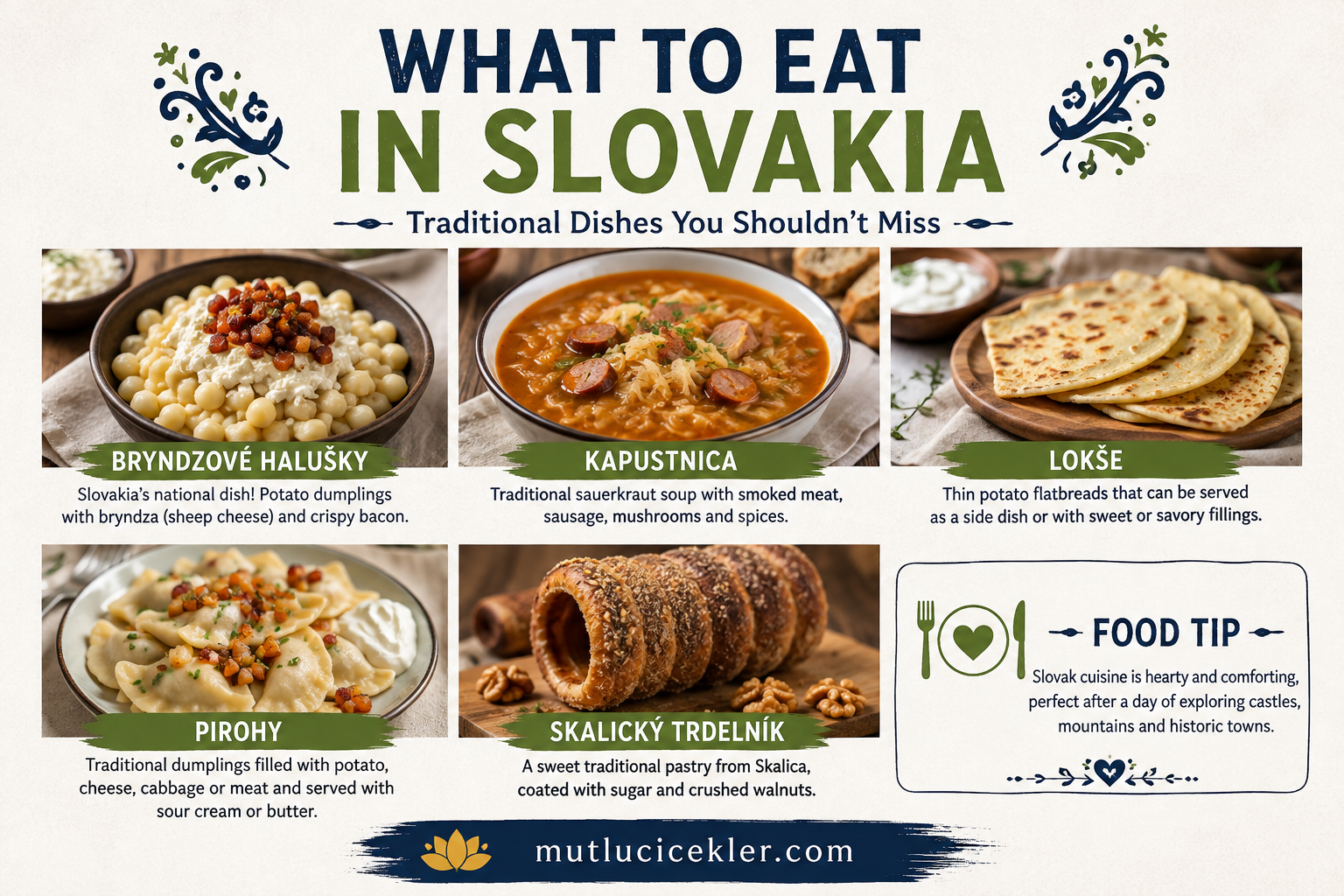
What to Eat in Slovakia
Slovak cuisine is hearty and comforting, with potatoes, cheese, cabbage, meat, dumplings, and soups appearing frequently in traditional dishes.
Trying local food is an important part of any Slovakia travel experience.
Bryndzové Halušky
Perhaps the most famous Slovak dish, bryndzové halušky consists of small potato dumplings served with bryndza, a traditional sheep cheese, and usually topped with bacon.
The creamy, salty cheese combined with soft dumplings creates one of the country’s most distinctive comfort foods.
For first-time visitors, this is arguably the essential Slovak dish to try.
Kapustnica
Kapustnica is a traditional sauerkraut soup commonly associated with Slovak cuisine.
Recipes vary by region and family, but versions may contain smoked meat, sausage, mushrooms, spices, or dried fruit.
It is particularly popular during the colder months and around Christmas.
Lokše
Lokše are thin potato flatbreads traditionally cooked on a hot surface.
They can be served in different ways depending on the region and occasion. Savory versions may accompany meat dishes, while sweet variations can include fillings such as poppy seeds.
Pirohy
Slovak pirohy are filled dumplings similar to other dumpling traditions found throughout Central and Eastern Europe.
Fillings vary, but potato and sheep cheese versions are particularly popular.
They may be served with sour cream, butter, or crispy bacon.
Skalický Trdelník
Travelers with a sweet tooth can look for Skalický trdelník, a traditional cylindrical pastry associated with the town of Skalica.
The dough is wrapped around a cylinder, baked, and traditionally coated with ingredients such as walnuts and sugar.
5-Day Slovakia Itinerary
Five days provide enough time to experience several of Slovakia’s highlights, although travelers interested in hiking may want to extend their stay.
Day 1 – Bratislava
Begin your trip in Slovakia’s capital.
Explore Bratislava Old Town, walk through Michael’s Gate, visit St. Martin’s Cathedral, and continue toward Bratislava Castle.
Spend the evening walking along the Danube or enjoying dinner in the historic center.
Overnight: Bratislava
Day 2 – Banská Štiavnica
Travel from Bratislava toward Banská Štiavnica.
Spend the day exploring the historic center, castles, mining heritage, and viewpoints.
If time allows, visit the famous Calvary above the town.
Overnight: Banská Štiavnica or central Slovakia
Day 3 – Spiš Castle & High Tatras
Continue toward eastern Slovakia and visit Spiš Castle.
After exploring the castle complex and surrounding landscape, travel toward the High Tatras.
Check into accommodation in Štrbské Pleso, Starý Smokovec, or Tatranská Lomnica.
Overnight: High Tatras
Day 4 – High Tatras
Dedicate a full day to the mountains.
Choose a hiking trail according to your experience and weather conditions, explore Štrbské Pleso, or use mountain transport to reach higher viewpoints where available.
Even travelers who do not plan a difficult hike can enjoy the alpine scenery.
Overnight: High Tatras
Day 5 – Slovak Paradise National Park
Finish your itinerary with an outdoor adventure in Slovak Paradise National Park.
Choose a suitable trail and spend several hours exploring the park’s forests, waterfalls, and gorges.
Afterward, continue to your next destination or return toward Bratislava depending on your travel plans.
Best Time to Visit Slovakia
The best time to visit Slovakia depends largely on what you want to do.
Spring – April to May
Spring brings greener landscapes and generally fewer visitors than the peak summer period.
May can be particularly pleasant for sightseeing, although mountain conditions may remain changeable.
Summer – June to August
Summer is one of the best seasons for hiking, road trips, sightseeing, and outdoor activities.
Mountain areas become especially popular during this period.
Autumn – September to October
Early autumn offers cooler temperatures and beautiful colors in Slovakia’s forests and mountain regions.
September can be an excellent compromise between pleasant weather and smaller crowds.
Winter – December to March
Winter transforms the mountain regions into destinations for skiing and snow activities.
Christmas markets also bring a festive atmosphere to cities such as Bratislava.
Getting Around Slovakia
By Train
Slovakia has a useful railway network connecting many major cities and destinations.
Trains are particularly convenient for journeys between Bratislava and cities or towns in central and eastern Slovakia.
By Bus
Buses complement the railway network and can be useful for reaching smaller towns and rural destinations.
By Car
Renting a car provides greater flexibility, especially if your itinerary includes castles, national parks, mountain villages, or several smaller destinations.
A car can be particularly useful for travelers following a multi-day itinerary through central and eastern Slovakia.
Public Transportation
Bratislava and other larger towns have local public transportation systems.
Within Bratislava’s historic center, however, many major attractions can be reached on foot.
Practical Slovakia Travel Tips
Currency
Slovakia uses the euro (€).
Cards are widely accepted in cities and tourist areas, but carrying some cash can still be useful when visiting smaller establishments or rural destinations.
Language
The official language is Slovak.
English is commonly understood in many hotels, restaurants, and tourism-related businesses, particularly in popular destinations. Learning a few basic Slovak words can nevertheless be helpful.
Hiking
Mountain weather can change quickly.
Always check current conditions before hiking and choose routes appropriate for your experience and equipment.
Driving
A car offers excellent flexibility for exploring Slovakia, but travelers should familiarize themselves with local road regulations and motorway toll requirements before driving.
Is Slovakia Worth Visiting?
Absolutely.
Slovakia offers an impressive variety of experiences within a relatively compact area. In a single trip, visitors can explore a European capital, wander through medieval towns, discover enormous castles, hike through mountain landscapes, and experience traditional Central European cuisine.
It is particularly appealing to travelers who enjoy destinations that combine culture, history, nature, and outdoor activities.
Compared with Europe’s most heavily visited destinations, many parts of Slovakia can also feel pleasantly relaxed.
Frequently Asked Questions About Slovakia
How many days do you need in Slovakia?
Around 5–7 days is ideal for a first trip. Five days can cover Bratislava, one or two historic destinations, and the High Tatras, while a full week provides more time for hiking and smaller towns.
What is Slovakia famous for?
Slovakia is known for its castles, Carpathian mountains, caves, historic towns, thermal springs, folk traditions, and traditional cuisine.
What is the most famous food in Slovakia?
Bryndzové halušky, potato dumplings with traditional sheep cheese, is widely considered Slovakia’s national dish and is one of the most important foods for visitors to try.
Is Bratislava worth visiting?
Yes. Bratislava has a compact historic center, an impressive hilltop castle, Danube views, cafés, museums, and convenient connections to nearby Central European destinations.
What are the best places to visit in Slovakia?
For first-time travelers, some of the best choices are Bratislava, the High Tatras, Spiš Castle, Banská Štiavnica, and Slovak Paradise National Park.
When is the best time to visit Slovakia?
May through September is generally best for sightseeing, hiking, and road trips. Winter is better for skiing and travelers interested in snowy mountain scenery.
Can you visit Slovakia without a car?
Yes. Many major destinations can be reached using trains and buses. However, renting a car makes it easier to visit remote castles, national parks, villages, and several attractions within a limited amount of time.
Conclusion
Slovakia may be small, but its landscapes, historic heritage, and cultural experiences make it one of Central Europe’s most rewarding destinations.
Start your journey among the historic streets of Bratislava, continue through the atmospheric hills of Banská Štiavnica, explore the medieval remains of Spiš Castle, and finish your adventure surrounded by the spectacular scenery of the High Tatras and Slovak Paradise National Park.
Add traditional dishes such as bryndzové halušky, kapustnica, lokše, and pirohy, and you have all the ingredients for a diverse Central European journey.
Whether you visit for history, food, mountains, photography, or outdoor adventures, Slovakia deserves a place on your European travel list.
Follow mutlucicekler.com for more travel guides, destination ideas, traditional foods, and travel inspiration from around the world.


Bir yanıt yazın