
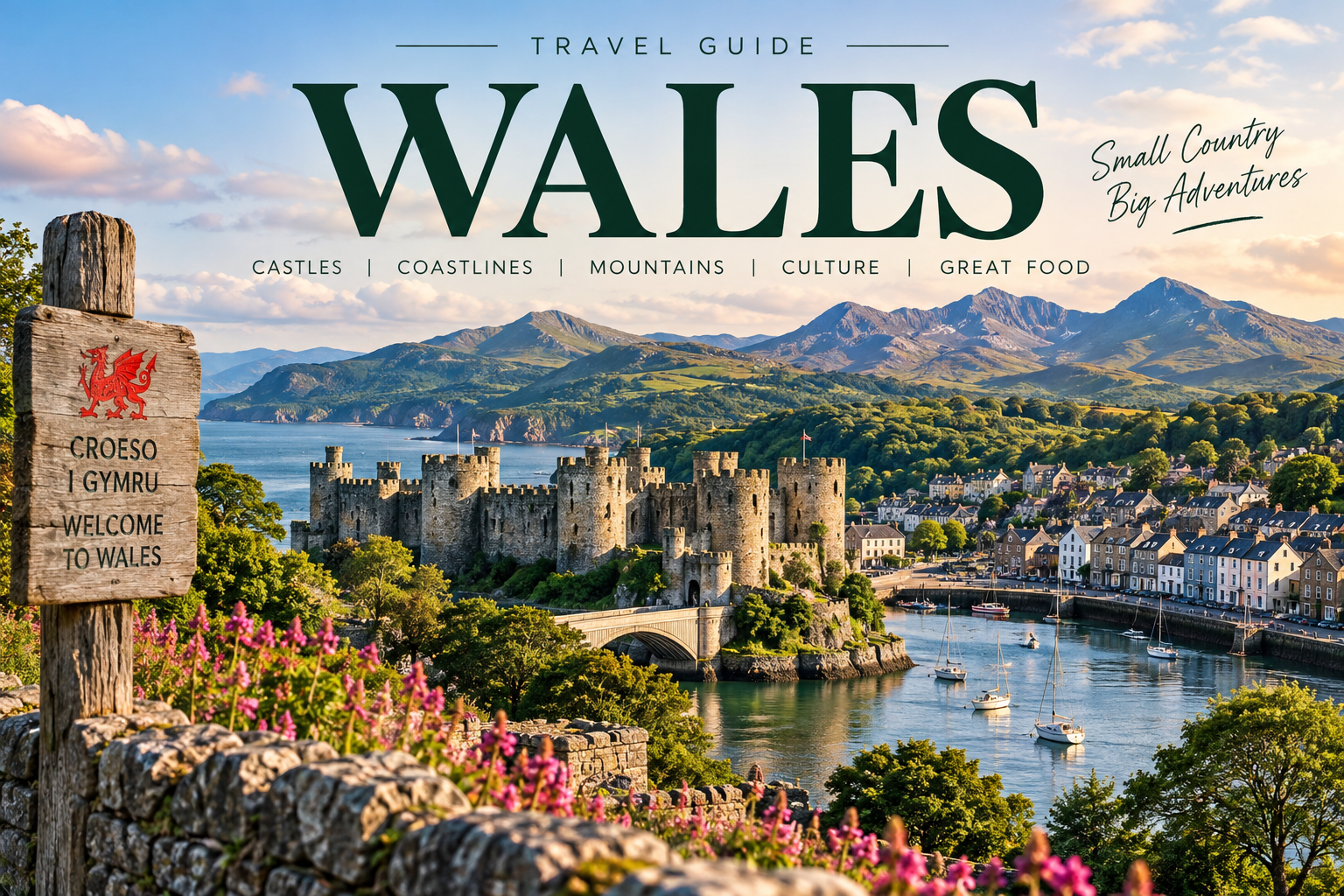
Wales is a captivating destination filled with dramatic coastlines, medieval castles, rugged mountains, peaceful villages, and centuries of Celtic culture. Although it is part of the United Kingdom, Wales has its own distinctive identity, language, traditions, and landscapes.
From exploring historic Cardiff to hiking among the mountains of Eryri (Snowdonia), discovering colorful seaside towns and walking sections of the Wales Coast Path, there is much more to Wales than many first-time visitors expect.
This Wales travel guide covers the best places to visit in Wales, top attractions, traditional Welsh food, transportation, accommodation, practical travel tips, and a suggested itinerary.
Quick Facts About Wales
Before planning your trip, here are some useful facts about Wales that are helpful for first-time visitors:
- 🏴 Country: Wales (Cymru in Welsh)
- 🏙️ Capital: Cardiff
- 🌍 Location: Western part of Great Britain
- 🇬🇧 Part of: The United Kingdom
- 🗣️ Official Languages: Welsh and English
- 💷 Currency: British pound sterling (GBP)
- ⏰ Time Zone: GMT; BST during daylight saving time
- 🔌 Plug Type: Type G
- 🚗 Driving: Traffic drives on the left
- 🚆 Getting Around: Trains, buses and rental cars are commonly used
- 🏰 Known For: Castles, national parks, mountains, coastal towns and hiking trails
- ⛰️ Highest Point: Yr Wyddfa (Snowdon), 1,085 metres
- 🌊 Famous Natural Areas: Eryri, Pembrokeshire Coast and Bannau Brycheiniog
- 🍴 Traditional Foods: Welsh rarebit, cawl, Welsh cakes, bara brith and laverbread
- 🌼 National Symbol: The daffodil is one of the best-known symbols of Wales
- 🐉 Famous Emblem: The Red Dragon
- ☔ Weather: Changeable conditions and rain are possible throughout the year
- 🗓️ Popular Time to Visit: Late spring through early autumn
- 🥾 Best For: Nature lovers, hikers, history enthusiasts, photographers and travelers who enjoy castles and coastal scenery
Good to know: Road signs in Wales are commonly displayed in both Welsh and English. You may see “Cymru” instead of Wales and “Eryri” instead of Snowdonia, so recognizing these Welsh names can be useful during your trip.
Where Is Wales?
Wales is located on the western side of Great Britain. It shares a land border with England and is surrounded by the Irish Sea, Bristol Channel, and Celtic Sea.
The capital and largest city is Cardiff, located in South Wales.
Wales is relatively compact, but its mountainous terrain and rural roads mean journeys can sometimes take longer than they appear on a map. For travelers who want to explore beyond the main cities, planning transportation in advance is especially useful.
Why Visit Wales?
Wales combines several different types of travel experiences in one relatively small destination.
Visitors can discover:
- Medieval castles and historic ruins
- Mountain landscapes
- Coastal walking routes
- Traditional villages
- Sandy beaches and hidden coves
- Welsh food and local specialties
- Museums and cultural attractions
- Scenic railway journeys
- Outdoor activities
- Celtic heritage and the Welsh language
Wales is particularly rewarding for travelers interested in nature, history, photography, hiking, road trips, and slower travel.
Best Places to Visit in Wales
1. Cardiff
Cardiff is an excellent starting point for a first trip to Wales.
The Welsh capital combines historic landmarks with shopping streets, museums, restaurants, parks, and a regenerated waterfront.
What to See in Cardiff
Some of the city’s highlights include:
- Cardiff Castle
- National Museum Cardiff
- Bute Park
- Cardiff Bay
- Wales Millennium Centre
- Principality Stadium
- Victorian and Edwardian shopping arcades
Cardiff is compact enough that many central attractions can be explored on foot.
Travel tip: If you only have a short time in Wales, Cardiff can work well as a base for exploring parts of South Wales.

2. Eryri (Snowdonia) National Park
For mountain scenery, Eryri is one of the most impressive areas in Wales.
The national park is home to mountains, valleys, lakes, forests, villages, and numerous walking trails.
Its best-known mountain is Yr Wyddfa (Snowdon), the highest mountain in Wales.
Visitors do not necessarily need to attempt the summit. There are plenty of easier walks and scenic viewpoints throughout the national park.
Things to Do in Eryri
- Hiking
- Landscape photography
- Visiting mountain villages
- Exploring lakes
- Scenic drives
- Heritage railway journeys
- Outdoor adventure activities
Weather in the mountains can change quickly, so visitors should carry suitable clothing even when conditions appear pleasant at lower elevations.

3. Conwy
Conwy is one of the most atmospheric historic towns in North Wales.
Its skyline is dominated by Conwy Castle, a spectacular medieval fortress constructed during the reign of Edward I.
The town’s medieval walls are another major attraction.
Don’t Miss
- Conwy Castle
- Conwy Town Walls
- Conwy Quay
- Historic streets
- Traditional local shops
- Views across the estuary
Conwy is a particularly good destination for travelers interested in medieval history and architecture.

4. Llandudno
Not far from Conwy, Llandudno offers a completely different atmosphere.
Known for its Victorian seaside character, the town is famous for its promenade, pier, and the dramatic limestone headland known as the Great Orme.
Visitors can walk, drive, or use local transport to explore the Great Orme area.
Llandudno works particularly well as part of a wider North Wales itinerary.

5. Pembrokeshire Coast
The Pembrokeshire coast is one of Wales’ greatest natural attractions.
Here, dramatic cliffs meet sandy beaches, small harbors, islands, and clear coastal waters.
Pembrokeshire Coast National Park is especially popular with hikers and nature lovers.
One of the best ways to experience the area is by walking a section of the coastal path rather than trying to see everything from a car.
Wildlife sightings vary by location and season, but coastal birds and marine wildlife are among the area’s attractions.

6. Tenby
Tenby is one of Wales’ most photogenic seaside towns.
Its pastel-colored buildings overlook a picturesque harbor and sandy beaches.
Spend some time simply wandering through the historic center rather than rushing between attractions.
Things to Do in Tenby
- Walk around the harbor
- Relax on the beach
- Explore the old town
- Photograph the colorful waterfront
- Try local seafood
- Take coastal walks
Tenby can become busy during peak summer periods, so visiting outside the busiest hours can make the experience more enjoyable.

7. Brecon Beacons (Bannau Brycheiniog)
Bannau Brycheiniog National Park is another excellent destination for outdoor travelers.
The landscape includes mountains, waterfalls, open countryside, caves, and rural communities.
It is particularly popular for:
- Hiking
- Cycling
- Stargazing
- Waterfall walks
- Scenic drives
- Nature photography
The region’s relatively dark skies also make it attractive for astronomy enthusiasts when weather conditions are favorable.

8. Anglesey
The island of Anglesey, known as Ynys Môn in Welsh, lies off the northwest coast of Wales.
It offers beaches, coastal scenery, historic sites, walking trails, and small communities.
It is a good choice for travelers who prefer quieter landscapes and want to combine nature with Welsh history.

9. Portmeirion
Portmeirion is one of the most unusual places to visit in Wales.
Designed in an Italianate style, this colorful village in North Wales feels dramatically different from the surrounding Welsh landscape.
Its architecture, gardens, waterfront setting, and distinctive atmosphere make it especially appealing to photographers.

10. Hay-on-Wye
Book lovers should consider visiting Hay-on-Wye.
This small border town became internationally famous for its many bookshops and literary culture.
It is also associated with the annual Hay Festival, which attracts writers, thinkers, and visitors from around the world.
Even outside festival dates, the town is worth exploring for its independent shops and relaxed atmosphere.

Beautiful Castles to Visit in Wales
Wales is famous for its castles, and exploring at least one should be part of a first visit.
Notable examples include:
- Cardiff Castle
- Conwy Castle
- Caernarfon Castle
- Harlech Castle
- Caerphilly Castle
- Pembroke Castle
- Beaumaris Castle
Each represents a different chapter of Welsh and British history.
Instead of trying to visit as many castles as possible, choose two or three that fit naturally into your route.
What to Eat in Wales
Food is an important part of understanding Welsh culture.
Traditional dishes often use simple, hearty ingredients suited to the country’s agricultural and coastal traditions.
Welsh Rarebit
Welsh rarebit is much more than ordinary cheese on toast.
It traditionally consists of toasted bread topped with a rich, seasoned cheese sauce. Recipes vary, with ingredients such as mustard or Worcestershire sauce often used to add depth.
It is one of the easiest Welsh specialties for first-time visitors to try.
Cawl
Cawl is a traditional Welsh soup or stew.
Different recipes use different ingredients, but versions commonly include meat and seasonal vegetables.
It is particularly comforting during colder weather.
Glamorgan Sausages
Despite the name, traditional Glamorgan sausages are generally meat-free.
They are commonly prepared using cheese, leeks, and breadcrumbs and are a distinctive example of Welsh comfort food.
Welsh Cakes
Welsh cakes are small, lightly sweet traditional treats cooked on a griddle.
They are commonly made with flour, butter, sugar, and dried fruit.
Try them warm if you get the opportunity.
Bara Brith
Bara brith is a traditional Welsh fruit loaf associated with tea.
Its name translates approximately as “speckled bread,” referring to the dried fruit distributed throughout the loaf.
It makes an excellent afternoon snack alongside a cup of tea.
Laverbread
One of the more unusual traditional Welsh foods is laverbread.
Despite its name, it is not bread. It is made from cooked laver seaweed and has a long association with Welsh coastal cuisine, particularly in South Wales.
Travelers interested in regional food traditions should look out for it on traditional breakfast menus.

When Is the Best Time to Visit Wales?
Wales can be visited throughout the year, but the experience changes considerably with the seasons.
Spring
Spring brings longer days, fresh green landscapes, flowers, and generally fewer visitors than the height of summer.
It can be an excellent season for hiking and road trips.
Summer
Summer usually offers the longest daylight hours and is popular for beaches, hiking, festivals, and coastal trips.
However, popular destinations can also be busier.
Autumn
Autumn brings colorful landscapes and a quieter atmosphere.
It is an attractive season for photographers, walkers, and travelers who prefer fewer crowds.
Winter
Winter can be cold, wet, and windy, particularly in mountainous and coastal regions.
On the other hand, cities, historic towns, and atmospheric countryside can still make a winter trip worthwhile.
Important: Rain is possible at any time of year in Wales. A waterproof jacket is one of the most useful items you can pack.
How to Get Around Wales
By Train
Rail services connect Cardiff with many major towns and cities.
Trains can be particularly convenient for journeys between larger destinations, although some rural areas have limited rail access.
By Bus
Buses connect many communities and can be useful for travelers without a car.
Services may be less frequent in rural areas, especially during evenings, Sundays, or outside peak travel periods.
Always check the latest timetable before relying on a rural connection.
By Car
A car offers the greatest flexibility for exploring:
- National parks
- Small villages
- Remote beaches
- Rural castles
- Scenic countryside
However, some rural roads are narrow and winding. Distances that look short on a map may take longer than expected.
Where to Stay in Wales
The best place to stay depends on your itinerary.
Cardiff: Best for city attractions, nightlife, museums, and first-time visitors exploring South Wales.
Conwy or Llandudno: Convenient bases for North Wales and Eryri.
Tenby: Excellent for beaches and exploring Pembrokeshire.
Betws-y-Coed: Popular for mountain scenery and outdoor activities in North Wales.
Brecon: A practical base for exploring Bannau Brycheiniog.
For a road trip, staying in two or three different regions is usually more practical than trying to explore the entire country from one hotel.
Suggested 5-Day Wales Itinerary
Day 1 – Cardiff
Explore Cardiff Castle, Bute Park, the city center, and Cardiff Bay.
Try a Welsh specialty for dinner.
Day 2 – Bannau Brycheiniog
Head into the national park for a scenic drive, waterfall walk, or hiking route.
Return to Cardiff or stay overnight in the region.
Day 3 – Pembrokeshire and Tenby
Travel west toward Pembrokeshire.
Explore Tenby’s historic streets, harbor, and beaches before enjoying the coastal scenery.
Day 4 – North Wales
If your schedule allows a longer drive, continue toward North Wales.
Explore Eryri and spend the night around Conwy, Llandudno, or another convenient base.
Day 5 – Conwy and Llandudno
Visit Conwy Castle and walk around the historic town.
Continue to Llandudno and the Great Orme before completing your Welsh journey.
Good to know: This itinerary covers a considerable distance. Travelers who prefer a slower trip should choose either North Wales or South Wales rather than trying to cover both in five days.
Useful Welsh Words for Travelers
English is widely spoken throughout Wales, but Welsh remains an important part of the country’s identity.
You will often see bilingual road signs and place names.
A few Welsh words you may encounter include:
- Croeso – Welcome
- Diolch – Thank you
- Bore da – Good morning
- Nos da – Good night
- Cymru – Wales
- Cymraeg – Welsh language
Trying even a simple “Diolch” can be a nice way to engage with local culture.
Practical Travel Tips for Wales
Pack for changing weather. Sunshine, rain, wind, and cooler temperatures can occur within the same day.
Do not underestimate travel times. Rural and mountain roads can make journeys slower.
Book popular accommodation early in summer. Coastal towns and national park areas can become busy.
Wear proper footwear. Waterproof walking shoes are useful even if you are not planning serious hikes.
Check mountain conditions. Weather at higher elevations can be very different from conditions in nearby towns.
Leave room for spontaneous stops. Some of the most memorable Welsh landscapes are discovered between major attractions.
Is Wales Expensive to Visit?
Travel costs vary considerably depending on season, accommodation type, transportation, and dining choices.
Budget-conscious travelers can reduce expenses by:
- Using public transportation where practical
- Booking accommodation early
- Visiting free natural attractions
- Combining supermarkets and casual meals with restaurant dining
- Choosing guesthouses or hostels
- Traveling outside peak summer periods
Many of Wales’ greatest experiences—coastal scenery, countryside walks, viewpoints, and historic towns—can be enjoyed without a large attraction budget.
How Many Days Do You Need in Wales?
For a first visit:
2–3 days: Choose Cardiff and nearby South Wales attractions.
4–5 days: Explore one region in greater depth or combine Cardiff with Pembrokeshire.
7 days: A road trip can include several regions without feeling excessively rushed.
10 days or more: Better for combining North Wales, South Wales, national parks, castles, and coastal destinations at a relaxed pace.
If nature and photography are priorities, spending more time in fewer places is often more rewarding.
Best Things to Do in Wales
Wales is not only about beautiful castles and scenic landscapes. From mountain hikes and coastal walks to heritage railways and traditional Welsh food, there are plenty of memorable experiences to add to your itinerary.
Hike in Eryri (Snowdonia)
Eryri National Park is one of the best places for hiking in Wales. Experienced hikers can explore routes around Yr Wyddfa (Snowdon), while visitors looking for an easier experience can choose shorter trails around the lakes, valleys, and villages.
Mountain weather can change quickly, so always check the forecast and trail conditions before setting out.
Walk Along the Wales Coast Path
One of the best ways to experience the Welsh coastline is by walking part of the Wales Coast Path.
You do not need to complete the entire route. Choose a shorter section around Pembrokeshire, Anglesey, or the Gower Peninsula to enjoy dramatic cliffs, sandy beaches, coastal villages, and beautiful sea views.
Explore a Medieval Castle
Visiting a castle should be high on your list of things to do in Wales.
Conwy Castle, Caernarfon Castle, Harlech Castle, and Caerphilly Castle are among the country’s most impressive historic landmarks.
Many Welsh castles also offer excellent views of the surrounding towns, mountains, or countryside.
Take a Scenic Heritage Railway Journey
Wales is home to several heritage railways that offer a relaxing way to experience the countryside.
Historic trains travel through mountain landscapes, forests, valleys, and traditional villages, particularly in North and Mid Wales.
A heritage railway journey is a great choice for photographers, families, and travelers who enjoy slow travel.
Discover the Pembrokeshire Coast
The Pembrokeshire Coast offers much more than beautiful scenery.
Depending on the season and weather conditions, visitors can find activities such as boat trips, kayaking, coastal excursions, and wildlife-watching experiences.
For water-based activities, always check local weather conditions and choose experienced, reputable operators.
Explore Wales’ Small Towns
Some of the most enjoyable experiences in Wales can be found away from the major attractions.
Spend a few hours wandering through places such as Tenby, Conwy, Hay-on-Wye, or Betws-y-Coed. Explore independent shops, walk along historic streets, stop at a local café, and simply enjoy the atmosphere.
Leaving some free time in your itinerary can help you discover a quieter side of Wales.
Taste Traditional Welsh Food
Trying local food should be part of your Wales experience.
Look for traditional specialties such as Welsh rarebit, cawl, Welsh cakes, bara brith, and Glamorgan sausages.
Local bakeries, markets, cafés, and traditional restaurants are good places to discover regional flavors.
Go Stargazing
Away from major towns and cities, parts of rural Wales offer excellent conditions for observing the night sky when the weather is clear.
Bannau Brycheiniog is particularly well known for its dark skies.
On a clear night, stargazing can become one of the most peaceful experiences of your Wales trip.
A Useful Tip for Planning Activities in Wales
Try not to build an outdoor itinerary that depends on perfect weather every day. Welsh weather can change quickly.
Keep a flexible plan: use clear days for hiking, coastal walks, and outdoor activities, while saving castles, museums, cafés, and other indoor attractions for rainy periods.
This flexibility can make exploring Wales much easier and more enjoyable.
Frequently Asked Questions About Wales
Is Wales worth visiting?
Yes. Wales is particularly attractive for travelers interested in castles, mountains, coastal landscapes, hiking, history, and distinctive regional culture.
What is Wales most famous for?
Wales is known for its castles, mountainous scenery, rugged coastline, Welsh language, rugby culture, traditional food, and historic communities.
Do I need a car in Wales?
Not necessarily. Cardiff and several larger destinations are accessible by public transportation. However, renting a car can make exploring remote countryside, beaches, villages, and national parks considerably easier.
What currency is used in Wales?
Wales uses the British pound sterling (GBP).
Is English spoken in Wales?
Yes. English is widely spoken. Welsh is also an official language and is especially prominent in certain parts of the country.
What should I pack for Wales?
A waterproof jacket, comfortable walking shoes, layers, and a small day bag are particularly useful. Even during warmer months, changing weather should be expected.
Final Thoughts: Is Wales Worth Adding to Your UK Trip?
Absolutely.
Wales offers something that can be difficult to find in more heavily visited destinations: dramatic landscapes, remarkable historical sites, distinctive local culture, and beautiful places that still encourage travelers to slow down.
Walk beside the medieval walls of Conwy, watch the sea from the Pembrokeshire coast, explore the mountains of Eryri, discover Cardiff’s historic and modern sides, and stop for Welsh cakes along the way.
Wales is not simply an extension to an England itinerary. It is a destination with its own language, landscapes, history, food, and character—and it deserves time of its own.


Bir Cevap Yazın