


Imagine walking along a dark beach when a wave breaks and the shoreline suddenly flashes electric blue. A few seconds later, the light disappears. Then another wave arrives, and the water glows again. It may look like a scene from a fantasy film, but the explanation is rooted in marine biology.
This phenomenon is called bioluminescence: light produced by living organisms through chemical reactions. In many of the ocean’s spectacular glowing-wave displays, the light comes from microscopic plankton. When enough of these tiny organisms gather near the surface, moving water can set off a remarkable natural light show.
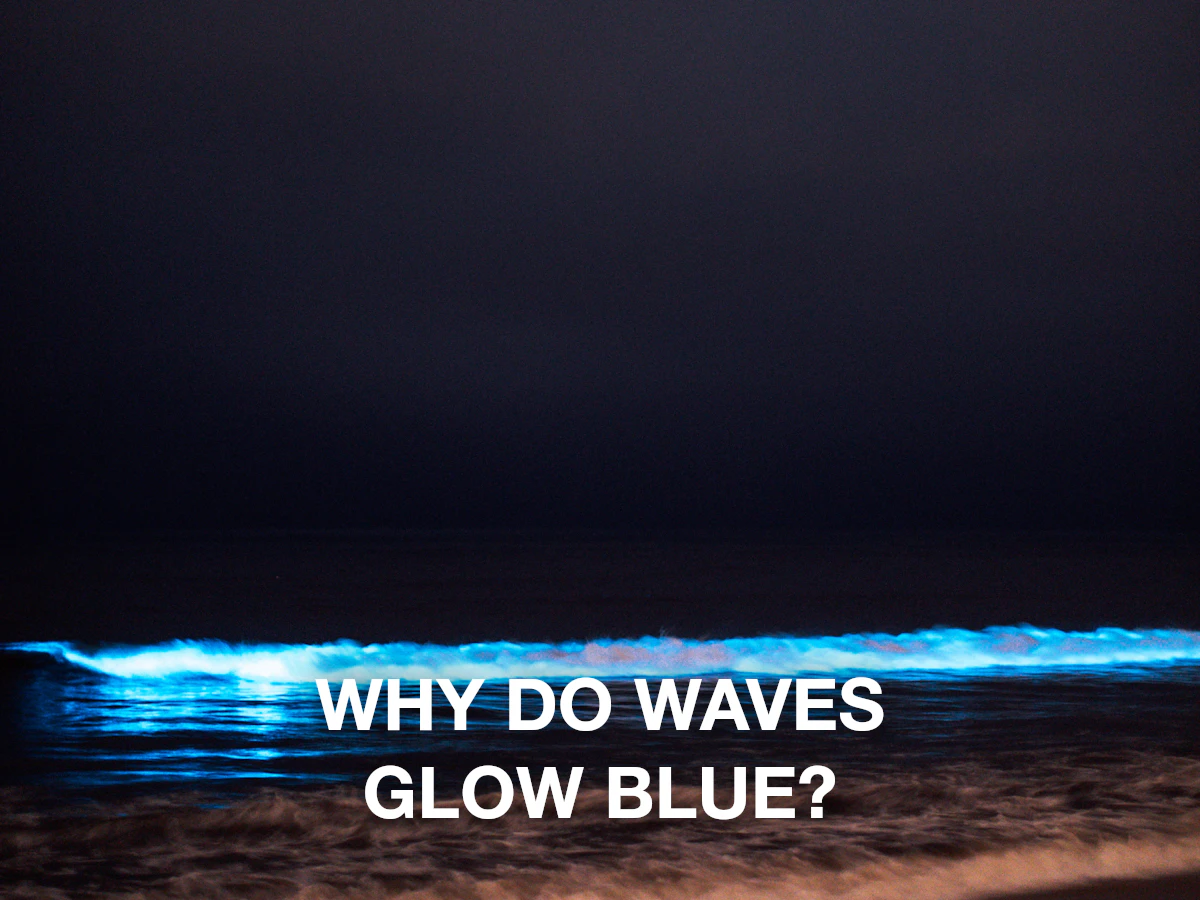
What makes ocean waves glow blue?
Glowing waves often occur when large numbers of single-celled marine organisms called dinoflagellates accumulate in coastal waters. Some species can emit brief flashes of light when waves, swimming animals, or boats disturb the water. A single organism produces a tiny flash; a dense concentration of them can make the edge of a breaking wave appear to glow.
One species associated with striking displays off Southern California is Lingulaulax polyedra, previously known as Lingulodinium polyedra. According to the Scripps Institution of Oceanography, blooms of these plankton can turn coastal water reddish-brown during the day while producing an intense blue glow at night when disturbed.
Not every ocean glow comes from the same species. Many other marine organisms—from bacteria to jellyfish and certain fish—can produce their own light, although glowing surf is often linked to plankton near the surface.
How do tiny plankton produce their own light?
The process is biological chemistry, not electricity or reflected moonlight. In many bioluminescent organisms, a light-producing molecule known as luciferin participates in a reaction supported by enzymes, often called luciferases. The reaction releases energy as visible light.
Bioluminescent systems vary between organisms, and scientists are still investigating the details of different species. But one feature is easy to observe: mechanical disturbance can trigger a burst of light in many glowing dinoflagellates. According to the Woods Hole Oceanographic Institution, this light can play several ecological roles, including defense, attracting prey, and communication.
Why does the glow appear when a wave breaks?
A calm patch of water may seem completely ordinary. Once waves crash, however, nearby plankton experience movement and mechanical forces that can trigger their flashes. Millions or billions of individual bursts become visible as a bright line along the surf.
That also helps explain why a boat’s wake can sparkle, why swimmers sometimes leave trails of light, and why a breaking wave can be brighter than the still water behind it. Researchers suspect that flashes from some dinoflagellates may startle predators or attract larger animals that interfere with an attacker. These are scientific hypotheses about protective behavior, not a single fully proven purpose for every species.
Why blue instead of green, red, or white?
Bioluminescence exists in several colors, but blue and blue-green are particularly common in the sea. These wavelengths travel efficiently through seawater, which can make them advantageous for underwater signaling. The color depends on the organism’s chemistry as well as how light travels through water.
This does not mean that all bioluminescence is blue. Fireflies, for example, are famous for yellow-green light, while some marine organisms produce other colors. The National Oceanic and Atmospheric Administration (NOAA) explains that bioluminescent colors can extend well beyond blue.
Where can you see glowing waves?
Bioluminescent coastal displays have been documented in different parts of the world, including Southern California, parts of Australia and islands in the Indian Ocean. Widely photographed examples include beaches around San Diego, California; Jervis Bay, Australia; and locations in the Maldives.
However, no beach glows every night. Visibility depends on the presence of suitable organisms, bloom conditions, currents, surf, darkness, and other environmental factors. Even at a well-known viewing location, arriving at the right beach does not guarantee a display. If the Maldives interests you, our Maldives travel guide offers broader destination information, but it is not a prediction of glowing-water conditions.
Is bioluminescence the same thing as a red tide?
No. A red tide is a term commonly used for certain dense blooms of microscopic algae or plankton, which may discolor the water. Some blooms are bioluminescent, others are not. Likewise, not every glowing-water event should be described as a red tide.
Another important distinction: a red tide is not automatically toxic, but some algal blooms can be harmful. Certain organisms produce toxins or cause ecological problems, and different species can be present in the same region. Scripps emphasizes that glowing conditions, discoloration, and possible health risks must not be treated as interchangeable signals.
Are glowing beaches safe for swimming?
A glowing ocean is beautiful, but the light alone cannot tell you whether the water is safe. Risks depend on the species involved, local water quality, surf conditions, and whether officials have issued a harmful algal bloom or beach advisory. Never assume a dazzling blue glow is proof that a bloom is harmless.
Before swimming, look for current information from local public-health agencies, lifeguards, and marine monitoring services. Avoid entering water when a beach is closed, signs warn about algal blooms, or the surf itself is dangerous. Enjoying the display from a safe spot on shore is often the better choice.
Why do photographs look brighter than the real waves?
Viral images can look almost unreal, with brilliant neon-blue water sweeping across an otherwise black beach. Long exposures, camera sensitivity, and image processing can make the blue more pronounced than it appears to the human eye. When our eyes adapt to darkness, color perception becomes less reliable.
The Monterey Bay Aquarium notes that observers may perceive glowing waves as pale or white rather than the saturated blue captured in photographs. For the most realistic expectations, remember that the actual display may be subtle, fleeting, and highly dependent on viewing conditions.
Can scientists predict when the ocean will glow?
Researchers monitor plankton blooms and coastal conditions, but predicting the precise night, beach, and brightness of a display remains difficult. Wind, currents, changing organism concentrations, and wave action can quickly alter what appears at the shoreline.
Scientists are also developing new ways to measure the flashes. A 2024 UC San Diego research report described numerical simulations designed to estimate the light produced by dinoflagellates in breaking waves—an example of how an extraordinary sight can also reveal useful information about marine ecosystems.
Frequently asked questions
Do glowing waves happen every night?
No. They occur when suitable bioluminescent organisms and environmental conditions coincide. A famous location may go long periods without a visible display.
Is the blue light caused by pollution?
Not generally. Bioluminescence is light made by living organisms. However, the appearance of a glow does not establish that the water is clean or safe.
Can you see bioluminescence with the naked eye?
Yes. Strong displays are visible without special equipment, though a camera can record more intense color than an observer perceives.
Does a full moon make the glow stronger?
Moonlight does not create bioluminescence. A darker sky often makes faint flashes easier to see, while the biological activity itself depends on the organisms and water movement.
The ocean’s natural light show has a scientific story
Glowing waves remind us that the ocean is full of life on scales we rarely notice. A seemingly empty stretch of seawater can contain countless microscopic organisms, each capable of releasing a brief spark. Together, under the right conditions, they turn an ordinary wave into something extraordinary.
Editorial note: This explainer distinguishes established biological mechanisms from hypotheses about why individual species flash. Conditions and beach safety can change; consult local monitoring information rather than relying on historical photographs or travel claims.
Sources and further reading
- NOAA — What Is Bioluminescence?
- Scripps Institution of Oceanography — Red Tides and Bioluminescence FAQ
- Woods Hole Oceanographic Institution — How Does Bioluminescence Work?
- Monterey Bay Aquarium — The Magic of Bioluminescence
- UC San Diego — Research on Bioluminescent Light in Breaking Waves
Cover photograph: Roberto Nickson / Unsplash, photographed at Hermosa Beach, California.
Bir yanıt yazın