
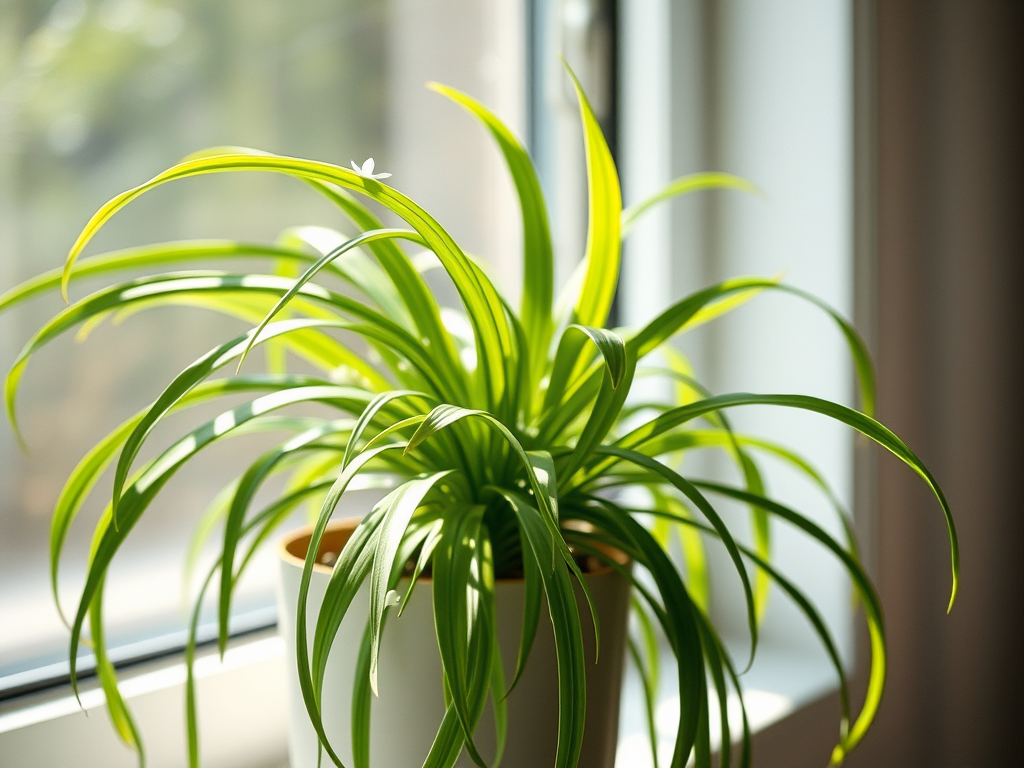
The spider plant is a popular, low-maintenance, and hardy houseplant known for its air-purifying qualities. It is often recognized for its arching leaves and small white flowers. Here’s a comprehensive guide to help keep your spider plant healthy:
1. Light Requirements
- Prefers bright, indirect light. If it doesn’t get enough light, the leaves may lose their vibrant color.
- Avoid direct sunlight, as it can scorch the leaves.
- It can also adapt to partial shade, though its growth may slow down.
2. Watering
- Keep the soil lightly moist, but avoid overwatering.
- Water when the top layer of soil feels dry.
- In winter, reduce watering frequency as the plant’s water needs decrease.
- Use well-draining pots to prevent root rot from water accumulation.
3. Humidity and Temperature
- Thrives in moderate humidity levels. Dry air may cause the leaf tips to turn brown. Use a humidity tray or mist the plant in drier environments.
- Ideal temperature range: 15-24°C (59-75°F). Avoid cold drafts and extreme temperature fluctuations.
- Keep away from radiators or heaters that can cause rapid changes in temperature.
4. Soil and Potting
- Choose light, well-draining soil. A general-purpose potting mix works well.
- Ensure the pot has drainage holes to prevent excess water from sitting in the soil, which can lead to root rot.
- Spider plants grow quickly, so you may need to repot them every 1-2 years.
5. Fertilization
- During the growing season (spring and summer), fertilize with a liquid fertilizer once a month.
- No need to fertilize in winter, as the plant’s growth slows down during this period.
6. Leaf Care
- To prevent dust buildup, occasionally wipe the leaves with a damp cloth. This improves photosynthesis and keeps the plant looking vibrant.
- Trim off any brown or dry leaf tips using clean scissors.
7. Air Purification
- According to NASA, the spider plant helps filter harmful substances from indoor air, such as carbon monoxide, formaldehyde, and xylene.
8. Propagation
- Spider plants develop “baby plants” (pups) on long runners. Once these pups have rooted, they can be separated from the main plant and potted individually.
- You can root the pups in a glass of water or plant them directly into moist soil.
9. Common Issues
- Brown Leaf Tips: Often caused by low humidity or overwatering.
- Fading Leaves: May indicate insufficient light. Move the plant to a brighter location.
- Root Rot: Caused by overwatering and poor drainage.
The spider plant is a resilient and attractive houseplant that’s easy to care for, whether at home or in the office. By providing the right light, water, and temperature conditions, you can ensure that your spider plant thrives and continues to purify the air in your space.













Bir Cevap Yazın