
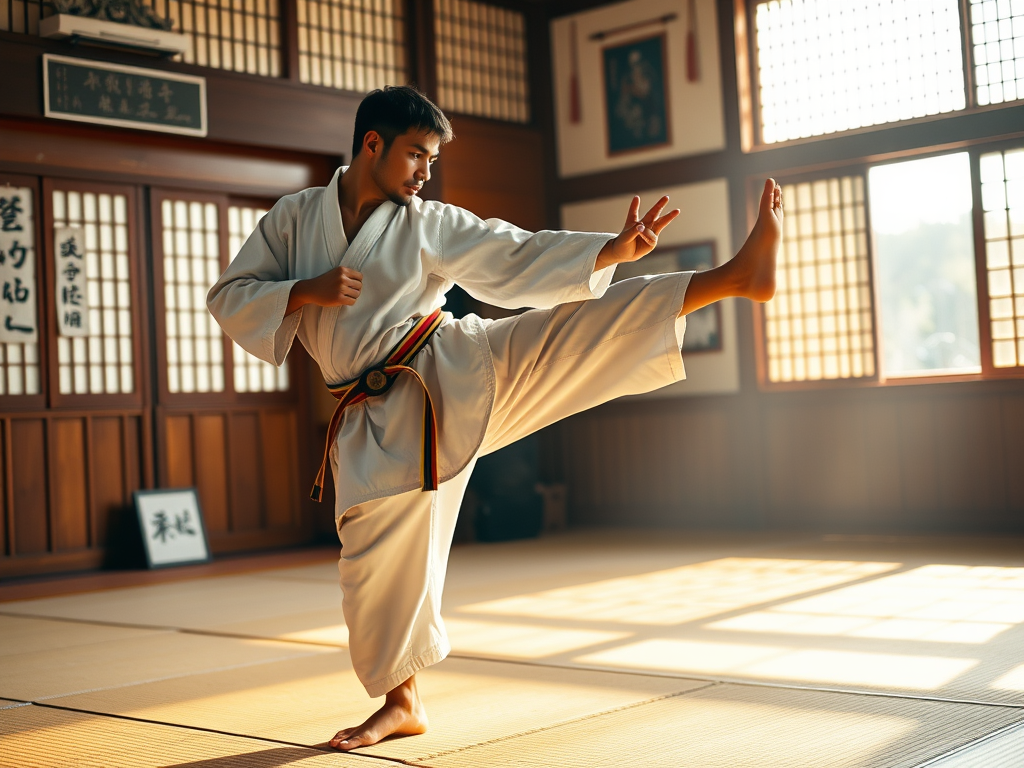
Karate is a martial art originating from Japan that combines physical and mental discipline. It is an excellent option for those who want to learn self-defense techniques while improving their physical and mental well-being. So, how is karate practiced? Here’s a beginner’s guide with essential information to answer that question:
1. What is Karate?
Karate, meaning “empty hand,” is a martial art based on unarmed defense techniques. It primarily involves punches, kicks, elbow strikes, and knee strikes. Karate is not just about physical strength but also requires concentration, discipline, and respect.
2. Tips for Starting Karate
- Choosing a Dojo: To start learning karate, you first need to find a dojo (karate school). Make sure the dojo teaches traditional karate techniques and has licensed, experienced instructors.
- Equipment: The basic equipment you’ll need includes a karate uniform (kimono or “gi”), a belt (obi), and a suitable floor for practicing barefoot.
- Mental Preparation: Karate requires patience and discipline. Give yourself time and enjoy the process.
3. Basic Karate Techniques
Karate is built on fundamental techniques. Here are some basic techniques you can learn as a beginner:
a. Stances (Tachi)
- Zen Kutsu Dachi: A forward-leaning stance, the basic position for defense and attack.
- Kiba Dachi: Known as the horse stance, it provides a balanced and strong posture.
b. Punching Techniques (Tsuki)
- Oi Tsuki: A basic forward punch.
- Gyaku Tsuki: A reverse punch, a powerful attacking technique.
c. Kicking Techniques (Geri)
- Mae Geri: A basic front kick.
- Yoko Geri: A side kick, effective for both defense and attack.
d. Blocks (Uke)
- Gedan Barai: A downward block, protecting against low-level attacks.
- Age Uke: An upward block, defending against head-level strikes.
4. Karate Philosophy and Discipline
Karate is not just a physical sport but also a life philosophy. The five core principles of karate are:
- Respect: Respect for both your opponent and yourself.
- Discipline: Regular training and self-discipline.
- Patience: Taking time to learn and improve techniques.
- Goal-Orientedness: Continuously striving for self-improvement.
- Honesty: Being fair in training and competitions.
5. How Are Karate Training Sessions Conducted?
- Warm-Up: Every training session begins with stretching and warm-up exercises to prevent injuries and enhance performance.
- Kihon (Basic Techniques): Practicing basic stances, punches, kicks, and blocks.
- Kata (Forms): A series of pre-arranged movements performed in sequence. Kata helps reinforce techniques and improve mental focus.
- Kumite (Sparring): Partner drills or free sparring, offering a chance to practice learned techniques.
6. Karate Belt System
Karate uses a colored belt system to indicate skill levels. The system progresses from beginner to mastery as follows:
- White Belt: Beginner level.
- Yellow, Orange, Green, Blue, Brown Belts: Intermediate levels.
- Black Belt: Mastery level. Black belts are further divided into dan levels.
7. Karate Competitions
Karate includes competitions in both kata and kumite disciplines. Competitions provide an opportunity to test your skills and compete with other practitioners. They also help boost confidence and motivation.
8. Benefits of Karate
- Physical Development: Improves flexibility, strength, balance, and coordination.
- Mental Development: Enhances focus, discipline, and stress management.
- Self-Defense: Teaches basic self-defense techniques.
- Social Benefits: Helps you meet new people at the dojo and fosters teamwork.
9. Motivation to Start Karate
Karate is suitable for people of all ages. It’s great for building confidence in children, stress relief and fitness for adults, and improving balance and flexibility for seniors. It’s never too late to start karate!
Conclusion
Karate is a traditional martial art that promotes both physical and mental development. Learning basic techniques, following a disciplined training program, and embracing the philosophy of karate are the keys to success in this art. If you’re considering starting karate, find a dojo and take the first step on this journey. Remember, every master was once a beginner!












Bir Cevap Yazın