
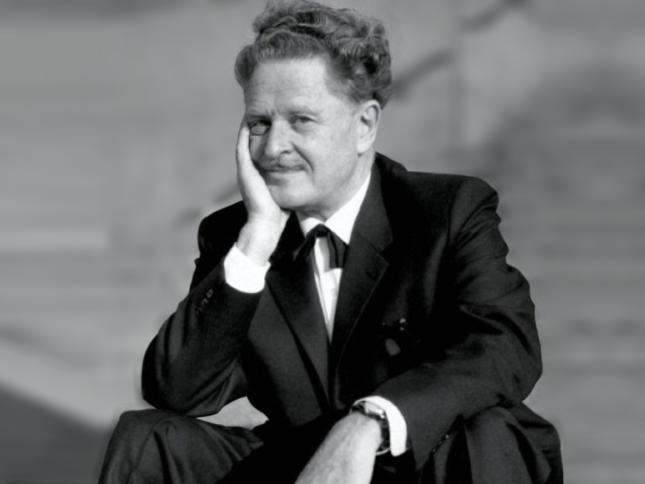
Nâzım Hikmet Ran is one of the most important and influential poets in Turkish literature. Through both his poetry and his life, he left a profound mark not only in Turkey but also worldwide. Nâzım Hikmet addressed themes of love for humanity, peace, freedom, and social justice in his poems, and he never compromised his beliefs throughout his life. In this blog post, you will find detailed information about Nâzım Hikmet’s life, works, and legacy.
Nâzım Hikmet’s Life
1. Early Years and Education
- Birth: Nâzım Hikmet was born on January 15, 1902, in Salonica. His father, Hikmet Bey, was a civil servant in the Ottoman Empire, and his mother, Celile Hanım, was a painter and pianist.
- Education: He completed his primary education in Istanbul. Later, he enrolled in the Naval Academy but could not graduate due to health issues.
2. First Steps in Poetry
- Nâzım Hikmet began writing poetry at a young age. His early poems followed the traditional style of the time, but he later embraced free verse.
- In the 1920s, he went to Moscow and studied economics and political science at the University of the Toilers of the East. During this period, he was influenced by Russian futurism and poets like Mayakovsky.
3. Arrests and Prison Years
- After returning to Turkey, Nâzım Hikmet was repeatedly arrested and imprisoned due to his communist views.
- In 1938, he was sentenced to 28 years in prison on charges of “inciting the military to rebellion.” He was released in 1950 under a general amnesty law.
4. Exile Years and Death
- In 1951, he left Turkey and moved to the Soviet Union, where he spent the rest of his life in exile.
- He died of a heart attack on June 3, 1963, in Moscow. His grave is in the Novodevichy Cemetery.
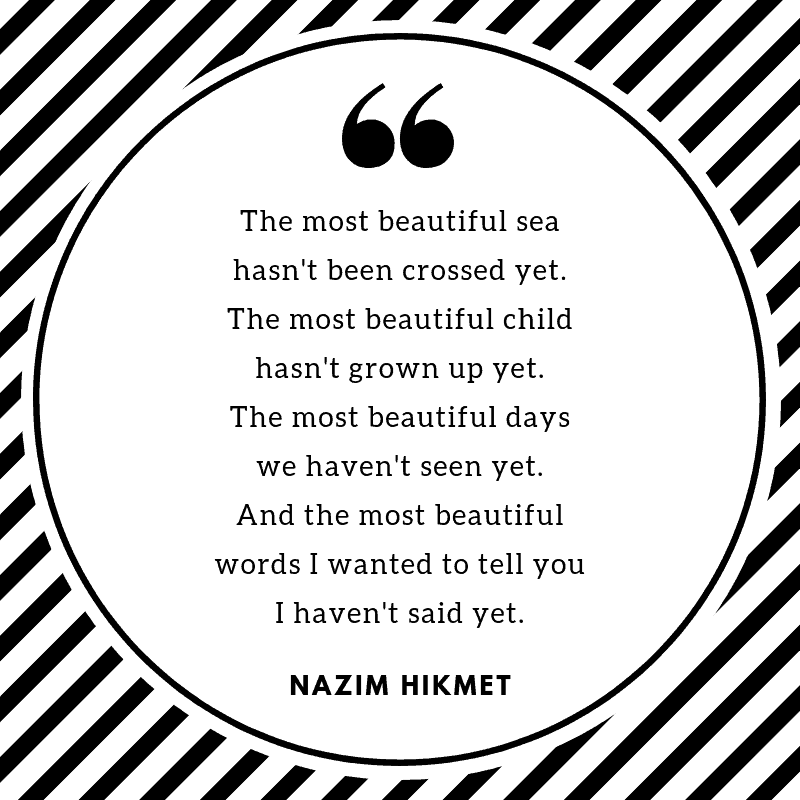
Nâzım Hikmet’s Literary Personality and Poetic Style
Nâzım Hikmet is a pioneering poet who introduced free verse to Turkish poetry. His poems addressed social issues, love for humanity, peace, and freedom. Here are some characteristics of his literary personality:
1. Free Verse
- Nâzım Hikmet broke away from traditional poetic forms and adopted free verse, which brought freedom and dynamism to his poetry.
2. Social Realism
- His poems dealt with the struggles of the working class, peasants, and the oppressed. Themes of social justice and equality were central to his work.
3. Love for Humanity and Peace
- Nâzım Hikmet emphasized love for humanity and peace in his poems. In works like “On Living,” he celebrated the beauty of life and human resilience.
4. Lyricism and Epic Narration
- He combined lyrical and epic elements in his poetry, creating an emotional yet grand narrative style.
Nâzım Hikmet’s Works
Nâzım Hikmet produced works in various genres, including poetry, theater, novels, and memoirs. Here are some of his most famous works:
1. Poetry Collections
- 835 Satır (835 Lines, 1929): His first poetry collection, featuring examples of free verse.
- Memleketimden İnsan Manzaraları (Human Landscapes from My Country, 1966-1967): An epic poetry collection depicting Turkey’s social structure.
- Kuvâyi Milliye (The National Forces, 1968): An epic poem about the Turkish War of Independence.
- Rubailer (Quatrains, 1966): A collection of poems written in the rubai style.
2. Plays
- Kafatası (The Skull, 1932): A play containing social critiques.
- Ferhad ile Şirin (Ferhad and Şirin, 1965): A modern reinterpretation of a classic folk tale.
3. Novels and Memoirs
- Yaşamak Güzel Şey Be Kardeşim (Life’s Good, Brother, 1967): An autobiographical novel.
- Benerci Kendini Niçin Öldürdü? (Why Did Benerci Kill Himself?, 1932): A novel exploring social and individual conflicts.
Nâzım Hikmet’s Legacy
Nâzım Hikmet was not only a poet but also a thinker and activist. His legacy lives on through his poems and ideas. Here are some key aspects of his legacy:
1. The Revolutionary Power of Poetry
- Nâzım Hikmet saw poetry as a tool for social change. His poems inspired people to become aware and take action.
2. Universal Values
- Themes like love for humanity, peace, and freedom in his poems are considered universal values. This is why his works are read and loved worldwide.
3. The Relationship Between Art and Politics
- Nâzım Hikmet believed that art could not be separated from politics. He argued that artists have social responsibilities and that art should contribute to societal progress.
Unforgettable Poems by Nâzım Hikmet
Nâzım Hikmet’s poems continue to resonate even years later. Here are a few examples of his most famous poems:
- “On Living”:
“Living is no laughing matter:
you must live with great seriousness
like a squirrel, for example—
I mean without looking for something beyond and above living,
I mean living must be your whole occupation.” - “The Walnut Tree”:
“My head is frothy clouds, my insides and outsides the sea,
I am a walnut tree in Gülhane Park,
gnarled and knotted, an old walnut.”
Conclusion
Nâzım Hikmet is one of the greatest figures in Turkish literature and world poetry. His poems, life, and ideas continue to inspire not only his own era but also future generations. In this blog post, we have provided detailed information about Nâzım Hikmet’s life, works, and legacy. Reading his poems offers both literary pleasure and social awareness.












Uğurcan BAL için bir cevap yazınCevabı iptal et