
🌿 Introduction
In the heart of Turkish culture lies a centuries-old form of humor, wisdom, and storytelling — the Shadow Play of Hacivat and Karagöz.
This unique art form blends satire, poetry, and traditional wit, bringing to life two unforgettable characters who represent the essence of Anatolian humor.
Even in today’s digital world, their jokes, philosophy, and cultural symbolism continue to inspire Turkish theater and cinema.
🕯️ What Is Hacivat and Karagöz?
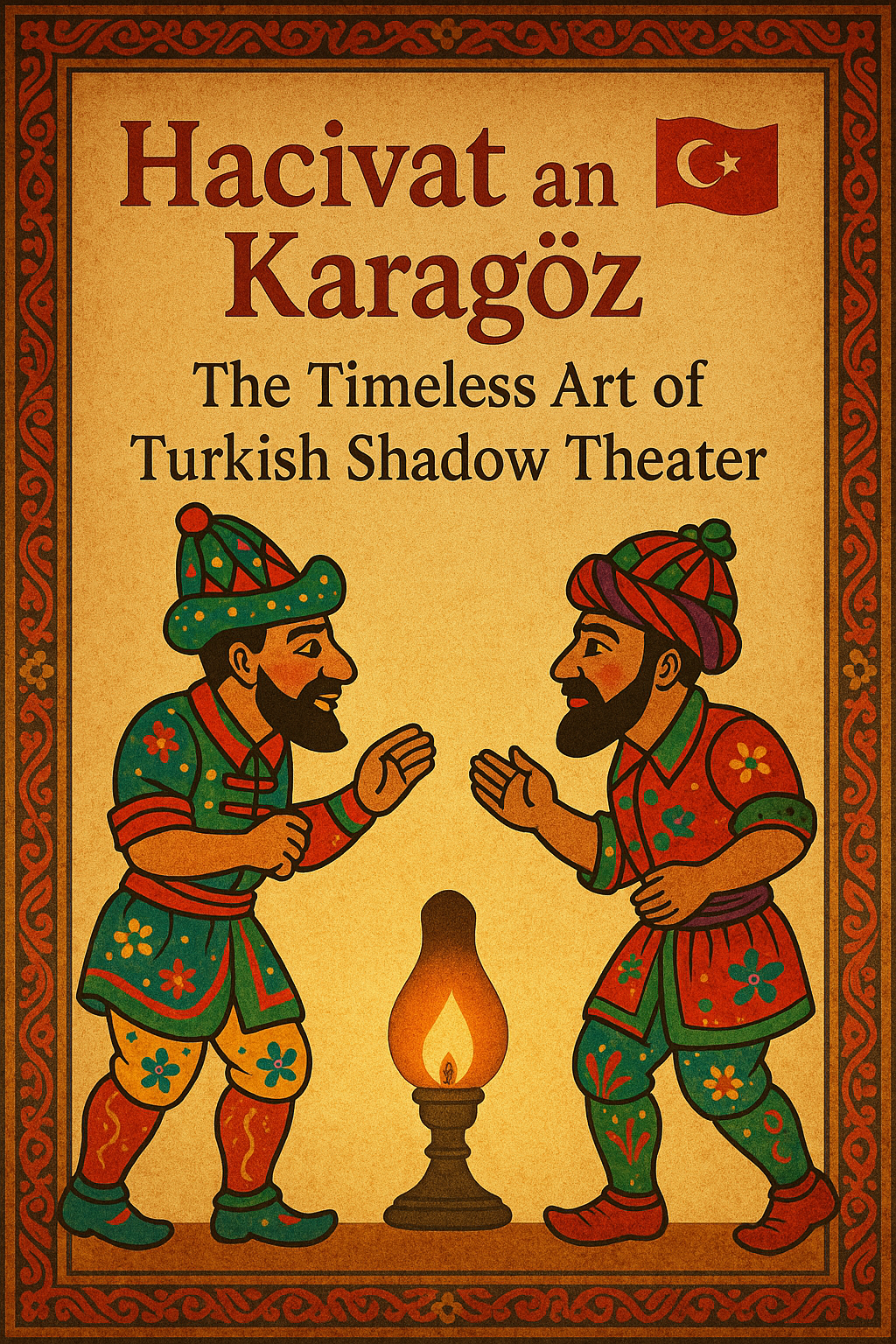
Hacivat and Karagöz are the main characters of the traditional Turkish shadow puppet theater, performed behind a lit white screen called a “ayna” (mirror).
Colorful leather puppets are held against the light, casting shadows that act out humorous dialogues and short plays.
This form of theater was particularly popular during the Ottoman Empire, especially during the Ramadan evenings, when families gathered after iftar to enjoy laughter and clever satire.
👥 The Characters and Their Personalities
| Character | Description |
|---|---|
| Karagöz | Represents the uneducated but witty common man. He speaks directly, makes silly mistakes, and uses spontaneous humor. |
| Hacivat | Educated, polite, and articulate. He often uses Arabic and Persian words, symbolizing the intellectual class. |
| Dynamic Between Them | Their contrasting personalities — Hacivat’s sophistication vs. Karagöz’s simplicity — create endless humorous and philosophical exchanges. |
💬 Example of their style:
Hacivat: “Karagözüm, are you awake?”
Karagöz: “No, I’m sleeping with my eyes open!”
🎨 Historical Background
The origins of Hacivat and Karagöz are traced back to the 14th century in Bursa, during the early Ottoman era.
Legend has it that Karagöz (a construction worker) and Hacivat (a mason) worked on building a mosque for Sultan Orhan Gazi.
Their constant banter and jokes slowed the construction, angering the Sultan — but after their deaths, the people missed their humor so much that artists began reenacting them through shadow play.
This story transformed into a cultural legacy, spreading through the Ottoman lands from the Balkans to the Middle East.
🌍 Cultural Importance
Hacivat and Karagöz are more than comedic characters — they reflect:
- The social diversity of Ottoman society,
- The tension between tradition and modernity,
- The clever wisdom of the common people.
Their performances often included characters of different ethnicities — Greeks, Armenians, Jews, Arabs, and Persians — making the plays a colorful mirror of Ottoman cosmopolitan life.
🕊️ Symbolism and Meaning
- Karagöz symbolizes the voice of the people, blunt but honest.
- Hacivat stands for education and authority, often misunderstood by the common folk.
Together, they represent balance — wisdom mixed with humor, intellect meeting instinct, and laughter as a bridge between differences.

🎬 Modern Adaptations
Today, Hacivat and Karagöz remain cultural icons:
- Featured in Turkish cinema, such as “Hacivat ve Karagöz Neden Öldürüldü?” (2006).
- Performed in schools, cultural festivals, and UNESCO heritage events.
- Recognized by UNESCO in 2009 as part of the Intangible Cultural Heritage of Humanity.
🎭 Despite new entertainment forms, their legacy lives on as a proud symbol of Turkish humor, tradition, and creativity.
✨ Conclusion
The story of Hacivat and Karagöz reminds us that laughter is timeless — and wisdom often hides behind humor.
From Ottoman palaces to modern theaters, their shadows continue to dance, telling the story of friendship, satire, and humanity.
They are not just characters but reflections of the Turkish soul — clever, kind, and endlessly entertaining.
❓ FAQ
1. What is Hacivat and Karagöz’s main theme?
👉 The contrast between wisdom and simplicity, and humor as a form of social criticism.
2. When is the shadow play usually performed?
👉 Traditionally during Ramadan nights and cultural festivals.
3. Are the original plays still performed today?
👉 Yes, modern artists keep the tradition alive across Turkiye and internationally.
4. What materials are used for the puppets?
👉 The figures are handmade from translucent camel or ox leather and painted with natural dyes.


Bir Cevap Yazın