
🌿 Introduction
Honey production depends on colony health, timing, and a seamless chain of harvest–extraction–storage hygiene.
This guide walks through the complete process — from planning to packaging — for both hobby and professional beekeepers, adapted to Mediterranean climates like Türkiye.
🐝 1) Planning & Setup
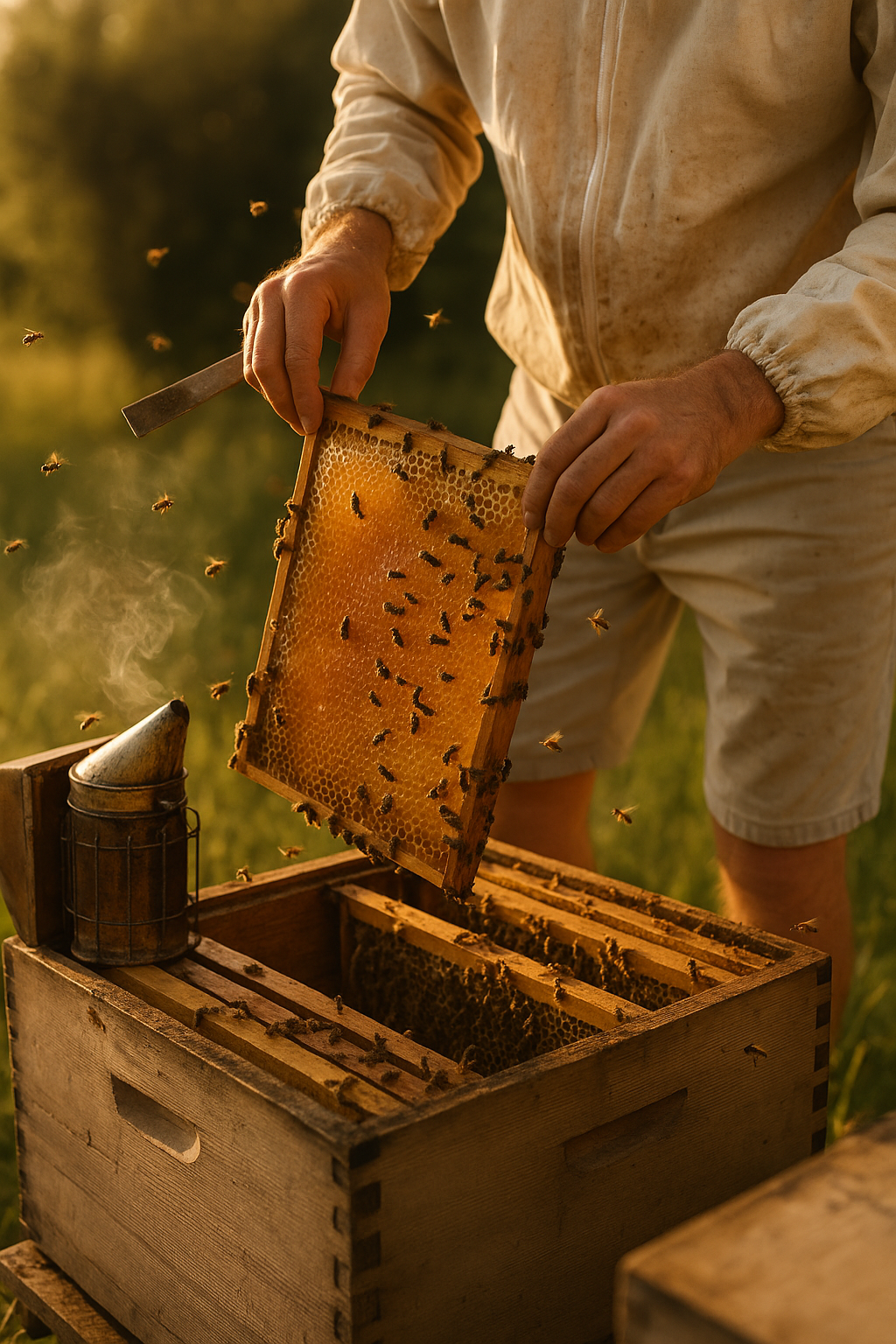
1.1 Region & Flora
- Rich nectar sources: acacia, linden, chestnut, sunflower, thyme, sainfoin, lavender.
- Choose a sunny, wind-protected location near a clean water source (200–300 m) and away from pesticide-treated fields.
1.2 Hive & Bee Breed
- Common breeds: Anatolian, Caucasian, Aegean (Muğla type).
- Hive type: Langstroth or Dadant. If you’re migratory, ensure secure bottoms and strong fasteners.
1.3 Legal Registration
- Register with your local agricultural office, number each hive, and get land-use or apiary permits where required.
👑 2) Colony Management (Early Spring)
- Queen control: verify egg-laying and brood pattern; replace old queens.
- Frame balance: maintain brood-pollen-honey harmony; add foundation sheets as needed.
- Feeding (if necessary): early-spring sugar syrup (1 : 1) or pollen patties; stop feeding before the main nectar flow.
- Varroa & disease control: integrated approach — organic acids, brood breaks, hygienic practices; check bottom boards regularly.
🌼 3) Honey Flow & Super Management
When nectar starts:
- Add honey supers to encourage comb building.
- Prevent swarming by frequent checks, giving space, using young queens, and keeping colonies balanced.
🧺 4) Harvest (Maturity Criteria)
- Harvest when ≥ 70 % of combs are capped.
- Use a refractometer: water content should be ≤ 18 % (ideal 16–18 %).
- Avoid disturbing hives 2–3 days before harvest; do not use repellents or chemicals.
🌀 5) Extraction & Filtration (Hygiene Focus)
- Uncap sealed combs with a heated knife or fork.
- Extract honey using a centrifugal extractor.
- Filter through double strainers (80–200 microns).
- Rest honey in a settling tank for 24–48 h to remove foam and air.
- Maintain temperature below 40 °C (104 °F) — excessive heat destroys enzymes.
🧪 6) Quality Checks
| Parameter | Ideal Range | Purpose |
|---|---|---|
| Moisture | ≤ 18 % | Prevent fermentation |
| Aroma | Natural floral scent | Detect contamination |
| Visual | Clear, no debris | Hygiene check |
| Viscosity | Thick flow | Maturity indicator |
🏷️ 7) Packaging & Labeling
- Use food-grade glass jars; fill at 30–35 °C.
- Label must include: net weight, origin, producer ID, batch/lot, shelf life, floral type, and “Not suitable for infants under 1 year”.
- Store in a cool (15–20 °C), dry, dark place.
🔁 8) Colony Health & Overwintering
- Ensure 8–12 kg honey reserves and a young queen before winter.
- Fall varroa treatment, reduce hive space, balance humidity.
- In winter: avoid opening hives; if needed, feed solid candy, not syrup.
🧰 Essential Equipment Checklist
- Hives + supers, frames & foundation
- Bee suit, gloves, smoker, hive tool, brush
- Uncapping knife, extractor, strainers
- Settling tank, jars & lids, refractometer
- Labels & marking equipment
📅 Seasonal Calendar (Typical for Türkiye)
| Period | Main Tasks |
|---|---|
| Feb–Mar | Late-winter inspection, feed if needed |
| Apr–May | Colony buildup, comb foundation, supering |
| Jun–Jul | Main honey flow, swarm control, harvest |
| Aug | Post-harvest rest, equipment cleaning |
| Sep–Oct | Feeding, varroa treatment, winter prep |
| Nov–Jan | Quiet period, equipment maintenance |
⚠️ Safety & Ethics
- Keep safe distances from neighbors and animals.
- Follow correct dosages and timing for treatments.
- Never feed syrup during the honey flow — it contaminates honey purity.
💡 Small-Scale Economics (Example)
10 hives × 15–20 kg = 150–200 kg/year.
Direct sales with transparency and storytelling (“single-flora,” “mountain honey”) can significantly increase income.
🙋♀️ FAQ
Why does honey crystallize?
It’s natural. Depends on glucose/fructose ratio; re-liquefy gently in 35–40 °C warm water.
What if moisture is too high?
Fermentation risk. Delay harvest or blend with mature honey to lower moisture.
Can I harvest at night?
Possible but risky; bees are attracted to light — better harvest in calm daylight.
Does smoke affect flavor?
Yes, excessive smoke leaves an aftertaste. Use clean, natural fuel lightly.













Bir Cevap Yazın