
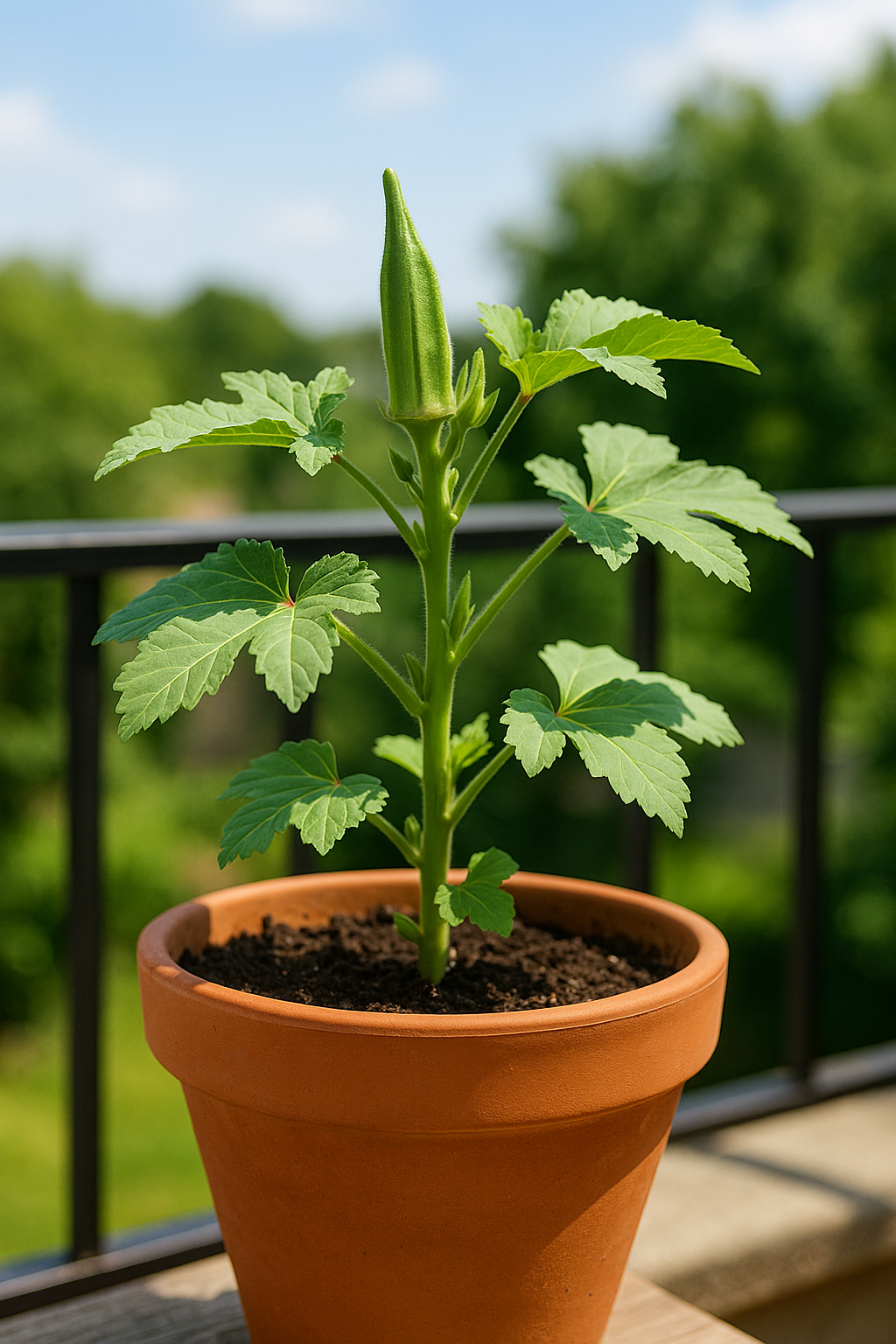
🏡 Introduction
Okra — also known as lady’s finger — is one of the most beloved vegetables of summer. Rich in fiber, vitamins, and minerals, it’s a healthy addition to any diet.
The good news? You don’t need a large garden to grow it! With the right soil, sunlight, and care, you can easily grow okra in pots right on your balcony or terrace. 🌞🌿
This guide will walk you through everything you need to know about how to grow okra in pots at home.
🪴 Can You Grow Okra in Pots?
Yes! Okra adapts well to container gardening.
Since it develops deep roots, choosing the right pot size is important. With proper conditions, you can enjoy a surprisingly abundant harvest even in small spaces.
🪴 1. Choosing the Right Pot
- Depth: Use a pot at least 30–40 cm (12–16 inches) deep.
- Material: Clay or ceramic pots are better than plastic, as they allow airflow to the roots.
- Drainage: Make sure the pot has drainage holes at the bottom to prevent waterlogging.
💧 Too much water can cause root rot.
🌱 2. Best Soil for Okra
Okra thrives in loose, fertile, and well-drained soil.
Ideal soil mix:
- 1 part peat or cocopeat
- 1 part garden soil
- 1 part compost or well-rotted manure
🌿 The soil pH should be between 6 and 7 for best results.
🌞 3. Sunlight and Temperature
Okra is a warm-season plant.
- Needs at least 6–8 hours of direct sunlight daily.
- The ideal temperature range is 20–30°C (68–86°F).
- Place your pot in a sunny, wind-protected area (a south-facing balcony works best).
🌾 4. Sowing Okra Seeds
- Soak the seeds:
Soak okra seeds in warm water for 12–24 hours before planting to boost germination. - When to sow:
The best time is late April to early May. - Depth:
Plant 2–3 seeds per pot, covering them with 2–3 cm (1 inch) of soil. - Watering:
Keep the soil moist but not soggy after sowing.
💧 5. Watering Routine
Okra dislikes both drought and overwatering.
- Water when the top layer of soil feels dry.
- In hot weather, water early in the morning or late evening.
- Avoid excess watering to prevent root decay.
🌿 6. Fertilizing and Maintenance
- Feed once a month with organic liquid fertilizer or compost tea.
- When plants reach 15–20 cm (6–8 in), gently loosen the soil around the roots.
- Remove yellow or wilted leaves regularly.
🌸 7. Flowering and Harvesting
- Okra plants start flowering about 60–70 days after sowing.
- After flowering, small green pods appear within days.
- Harvest okra when pods are 3–5 cm (1–2 in) long — tender and fresh.
🌼 If you wait too long, pods become tough and fibrous.
🌼 8. Common Problems & Solutions
| Problem | Cause | Solution |
|---|---|---|
| Yellowing leaves | Overwatering | Reduce watering frequency |
| Flower drop | Lack of sunlight | Move to a sunnier spot |
| Aphids | Warm, humid air | Spray leaves with mild soap water |
🌿 Benefits of Growing Okra in Pots
- 100% organic, pesticide-free produce 🌱
- Ideal for small spaces
- Visually appealing plant with yellow blossoms
- Daily fresh harvest possible from your balcony
💬 Conclusion
Growing okra in pots is both fun and rewarding! 🌿
With a little sunlight, consistent watering, and some care, you can enjoy your own home-grown organic okra.
It’s healthier, fresher, and a wonderful way to bring nature into your home. 🌞💚
🙋♀️ FAQ – Frequently Asked Questions
1. Can okra seeds be reused next year?
Yes, dry the pods and store the seeds — they remain viable for up to 2–3 years.
2. How many plants per pot?
One or two plants per 30–40 cm pot are ideal.
3. When should I plant okra?
Late April to early May, when temperatures stay warm.
4. Is okra resistant to cold?
No, frost can damage roots and slow growth.
5. How long does it take to produce pods?
You’ll see harvestable pods about 8–10 weeks after sowing.













Uğurcan BAL için bir cevap yazınCevabı iptal et