

🌙 Introduction
On the coldest night of winter, lights glow in the houses, pumpkin desserts simmer in pots, and people wrapped in white sheets wander the streets…
This mysterious and thrilling night is called Bocuk Night. 🎃
Celebrated in the Thrace region of Turkey — especially in Keşan, Uzunköprü, and İpsala — this centuries-old Balkan tradition blends fear, folklore, and community warmth into a truly unique cultural event.
🕯️ What Is Bocuk Night?
Bocuk Night is an ancient winter ritual rooted in Balkan folklore.
It’s known as the coldest night of winter, when people warn each other, saying: “The Bocuk is coming!”
According to tradition, “Bocuk” is a ghostly figure associated with cold weather and dark winter nights.
The main idea of the celebration is simple yet meaningful:
To ward off evil spirits and the harshness of winter by gathering with loved ones, eating sweet pumpkin dessert, and staying warm indoors.
🧛♀️ Who Is Bocuk?
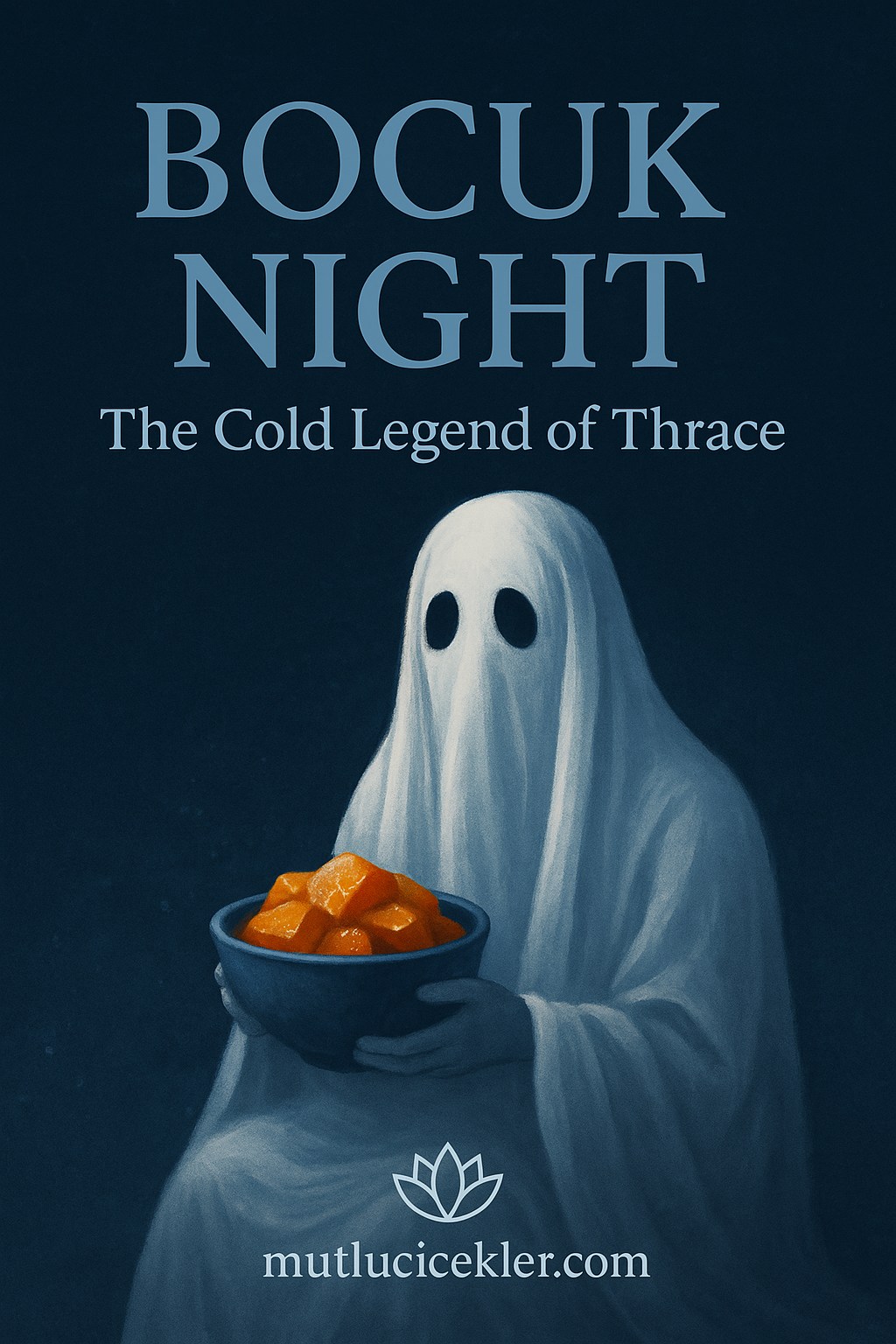
In local legend, Bocuk is a white-faced, ghostly woman who appears on the coldest night of the year.
It is believed that she roams rooftops and scares those who stay outdoors too late.
However, there’s no need to be afraid!
Because there’s a way to protect yourself: eat pumpkin dessert and stay home. 🍮
This simple act is believed to keep evil and misfortune away for the rest of the year.
🍯 How Is Bocuk Night Celebrated?
The celebration combines both fear and joy — and it’s full of colorful traditions.
🔹 1. Making Pumpkin Dessert
Pumpkin dessert is the symbol of Bocuk Night.
Families cook sweet pumpkin (often with sugar, honey, or molasses) and share it with neighbors and guests.
🔹 2. Wearing White Sheets
Young people dress in white sheets to impersonate “Bocuk.”
They go door to door, play pranks, and scare others — but all in good fun!
This symbolizes good spirits driving away the bad ones.
🔹 3. Gathering Together
Families stay indoors, gather around the fire, share stories, and enjoy desserts.
It’s a night of warmth, laughter, and community bonding.
🕰️ When Is Bocuk Night Celebrated?
Bocuk Night is celebrated on the coldest night of January, usually around January 6th.
There’s no fixed date — it varies depending on the local winter calendar.
In some Balkan regions, it’s associated with post-Christmas (Orthodox Epiphany) traditions.
🌍 Origins and History
Bocuk Night has pagan and Slavic roots, tracing back to Balkan mythology.
It represents the ancient belief in the battle between cold and warmth, evil and goodness.
Over time, the tradition spread through Ottoman-era migrations and became part of Thracian folk culture in Turkey.
🔥 Bocuk Night Today
Today, Bocuk Night has evolved into a cultural festival, attracting visitors from across Turkey and beyond.
The most famous celebration takes place in Çamlıca Village (Keşan, Edirne) where the entire village transforms into a living folklore scene.
- Bonfires light up the streets,
- People dress as ghosts,
- Pumpkin desserts are shared freely,
- Folk dances and concerts fill the night.
It’s both a revival of tradition and a fun, family-friendly winter festival.
💡 Tips
🎃 Want to experience it firsthand? Visit Çamlıca Village’s Bocuk Festival in January!
🔥 Bring warm clothes, try the pumpkin dessert, and enjoy the eerie yet cozy atmosphere.
💬 Don’t forget — if someone says “The Bocuk is coming!”, smile and offer them some dessert.
❓ FAQ (Frequently Asked Questions)
What does Bocuk Night symbolize?
It symbolizes unity, goodness, and protection from evil during the hardest days of winter.
Why do people eat pumpkin dessert?
It’s believed that the Bocuk fears sweetness — so eating pumpkin dessert protects your home and family.
Is it only celebrated in Edirne?
Mostly yes, but similar winter rituals exist in Kırklareli, Tekirdağ, and some Balkan countries.
🌕 Conclusion
Bocuk Night is one of Turkey’s most fascinating and unique winter traditions — a celebration of community, folklore, and resilience.
It reminds us that even in the coldest nights, warmth can be found in togetherness, laughter, and a simple bowl of pumpkin dessert. ❄️🍮


Bir yanıt yazın