
🌍 Introduction
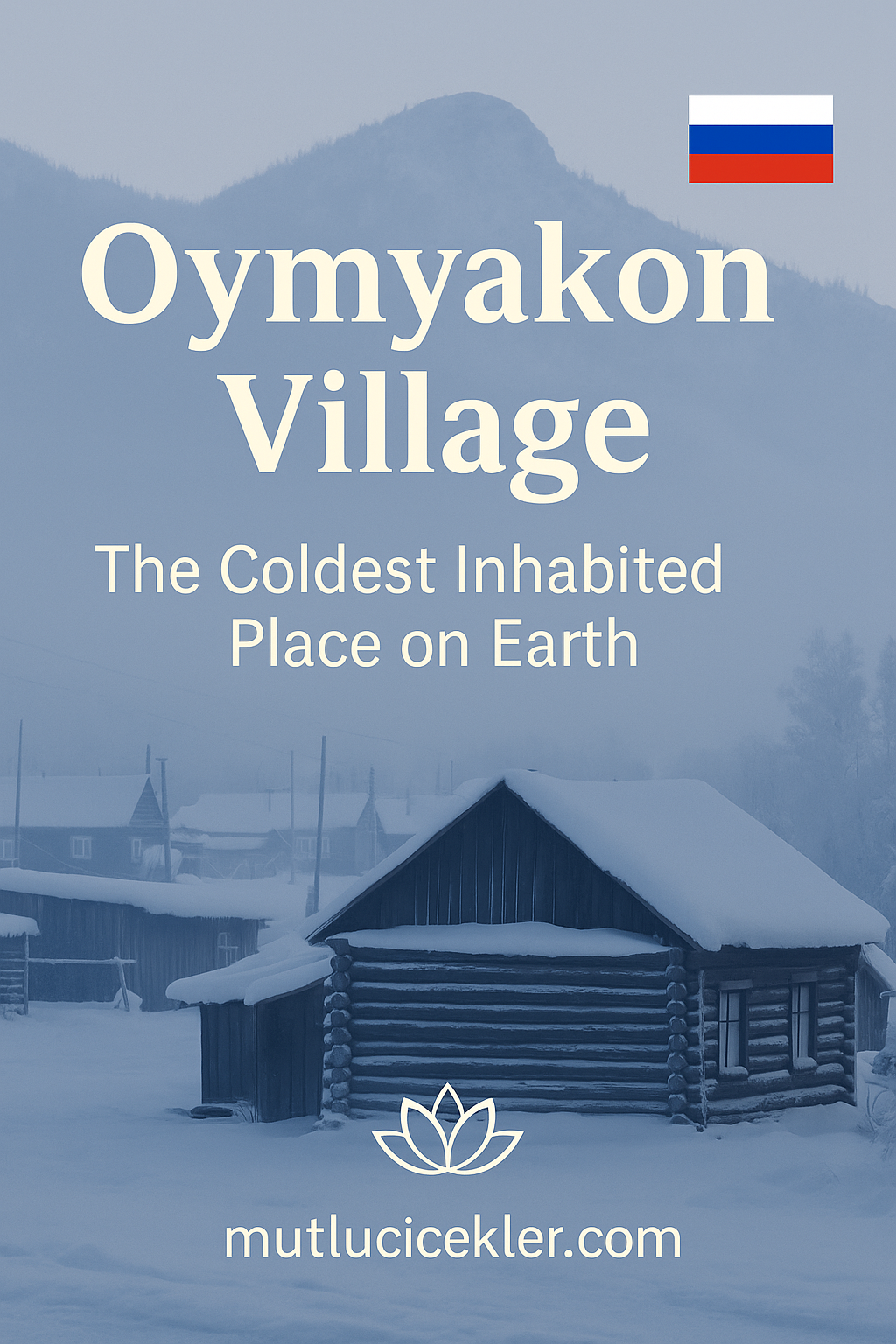
In the heart of Siberia, near the Arctic Circle, lies Oymyakon, known as the coldest inhabited place on Earth.
During winter, temperatures can drop below -70°C (-94°F) — colder than some parts of Antarctica!
But despite these extreme conditions, people continue to live here, raise families, and adapt to the frozen world.
Here are some fascinating facts about this icy wonder of endurance! ❄️🇷🇺
🧭 1️⃣ Where Is Oymyakon?
Oymyakon is located in the Sakha Republic (Yakutia), Russia — about 930 km east of Yakutsk, one of the coldest cities in the world.
🌡️ 2️⃣ Record Temperature: -71.2°C (-96°F)
In 1933, a temperature of -71.2°C was recorded in Oymyakon,
making it the coldest permanently inhabited place on Earth. 🥶
🧍♂️ 3️⃣ A Tiny Yet Tough Community
About 500 people live in Oymyakon.
Most work in reindeer herding, fishing, or animal farming.
❄️ 4️⃣ Engines Never Stop Running
Because of the extreme cold, cars and trucks are kept running all day long to prevent the fuel from freezing.
Turning off the engine could mean it never starts again! 🚗❄️
🐟 5️⃣ Frozen Food Is Normal
Since the ground is permanently frozen (permafrost), there’s no agriculture.
Locals survive on fish, horse meat, and reindeer — usually eaten frozen.
🎒 6️⃣ Schools Only Close Below -52°C
Yes — children go to school even at -50°C!
Classes are only canceled when the temperature drops below -52°C.
🏠 7️⃣ No Underground Plumbing
Because the soil never thaws, water pipes cannot be buried underground.
Water is collected from central pumps or rivers and carried home manually. 🚰
🌙 8️⃣ Limited Daylight
In winter, the sun shines for only 3–4 hours per day.
In summer, however, 24-hour daylight bathes the village in soft Arctic light. ☀️🌙
🧊 9️⃣ A Tourist Attraction for the Brave
Despite the cold, Oymyakon attracts adventure travelers who come to experience “cold tourism.”
They take selfies in -60°C and pour boiling water into the air to watch it turn into ice mist! 📸
🚗 🔟 Reaching Oymyakon Is a Challenge
The nearest large city, Yakutsk, is a 12–15 hour drive away on icy, rugged roads known as the “Road of Bones.”
🪶 1️⃣1️⃣ The Name Means “Unfrozen Water”
Ironically, Oymyakon means “unfrozen water” in the Yakut language,
named after a nearby hot spring that never freezes. 💧
🧥 1️⃣2️⃣ Dressing in Layers of Fur
Locals wear layers of reindeer fur, wool, and felt boots.
Exposed skin can freeze in minutes, so every bit of warmth matters!
🔥 1️⃣3️⃣ Fire Never Goes Out Indoors
Wood-burning stoves run 24 hours a day to keep homes warm.
Firewood is a highly valuable resource.
🐕 1️⃣4️⃣ Sled Dogs Are Survivors
Siberian dogs thrive here — their thick fur keeps them safe even in -60°C. 🐾
💨 1️⃣5️⃣ Boiling Water Turns to Ice Mist
Throwing boiling water into the air instantly creates a cloud of ice crystals.
It’s a favorite experiment for tourists and photographers. 📸
📵 1️⃣6️⃣ Electronics Freeze Instantly
Phones, cameras, and batteries stop working within minutes in the extreme cold.
Locals use protective pouches to keep them warm.
🧊 1️⃣7️⃣ The Ground Never Thaws
The soil is permanently frozen — a condition called permafrost —
which makes construction and farming extremely difficult.
📸 1️⃣8️⃣ The “Pole of Cold” Monument
At the entrance to the village stands a monument labeled “The Coldest Place on Earth.”
Visitors often take pictures here next to a giant thermometer.
🏔️ 1️⃣9️⃣ Life in the Land of Ice
Oymyakon is part of a vast frozen region — Yakutia,
where many villages live under similar subzero extremes.
💙 2️⃣0️⃣ Life Goes On
Despite nature’s harshest challenges, people live, marry, study, and work here.
For the Oymyakon residents, cold isn’t just a season — it’s a way of life.
🌺 Conclusion
Oymyakon is a true symbol of human resilience.
Even in temperatures that could freeze steel, life continues — warm with spirit and determination.
It’s not just the world’s coldest village, but also one of its most inspiring places. ❄️
❓ FAQ (Frequently Asked Questions)
1️⃣ Where is Oymyakon located?
In the Sakha Republic (Yakutia) in eastern Russia.
2️⃣ What is the coldest recorded temperature?
-71.2°C (-96°F), recorded in 1933.
3️⃣ How do people keep warm?
With wood stoves and multiple layers of fur clothing.
4️⃣ Can you visit Oymyakon?
Yes, through guided winter tours — but only for the very brave!
5️⃣ What does “Oymyakon” mean?
It means “unfrozen water,” referring to a nearby warm spring that never freezes.













Bir Cevap Yazın