

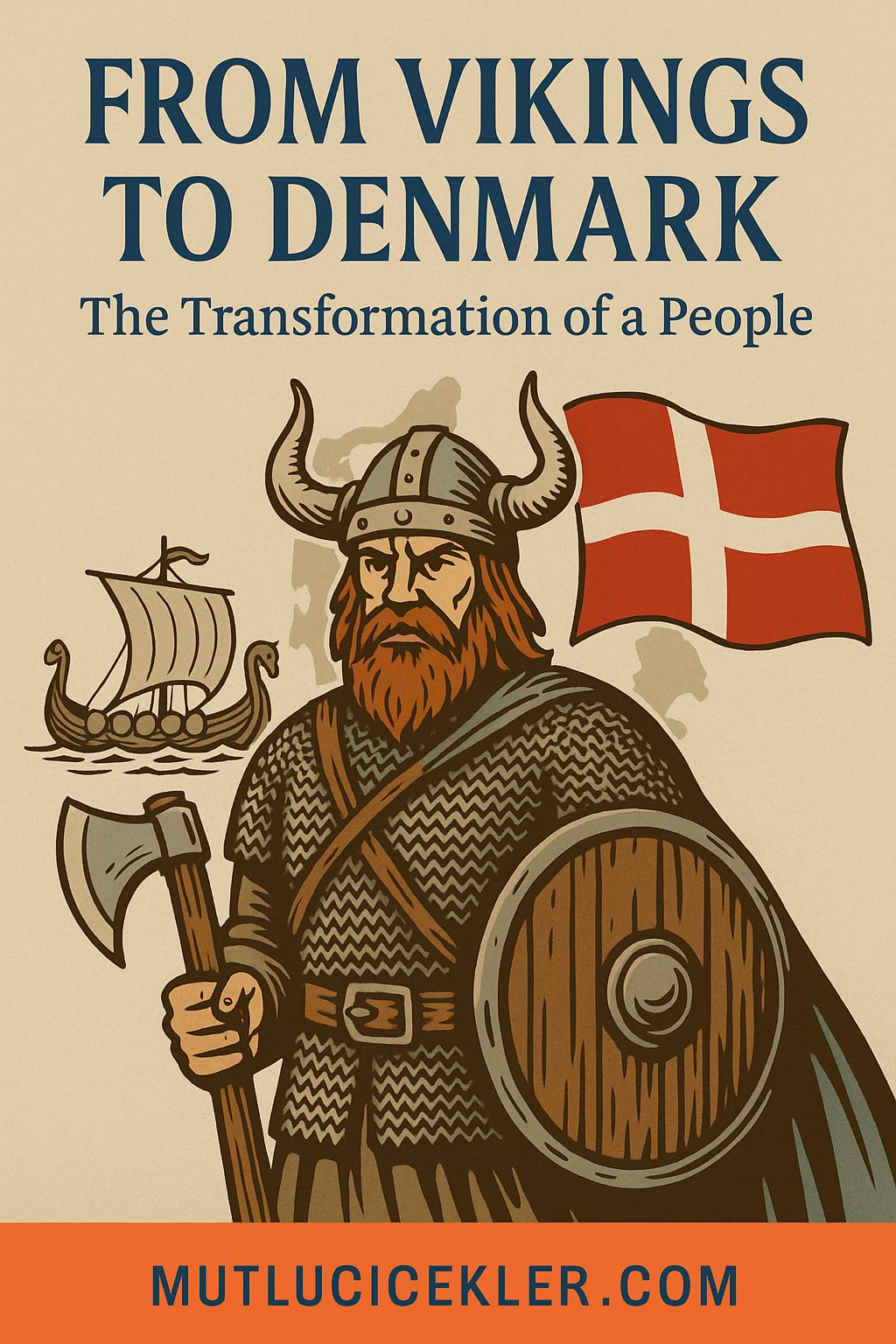
Introduction
Today, Denmark is known as one of the most peaceful, organized, and developed countries in Northern Europe. Yet the roots of this modern nation stretch back to a turbulent past shaped by fearless warriors and skilled seafarers: the Vikings.
Starting in the 8th century, the Vikings became the dominant force of Northern Europe. But contrary to the common stereotype of “barbaric raiders,” Viking society was far more complex—masters of shipbuilding, trade, exploration, and cultural exchange.
So how did these warrior tribes evolve into the foundation of today’s Danish Kingdom?
Here is the thousand-year journey from Vikings to the dawn of Denmark…
🛶 Who Were the Vikings?
The Vikings were Scandinavian peoples living in what is now Denmark, Norway, and Sweden.
✔️ Key features of Viking society:
- Highly advanced shipbuilders and navigators
- Warriors who raided European coasts
- Traders who built vast commercial networks
- Users of the runic alphabet and Norse mythology
- Farmers, craftsmen, merchants—not just fighters
They were a sophisticated culture shaped by harsh northern landscapes and strong community structures.
⚔️ Danish Vikings: Europe’s Fearsome Raiders
Among all Viking groups, the Danish Vikings were particularly known for their expeditions and raids along the coasts of England, France, and Germany.
Prominent Danish Viking figures:
- Ragnar Lodbrok (legendary)
- Gorm the Old – the first historical King of Denmark
- Harald Bluetooth – unified Denmark and introduced Christianity
- Cnut the Great – ruler of the North Sea Empire
🌍 The Path from Viking Clans to a Kingdom
1️⃣ Gorm the Old: The First King of Denmark
Around the mid-10th century, Gorm united several Viking tribes and became the first recognized ruler of the Danish Kingdom.
👉 This marked the shift from “Viking tribal confederations” to a centralized monarchy.
2️⃣ Harald Bluetooth: Unification and Christianity
Gorm’s son, Harald Bluetooth, transformed Denmark even further.
Harald Bluetooth’s achievements:
- United the tribes under one crown
- Expanded Danish authority into parts of Norway
- Introduced Christianity as an official religion
- Raised the famous Jelling Stones (UNESCO site)
This period was the beginning of Denmark’s transition from pagan Viking culture to a Christian medieval kingdom.
3️⃣ Cnut the Great: The Scandinavian Empire
In the 11th century, Danish King Cnut the Great created one of the most powerful empires of the era.
Kingdoms ruled by Cnut:
- England 🇬🇧
- Denmark 🇩🇰
- Norway 🇳🇴
This period is often considered the Golden Age of Denmark.
⚓ The End of the Viking Age: Rise of a Peaceful Denmark
By the late 11th century, Viking raids began to diminish due to major changes in Europe.
Reasons Viking raids declined:
- Spread of Christianity
- Stronger centralized governments
- Agriculture and trade becoming dominant
- Improved European defenses
- Changes in naval technology
The once-fearsome Viking warrior society gradually evolved into a structured medieval kingdom.
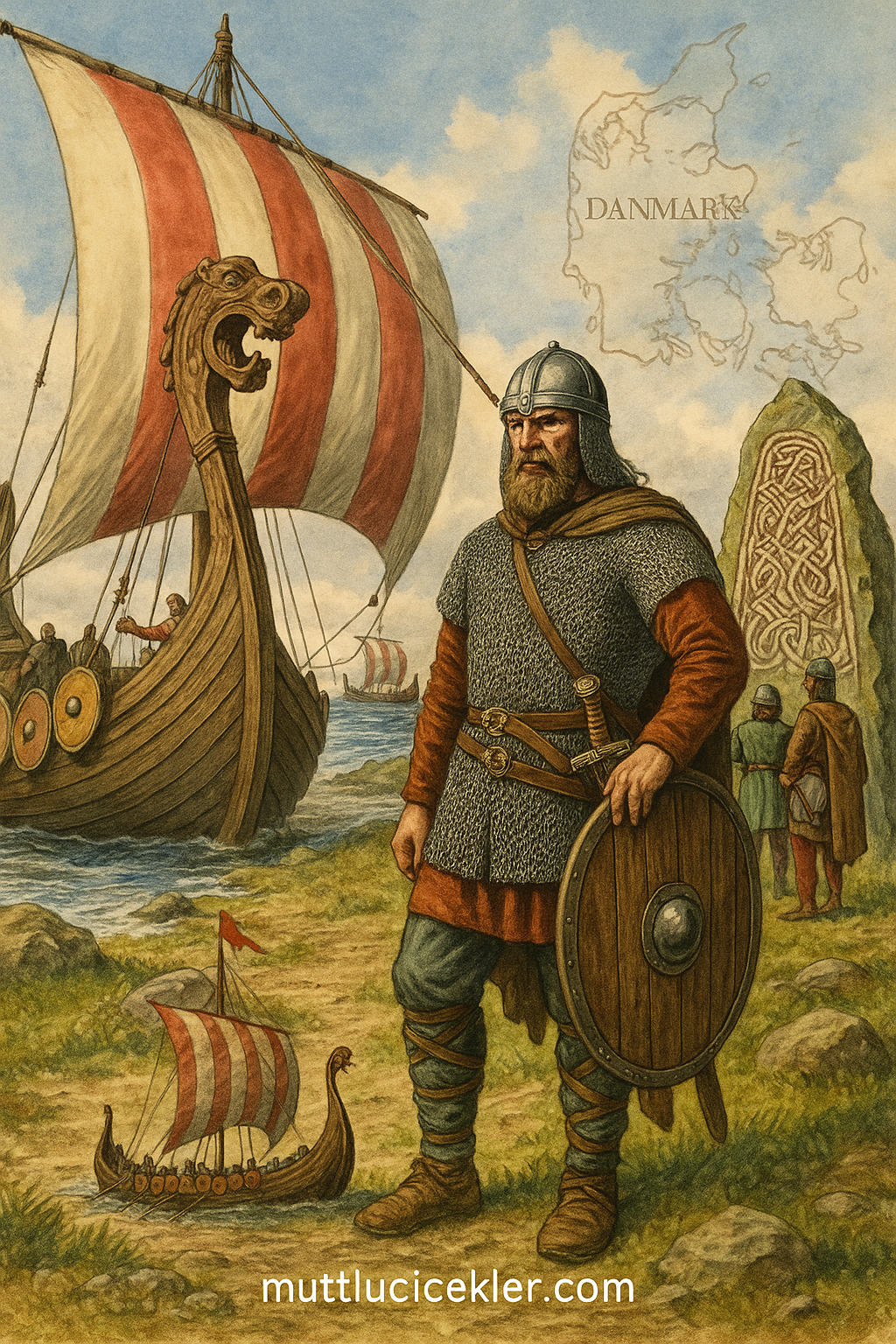
🇩🇰 Legacy: Viking Influence on Modern Denmark
Modern Denmark still carries the spirit of its Viking ancestors:
- Strong seafaring tradition
- Cultural pride in Viking heritage
- Viking museums, runestones, and archaeology
- Values such as courage, exploration, and craftsmanship
- The Danish monarchy, one of the oldest in the world
Danish identity remains deeply intertwined with Viking culture—even after a thousand years of transformation.
📌 FAQ
1. Were all Vikings from Denmark?
No. Vikings originated from Denmark, Norway, and Sweden.
2. When did Denmark become a kingdom?
In the 10th century under Gorm the Old.
3. What made Danish Vikings unique?
They conducted major raids and settlements in England and Western Europe.
4. Who brought Christianity to Denmark?
Harald Bluetooth.
5. Did Vikings disappear?
No. They gradually integrated into Christian kingdoms—modern Danes are their descendants.
🧠 Conclusion
The transformation from Viking clans to the Kingdom of Denmark represents one of the most remarkable cultural evolutions in European history. What began as a fierce, seafaring warrior society slowly became a centralized, Christian kingdom—and eventually one of the world’s most advanced modern nations.
Today Denmark reflects the Viking spirit through its values of exploration, resilience, and cultural pride.


Bir yanıt yazın