

Shining brightly in the night sky after the Moon, Venus has fascinated humanity for centuries. Often called Earth’s twin due to its similar size and structure, Venus hides a shocking reality beneath its beauty.
So the big question remains: Could there be life on Venus?
🌍 Why Is Venus Called “Earth’s Twin”?
Venus and Earth share several remarkable similarities:
- Nearly the same diameter and mass
- Both are rocky (terrestrial) planets
- Similar internal structure
- Located close to each other in the inner Solar System
However, when it comes to surface conditions, these similarities completely disappear.
🔥 Extreme Conditions That Challenge Life on Venus
Venus is one of the most hostile planets in the Solar System:
- 🌡️ Surface temperature: around 460°C (860°F)
- ☁️ Atmosphere: about 96% carbon dioxide
- 🌪️ Atmospheric pressure: nearly 90 times that of Earth
- ☔ Weather: clouds of sulfuric acid
Under these conditions, life as we know it cannot survive on the surface.
☁️ Life in the Clouds? A Scientific Surprise
In recent years, scientists have turned their attention to Venus’s cloud layers.
Why the excitement?
- Certain cloud altitudes have temperatures and pressures similar to Earth
- In 2020, researchers detected phosphine gas in Venus’s atmosphere
🧪 On Earth, phosphine is typically produced by biological processes.
This discovery raised a fascinating possibility:
👉 Could microbial life exist in Venus’s clouds?
🧬 What Kind of Life Could Exist on Venus?
If life does exist on Venus, it would likely be:
- Microscopic
- Extremely resilient (extremophiles)
- Adapted to acidic and harsh environments
This means no plants, animals, or human-like life forms, but possibly microbial organisms.
🚀 Past and Future Missions to Venus
Venus was neglected for years, but interest is rapidly returning:
- 🛰️ NASA – DAVINCI & VERITAS missions
- 🛰️ ESA – EnVision mission
These missions aim to study Venus’s atmosphere and geological history, searching for answers to a crucial question:
“Was Venus ever habitable?”
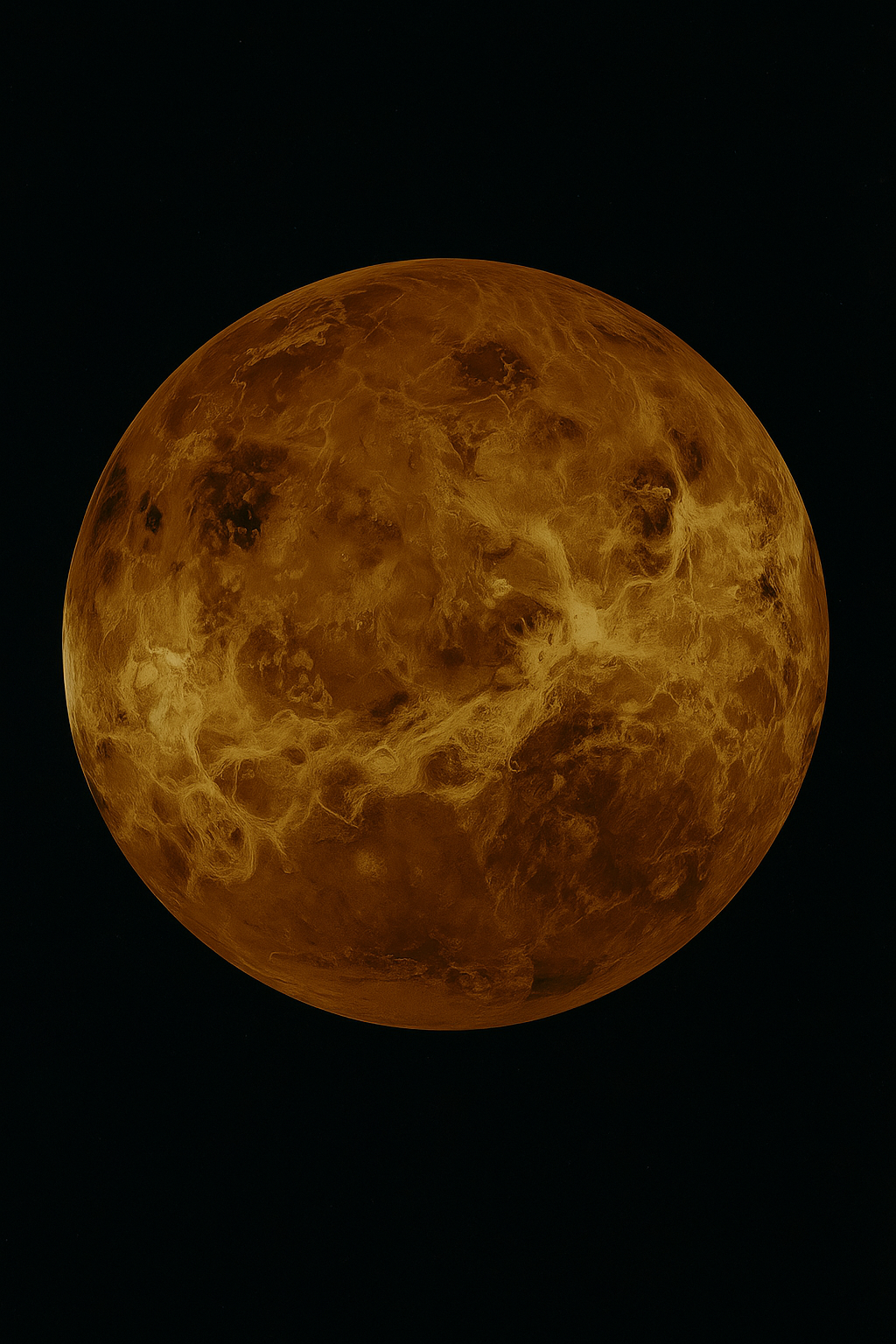
🌊 Did Venus Once Have Oceans?
Some climate models suggest that billions of years ago, Venus may have been:
- Cooler
- Rich in water
- Much more Earth-like
If true, Venus may have transformed from a potentially habitable world into a runaway greenhouse planet.
✨ Conclusion: What Venus Teaches Us
Venus is more than a mysterious planet—it is a powerful warning. Its extreme greenhouse effect shows how fragile planetary climates can be.
Maybe Venus doesn’t host life today…
But it reminds us how delicate the conditions for life truly are.
👉 For more science, space, and fascinating discoveries, follow us at:
mutlucicekler.com












Bir Cevap Yazın