

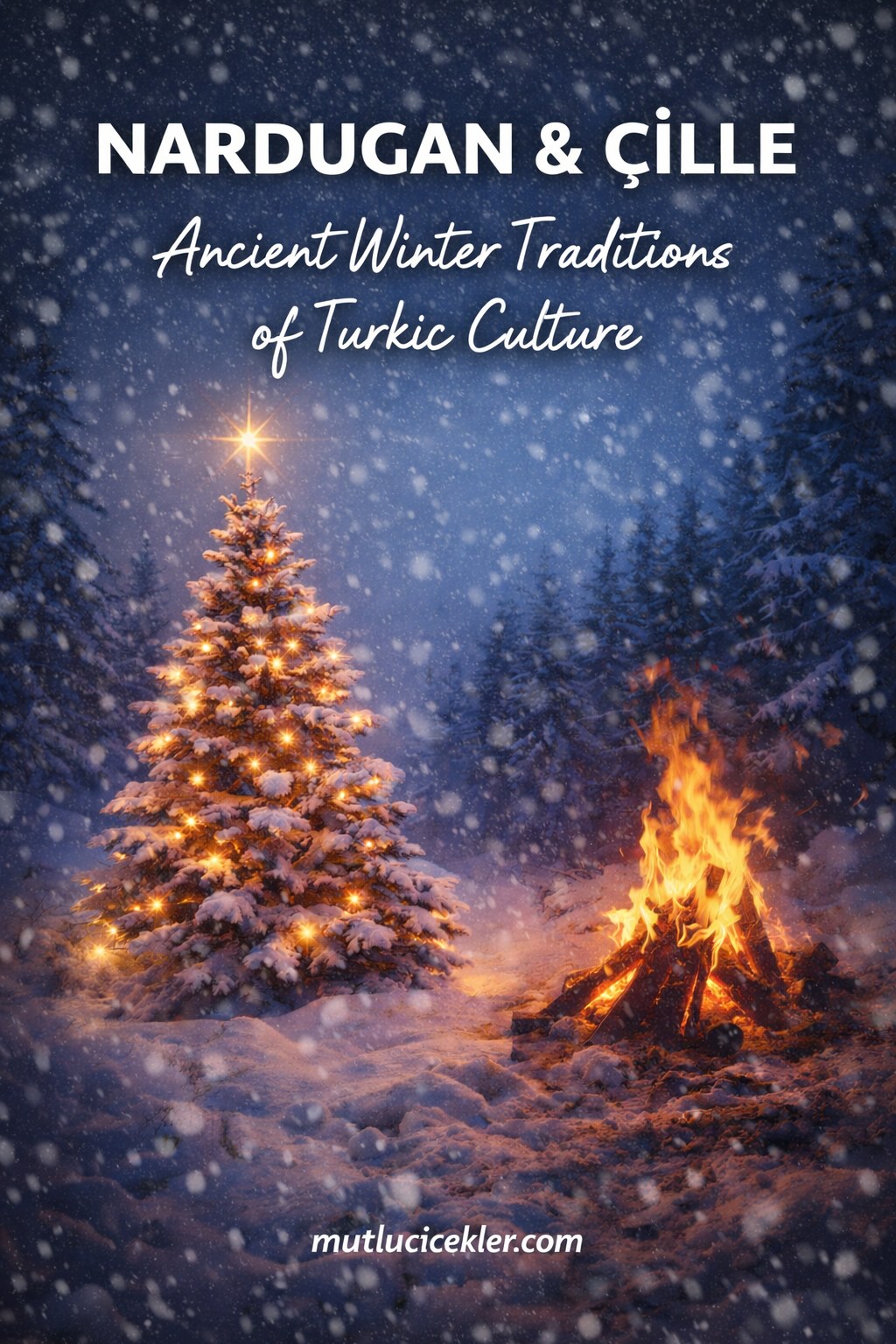
“From the darkest days to the rebirth of light…”
🌟 Introduction
Turkic culture is rich with ancient traditions shaped by a deep connection to nature. Among these are Nardugan, an old winter solstice celebration, and Çille, a folk term describing the coldest and harshest period of winter. Together, they reflect how people once understood nature’s cycles and found hope even in the darkest days.
🌲 What Is Nardugan?
Nardugan is an ancient festival celebrated by Turkic peoples around December 21–22, the winter solstice. The word comes from “Nar” meaning sun, and “dugan” meaning to be born — together, “the birth of the sun.”
On this day:
- ☀️ Nights begin to shorten and days grow longer.
- 🌱 The return of light and life is celebrated.
- 🌳 Evergreen trees were considered sacred and decorated.
- 🎁 People exchanged gifts and made wishes.
Some researchers believe that modern New Year and Christmas tree traditions may have roots in Nardugan.
🔥 The Meaning and Rituals of Nardugan
Nardugan symbolized:
- The victory of light over darkness,
- Gratitude to nature and the sky,
- Hope for a fertile and prosperous new year.
People gathered, lit fires, sang songs, shared food, and offered prayers for abundance and protection.
❄️ What Is Çille?
Çille refers to the coldest and toughest period of winter in Anatolian folk tradition. The word comes from Persian, meaning “forty”, representing a 40-day harsh winter phase.
📅 It is generally divided into:
- Great Çille: Late December to late January
- Small Çille: Late January to mid-February
This period is also known as “Zemheri”, when freezing temperatures dominate daily life.
🧣 Folk Beliefs About Çille
During Çille:
- ❄️ Severe cold and heavy snow are expected.
- 🧊 Water is believed to freeze deeply.
- 🌨️ Snow is seen as a sign of blessing and abundance.
A common saying goes:
“Winter does not end before Çille passes.”
Families would spend more time indoors, strengthening bonds and sharing warm meals.

🌟 The Connection Between Nardugan and Çille
Although one is a festival and the other a seasonal period:
- 🌲 Nardugan represents light, rebirth, and hope.
- ❄️ Çille represents hardship, patience, and endurance.
Together, they symbolize balance in life: darkness and light, cold and warmth, struggle and renewal.
🕊️ Conclusion
Nardugan and Çille are more than old calendar terms. They are reflections of an ancient worldview that respected nature and sought meaning in its cycles. Remembering these traditions today helps keep cultural roots alive and passes this heritage on to future generations.
🌲 The sun is reborn,
❄️ the cold will pass,
🌸 but hope always remains…
❓ FAQ – Frequently Asked Questions
When is Nardugan celebrated?
📅 Around December 21–22, during the winter solstice.
Is Nardugan the same as New Year?
🔎 Not exactly. It is an ancient Turkic festival celebrating the rebirth of the sun.
How long does Çille last?
❄️ Traditionally about 40 days.
Is Çille the same as Zemheri?
✅ Yes, both refer to the coldest period of winter.
👉 Discover the ancient roots of winter traditions with us!
💬 Share your thoughts in the comments,
❤️ Spread the word by sharing this post,
🌸 Don’t forget to follow mutlucicekler.com!


Bir yanıt yazın