
🌨️ Introduction
Turkic mythology and Central Asian folk beliefs are filled with powerful figures deeply connected to nature. One of the most fascinating among them is Ayaz Ata, the legendary spirit of frost and winter. Known as a symbol of cold, snow, and wisdom, Ayaz Ata still lives on today in cultural traditions and winter celebrations across the Turkic world.
❄️ The Origin and Meaning of Ayaz Ata
The name Ayaz Ata comes from two words:
- “Ayaz” meaning sharp frost or icy cold,
- “Ata” meaning father, elder, or respected ancestor.
Together, Ayaz Ata can be interpreted as “the wise father of frost.” He represents both the harshness and the balance of winter.
🧙♂️ Ayaz Ata in Mythology
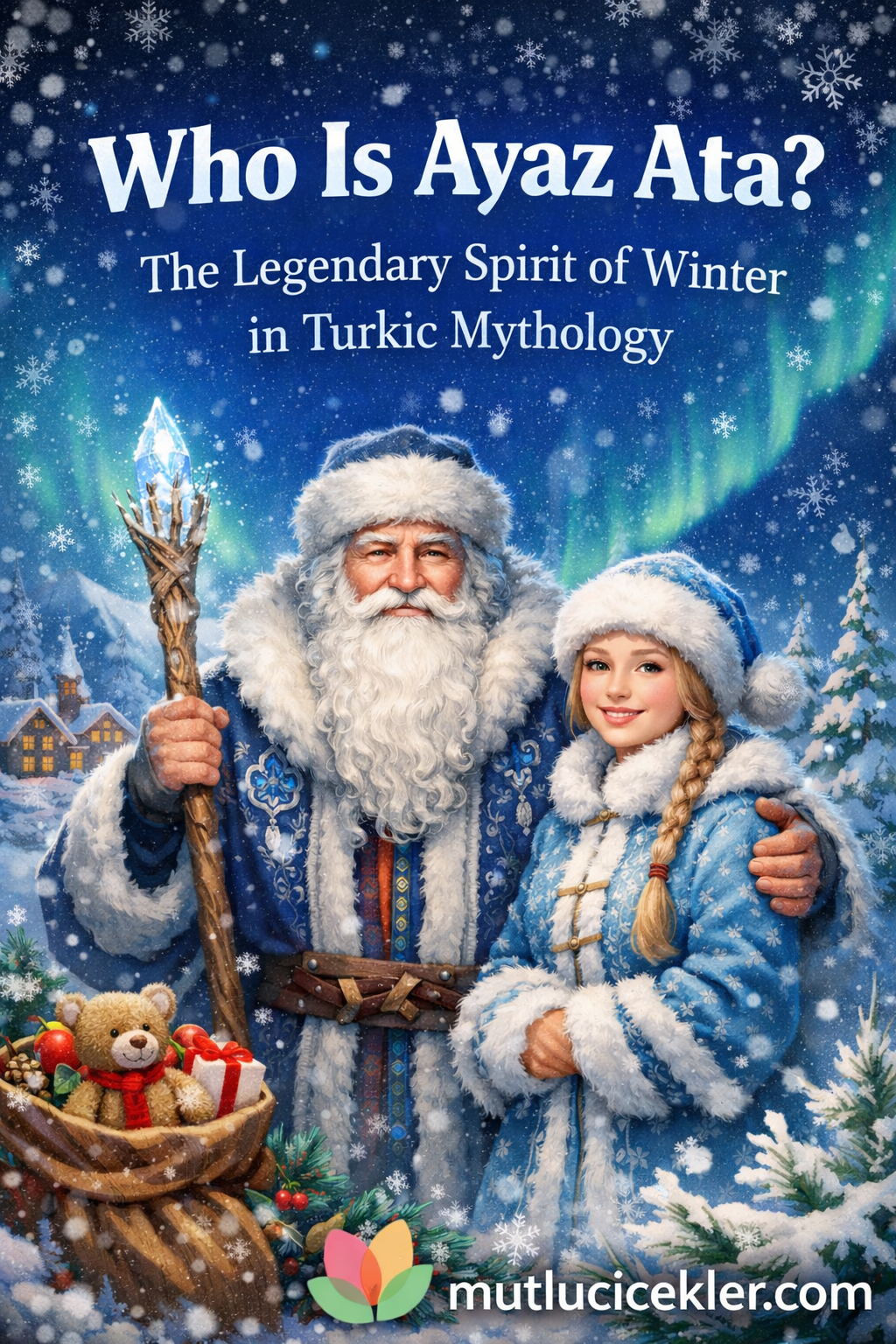
In legends, Ayaz Ata is portrayed as the master of winter who controls snow and freezing winds. He is usually described as:
- An old man with long white hair and beard 👴
- Wearing blue or white fur-trimmed clothes ❄️
- Carrying a magical staff or cane
Some stories say he tests people during winter—rewarding the kind and hardworking, while teaching lessons to the lazy through cold and hardship.
🎄 Ayaz Ata and New Year Traditions
In modern Central Asia, Ayaz Ata has become a figure similar to Santa Claus, especially in Kazakhstan, Kyrgyzstan, and nearby regions.
He is believed to:
- Visit children during New Year celebrations 🎁
- Bring gifts and good wishes
- Appear together with his granddaughter or helper, often called Kar Kız (Snow Girl)
Because of this, Ayaz Ata is sometimes called “the Turkic Santa Claus,” though his roots are much older and deeply mythological.
🌬️ Connection with Nature
Ayaz Ata is not only about cold—he represents the natural cycle of seasons.
He symbolizes:
- The purifying power of winter,
- The rest before spring,
- Nature’s balance and renewal.
Winter, through Ayaz Ata, is seen as a necessary and sacred phase of life.
🧿 Ayaz Ata in Folk Beliefs
Among Turkic peoples, harsh winter days are often explained by saying:
“Ayaz Ata has arrived.”
In some traditions:
- People pray for protection from extreme cold,
- Winter is believed to bring abundance for the coming year,
- Ayaz Ata is respected rather than feared.
📌 Ayaz Ata Today
Today, Ayaz Ata continues to live on through:
- Cultural festivals,
- Folk tales and children’s stories,
- New Year performances in Central Asia.
He stands as a shared symbol of Turkic heritage and winter mythology.
🌟 Conclusion
Ayaz Ata is one of the most remarkable figures of Turkic mythology, representing the spirit of winter, wisdom, and nature’s power. Though he may resemble Santa Claus in modern celebrations, his origins lie deep in ancient Turkic beliefs. Ayaz Ata reminds us of humanity’s timeless bond with nature and the changing seasons.
❓ FAQ – Frequently Asked Questions
Is Ayaz Ata the same as Santa Claus?
No. While they share similarities, Ayaz Ata comes from Turkic mythology and has different cultural roots.
Which countries know Ayaz Ata?
He is known mainly in Kazakhstan, Kyrgyzstan, Tatarstan, Bashkortostan, and other Turkic regions.
Who accompanies Ayaz Ata?
In many stories, he appears with Kar Kız (Snow Girl), his granddaughter or helper.
Is Ayaz Ata a negative figure?
No. Although he represents cold, he is seen as wise, fair, and protective.
👉 For more cultural stories and mythological legends, don’t forget to follow mutlucicekler.com 🌸




Bir Cevap Yazın