

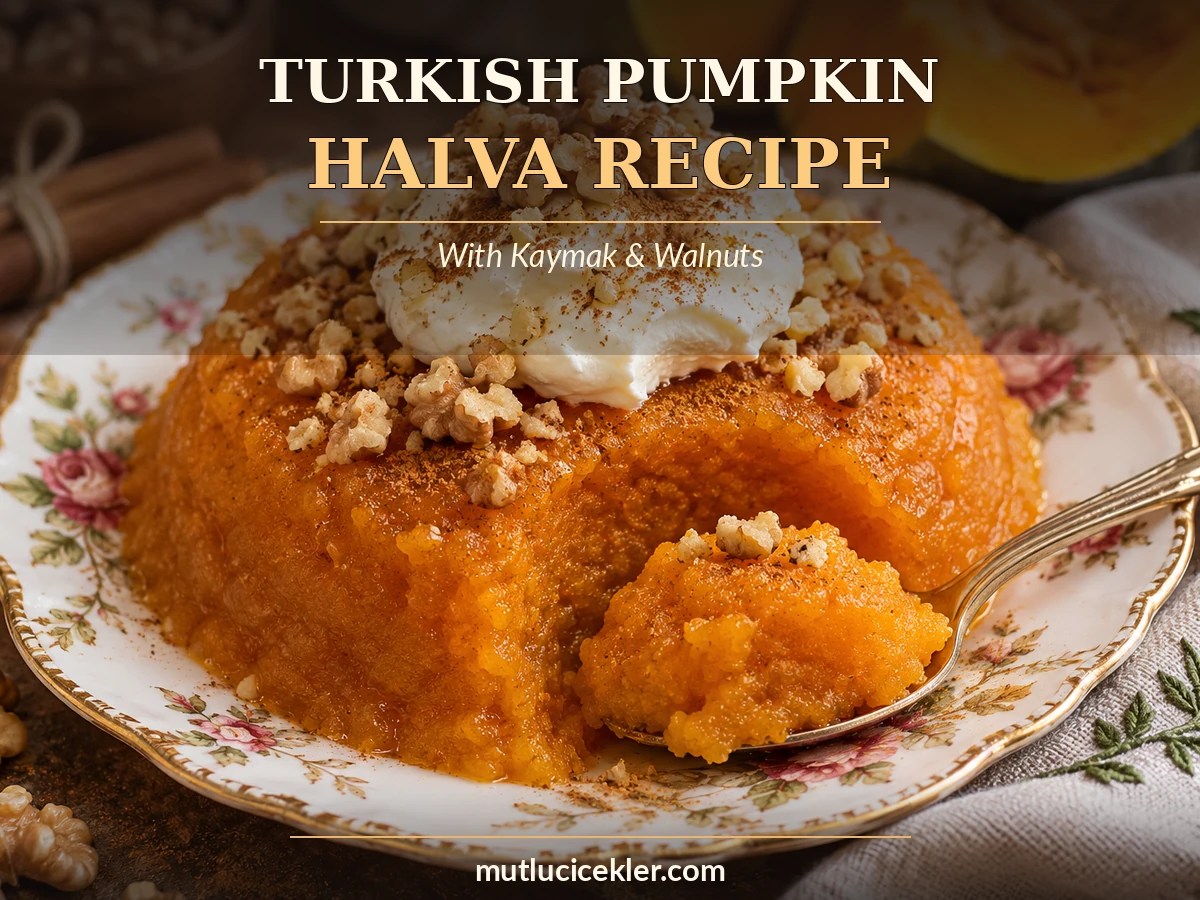
Turkish pumpkin halva with kaymak (Kaymaklı Kabak Helvası) is a rich spoon dessert made by cooking sweet pumpkin until tender, mashing it into a smooth purée, and thickening it with butter-toasted flour or semolina. A little clotted cream gives the finished halva a delicate, velvety finish. This recipe is for a soft, spoonable halva—not the syrup-glazed pumpkin slices commonly served as kabak tatlısı.
The key is moisture control: allow the pumpkin to soften, remove excess liquid if necessary, and stir the purée over gentle heat until it holds its shape. Below you will find the ingredients, detailed cooking method, variations, troubleshooting, serving ideas and safe storage advice.
What Is Turkish Pumpkin Halva?
In this version, cooked pumpkin is mashed and cooked again with a small amount of toasted flour or semolina, creating a thick, gently textured dessert. Kaymak (Turkish clotted cream) is folded in at the end or spooned on top. Regional pumpkin desserts vary in ingredients and preparation; this article explains the puréed, pan-thickened version shown in the cover image.
Unlike kabak tatlısı, which usually keeps the pieces of pumpkin intact and glossy with syrup, this halva is smooth enough to scoop. The final texture should be thick and soft, not watery and not stiff like bread dough.
Ingredients for Turkish Pumpkin Halva (Serves 4–6)
- 1 kg sweet pumpkin (kabocha, chestnut pumpkin or another firm, sweet variety), peeled and cubed
- 1½–2 cups granulated sugar, adjusted to the sweetness of the pumpkin and personal preference
- 3 tablespoons butter
- 2 tablespoons all-purpose flour or semolina (flour produces a smoother result; semolina is slightly grainier)
- 150–200 g kaymak (clotted cream), plus a little extra if desired for serving
- 1 teaspoon cinnamon, optional
- Chopped walnuts, optional, for garnish
Equipment: a heavy-bottomed saucepan, a separate frying pan, a sturdy spatula, and a potato masher or immersion blender. A blender is optional; the pumpkin only needs to be mashed smoothly.
How to Make Turkish Pumpkin Halva Step by Step
Step 1 — Cook the pumpkin with sugar
Peel and cube the pumpkin into pieces of similar size. Place it in a heavy-bottomed pot and sprinkle with the sugar. Cover and leave it for approximately 3–4 hours so the pumpkin releases some of its own liquid. If leaving it overnight, keep it refrigerated.
Cook over low to medium heat, stirring occasionally, until the pumpkin is completely tender. Start without adding extra water because the pumpkin releases moisture as it cooks; if the pan looks dry or starts to catch, add a small splash of water and lower the heat. Cooking time varies with the size and firmness of the pieces.
Step 2 — Make a smooth pumpkin purée
Mash the cooked pumpkin with a potato masher or blend briefly until smooth. If there is a large amount of watery liquid in the pan, simmer uncovered for a few minutes to reduce it. The purée should be thick enough to sit on a spoon without immediately running off.
Taste carefully once it has cooled slightly. Pumpkin sweetness varies; the finished dessert should taste pleasantly sweet rather than dominated by sugar.
Step 3 — Toast the flour or semolina in butter
Melt the butter in a separate pan over low to medium-low heat. Add the flour or semolina and stir continuously until evenly coated, fragrant and lightly golden. Do not allow it to burn: darkened flour can give the halva a bitter taste.
Slowly add the warm pumpkin purée to the butter mixture while stirring. The mixture may sputter, so add it in stages. Continue stirring gently until the flour or semolina is cooked through and the pumpkin mixture thickens.
Step 4 — Add the kaymak
Reduce the heat to its lowest setting. Fold in the kaymak briefly, until incorporated, then remove the pan from the heat. Avoid vigorous boiling after adding the cream because it can affect the smooth texture. For a more distinct cream topping, reserve a little kaymak and add it when serving.
Step 5 — Rest, plate and garnish
Leave the halva to rest for 5–10 minutes. It will firm slightly as it cools. Spoon it into a small serving bowl or shape it gently on a plate. Garnish with a spoonful of kaymak, chopped walnuts or a dusting of cinnamon if desired. Serve warm or just slightly cooled.
How to Tell When the Texture Is Right
- Too runny: Simmer the pumpkin purée a little longer to evaporate excess water, then stir continuously until it thickens.
- Too stiff: Stir in a small spoonful of warm water or a little additional cream until the halva becomes spoonable again.
- Floury taste: Toast the flour properly and allow enough time after combining it with the purée; it must cook through.
- Grainy result: Semolina gives some natural texture. Choose flour and mash the pumpkin more finely for a smoother version.
- Too sweet: Begin with the lower sugar quantity if your pumpkin is naturally sweet. The sugar cannot be removed after cooking.
Serving Suggestions and Variations
A warm serving with kaymak and walnuts gives this dessert a contrast of creamy, sweet and crunchy textures. Cinnamon is optional and works especially well if you want a warmer aroma. If using a particularly flavorful pumpkin, keep the toppings light so its taste remains noticeable.
For a slightly coarser, more traditional halva-like bite in this version, choose semolina instead of flour. For a smoother pudding-like finish, use flour and mash the pumpkin thoroughly. The pumpkin-to-liquid balance may change with the variety, so use the texture indicators rather than following time estimates blindly.
Storage and Allergen Notes
Because this dessert contains butter and kaymak, do not leave it out for long periods. Cool it promptly, transfer leftovers to a covered container and refrigerate within two hours. Enjoy within roughly three days for the best flavor and texture. Serve chilled or warm a portion gently; avoid boiling the cream-rich mixture.
The recipe contains dairy. All-purpose flour and semolina contain wheat and gluten, while the optional walnut topping contains tree nuts. Check any substitution carefully if preparing the dessert for someone with allergies.
Frequently Asked Questions
Is this the same as Turkish pumpkin dessert (kabak tatlısı)?
No. Kabak tatlısı commonly features pumpkin pieces cooked in sugar syrup. This recipe mashes the pumpkin and thickens it in a pan with butter-toasted flour or semolina to make a spoonable halva.
Can I make pumpkin halva without a blender?
Yes. Mash the cooked pumpkin with a fork, wooden spoon or potato masher until smooth. The pumpkin should be very tender before mashing.
Should I use flour or semolina?
Both work in this variation. Flour creates a smoother, softer texture, while semolina adds a delicate grain. Keep the amount as listed and adjust the final moisture based on the pumpkin.
Is kaymak essential?
Kaymak adds richness and is a defining feature of this version, but the cooked pumpkin base can also be served with a small spoonful of cream on top instead of folding it all into the pan.
Can I prepare it ahead of time?
Yes. Keep it refrigerated in a covered container. The texture firms as it chills; allow an individual serving to warm slightly or reheat it gently before serving.
Final Thoughts
A good pumpkin halva is about more than sweetness: the pumpkin should be tender, the flour or semolina gently toasted, and the finished dessert thick enough to hold a soft shape on the spoon. Finish with kaymak, walnuts or cinnamon according to taste.
More Turkish Desserts to Try
Try our orange semolina halva recipe or chocolate semolina dessert for more easy spoon desserts.
Bir yanıt yazın