

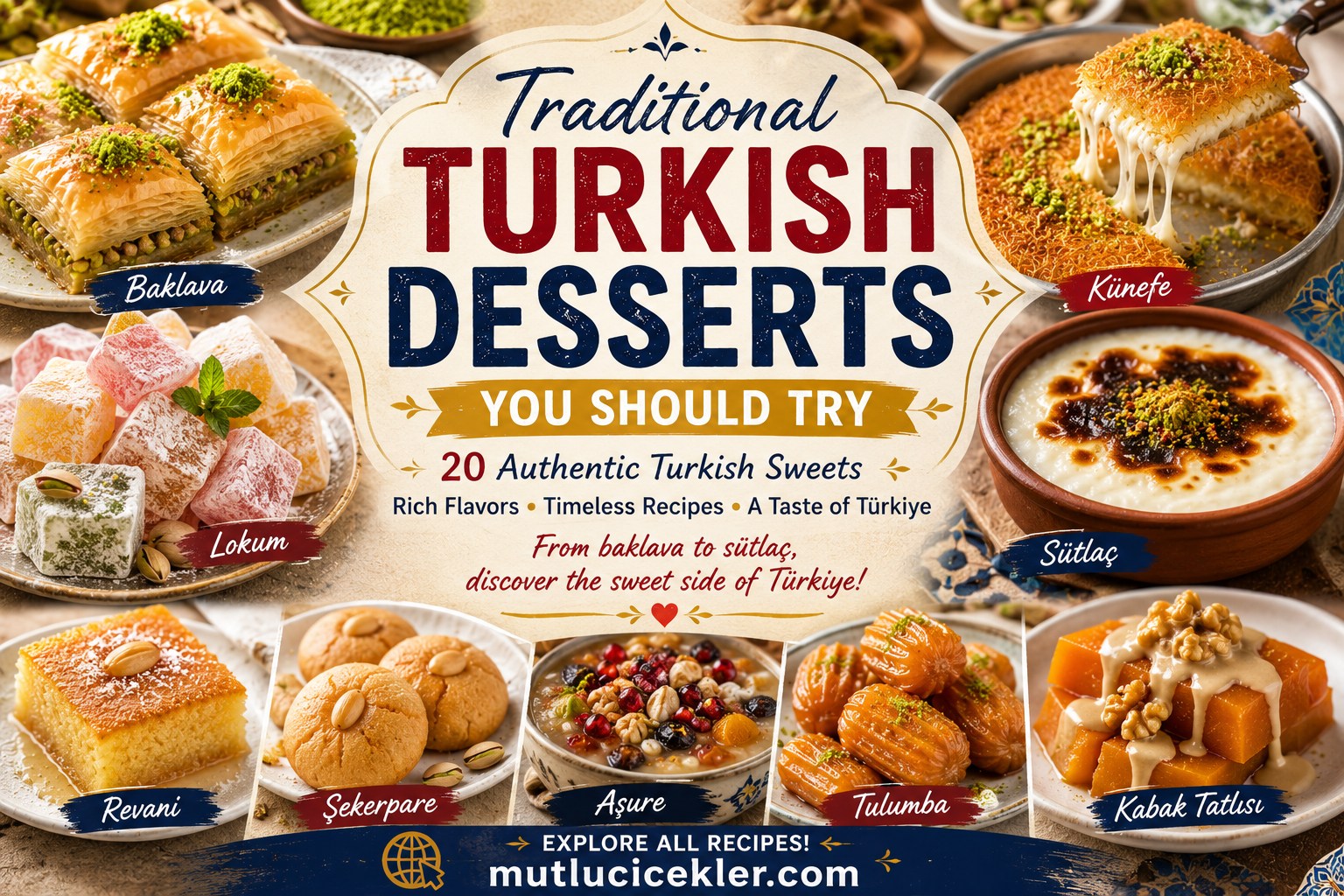
Turkish cuisine is famous around the world for its rich flavors, centuries-old culinary traditions, and incredible variety—and traditional Turkish desserts are an essential part of that story.
While baklava and Turkish delight may be the first sweets that come to mind, Türkiye’s dessert culture extends far beyond these internationally famous favorites. From syrup-soaked pastries and creamy milk puddings to cheese desserts, semolina cakes, and one of the world’s oldest known sweet dishes, there is an extraordinary range of flavors to discover.
Some Turkish desserts are intensely sweet and best enjoyed with strong Turkish coffee or tea. Others are surprisingly light, delicate, and refreshing.
If you’re visiting Türkiye, exploring Turkish cuisine, or simply looking for new desserts to try, here are some of the best traditional Turkish desserts worth discovering.
Turkish Desserts at a Glance
Turkish desserts can generally be grouped into several broad categories:
Syrup-based desserts: Baklava, şekerpare, revani and tulumba
Milk desserts: Sütlaç, kazandibi and tavuk göğsü
Pastry desserts: Baklava, şöbiyet and künefe
Fruit and vegetable desserts: Kabak tatlısı and ayva tatlısı
Confectionery: Lokum and helva
This variety is one of the reasons Turkish dessert culture is so fascinating.
Now, let’s discover the classics.
1. Baklava
No guide to traditional Turkish desserts would be complete without baklava.
This iconic dessert consists of many thin layers of pastry combined with nuts and finished with sweet syrup.
In Türkiye, pistachio baklava is particularly famous, especially varieties associated with Gaziantep, a city renowned for its pistachios and baklava-making tradition.
Walnut baklava is also extremely popular.
The best baklava balances several textures at once:
- Crisp pastry
- Rich nuts
- Buttery layers
- Sweet syrup
Despite its richness, expertly prepared baklava shouldn’t simply taste overwhelmingly sugary. The pastry, nuts, butter, and syrup should complement one another.
What does baklava taste like?
Expect a combination of buttery, nutty, crisp, and sweet flavors.
Best served with:
A small glass of Turkish tea or a cup of Turkish coffee.
2. Künefe
If you enjoy desserts that combine sweet and salty flavors, künefe deserves a place near the top of your list.
Künefe is traditionally prepared with thin strands of shredded pastry known as kadayıf and a special unsalted cheese.
The dessert is cooked until crisp and golden, soaked with syrup, and commonly topped with crushed pistachios.
The magic happens when it is served hot.
Cut into freshly prepared künefe and you’ll find warm, stretchy melted cheese beneath the crispy pastry.
What does künefe taste like?
Crispy, buttery, sweet, and slightly savory.
Best eaten:
Immediately after cooking while the cheese is still hot.
3. Turkish Delight – Lokum
Known internationally as Turkish delight, lokum has been associated with Turkish confectionery for centuries.
Traditional lokum has a soft, chewy texture and comes in numerous flavors and varieties.
Popular versions include:
- Rose
- Lemon
- Mint
- Pistachio
- Hazelnut
- Pomegranate
- Walnut
Some modern varieties are coated with coconut or filled generously with nuts.
Lokum is commonly served alongside Turkish coffee and is also a popular gift to bring home from Türkiye.
What does Turkish delight taste like?
That depends heavily on the variety. Classic versions are sweet and aromatic, while nut-filled varieties offer more texture and richness.
4. Sütlaç – Turkish Rice Pudding
For something lighter than syrup-soaked pastries, try sütlaç.
Turkish rice pudding is traditionally made using milk, rice, and sugar.
It has a creamy texture and relatively simple flavor.
One particularly popular variation is fırın sütlaç, or baked rice pudding.
The pudding is placed into small oven-safe bowls and baked until the surface develops characteristic dark caramelized spots.
Unlike some Western rice puddings, Turkish sütlaç is generally relatively delicate.
What does sütlaç taste like?
Creamy, milky, comforting, and mildly sweet.
Best for:
Anyone who prefers desserts that aren’t excessively rich.
5. Kazandibi
Kazandibi is one of the most distinctive traditional Turkish milk desserts.
Its name roughly refers to the “bottom of the cauldron” or pot, which hints at the dessert’s defining feature.
The bottom layer is deliberately caramelized, creating darker roasted flavors that contrast beautifully with the creamy pudding.
Kazandibi is generally served in slices or rolled portions.
What does kazandibi taste like?
Creamy and milky with a distinctive caramelized, lightly toasted flavor.
If you like crème brûlée-style caramel notes, kazandibi is definitely worth trying.
6. Tavuk Göğsü
This might be the most surprising dessert on the list.
Tavuk göğsü literally means “chicken breast.”
And traditionally, that’s exactly what the dessert contains.
Finely shredded chicken breast is incorporated into a sweet milk pudding in such a way that the finished dessert doesn’t taste like a savory chicken dish.
Instead, the chicken contributes to its characteristic texture.
The dessert is often associated with Ottoman culinary tradition.
What does tavuk göğsü taste like?
Mild, creamy, slightly sweet, and much less unusual than its ingredients might suggest.
It’s one of those Turkish foods you may want to try before deciding whether the concept sounds appealing!
7. Revani
Revani is a classic semolina cake soaked in syrup.
The cake itself is made using semolina, giving it a distinctive texture that absorbs syrup beautifully without necessarily becoming completely mushy.
Depending on the recipe, lemon or orange may be used to add freshness.
Revani is commonly cut into squares or diamond-shaped pieces before serving.
What does revani taste like?
Soft, moist, sweet, and slightly grainy from the semolina.
Citrus notes can help balance the syrup.
8. Şekerpare
Şekerpare is another beloved syrup-based Turkish dessert.
Small, tender cookies or pastries are baked until golden and then soaked in sweet syrup.
The name is often interpreted along the lines of “a piece of sweetness.”
They may be decorated with hazelnuts, almonds, or other nuts before baking.
As the warm pastries absorb the syrup, their interior becomes wonderfully soft while retaining some structure.
What does şekerpare taste like?
Rich, buttery, soft, and very sweet.
Turkish tea is an excellent companion because its slight bitterness balances the syrup.
9. Tulumba Tatlısı
If you’ve ever encountered churros, the appearance of tulumba might seem somewhat familiar.
Pieces of ridged dough are fried until crisp and then soaked in cold syrup.
The result is a dessert with a crisp exterior and a sweet, syrupy interior.
Tulumba is commonly found in Turkish dessert shops and is also associated with street-food culture.
What does tulumba taste like?
Crunchy on the outside, soft inside, and intensely sweet.
This is definitely one for syrup-dessert lovers.
10. Lokma
Lokma consists of small pieces of fried dough soaked or coated in syrup.
The name comes from a word meaning something like a bite or morsel.
Fresh lokma can be incredibly addictive: golden and crisp outside while remaining soft and airy inside.
Depending on where and how they’re served, they may be topped with cinnamon or other additions.
Lokma also has important cultural associations and may be distributed to groups of people on particular occasions.
What does lokma taste like?
Warm, light, fried, crisp, and syrupy.
For the best experience, eat it freshly prepared.
11. Helva
Helva is an important part of Turkish food culture, but the word describes more than one type of sweet.
Two particularly well-known versions are:
Tahin Helvası
Made primarily with sesame paste (tahini) and sugar.
It has a crumbly, dense texture and strong sesame flavor.
Variations may contain:
- Pistachios
- Cocoa
- Vanilla
- Nuts
İrmik Helvası
Semolina helva is prepared by roasting semolina with butter or oil and combining it with a sweet liquid.
Pine nuts are sometimes added.
It is generally served warm and has a comforting toasted flavor.
What does helva taste like?
Tahin helva is nutty and dense, while semolina helva is warm, buttery, toasted, and aromatic.
12. Aşure – Noah’s Pudding
Aşure is unlike almost any other dessert on this list.
Also known internationally as Noah’s pudding, it is made with a remarkable mixture of grains, legumes, dried fruits, nuts, and other ingredients.
Recipes vary considerably between households.
Ingredients can include:
- Wheat
- Chickpeas
- Beans
- Raisins
- Dried apricots
- Dried figs
- Walnuts
- Hazelnuts
- Pomegranate seeds
- Cinnamon
Aşure is especially notable because of its cultural tradition of sharing.
Large batches may be prepared and distributed to neighbors, relatives, and friends.
What does aşure taste like?
Sweet, fruity, nutty, and highly textured.
Every spoonful can contain a slightly different combination of ingredients.
13. Kabak Tatlısı – Turkish Pumpkin Dessert
Pumpkin might make you think of pie, but Turkish cuisine takes a very different approach.
Kabak tatlısı is traditionally prepared by slowly cooking pumpkin with sugar until the pieces become tender and glossy.
It is often served with:
- Walnuts
- Tahini
- Kaymak
The combination of sweet pumpkin, rich tahini, and crunchy walnuts is particularly delicious.
What does kabak tatlısı taste like?
Naturally sweet, soft, earthy, and rich when served with tahini or kaymak.
14. Ayva Tatlısı – Turkish Quince Dessert
Ayva tatlısı transforms quince into an elegant traditional dessert.
Quince halves are slowly cooked with sugar until tender.
During cooking, the fruit can develop a beautiful pink-to-red color.
The finished quince is commonly served with kaymak, a rich clotted dairy product, and sometimes sprinkled with pistachios or walnuts.
What does ayva tatlısı taste like?
Fruity, fragrant, delicately sweet, and slightly tart.
The richness of kaymak creates a wonderful contrast.
15. İrmik Helvası – Turkish Semolina Halva
Although helva has already appeared on our list, irmik helvası deserves special attention because it is so different from tahini-based helva.
Semolina is slowly toasted in butter or oil until aromatic and golden before being combined with milk, water, or syrup.
Pine nuts are a classic addition in many recipes.
The key is patiently roasting the semolina.
This creates the deep, nutty aroma that defines good irmik helvası.
What does it taste like?
Buttery, toasted, warm, nutty, and comforting.
16. Güllaç
Güllaç is one of Türkiye’s most distinctive seasonal desserts and is especially associated with Ramadan.
Very thin starch-based sheets are softened with sweetened milk and layered with ingredients such as walnuts.
The dessert is often decorated with:
- Pomegranate seeds
- Pistachios
- Walnuts
- Rose water, depending on the recipe
Compared with baklava or tulumba, güllaç feels considerably lighter.
What does güllaç taste like?
Soft, milky, delicate, lightly sweet, and refreshing.
17. Şöbiyet
Baklava lovers should also discover şöbiyet.
This rich pastry uses thin layers of dough and typically combines nuts with a creamy filling.
Like baklava, it is baked until golden and finished with syrup.
The creamy center gives şöbiyet a different texture from standard baklava.
What does şöbiyet taste like?
Buttery, nutty, creamy, crisp, and sweet.
It’s particularly appealing if you want something similar to baklava but even richer.
18. Ekmek Kadayıfı
Ekmek kadayıfı is a traditional syrup-soaked Turkish dessert often served with a generous portion of kaymak.
The bread-like base absorbs syrup, creating an extremely soft and rich texture.
Kaymak is particularly important here because its creamy richness balances the sweetness of the syrup.
What does ekmek kadayıfı taste like?
Very sweet, soft, syrupy, and creamy when served with kaymak.
19. Kadayıf
Kadayıf is made using extremely fine strands of pastry.
The strands can be layered with nuts, baked until golden, and finished with syrup.
Walnuts and pistachios are both common depending on the recipe and region.
The thin strands create an especially crisp texture.
What does kadayıf taste like?
Crispy, nutty, buttery, and syrupy.
20. Dondurma – Turkish Ice Cream
Turkish ice cream, known as dondurma, is famous for its unusual texture.
Traditional Maraş-style ice cream is associated with ingredients such as salep, which contributes to its characteristic elasticity and resistance to melting.
This gives the ice cream a dense, stretchy consistency quite different from typical ice cream.
In tourist areas, dondurma vendors are also famous for playfully teasing customers with long-handled serving tools before finally handing over the cone.
What does Turkish dondurma taste like?
Creamy and rich with an unusually dense, chewy texture.
Which Turkish Dessert Should You Try First?
If you’re new to Turkish desserts, your best choice depends on what you normally enjoy.
For pastry lovers: Baklava
For cheese lovers: Künefe
For creamy desserts: Sütlaç
For something unusual: Tavuk göğsü
For fruity desserts: Ayva tatlısı
For lighter desserts: Güllaç
For fried sweets: Lokma or tulumba
For sesame lovers: Tahin helvası
For cultural tradition: Aşure
If you only have time to try three, start with baklava, künefe, and sütlaç. Together, they showcase three very different sides of Turkish dessert culture.
Turkish Desserts by Type
Syrup-Soaked Desserts
Turkish cuisine has a particularly rich tradition of syrup desserts.
Examples include:
- Baklava
- Şekerpare
- Revani
- Tulumba
- Lokma
- Kadayıf
- Şöbiyet
- Ekmek kadayıfı
These desserts pair especially well with unsweetened Turkish tea or coffee.
Milk-Based Desserts
For a lighter option, look for:
- Sütlaç
- Kazandibi
- Tavuk göğsü
- Güllaç
Milk desserts generally have more delicate sweetness than traditional syrup pastries.
Fruit and Vegetable Desserts
Türkiye also has a fascinating tradition of transforming fruit and vegetables into elegant desserts.
Try:
- Kabak tatlısı
- Ayva tatlısı
They’re particularly delicious when paired with tahini, walnuts, pistachios, or kaymak.
What Do Turkish People Drink with Dessert?
Turkish Coffee
Strong, aromatic Turkish coffee provides an excellent contrast to rich desserts such as baklava and lokum.
A small piece of Turkish delight is frequently served alongside the coffee.
Turkish Tea
Turkish black tea is another excellent choice, particularly with syrup-heavy desserts.
Because tea is typically served without milk, its slightly bitter character balances sweetness beautifully.
Water
A glass of water is traditionally common alongside Turkish coffee and can also be welcome after particularly rich desserts.
Are All Turkish Desserts Extremely Sweet?
No.
This is one of the biggest misconceptions about Turkish sweets.
Baklava, tulumba, and şekerpare can certainly be very sweet because they’re soaked in syrup.
But desserts such as sütlaç, kazandibi, güllaç, and tavuk göğsü generally offer a milder sweetness.
Fruit-based desserts can also feel lighter depending on how they’re prepared.
So even if you don’t usually enjoy very sweet food, there are still plenty of Turkish desserts worth exploring.
Regional Turkish Desserts
Türkiye’s regional diversity plays an enormous role in its cuisine.
Different areas are particularly associated with certain sweets.
Gaziantep
Famous for pistachios and exceptional baklava.
Hatay
Well known for künefe and its cheese-based dessert tradition.
Kahramanmaraş
Famous for distinctive Maraş dondurması.
Afyonkarahisar
Known for kaymak, which accompanies several traditional desserts.
Exploring regional desserts is one of the best ways to understand how varied Turkish cuisine really is.
Turkish Dessert Culture
Dessert in Türkiye isn’t simply something eaten after dinner.
Sweets can be connected with:
- Religious holidays
- Family gatherings
- Weddings
- Celebrations
- Hospitality
- Visiting guests
- Neighborhood traditions
- Seasonal occasions
Baklava is strongly associated with celebrations and special occasions.
Güllaç is particularly connected with Ramadan.
Aşure has a tradition centered on preparation and sharing.
Lokum is closely associated with hospitality and Turkish coffee.
These traditions give Turkish desserts meaning beyond their ingredients.
Frequently Asked Questions About Turkish Desserts
What is the most famous Turkish dessert?
Baklava is probably the most internationally recognized Turkish dessert. Turkish delight, künefe, and sütlaç are also widely known.
What is Turkish delight called in Türkiye?
Turkish delight is called lokum in Turkish.
What is the best Turkish dessert to try?
Baklava is an excellent starting point, but künefe is ideal for anyone who enjoys cheese desserts, while sütlaç is perfect if you prefer something creamy and less intensely sweet.
What is the Turkish dessert with cheese?
Künefe is one of the best-known Turkish desserts containing cheese. It combines shredded pastry, unsalted cheese, syrup, and commonly pistachios.
What is Turkish rice pudding called?
Turkish rice pudding is called sütlaç. Baked rice pudding is known as fırın sütlaç.
What Turkish desserts aren’t too sweet?
Sütlaç, kazandibi, tavuk göğsü, and güllaç are generally good choices for people who prefer milder desserts.
What dessert should I eat with Turkish coffee?
Lokum and baklava are both excellent choices. The bitterness and intensity of Turkish coffee balance their sweetness.
Are there vegetarian Turkish desserts?
Yes. Many traditional Turkish desserts are made without meat. However, traditional tavuk göğsü is a notable exception because authentic versions can contain chicken.
Final Thoughts: Discover the Sweet Side of Türkiye
From the crisp layers of baklava and stretchy cheese of künefe to creamy sütlaç, refreshing güllaç, colorful aşure, and comforting irmik helvası, traditional Turkish desserts offer an extraordinary variety of flavors and textures.
And that’s precisely why Turkish dessert culture shouldn’t be reduced to baklava alone.
Each region, season, family, and celebration can introduce a different sweet tradition.
If you’re exploring Turkish cuisine for the first time, begin with a few classics—but don’t stop there.
Try something unfamiliar, order the dessert you can’t pronounce yet, enjoy it with a glass of Turkish tea or coffee, and discover one of the sweetest sides of Türkiye.
Bir yanıt yazın