
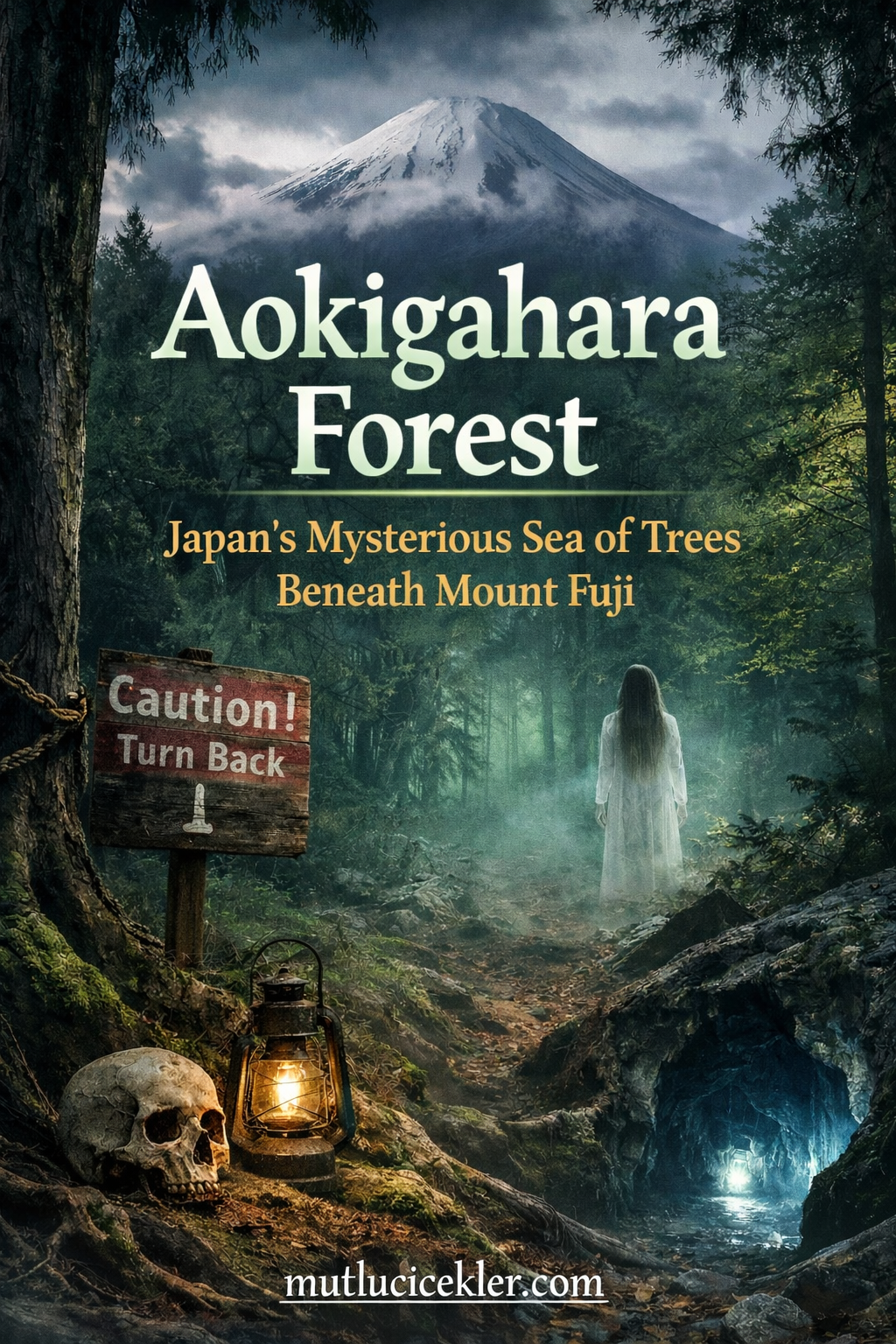
Located at the northwestern base of Mount Fuji, Aokigahara Forest—also known as the Sea of Trees—is one of the most mysterious and fascinating natural places in Japan. While often surrounded by dark legends, Aokigahara is far more than its reputation. It is a unique ecosystem shaped by volcanic activity, ancient myths, and an eerie natural silence unlike anywhere else in the world.
In this article, we explore the true nature of Aokigahara Forest, its geological origins, cultural background, myths, and why it continues to captivate travelers and researchers alike.
For a broader look at Japan’s fascinating landscapes, people, and traditions, check out this detailed article: 20 Interesting Facts About Japan 🔗
🌋 Where Is Aokigahara Forest and How Was It Formed?
Aokigahara Forest is located in Yamanashi Prefecture, stretching across approximately 35 square kilometers at the foot of Mount Fuji. The forest was formed after a major volcanic eruption in 864 AD, when lava flows spread across the area and later cooled, creating a porous volcanic foundation.
Because of this volcanic origin:
- The ground is uneven and rocky
- Tree roots grow horizontally rather than deep
- Numerous caves and underground lava tubes exist
This geological structure makes Aokigahara one of the most unusual forests on Earth.
🌲 An Unnatural Silence: Why the Forest Feels So Quiet
One of the most striking features of Aokigahara Forest is its intense silence. Visitors often describe the forest as unnervingly quiet, even during the day.
This happens because:
- Dense vegetation blocks wind and sound
- Volcanic rock absorbs noise instead of reflecting it
- Wildlife sounds are muffled
As a result, even footsteps feel muted, creating an atmosphere of isolation and deep introspection.
🧭 Why Is It Easy to Get Lost in Aokigahara?
Aokigahara Forest is known for disorienting visitors, especially those who stray from marked trails.
Main reasons include:
- Magnetic lava rock that can interfere with compasses
- Thick trees that block visual landmarks
- Nearly identical scenery in all directions
For this reason, authorities strongly advise visitors to:
- Stay on designated paths
- Avoid exploring alone
- Follow warning signs carefully

👻 Aokigahara in Japanese Mythology and Folklore
In Japanese folklore, Aokigahara is often associated with yūrei, or wandering spirits.
According to legends:
- Spirits of the lost are said to roam the forest
- Ancient tales speak of abandoned souls from times of famine
- The forest is believed to hold lingering emotional energy
These stories, passed down through generations, have shaped Aokigahara’s haunting reputation.
⚠️ The Truth Behind the “Suicide Forest” Label
International media often refers to Aokigahara as the “Suicide Forest,” but this label oversimplifies a sensitive issue.
In reality:
- Japan actively works to prevent tragedies
- Signs encourage visitors to seek help and choose life
- Volunteers and patrols regularly monitor the area
The focus is not on fear, but on awareness, compassion, and mental health support.
🌿 Aokigahara Forest Today: Nature, Respect, and Exploration
Today, Aokigahara is also known for:
- Peaceful hiking trails
- Famous lava caves like Ice Cave and Wind Cave
- Educational eco-tourism
Visitors are encouraged to explore responsibly, respecting both nature and the emotional weight of the place.
🌸 Final Thoughts: A Forest That Demands Understanding, Not Fear
Aokigahara Forest is not just a place of dark legends—it is a powerful reminder of nature’s force, silence, and humanity’s emotional depth. Approaching it with knowledge and respect reveals a deeply moving and unforgettable experience.
📌 Follow Us
For more fascinating destinations, mysterious places, and cultural insights from around the world, follow mutlucicekler.com 🌍✨




Bir Cevap Yazın