
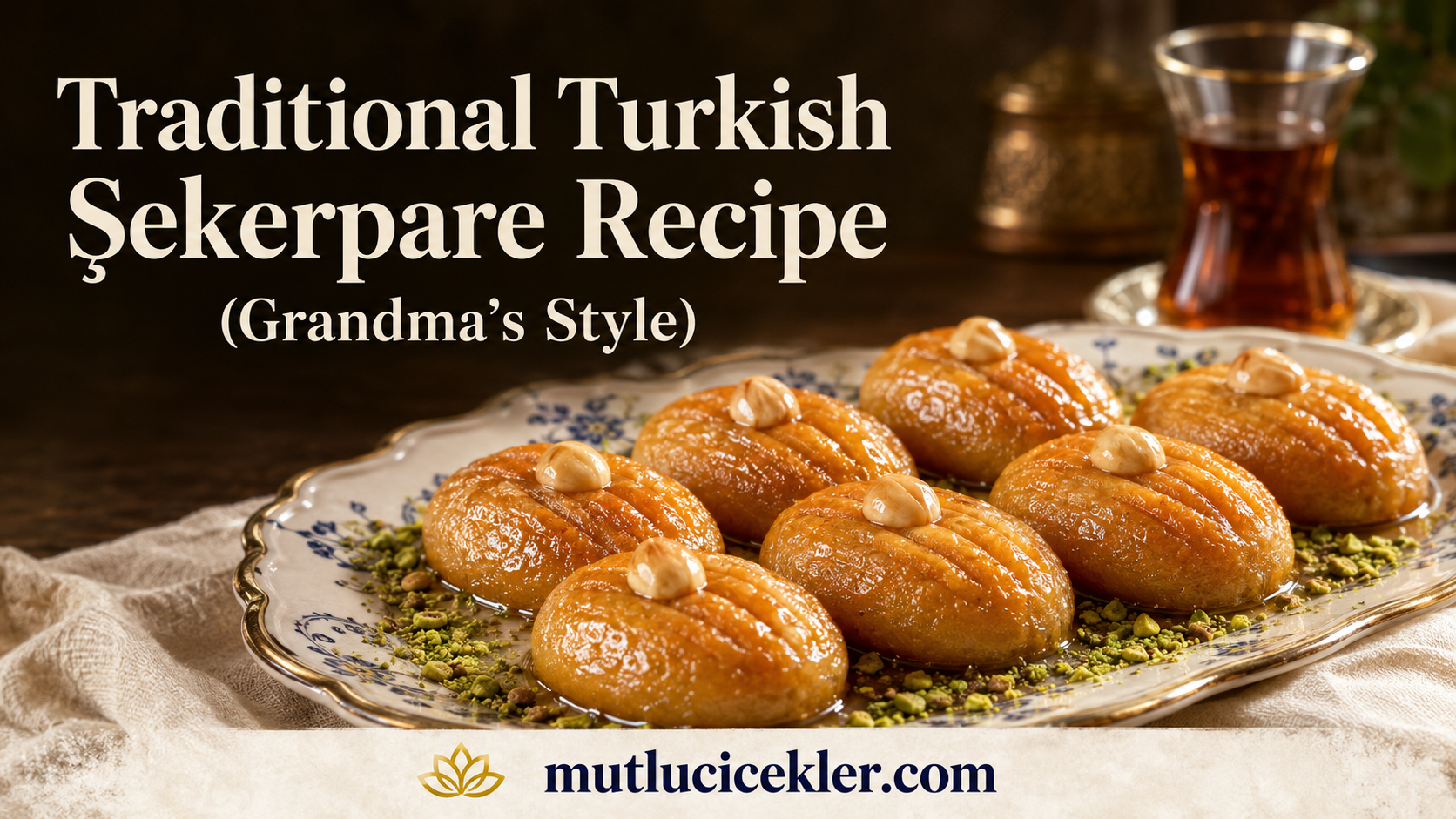
Şekerpare is one of the most beloved traditional Turkish desserts. These tender semolina cookies are baked until golden and then soaked in a fragrant lemon syrup. The result is a soft, moist and buttery dessert that melts in your mouth with every bite.
This easy Turkish şekerpare recipe uses simple pantry ingredients and includes all the tips you need to achieve the right texture. It is perfect for festive tables, family gatherings, afternoon tea or whenever you crave an authentic Turkish sweet.
What Is Şekerpare?
Şekerpare is a traditional Turkish syrup-soaked dessert made with flour, semolina, butter and powdered sugar. Small pieces of dough are usually shaped into ovals or rounds, topped with hazelnuts or almonds and baked until golden brown.
Warm syrup is poured over the freshly baked cookies, allowing them to absorb the sweetness while retaining their shape. Properly prepared şekerpare should be tender and moist without becoming mushy.
The name “şekerpare” can be translated as “a piece of sweetness,” which perfectly describes this classic dessert.
Recipe Overview
- Preparation time: 25 minutes
- Cooking time: 25–30 minutes
- Resting time: At least 2 hours
- Servings: Approximately 18–22 pieces
- Cuisine: Turkish
- Course: Dessert
Ingredients for Turkish Şekerpare
For the Syrup
- 2½ cups granulated sugar
- 3 cups water
- 1 teaspoon fresh lemon juice
For the Dough
- 125 g unsalted butter, softened at room temperature
- ½ cup vegetable oil
- ½ cup powdered sugar
- 1 large egg
- 3 tablespoons semolina
- 1 teaspoon vanilla extract
- 1 teaspoon baking powder
- Approximately 2–2½ cups all-purpose flour
- 1 egg yolk for brushing
- Whole hazelnuts or almonds for topping
Important: Flour absorbs moisture differently depending on the brand and humidity. Add it gradually rather than using the entire amount at once.
How to Make Şekerpare Step by Step
1. Prepare the Syrup
Place the granulated sugar and water in a saucepan. Stir briefly and bring the mixture to a boil over medium heat.
Once it begins boiling, reduce the heat and simmer for approximately 10 minutes. Add the lemon juice and continue simmering for another 2 minutes.
Remove the syrup from the heat and allow it to cool while you prepare the dough. The syrup should be cool or lukewarm when poured over the hot şekerpare.
2. Prepare the Dough
Place the softened butter, vegetable oil, powdered sugar and egg in a large mixing bowl. Mix until the ingredients are well combined.
Add the semolina, vanilla extract and baking powder. Begin adding the flour gradually, mixing gently after each addition.
Stop adding flour when the dough becomes soft, smooth and easy to shape. It should not stick excessively to your hands, but it should not feel firm or dry.
Avoid kneading the dough for too long, as overworking it can produce dense or hard şekerpare.
3. Shape the Şekerpare
Preheat the oven to 180°C/350°F and line a baking tray with parchment paper.
Take walnut-sized portions of dough and roll them between your palms. Shape each portion into a small oval or round cookie.
Arrange the pieces on the baking tray, leaving a little space between them. Brush the tops lightly with egg yolk and gently press one hazelnut or almond into the centre of each piece.
You may also create decorative lines on top using a fork instead of adding nuts.
4. Bake Until Golden
Bake the şekerpare in the preheated oven for approximately 25–30 minutes.
The exact baking time may vary depending on your oven. They are ready when the tops and bottoms have developed an even golden colour.
Do not remove them while they are still very pale. A properly baked surface helps the cookies maintain their shape when the syrup is added.
5. Add the Syrup
Remove the tray from the oven and wait for approximately 2–3 minutes.
Slowly pour the cooled or lukewarm syrup over the hot şekerpare. Distribute the syrup evenly so every piece receives a similar amount.
Let the dessert rest uncovered until most of the syrup has been absorbed. You can turn the pieces over once during the resting period if necessary.
Allow the şekerpare to rest for at least 2 hours before serving. For an even softer texture and deeper flavour, leave it for 4–5 hours.
Tips for Perfect Şekerpare
- Use softened butter, not melted butter.
- Add the flour gradually to keep the dough tender.
- Do not knead the dough longer than necessary.
- Bake the pieces until evenly golden, not merely pale yellow.
- Pour cool or lukewarm syrup over hot şekerpare.
- Add the syrup slowly instead of pouring it all into one area.
- Allow enough resting time for complete syrup absorption.
- Use similar-sized portions so all pieces bake evenly.
How Do You Know When Şekerpare Is Ready?
Şekerpare is properly baked when its surface is golden and the bottom is lightly browned. After absorbing the syrup, each piece should feel moist and tender while remaining intact.
If the centre is dry, the dessert may need more resting time. If it immediately falls apart, it may have been underbaked or exposed to excessively hot syrup.
Common Şekerpare Problems and Solutions
Why Did My Şekerpare Become Hard?
The most common cause is adding too much flour. Overbaking or kneading the dough excessively can also make the dessert hard.
Measure the flour gradually and stop as soon as the dough becomes easy to shape.
Why Did the Şekerpare Fall Apart?
The pieces may have been underbaked, or both the syrup and dessert may have been too hot.
Bake until golden and use cooled or lukewarm syrup with freshly baked şekerpare.
Why Did It Not Absorb the Syrup?
The cookies may have cooled too much before the syrup was added. Pour the syrup over them while they are still hot.
If necessary, cover the tray loosely and allow the dessert to rest longer.
Why Did the Dough Crack?
A small amount of cracking is normal. Deep cracks usually indicate that the dough contains too much flour or is too dry.
Serving Suggestions
Serve şekerpare at room temperature with Turkish tea or Turkish coffee.
For an attractive presentation, garnish it with:
- Finely ground pistachios
- Chopped hazelnuts
- Almonds
- Unsweetened coconut flakes
- A small spoonful of kaymak or clotted cream
Because şekerpare is already sweet and syrupy, light and unsweetened drinks are the best accompaniment.
Nutritional Information
The following values are approximate and calculated for one şekerpare, assuming the recipe makes 20 pieces:
- Calories: Approximately 250 kcal
- Carbohydrates: 38 g
- Fat: 10 g
- Protein: 3 g
- Sugar: 25 g
Nutritional values may vary depending on the size of each piece, the ingredients used and how much syrup is absorbed.
Chef’s Tips
- Weigh the flour whenever possible. Adding too much flour is the most common reason şekerpare becomes hard.
- The butter must be soft at room temperature but not melted.
- Stop kneading as soon as the dough comes together. Excessive kneading can produce dense cookies.
- Make all the pieces approximately the same size so they bake evenly.
- Bake until both the tops and bottoms are golden. Pale şekerpare may fall apart after the syrup is added.
- Let the syrup cool while the dessert bakes. Hot şekerpare and cool or lukewarm syrup create the best texture.
- Pour the syrup gradually, making sure it reaches every piece.
- Allow the dessert to rest for at least 2 hours. For the best flavour and texture, prepare it one day before serving.
- If your baking tray is very large, transfer the baked pieces to a smaller tray before adding the syrup. This prevents the syrup from spreading too thinly.
- Sprinkle ground pistachios only after the şekerpare has absorbed the syrup, so the garnish keeps its colour and texture.
How to Store Şekerpare
Place leftover şekerpare in an airtight container and keep it at room temperature for up to 2 days, provided the room is cool.
For longer storage, refrigerate it for up to 4–5 days. Allow the dessert to return to room temperature before serving for the best texture.
Avoid leaving it uncovered, as the surface may dry out and absorb refrigerator odours.
Can You Freeze Şekerpare?
Yes. Baked şekerpare can be frozen before the syrup is added. Let the pieces cool completely, transfer them to a freezer-safe container and freeze them for up to 2 months.
Thaw at room temperature, warm them briefly in the oven and then add freshly prepared syrup.
Freezing already syrup-soaked şekerpare is possible, but its texture may become softer after thawing.
Frequently Asked Questions
Can I make şekerpare without semolina?
You can, but semolina contributes to its traditional texture and helps the dessert absorb syrup. A version made without semolina will have a softer, more cookie-like consistency.
Can I prepare it one day ahead?
Yes. Şekerpare often tastes even better the following day because the syrup has more time to distribute evenly throughout the dessert.
Should the syrup or şekerpare be hot?
For this recipe, the freshly baked şekerpare should be hot, while the syrup should be cool or lukewarm. Avoid combining both while they are boiling hot.
Can I use margarine instead of butter?
Margarine can be used, but butter provides a richer aroma and more traditional flavour.
Which nuts are best for topping?
Whole hazelnuts and almonds are the most common choices. Pistachios can also be used for decoration after baking.
Final Thoughts
This traditional Turkish Şekerpare recipe brings the comforting taste of grandma’s kitchen to your table. The most important steps are adding the flour gradually, baking the pieces thoroughly and combining hot şekerpare with cooled syrup.
Prepare it for a festive meal, afternoon tea or a special family gathering and enjoy one of Türkiye’s most cherished homemade desserts.
For more traditional recipes, practical cooking tips and delicious food inspiration, follow mutlucicekler.com.
Bir Cevap Yazın