
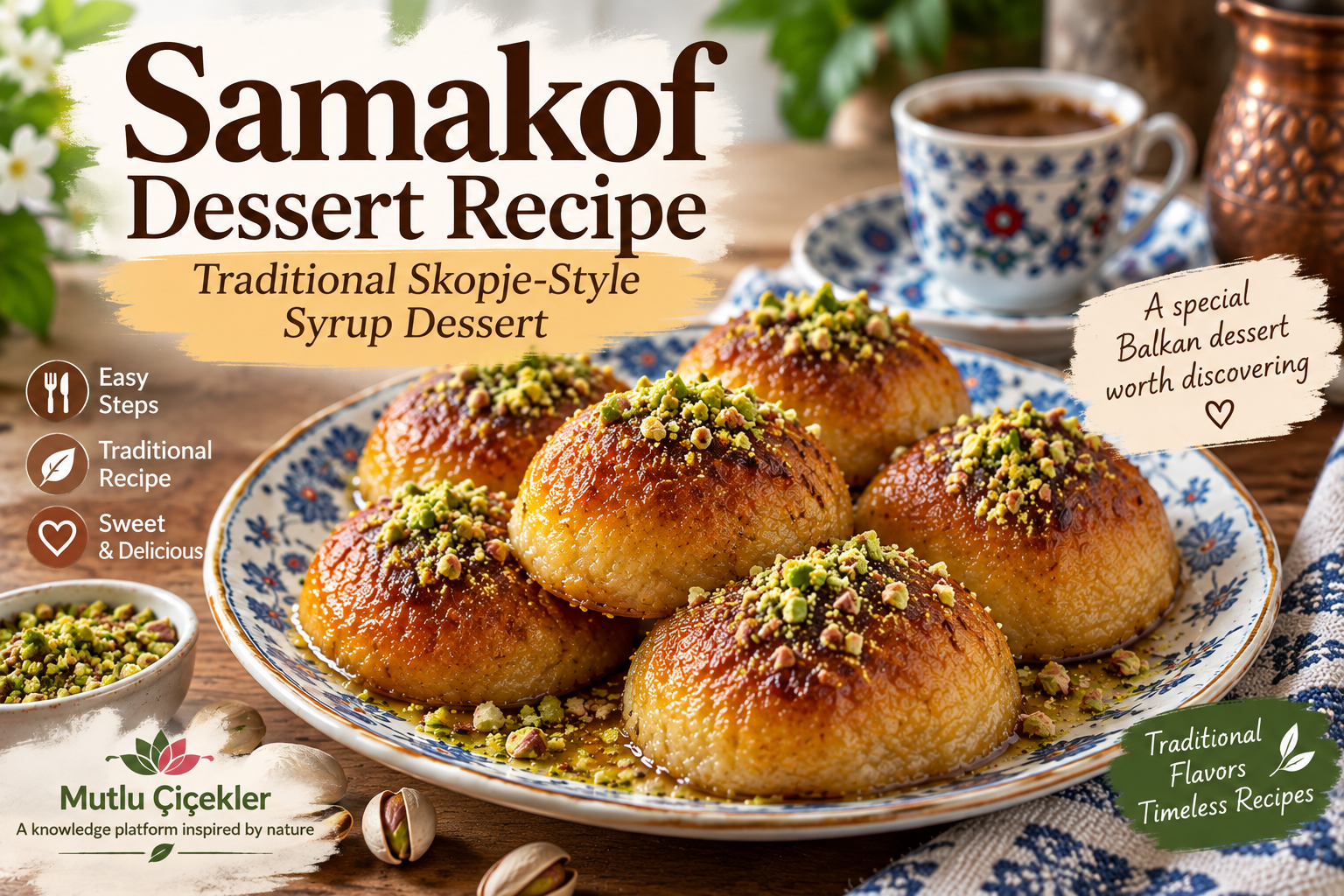
Samakof dessert is a lesser-known traditional syrup-soaked sweet associated with the culinary heritage of immigrants from Skopje and the wider Balkan region.
Unlike fried dough desserts such as lokma, a traditional version of Samakof is prepared by cooking milk, fat, and flour together to form a dough. Eggs are then incorporated into the cooled mixture, the dough is shaped into small portions and baked until golden. Finally, the baked pastries are soaked in sweet syrup.
The result is a soft, rich dessert with a golden exterior and a wonderfully syrupy texture.
If you enjoy discovering traditional Balkan desserts beyond the internationally famous classics, this Samakof dessert recipe is well worth trying.
What Is Samakof Dessert?
Samakof is a traditional syrup dessert made primarily with milk, flour, eggs, and fat.
The dough is first partially cooked on the stovetop. After cooling slightly, eggs are incorporated one at a time. The dough is then shaped into individual pieces and baked.
Once golden, the pastries are soaked in sugar syrup.
A documented traditional recipe places Samakof among the traditional sweets of immigrants from Skopje.
Because traditional dishes are often passed from one generation to another within families, different versions of Samakof may exist. Ingredients and preparation methods can therefore vary between households.
The recipe below follows a simple baked method inspired by the documented Skopje tradition.
Samakof Dessert Ingredients
For the Dough
- 4 large eggs
- 500 ml (about 2 cups) milk
- 1 cup all-purpose flour
- 1 cup cake flour
- 200 g (about 7 oz) butter or margarine
Note: A documented traditional version uses margarine. Butter can be used as a practical alternative for home cooking and provides a richer flavor.
For the Syrup
- 4 cups granulated sugar
- 3 cups water
- A few drops of lemon juice, optional
How to Make Samakof Dessert
1. Heat the Milk and Butter
Place the butter or margarine in a large, heavy-bottomed saucepan.
Allow it to melt over medium heat.
Add the milk and continue heating until the mixture approaches a boil.
Reduce the heat slightly before adding the flour.
2. Add the Flour
Gradually add the flour while stirring continuously with a wooden spoon or sturdy spatula.
Continue stirring over low to medium heat.
The mixture will begin to thicken and eventually form a cohesive dough.
Continue cooking until the dough begins to pull away from the sides of the saucepan.
Remove it from the heat.
3. Let the Dough Cool
Do not add the eggs immediately.
Allow the dough to cool until it is warm rather than piping hot.
This is an important step because adding eggs to very hot dough can cause them to cook before they are properly incorporated.
4. Add the Eggs
Add the eggs one at a time.
Mix thoroughly after each egg before adding the next.
At first, the dough may appear separated or slippery. Keep mixing and it should gradually become smooth again.
The finished mixture should be soft enough to shape but still hold its form.
5. Shape the Samakof Pastries
Lightly grease a baking tray or line it with baking paper.
Take small portions of dough, approximately the size of a walnut.
Roll them gently into round shapes and arrange them on the prepared tray, leaving some space between each piece.
You can make a small indentation in the center of each piece if desired.
6. Bake Until Golden
Preheat the oven to 180°C (350°F).
Bake the Samakof pastries until they are puffed and golden.
Depending on your oven and the size of the pastries, this will generally take approximately 25–35 minutes.
Rather than relying entirely on baking time, watch their color. They should develop a noticeable golden exterior before being removed from the oven.
How to Make the Syrup
Combine the sugar and water in a saucepan.
Bring the mixture to a boil, then reduce the heat and simmer for approximately 10 minutes.
If desired, add a few drops of lemon juice toward the end.
Remove the syrup from the heat.
Pour the syrup gradually over the baked Samakof pastries.
Allow them enough time to absorb the syrup before serving.
Tips for Making the Best Samakof Dessert
Cook the flour properly
The flour needs enough time to cook with the milk and fat. Continue stirring until the mixture forms a cohesive dough and begins pulling away from the saucepan.
Let the dough cool before adding eggs
This is one of the most important steps in the recipe. If the dough is too hot, the eggs may begin to cook.
Add the eggs one at a time
Adding each egg separately makes it easier to incorporate them evenly and control the final consistency of the dough.
Don’t make the pastries too large
Walnut-sized portions cook more evenly and absorb the syrup more effectively.
Bake until properly golden
Avoid removing the pastries while they are still very pale. A golden exterior helps provide better texture once the syrup is added.
Give the dessert time to rest
Samakof benefits from resting after the syrup is added. This allows the pastries to absorb the syrup more evenly.
Is Samakof Dessert Fried or Baked?
This is an important distinction because some modern online recipes describe Samakof as a fried dough dessert.
However, a documented traditional recipe associated with immigrants from Skopje prepares Samakof in the oven rather than frying it.
In this method, the flour mixture is cooked on the stovetop, eggs are incorporated after the dough cools slightly, and the shaped pieces are baked before being soaked in syrup.
Traditional family recipes can vary, so other preparations may exist. However, Samakof should not automatically be described as another name for lokma.
Where Does Samakof Dessert Come From?
The exact historical origin of many traditional Balkan recipes can be difficult to establish because recipes were often preserved within families rather than through formal written records.
One documented culinary source includes Samakof among the traditional desserts of immigrants from Skopje.
For this reason, it is more accurate to describe Samakof as a traditional sweet associated with Skopje and Balkan immigrant culinary heritage rather than making a definitive claim about a single town or origin story without stronger historical evidence.
The Balkan region has a rich tradition of syrup-soaked pastries, and Samakof is an interesting example of this shared culinary heritage.
Is Samakof the Same as Lokma?
No.
Although both are sweet dough-based desserts served with syrup, their traditional preparation methods differ.
Lokma is typically made from a yeast-based batter or dough that is deep-fried and then sweetened with syrup.
In the baked Samakof method described here, milk, fat, and flour are cooked together first. Eggs are added afterward, and the shaped pastries are baked in the oven before being soaked in syrup.
The two desserts should therefore not be considered identical.
How Many Calories Are in Samakof Dessert?
The calorie content of Samakof depends heavily on portion size and the amount of syrup absorbed.
As a general estimate, a serving may contain approximately 300–400 calories.
This is only an estimate rather than a laboratory nutritional analysis. Using more or less butter and syrup can significantly change the final calorie count.
Chef’s Tips
For a richer flavor, use full-fat milk and good-quality unsalted butter.
When incorporating the eggs, don’t worry if the mixture initially looks as though it has separated. Continue mixing before deciding whether the consistency is correct.
Avoid pouring all the syrup aggressively over one area. Distributing it evenly helps each pastry absorb a similar amount.
Samakof is already a rich syrup dessert, so it does not require elaborate toppings. If you want a little contrast, a small amount of finely chopped pistachios or walnuts can be added when serving.
Serve with unsweetened Turkish coffee or tea to balance the sweetness.
How to Store Samakof Dessert
Store leftover Samakof in a covered container in the refrigerator.
For the best texture and flavor, consume it within a few days.
You can remove the dessert from the refrigerator shortly before serving and allow it to approach room temperature.
Because it contains milk and eggs, avoid leaving it at room temperature for extended periods.
Frequently Asked Questions
What is Samakof dessert made from?
Traditional Samakof is made primarily from milk, flour, eggs, fat, sugar, and water. The sugar and water are used to prepare the syrup.
Is Samakof baked?
A documented traditional Skopje-style version of Samakof is baked in the oven before being soaked in syrup.
Is Samakof a Turkish dessert?
It is more precise to describe Samakof as part of the broader Balkan and Skopje immigrant culinary tradition. Culinary traditions throughout the Balkans developed through centuries of cultural exchange, so assigning every traditional dish exclusively to one modern country can be misleading.
Is Samakof an Ottoman dessert?
Samakof can be discussed within the broader historical culinary context of the Balkans, which spent centuries under Ottoman influence. However, without sufficient historical evidence, it is better not to claim that Samakof specifically originated in the Ottoman palace kitchen.
Is Samakof the same as lokma?
No. Lokma is generally deep-fried, while the traditional Samakof method described here involves baking the shaped dough before adding syrup.
Can I make Samakof ahead of time?
Yes. In fact, allowing the dessert to rest after adding the syrup helps the pastries absorb it more evenly.
What should I serve with Samakof?
Unsweetened Turkish coffee, black coffee, or tea pairs particularly well with this rich syrup dessert.
A Traditional Balkan Sweet Worth Discovering
Samakof dessert may not be as internationally famous as baklava or lokma, but that is precisely what makes it interesting for anyone exploring lesser-known Balkan recipes.
Its preparation is distinctive: milk, fat, and flour are cooked into a dough, eggs are incorporated, the pastries are shaped and baked, and finally everything is brought together with sweet syrup.
More importantly, Samakof offers a glimpse into the recipes preserved through the culinary traditions of families with roots in Skopje and the wider Balkans.
If you are looking for a traditional syrup dessert that’s a little different from the classics, Samakof is certainly one to discover.
✨ For more traditional recipes, lifestyle tips, and interesting discoveries, follow us and explore more articles on mutlucicekler.com.
Bir Cevap Yazın