
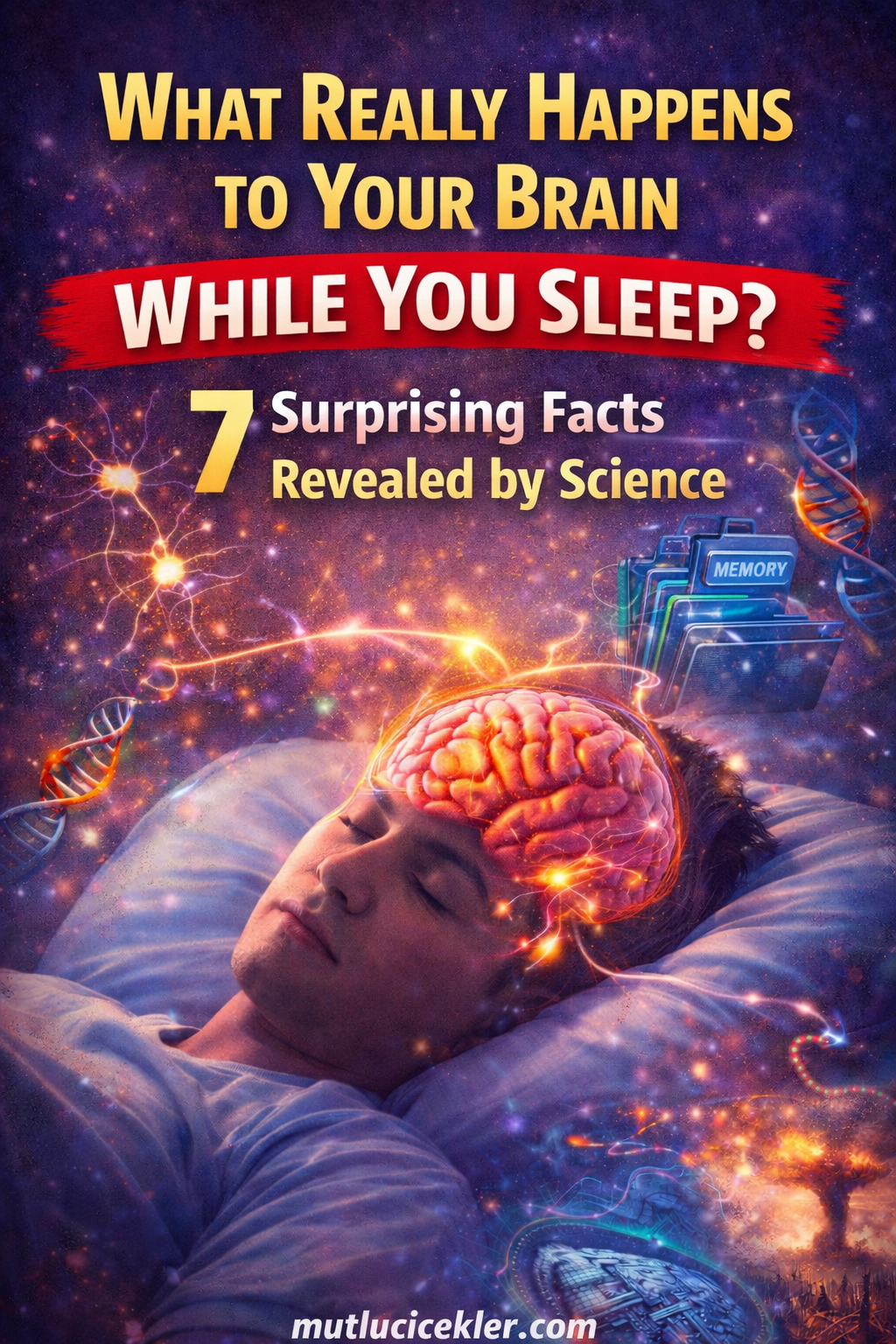
Sleep takes up nearly one-third of our lives, yet many people believe the brain simply “shuts down” when we fall asleep.
In reality, the opposite is true.
While we sleep, the brain becomes extremely active, performing essential processes that support memory, health, and emotional balance.
Scientists have discovered that during sleep the brain organizes information, clears toxins, strengthens neural connections, and processes emotions.
So what exactly happens to your brain while you sleep? Here are 7 fascinating facts backed by science.
🌙 1. The Brain Organizes the Information You Learned During the Day
Throughout the day, your brain collects massive amounts of information from everything you see, hear, and experience.
During sleep, the brain:
- sorts through these memories
- removes unnecessary information
- transfers important memories into long-term storage
This is why good sleep is essential for learning and memory improvement.
🧠 2. The Brain Cleans Itself
While you sleep, a special cleaning system in the brain becomes highly active. This is known as the glymphatic system.
This system helps remove:
- toxins
- metabolic waste
- harmful proteins accumulated during the day
Researchers believe this process may help protect the brain from neurological diseases.
⚡ 3. Brain Activity Changes Throughout the Night
Sleep is not a single state. Instead, the brain cycles through different stages during the night.
The two main stages are:
REM Sleep
During REM sleep:
- most dreaming occurs
- brain activity becomes very intense
- eyes move rapidly
Non-REM Sleep
In this stage:
- the body repairs tissues
- energy is restored
- physical recovery happens
These cycles repeat several times throughout the night.
💭 4. Dreams Are Created
Dreams occur mainly during the REM stage of sleep.
Scientists still debate the exact purpose of dreams, but several theories suggest they help with:
- emotional processing
- memory consolidation
- stress reduction
Dreams may reflect the brain’s effort to organize experiences and emotions.
🧬 5. Neural Connections Become Stronger
During sleep, the brain strengthens important synaptic connections between neurons.
This process improves:
- learning ability
- memory performance
- problem-solving skills
- cognitive flexibility
This is one reason why people who sleep well often perform better mentally.
🔋 6. The Brain Restores Its Energy
Sleep allows the brain to restore its energy resources.
During this time:
- cellular energy stores are replenished
- neurotransmitter levels rebalance
- brain metabolism stabilizes
Without enough sleep, people often experience fatigue, poor concentration, and slower thinking.
🧩 7. The Brain Processes Emotions
Sleep plays a crucial role in emotional health.
During REM sleep, the brain processes emotional experiences from the day, including:
- stress
- anxiety
- fear
- emotional memories
This process helps regulate mood and maintain psychological balance.
😴 Conclusion: Sleep Is Essential for Brain Health
Sleep is far more than simple rest.
While you sleep, your brain is busy:
- organizing memories
- clearing toxins
- strengthening neural networks
- regulating emotions
Quality sleep is therefore essential for mental performance, emotional health, and overall well-being.
As scientific research continues, we are learning even more about how sleep supports the incredible complexity of the human brain.
❓ Frequently Asked Questions (FAQ)
Why do humans dream?
Dreams may help the brain process emotions, organize memories, and manage stress.
Does sleep really clean the brain?
Yes. The glymphatic system becomes more active during sleep and helps remove toxins from the brain.
How many hours should adults sleep?
Most experts recommend 7–9 hours of sleep per night for adults.
What happens if you don’t sleep enough?
Sleep deprivation can negatively affect memory, focus, mood, and overall brain performance.
📌 For more fascinating science facts, discoveries, and interesting knowledge, follow us.
mutlucicekler.com












Bir Cevap Yazın